





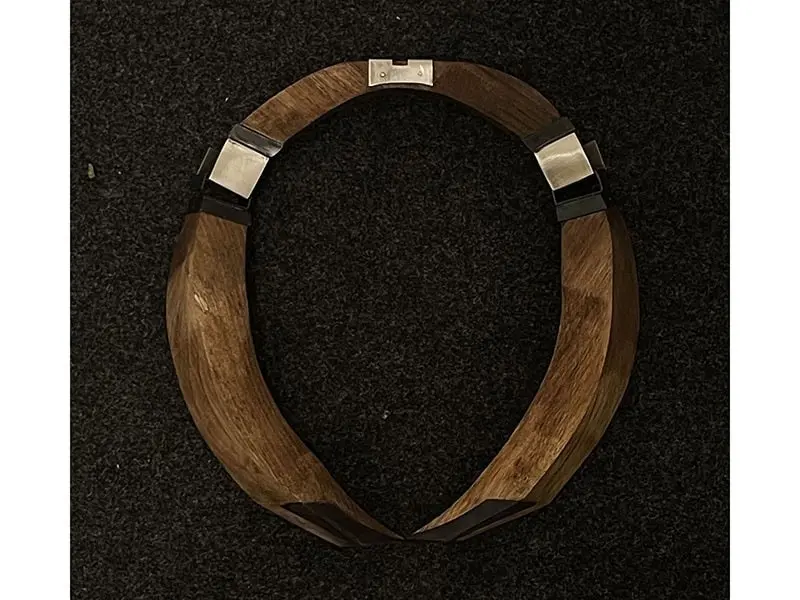
Contemporary jewelry has long contended with traditional expectations of beauty, luxury, and social status. However, emerging artists continue to push the boundaries of the medium, transforming personal adornment into a vehicle for conceptual critique. Among those leading this charge is Marie-Caroline Locquet, whose provocative, boundary-pushing creations have earned her recognition as a finalist for the prestigious Young Artist Award. Supported by Karen and Michael Rotenberg, this biennial prize acknowledges promise, innovation, and individuality in the work of emerging jewelry artists aged 35 or younger, celebrating creations that inspire future developments in the field.
Locquet approaches jewelry not as a symbol of wealth, power, or conventional elegance, but as a medium for psychological and physical provocation. Her work heavily incorporates implications of violence, restraint, and sexual dominance, producing defensive weapons and confinement devices that evoke a complex mix of discomfort and erotic tension. Through these striking objects, Locquet offers wearers a unique bodily experience designed to explore shared human fragility and the intricate boundaries between intimacy and public space.
The Roots of a Radical Practice
Locquet’s journey into the world of contemporary jewelry began during her early art studies, where she encountered radical works that fundamentally challenged her understanding of the medium. Rather than focusing on aesthetics or the display of affluence, these foundational pieces introduced her to art that felt strange, uneasy, and inherently dangerous. She points to the work of pioneers like Bernhard Schobinger and Dorothea Prühl—creators whose unconventional pieces altered the trajectory of modern craft—as pivotal influences that reshaped her perspective.
Fascinated by objects of disruption, reflection, and provocation, Locquet entered the field driven by fundamental questions: Why create and wear jewelry that appears disturbing at first sight? What is the cultural significance of fashioning objects deemed "unwearable"? This exploration of unwearability quickly became the core focus of her artistic research, steering her toward a practice that interrogates the psychological implications of what we place on our bodies.

Growing Up Amid the Weight of Adornment
Growing up in the north of France, Locquet developed an early awareness of the social pressures tied to appearance. She observed firsthand the weight of self-demonstration and the ways in which people use adornment to camouflage their social affiliations. This early sociological observation laid the groundwork for her conceptual approach, making jewelry a primary subject of academic and artistic study rather than a pursuit driven by mere aesthetic affinity.
In her practice, each completed piece redefines the traditional status of jewelry. Instead of functioning as a showcase for status, her works act as direct confrontations capable of creating significant disruption in public spaces. Her designs steer away from conventional seduction or representation, focusing instead on themes of disturbance, violence, vulnerability, and confinement. By pushing materials to their absolute limits, Locquet forces them to bare their true natures through forms that evoke both desire and death. Whether fashioned as defensive weapons or intricate restraint devices, her pieces maintain an ongoing tension between social discomfort and the temptation of an embrace.
Exploring Confinement and Mechanical Complexity Through ‘Hands’
Locquet’s creative vocabulary draws inspiration from historical and cultural objects associated with control and submission. Her research encompasses historical artifacts such as the collier d’appartenance—a collar traditionally given in submissive relationships—as well as the "slave collar," rooted in 19th-century Norman and Auvergnat marriage traditions as a token of possession. She has similarly explored animal labor tools like the horse collar to understand the physical and psychological impact of restraint.
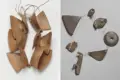
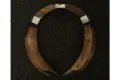
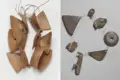
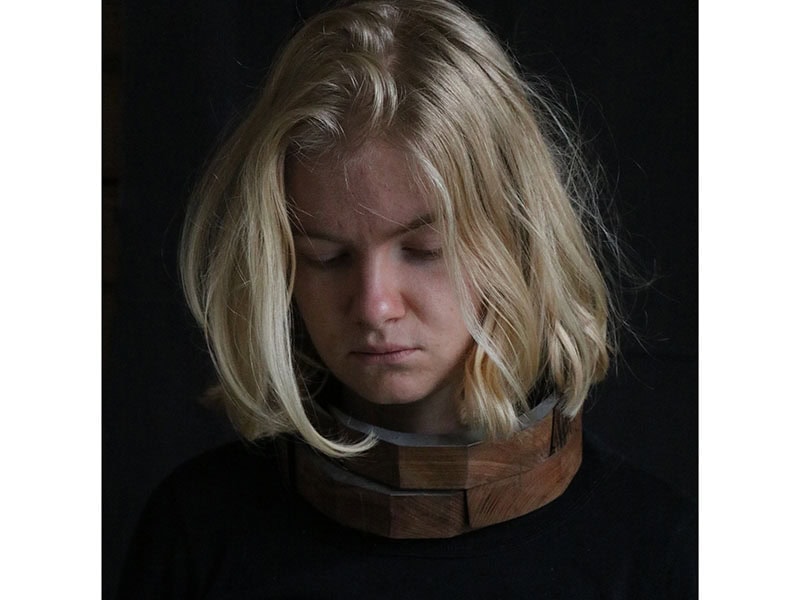
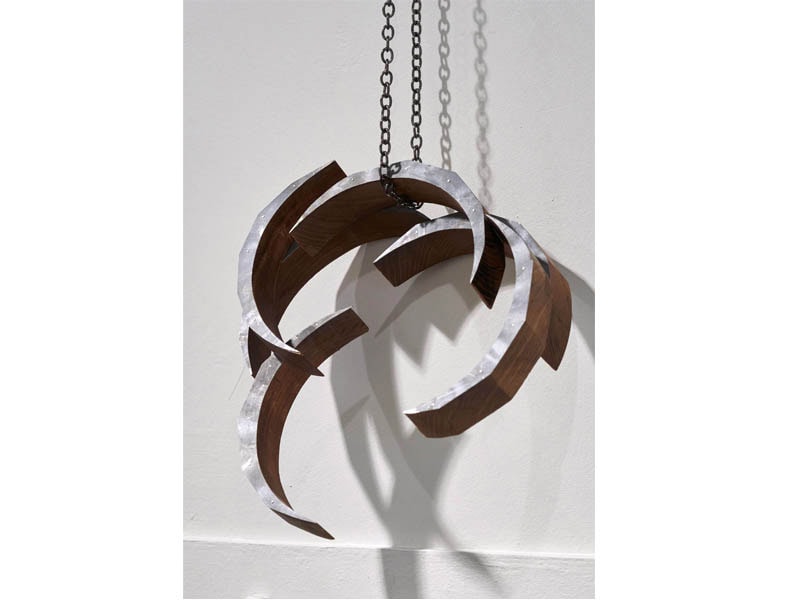
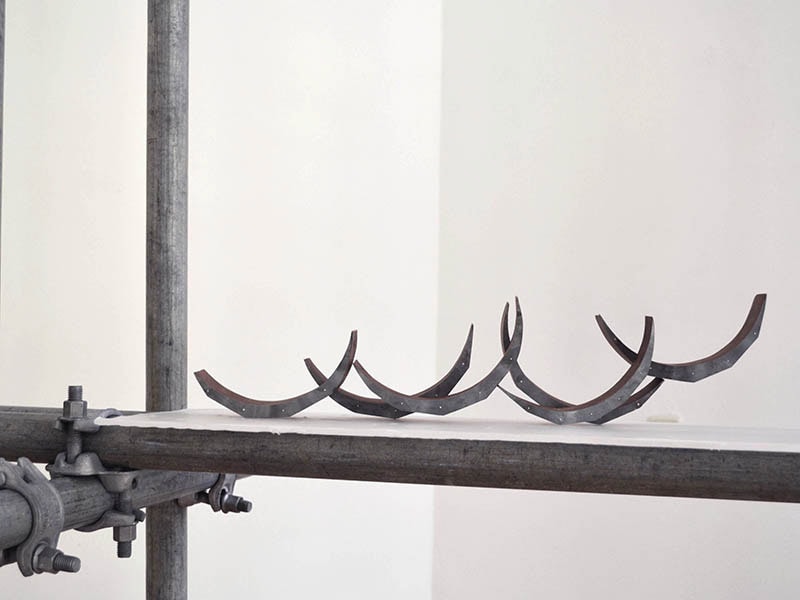
Among her notable works is the neckpiece titled Hands, created in 2024 using elm wood, zinc-plated steel, and silver. This piece exemplifies her obsessive research into mechanical systems, movements, clasps, and the ambiguous border dividing jewelry from sculpture. Hands unfolds and occupies surrounding space like a complex mechanical apparatus before closing around the wearer’s neck in a motion reminiscent of an act of strangulation. Described by the artist as her most complex and intimate piece, it vividly articulates themes of confinement, physical force, and emotional vulnerability.
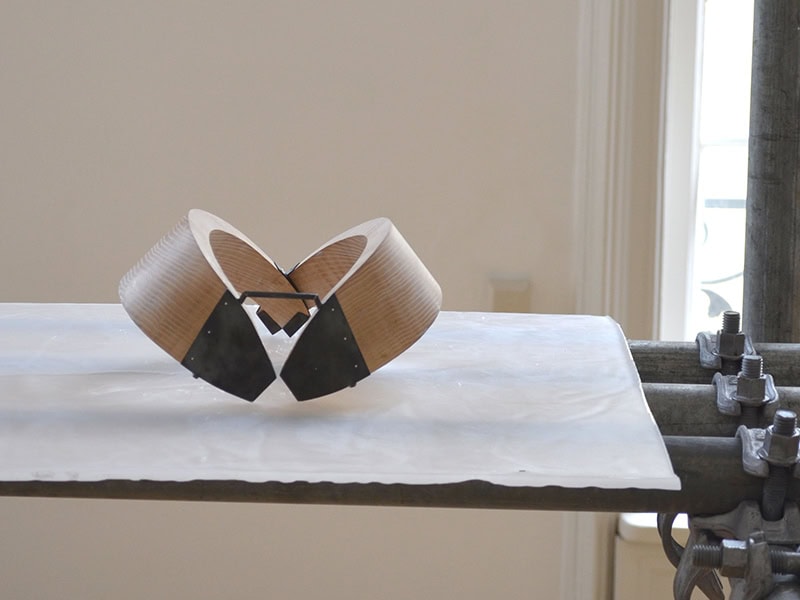
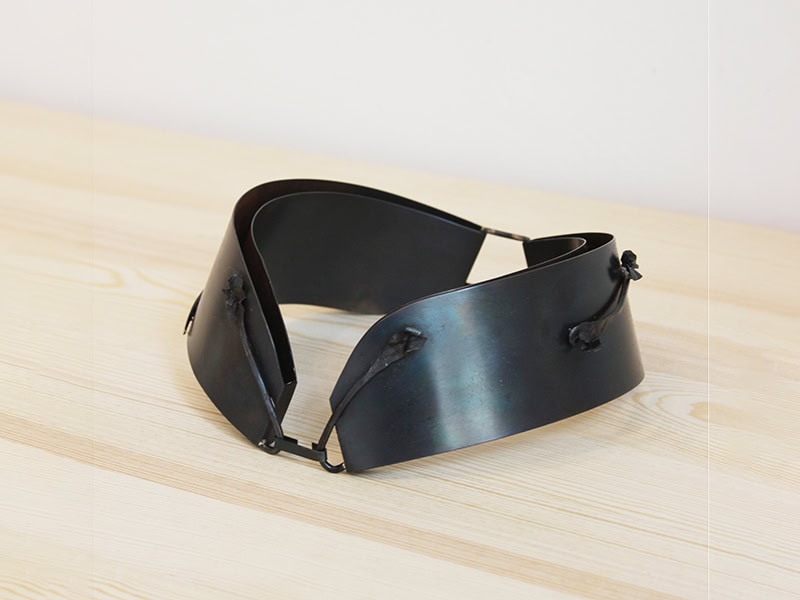
Her portfolio also features other striking contributions, such as Armor I, a forged steel neckpiece produced during her artist-in-residence program at EKA Tallinn in 2026, and Panicroom Vector I, a 2025 neckpiece crafted from iron, elm wood, silver, and rubber, which was recently exhibited at A-Galerii in Tallinn, Estonia. Through these diverse works, Locquet continues to investigate the uneasy relationship between the human body and protective or restrictive armors.
The Role of Adornment in Society
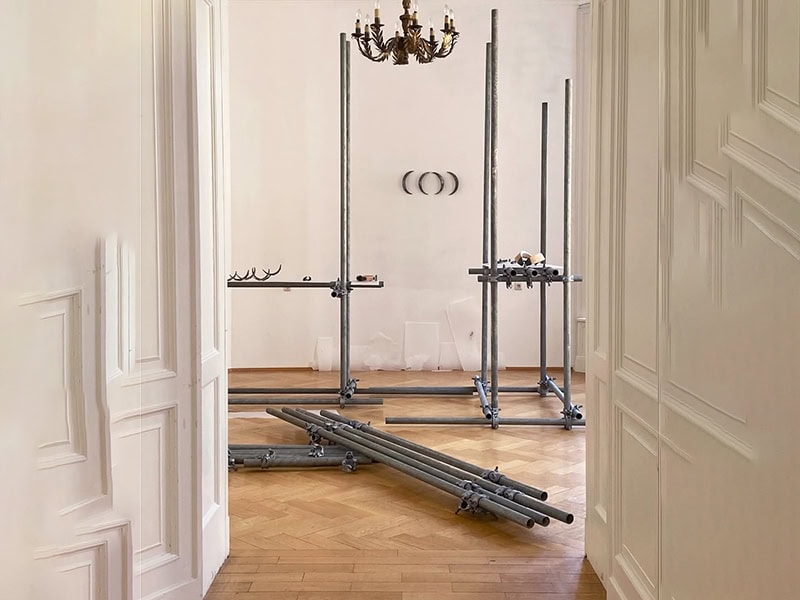
What excites Locquet most about contemporary art jewelry is its capacity to form a holistic artistic approach, seamlessly bridging the physical object, academic research, and the spatial environments designed to showcase it. More broadly, she remains deeply interested in how body ornament shapes society’s visual and cultural identity.
Believing that everything worn by individuals reflects the references, boundaries, and values of contemporary culture, Locquet initiated a major iconographic research project and collection titled "Unwearable"—adornment is impure, makeup is obscene, disguise is an abomination. This ongoing project examines how personal ornamentation, when intimately connected to the human body, reveals profound insights about social representations and collective culture, constantly shifting between the private sphere and the public domain.
Navigating the Risks and Challenges of the Field
Reflecting on the state of contemporary jewelry, Locquet recalls an exhibition she co-curated with colleagues and friends during Munich Jewellery Week (MJW) in 2018 titled Jewelry Is Still a Risky Business, referencing an earlier work by Paul Derrez. For Locquet, that title remains a guiding principle: contemporary jewelry should continue to take risks.
At the same time, she acknowledges persistent frustrations within the discipline. During her studies at a French fine art school, she frequently encountered the assumption that jewelry was somehow "lesser," superficial, or overly niche compared to other fine arts. While she views this marginalization as a structural strength that opens unique perspectives, she also questions whether it creates an unnecessary distance between the field and audiences outside its established community.
To bridge this gap, some of her pieces incorporate more literal elements that act as accessible entry points for viewers, helping them navigate complex conceptual terrains. Being named a finalist for the Young Artist Award serves as a powerful confirmation that her radical trajectory is resonating within the broader art community, validating years of dedicated exploration.
Looking Ahead
As she looks toward the next five years, Locquet remains grounded in her artistic process. Reflecting on how much her practice has evolved since graduating five years ago, she is eager to expand her installations into spatial dimensions, creating environments where her objects and their surrounding spaces actively resonate with one another. Alongside her studio practice, she harbors a strong interest in research and teaching, viewing academic spaces as ideal environments to challenge and reinvent collective notions of body ornament.
As the Art Jewelry Forum prepares to honor this year’s finalists, Locquet’s inclusion highlights the enduring vitality of a medium willing to confront discomfort, question societal norms, and embrace the profound complexities of human fragility.