


When is a piece of jewelry no longer a symbol of wealth, power, or status, but rather a tool for psychological provocation? For contemporary artist Marie-Caroline Locquet, the answer lies in the uncomfortable space where body ornament crosses over into restraint, defense, and vulnerability. Rather than designing objects meant for conventional seduction or public display, Locquet crafts wearable sculptures that evoke physical confinement, sexual dominance, and the raw fragility of human existence.
Her distinct and uncompromising vision has recently earned her international recognition as a finalist for the prestigious Young Artist Award. Supported biennially by Karen and Michael Rotenberg and administered through the Art Jewelry Forum (AJF), the award celebrates exceptional promise, innovation, and individuality among emerging jewelry artists aged 35 or younger. By spotlighting pioneering voices like Locquet, the award aims to champion boundary-pushing work that will shape the trajectory of the contemporary art jewelry field for years to come.
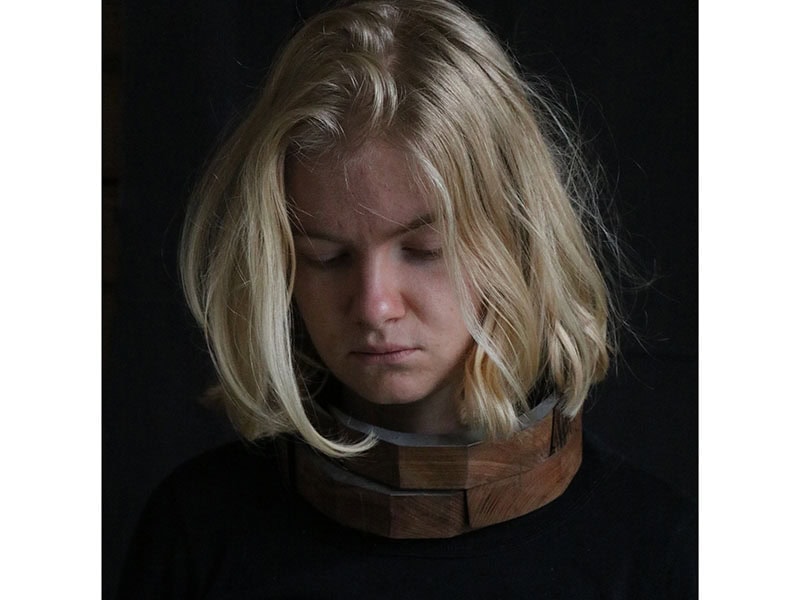
For Locquet, this recognition validates a grueling and deeply philosophical path she has pursued since her student days in France. Growing up in the northern region of the country, she developed an early sensitivity to how people use clothing and adornment to signal social class and camouflage personal identity. This sociological awareness steered her away from the commercial and aesthetic traditions of jewelry making, driving her instead toward a conceptual investigation of the medium.
Reflecting on her formative years in art school, Locquet recalls encountering radical creators who shattered her preconceptions about what jewelry could be. Instead of prioritizing beauty or the display of material wealth, artists such as Bernhard Schobinger and Dorothea Prühl created pieces that felt strange, unsettling, and inherently dangerous. These works reframed the definition of the discipline, positioning jewelry as an object of disruption, critical reflection, and psychological provocation.

This encounter sparked a central question that has governed Locquet’s research ever since: Why make and wear objects that appear deeply disturbing at first glance, and what does it truly mean to craft something deemed "unwearable"?
Being named a finalist for the Young Artist Award serves as a meaningful affirmation of these unconventional inquiries. Locquet notes that the acknowledgment gives her the confidence to persist with her radical approach, pushing materials and concepts further while continually challenging herself, the wearer, and the viewer alike.
Confronting Discomfort in Public Space
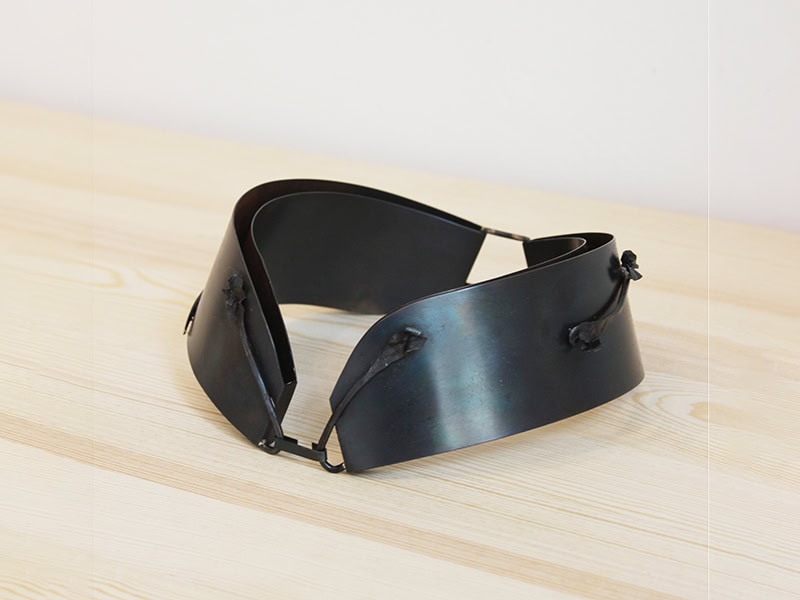
In her application for the Young Artist Award, Locquet presented a cohesive body of work that reconsiders the status of jewelry. Rather than functioning as showcase objects of prosperity or elegance, her pieces are designed as confrontational interventions capable of disturbing public space. Her creations eschew conventional representation in favor of exploring tension, violence, fragility, seduction, domination, vulnerability, and confinement.
By pushing materials to their absolute limits, Locquet forces them to reveal their innate characteristics through forms that simultaneously evoke desire and death. Whether functioning as defensive weapons or strict restraint devices, each piece provides a singular wearing experience designed to probe our shared human frailty. The resulting objects maintain a persistent, razor-thin tension between social discomfort and the temptation of physical embrace.
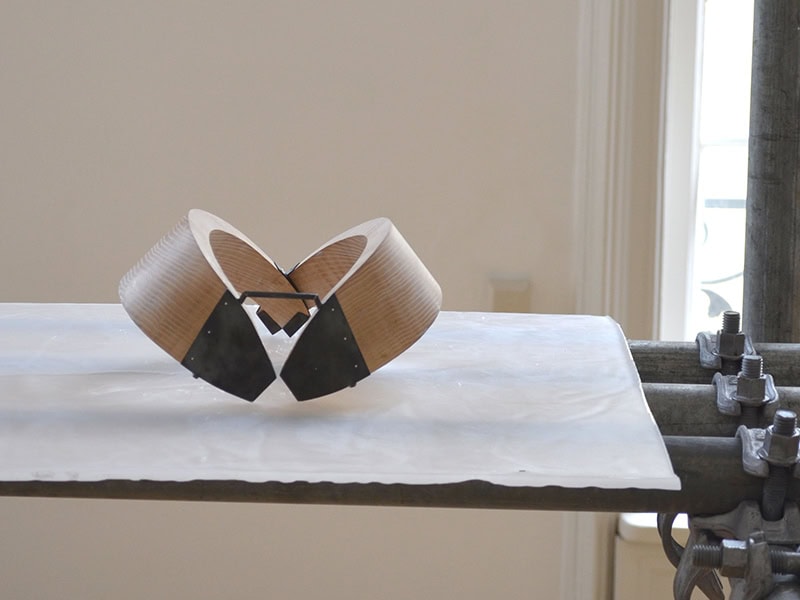
This exploration of confinement and control frequently draws from historical and sociological artifacts. Locquet’s research has incorporated historical references such as the collier d’appartenance—collars historically utilized in submissive relationships—as well as the "slave collar" originating from 19th-century Norman and Auvergnat traditions, which were traditionally given to women during marriage as tokens of possession. She has similarly investigated animal labor instruments, such as heavy horse collars, to inform her understanding of bodily restraint.
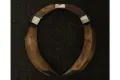
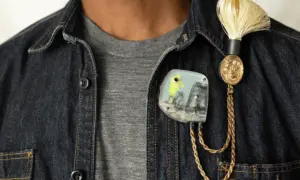
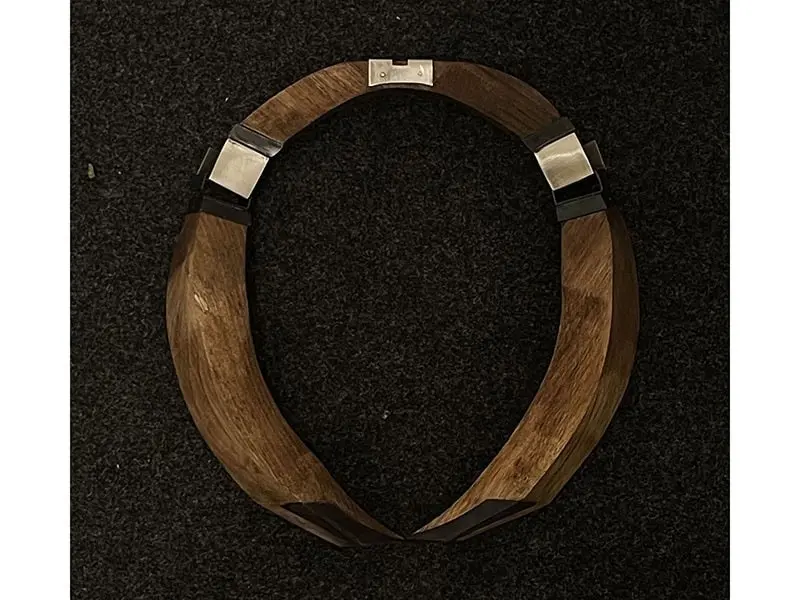
Among the standout pieces featured in her portfolio is Hands, a complex neckpiece created in 2024 using elm wood, zinc-plated steel, and silver. According to the artist, the piece encapsulates her obsessive investigation into mechanical systems, intricate movements, specialized clasps, and the ambiguous border separating jewelry from standalone sculpture. Hands unfolds and occupies surrounding space like a complex kinetic mechanism before finally closing tightly around the neck—an action that evokes the unsettling intimacy of strangulation. Described by Locquet as her most complex and personal work, the piece lays bare the visceral realities of confinement and violence.
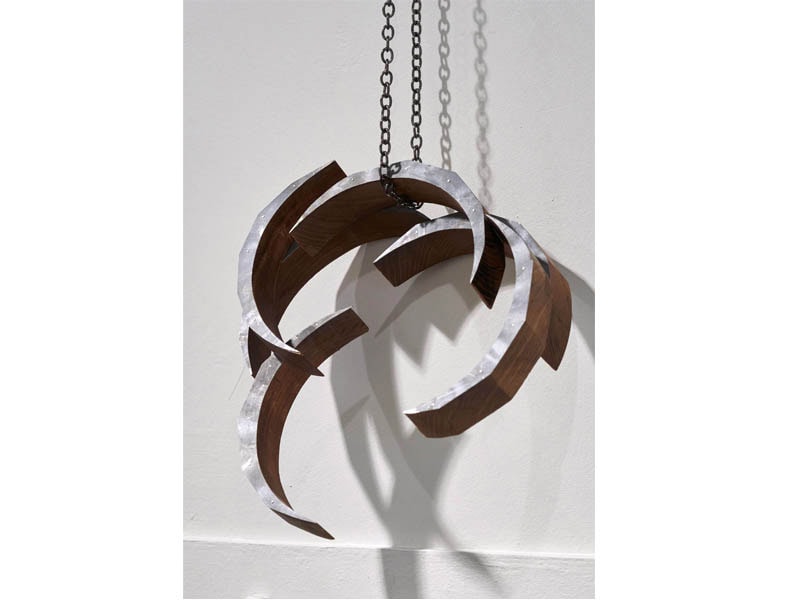
Her broader portfolio similarly reflects an interest in bridging individual adornment with spatial architecture. During Munich Jewellery Week in 2024, she presented exhibition work at the Institut Français München, and her installations have traveled to venues such as A-Galerii in Tallinn, Estonia. Pieces like her 2025 neckpiece Panicroom Vector I—constructed from iron, elm wood, silver, and rubber—serve as literal entry points for viewers trying to navigate the psychological landscapes of her practice.
Navigating the Boundaries of Contemporary Art
Locquet’s fascination with the field extends far beyond the individual object. She is deeply intrigued by how body ornamentation constructs and reflects the overarching image of a society. Everything worn on the body, she argues, draws directly from the boundaries, values, and reference points of the culture it inhabits.
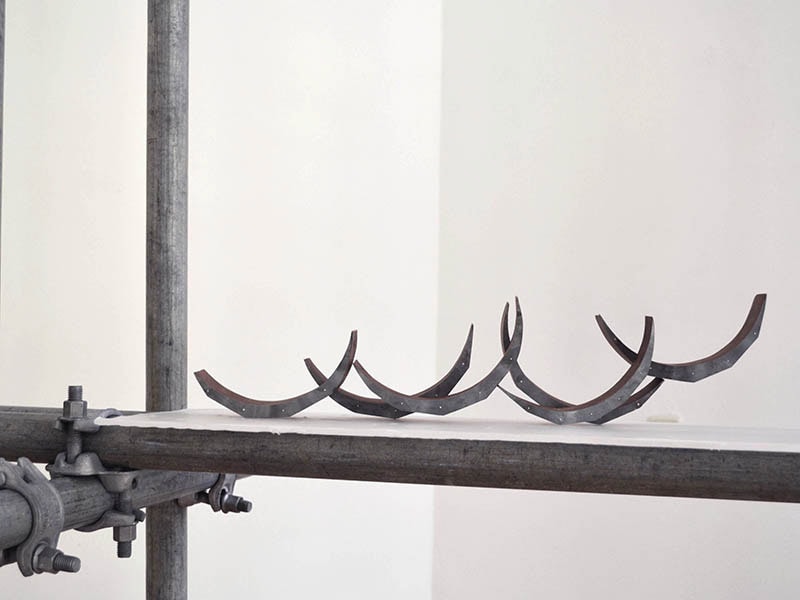
To deepen this inquiry, she initiated a large-scale iconographic research project and collection centered around the concepts of the worn and the unwearable, compiling materials under the guiding thesis that adornment can often be perceived as impure, makeup as obscene, and disguise as an abomination. This ongoing research underscores how ornamentation, once placed in direct contact with the human body, reveals profound truths about social structures, cultural representations, and the constant oscillation between the private interior and the public sphere.
Despite her passion for the medium, Locquet remains candid about the frustrations inherent to working within contemporary art jewelry. Reflecting on an exhibition she co-curated with colleagues during her student days titled Jewelry Is Still a Risky Business—a nod to a foundational work by Paul Derrez—she maintains that the discipline must continually embrace risk rather than seeking comfortable assimilation into mainstream fine art.
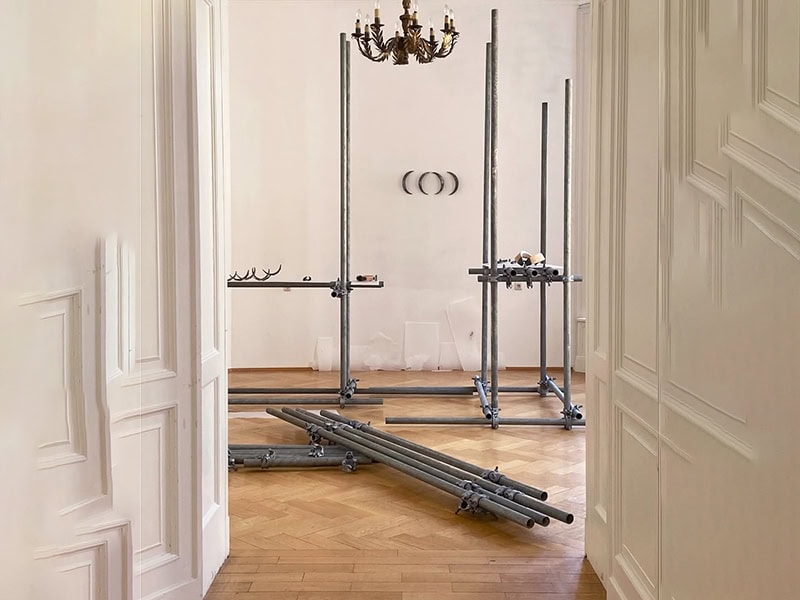
During her formal education at a French fine arts institution, Locquet frequently encountered the lingering prejudice that jewelry was somehow a lesser, superficial, or overly niche pursuit compared to traditional fine art mediums. While she views this marginalization as a structural strength that fosters alternative ways of seeing and thinking, she acknowledges that it can create a noticeable distance between experimental creators and broader audiences outside the established craft community.
Looking toward the horizon, Locquet envisions a future that balances hands-on studio production with academic research and teaching. Five years after graduating from her initial studies, she is eager to continue expanding her practice, pursuing international artist residencies, collaborating with fellow creators, and pushing the collective definition of body ornament through immersive spatial installations. As she prepares for upcoming exhibition projects and reflects on the support she has received from mentors and peers, Locquet remains firmly committed to the unpredictable, risk-laden journey of redefining what jewelry can accomplish.