






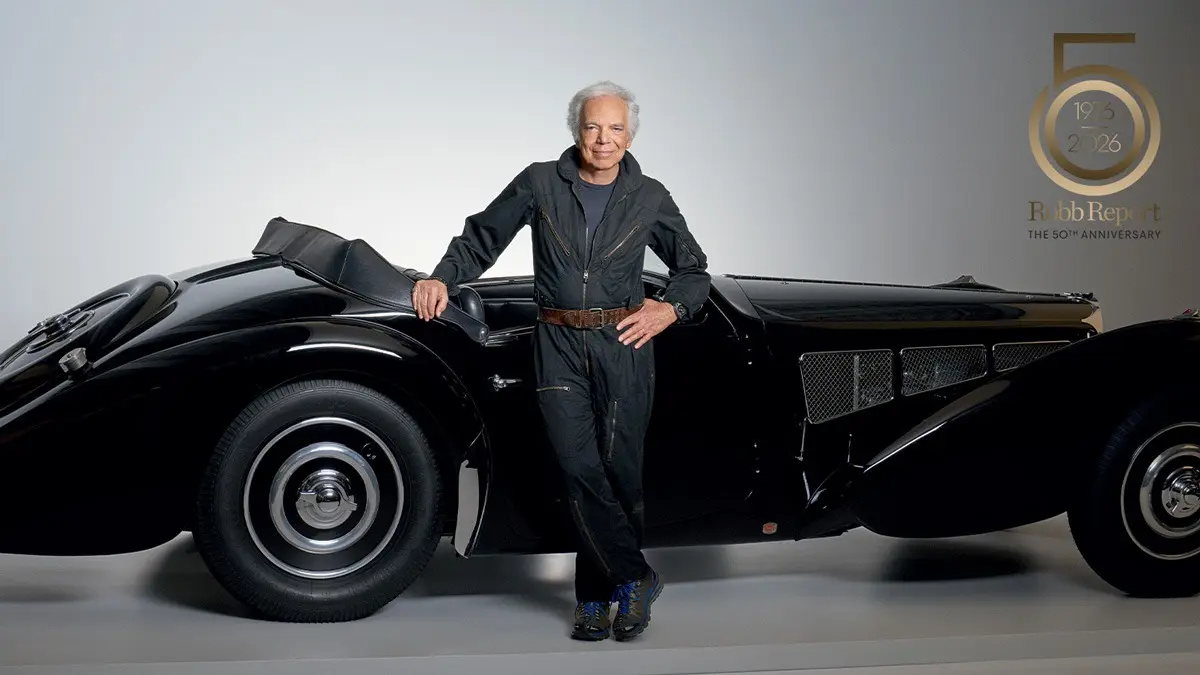
For 50 years, the upper echelons of luxury have not merely reflected the status quo; they have actively signaled to the world what comes next. From the moment Ferrari unleashed the unmistakable Testarossa and Concorde compressed the globe by ferrying passengers to Paris in three and a half hours, high-end culture has continually pushed boundaries. Groundbreaking designers like Giorgio Armani and Brunello Cucinelli revolutionized silhouettes, while iconic motifs like Van Cleef & Arpels’ Alhambra achieved a cultural ubiquity that eventually transcended fashion and found its way onto the baseball diamonds of the World Series. Meanwhile, vessels like the pioneering research ship REV Ocean shattered the archaic notion that serious oceanic exploration had to be a spartan endeavor. Over the past five decades, 74 defining objects, visionaries, locations, and experiences have permanently altered how society lives, travels, and consumes.

The Foundations of Modern Luxury: 1965–1976
Following the Second World War, the venerable craft of bespoke coachbuilding was largely pushed aside as surging global demand forced automakers to adopt more efficient, standardized manufacturing measures. Rather than relying on traditional rolling chassis to be dressed in custom, labor-intensive bodywork, manufacturers increasingly embraced monocoque construction, which integrated the body and chassis into a single, unified structure. Rolls-Royce famously broke nearly six decades of tradition when it followed suit with the introduction of the Silver Shadow in 1965. Designed by John Blatchley and powered by a smooth 6.2-liter V-8 engine, the model featured a shorter wheelbase than its predecessor, the Silver Cloud, yet delivered expanded cabin space and an unprecedentedly cosseting ride. Enhanced suspension engineering and superior sound dampening—both made possible by the unified construction—cemented its status as an engineering triumph. The Silver Shadow’s enduring cultural relevance was underscored a decade later when it graced the inaugural cover of Robb Report in 1976, remaining in production for another four years.

As the automotive world shifted, the realms of fashion, aviation, and wine underwent seismic shifts of their own. Giorgio Armani quietly dismantled a century of men’s tailoring conventions by stripping away rigid shoulder pads and interior linings. His softly constructed jackets, paired with billowing trousers, made formal wear feel relaxed without ever sacrificing elegance. The world caught up in 1980 when Richard Gere donned Armani’s louche suits in Paul Schrader’s American Gigolo, transforming ease into a sophisticated uniform.

Simultaneously, the skies shrank. In 1976, Concorde entered commercial passenger service, flying at twice the speed of sound and making the future a tangible reality. Cruising at Mach 2.04—approximately 1,354 mph—the Anglo-French aircraft cut transatlantic flight times between London and Washington, D.C., by more than half, soaring at 60,000 feet to reveal the curvature of the Earth to passengers willing to pay the staggering ticket prices.

On the ground, the global wine establishment was rocked on May 24, 1976, during the Judgment of Paris. British wine merchant Steven Spurrier assembled leading California wines alongside French benchmark bottles from Bordeaux and Burgundy for a blind tasting. When Chateau Montelena Chardonnay and Stag’s Leap Wine Cellars Cabernet Sauvignon took top honors, it shattered the European monopoly on fine wine and firmly placed Napa Valley on the global map. That same year, watch designer Gérald Genta sketched a luxury sports watch in five minutes on a restaurant napkin. The resulting Patek Philippe Nautilus—an all-steel mechanical timepiece marketed as one of the world’s costliest watches despite being made of steel—defied the quartz crisis and birthed an enduring horological icon.

The Excess and Ambition of the 1980s
The 1980s heralded an era of high-stakes ambition, conspicuous consumption, and radical reinvention across industries. In New York City, Steve Rubell and Ian Schrager opened Studio 54 in April 1977, establishing the ultimate temple of the disco era. Controlling access through a notoriously brutal door policy, the club treated entry itself as the ultimate luxury, bringing together celebrities, downtown eccentrics, and theatrical spectacle.

That entrepreneurial spirit soon bled into hospitality. Bill Kimpton opened San Francisco’s Bedford Hotel in 1981, while Schrager and Rubell followed with Morgans in New York in 1984. Together, they pioneered the boutique hotel concept, proving that compact rooms could command a premium when paired with striking interior design, vibrant social lobbies, and personalized service.

In the art world, 1982 marked the global breakout of 21-year-old Jean-Michel Basquiat, who became the youngest artist to exhibit at Documenta in Kassel, Germany. His rapid ascent and subsequent partnership with Andy Warhol crystallized the energetic friction of downtown New York. Concurrently, Mark Kostabi opened Kostabi World in Manhattan, utilizing a factory-like assembly of assistants to produce commodified art that playfully provoked the traditional art establishment.

Communication and mobility also underwent radical transformations. When Motorola’s DynaTAC 8000X went on sale in 1984 priced at $3,995, the nearly two-pound cellular phone became an immediate badge of executive clout. Immortalized by Michael Douglas’s Gordon Gekko in the 1987 film Wall Street, "The Brick" signaled that an owner’s time was too valuable to be tethered to a desk. In the fashion and retail spaces, Ralph Lauren opened the Rhinelander Mansion in Manhattan in 1986, redefining retail through total brand immersion by transforming a Gilded Age mansion into a cinematic vision of the American Dream. Hermes similarly cemented its luxury status when a chance conversation on a 1984 flight between Jane Louis Dumas and actress Jane Birkin on an airplane-sickness bag birthed the legendary Birkin bag.

On the water, powerboats reached cultural prominence with the Cigarette Top Gun, a high-performance vessel powered by gutsy V-8 engines that became synonymous with both offshore racing and the vibrant aesthetics of the era. High-end dining experienced its own punk-rock awakening in 1987 when 24-year-old Marco Pierre White opened Harveys in London, pairing rebellious charisma with formidable French technique to earn three Michelin stars and inspire a new generation of chefs. Meanwhile, Adrian Zecha introduced Amanpuri in Phuket, Thailand, in 1988, creating an intimate, ultra-private resort model that birthed the devoted subculture of "Amanjunkies."

Architectural Triumphs and Horological Milestones in the 1990s
As the 1990s unfolded, luxury expanded into monumental scales and refined mechanical artistry. In 1990, the launch of the 344-foot superyacht Lady Moura—built by Blohm+Voss for Saudi businessman Nasser Al-Rashid—redefined the category. Featuring a beach club with a fold-down hydraulic swim platform, a dedicated owner’s deck, a cinema, and a nightclub, it transformed the superyacht from a holiday toy into a floating family estate.

In contemporary art, Damien Hirst shocked the cultural establishment in 1991 by exhibiting The Physical Impossibility of Death in the Mind of Someone Living, a tiger shark suspended in formaldehyde at London’s Saatchi Gallery, shifting the art world’s epicenter toward the UK. Automotive engineering reached a stratospheric peak in 1992 with the debut of the 627 hp McLaren F1. Conceived by Gordon Murray, the carbon-fiber masterpiece featured a central driving position and a naturally aspirated V-12 that propelled it to a road-car record of 240 mph.

Hospitality also achieved architectural breakthroughs. In the early 1990s, the Hotel du Cap-Eden-Roc transformed its oceanfront pool into an infinity edge that appeared to dissolve directly into the Mediterranean, establishing a design standard for five-star resorts worldwide. Frank Gehry achieved a similar feat on land with the 1997 opening of the Guggenheim Bilbao, whose titanium curves birthed the "Bilbao effect"—the proven phenomenon that a single cultural landmark could entirely revitalize a city’s economic and global standing.

Horology experienced a renaissance during the decade. In 1993, Panerai stepped out of military supply and into the civilian market with the Luminor Ref. 5218/201A, a 44 mm timepiece that Sylvester Stallone famously discovered and wore in the 1996 film Daylight, catapulting the brand to global fame. In 1998, Cartier launched Collection Privée Cartier Paris, reviving historical shaped watches in limited precious-metal editions. A year later, independent watchmaker F.P. Journe launched his namesake brand with the Tourbillon Souverain, successfully championing independent horology on par with the historic Swiss houses.

The New Millennium: Innovation, Culinary Revolutions, and Private Aviation
The dawn of the 21st century accelerated changes in dining, hospitality, and ultra-high-net-worth lifestyles. Anthony Bourdain’s candid 1999 New Yorker essay and subsequent memoir Kitchen Confidential demystified the restaurant industry, paving the way for a career in television that redefined culinary storytelling and cultural appreciation. Simultaneously, bartender Sasha Petraske opened Milk & Honey in New York City on New Year’s Eve 1999, sparking the modern craft-cocktail and speakeasy movement through meticulous technique and strict decorum.

Fine dining entered the realm of avant-garde science during the molecular gastronomy movement. Spearheaded by Ferran Adrià at El Bulli in Spain, Heston Blumenthal at The Fat Duck, and Grant Achatz at Alinea, chefs utilized scientific principles to subvert expectations and transform textures. Concurrently, René Redzepi opened Noma in Copenhagen in 2003, pioneering the New Nordic cuisine movement through foraging, fermentation, and a deep reverence for the natural world.

Private aviation underwent a massive expansion in 1998 with the entry into service of Boeing’s first Business Jet (BBJ). By combining the expansive interior volume of a 737 with intercontinental range, the BBJ set a new benchmark for airborne luxury. This was complemented by the introduction of very light jets like the Eclipse 500 in 2006, which democratized access to private jet travel. On the seas, Paul Allen’s expedition yacht Octopus, delivered in 2003, redefined superyachting by combining luxury amenities with ice-class exploration capabilities.

Fashion also saw the rise of minimalist luxury and streetwear integration. Hedi Slimane introduced razor-slim tailoring at Dior Homme in 2001, while Mary-Kate and Ashley Olsen launched The Row in 2006, championing quiet luxury and impeccably crafted wardrobe staples. In 2017, the boundaries between streetwear and high fashion dissolved permanently when Supreme collaborated with Louis Vuitton, signaling a profound demographic and cultural shift in luxury menswear.

Contemporary Frontiers and Enduring Icons
In recent years, the definition of luxury has continued to evolve toward experiential exclusivity, sustainable innovation, and architectural reinterpretation. The COVID-19 pandemic accelerated the rise of the ultra-private "supervilla" and isolated estate rentals, prioritizing seclusion and residential-scale hospitality. Meanwhile, brands like Van Cleef & Arpels have seen their iconic Alhambra motifs transition from classic jet-set jewelry to ubiquitous cross-generational status symbols worn by athletes, artists, and royalty alike.

In the automotive sector, high-performance super-SUVs like the Lamborghini Urus—introduced in 2017—have created an entirely new market segment, proving that everyday utility and supercar performance can coexist. In aviation, companies like Joby Aviation are pioneering commercial electric vertical takeoff and landing (eVTOL) services, promising zero-emissions urban air mobility.

On the water, shipyards continue to push architectural boundaries. Benetti’s recent B.Loft 65M replaces traditional compartmentalized yacht layouts with soaring, multilevel glass structures inspired by waterfront urban lofts. These modern milestones, alongside enduring historical pillars, demonstrate that the pursuit of exceptional design, uncompromising craftsmanship, and visionary engineering remains as dynamic and influential today as it was fifty years ago.