The world’s largest ocean carriers are spending heavily on new container ships, and the pace of ordering shows no signs of slowing down. As global trade dynamics shift and shipping lines race to secure capacity, the sheer volume of new vessels entering production is reshaping the maritime logistics landscape.
According to data published by Linerlytica, global container ship orders have climbed to 16.2 million 20-foot equivalent units (TEUs). This massive backlog is equal to 46.5 percent of the existing global fleet, marking the highest share recorded since 2009. The staggering investment reflects both carrier optimism and a desperate scramble to keep pace with soaring demand on key trade routes.
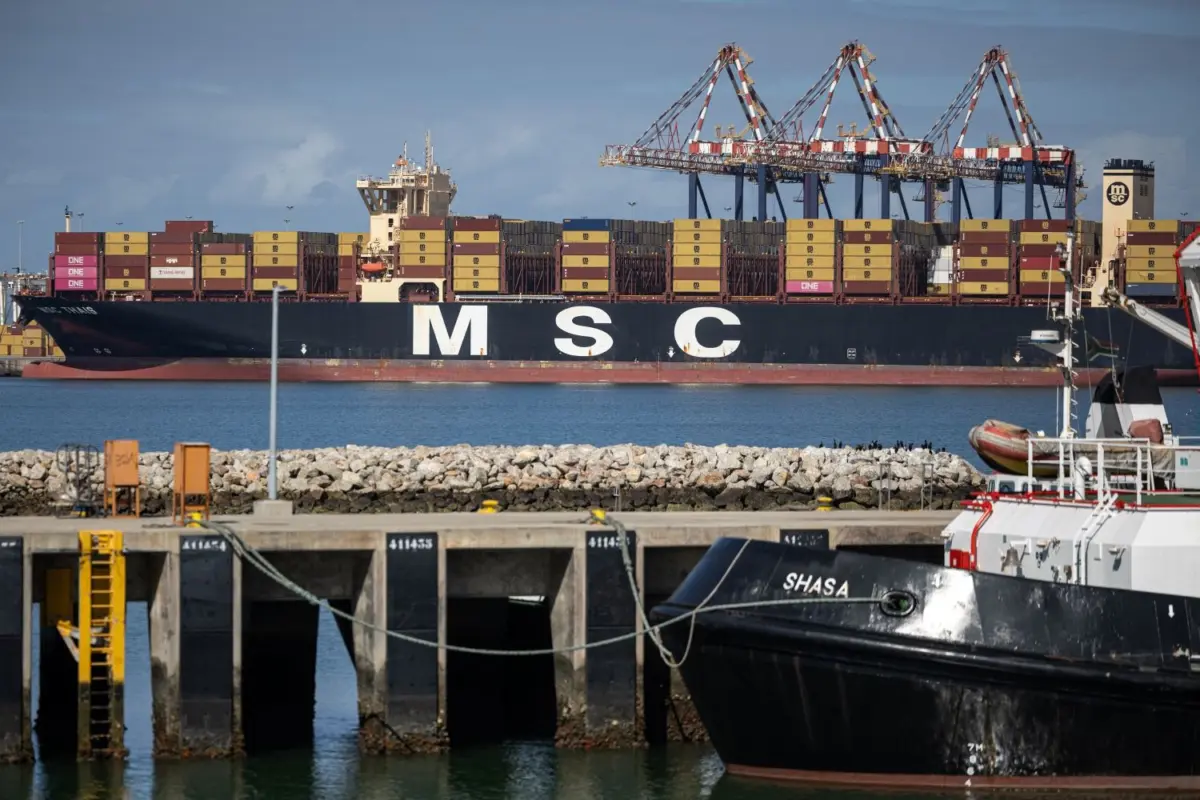
The order-to-fleet ratio moved again when Mediterranean Shipping Co. (MSC), the biggest container shipping company in the world by tonnage, was reported to have ordered another 20 ships capable of carrying 24,000 TEUs of capacity each. These ultra-large vessels are reportedly slated to be built by Hengli Heavy Industries in China, injecting an additional 480,000 TEUs into MSC’s already immense arsenal. This latest batch pushes MSC’s total orders for vessels exceeding 20,000 TEUs at Hengli alone to an astounding 62 vessels. Neither a total financial value nor a specific delivery schedule has been publicly reported for this massive tranche.
Around the time Linerlytica reported on MSC’s monumental haul, it was separately revealed that South Korea-based HMM signed a binding contract for eight 13,000-TEU ships. These consecutive announcements underscore an industry-wide spending spree that spans multiple vessel classes and shipyards across Asia.
Market researchers at Alphaliner project that roughly 1,000 newbuildings totaling 8.5 million TEUs are due to enter the market across 2027 and 2028. Meanwhile, the heavy wave of orders placed through the autumn months is scheduled for delivery primarily in 2029 and 2030.
At the same time, industry forecasts point toward complex supply and demand balances in the coming years. BIMCO’s September outlook projects that the global fleet will grow by 9 percent in 2027. During that same period, effective supply is expected to rise by 5 percent to 6 percent, while actual ship demand is anticipated to grow by anywhere from 0.5 percent to 4.5 percent. The wide range in demand projections largely depends on whether the security and geopolitical situation at the Strait of Hormuz eventually normalizes.
Amid this broader ordering frenzy, Maersk supplied the clearest break with recent restraint when the Danish carrier confirmed last month that it had ordered 26 dual-fuel ships. Each vessel will boast a capacity of 18,600 TEUs and is slated for delivery in 2029 and 2030. These new vessels will rank among the largest in the Maersk fleet. Prior to this landmark order, the carrier had notably declined to follow its chief competitors in the aggressive jump to ultra-large container vessels featuring a capacity of 24,000 TEUs.
Maersk described the multi-billion-dollar transaction as a core component of its ongoing, long-term fleet renewal program.
Analyzing the move in a LinkedIn post shortly after the confirmation, container shipping expert Lars Jensen, CEO of Vespucci Maritime, calculated that Maersk’s newest order dramatically lifted the company’s orderbook from 25 percent of its existing fleet to 35 percent.
According to Jensen, the specific size of Maersk’s chosen vessels is strategically significant. He noted that these 18,600-TEU ships are “more versatile in deployment across several trades going forward” than the more restrictive 24,000-TEU vessels favored by rivals like MSC.
Weeks prior to the announcement, during an August earnings call, a JPMorgan analyst pressed Maersk CEO Vincent Clerc on whether an industry-wide orderbook nearing 40 percent could eventually climb back toward the historic 60 percent highs witnessed in 2009. In response, Clerc strongly stressed the fundamental market need for more operational capacity.
“I still think that the orderbook reflects a very optimistic view on the world, but I think so less and less as long as this trend continues,” Clerc told analysts. “Because if I have a total market growing 4 percent but the head-haul demand is growing 7 to 8 percent, I need 7 to 8 percent capacity more every year just to be able to carry stuff.”
During the same call, Clerc revealed that vessel utilization rates were hovering near 96 percent. He also pointed out that head-haul shipping volumes originating out of the Far East had soared by roughly 25 percent in just a three-year span, highlighting the acute operational pressures driving the demand for new tonnage.
This massive wave of ordering is heavily concentrated at the very top of the vessel size range. A February assessment by BIMCO counted 436 ships with a capacity of 12,000 TEUs or more, representing a staggering 65 percent of all container capacity currently on order globally.
Other major global carriers are continuing to build out their fleets at a massive scale. French carrier CMA CGM has been reported by Linerlytica and maritime supply chain publication The Loadstar to have ordered 12 ultra-large 24,000-TEU vessels from China’s Yangzijiang Shipbuilding. These ships are scheduled for delivery across 2029 and 2030, though CMA CGM has not yet publicly confirmed the transaction.
Including this reported deal, CMA CGM’s ordering activity across 2026 adds up to an impressive 32 ships and approximately 365,000 TEUs of new capacity.
Meanwhile, Cosco Shipping placed an order for 18 ships in September. According to Alphaliner data, Cosco’s expanding orderbook now represents 52 percent of its current operating fleet—the largest ratio among the world’s top 10 container lines. Twelve of these newly contracted ships are megamax-class vessels capable of carrying 21,700 TEUs each. In total, the massive purchase will cost Cosco roughly $3 billion. Across 2026 alone, Cosco has announced 48 newbuilding contracts valued at approximately $8 billion.
While the industry giants chase record-breaking megamaxes, the middle tier of the container shipping market is frequently turning to South Korean shipyards to build slightly smaller, highly versatile ship classes. HMM’s recent contract, announced by HD Korea Shipbuilding & Offshore Engineering, covers eight liquefied natural gas (LNG) dual-fuel ships of 13,000 TEUs each. Valued at about $1.42 billion and scheduled for delivery by 2029, this agreement lifts HMM’s total orders for this specific ship class to 20, following an initial tranche of 12 ordered last October.
Citing Alphaliner figures, Jensen noted that these additions bring HMM’s total orderbook to 32 percent of its existing fleet. Despite this growth, HMM maintains the third-smallest orderbook percentage among the 16 largest shipping lines globally.
Other mid-tier operators are making similar moves. Yang Ming recently signed a contract for six ships, each with a capacity of 13,650 TEUs, at Hanwha Ocean on September 2. This agreement pushes Yang Ming’s backlog to 24 active vessels, totaling an aggregate capacity of 318,500 TEUs.
In stark contrast to the aggressive newbuilding strategies embraced by its peers, Hapag-Lloyd is pursuing a divergent path centered primarily around corporate acquisition. The German carrier’s half-year financial report puts its direct orderbook at 32 newbuildings totaling 349,000 TEUs. This accounts for roughly 14 percent of its current fleet capacity, representing the lowest ratio among all major global lines.
Instead of heavy reliance on shipyard contracts, Hapag-Lloyd’s future growth strategy heavily rests on its pending acquisition of ZIM, a deal valued at more than $4 billion. However, this high-stakes merger has faced notable hurdles, having been publicly challenged by the Israeli government.
When asked during an August earnings call what alternative course of action Hapag-Lloyd would take if the ZIM transaction ultimately fell through, CEO Rolf Habben Jansen did not outline a backup fleet expansion plan.