





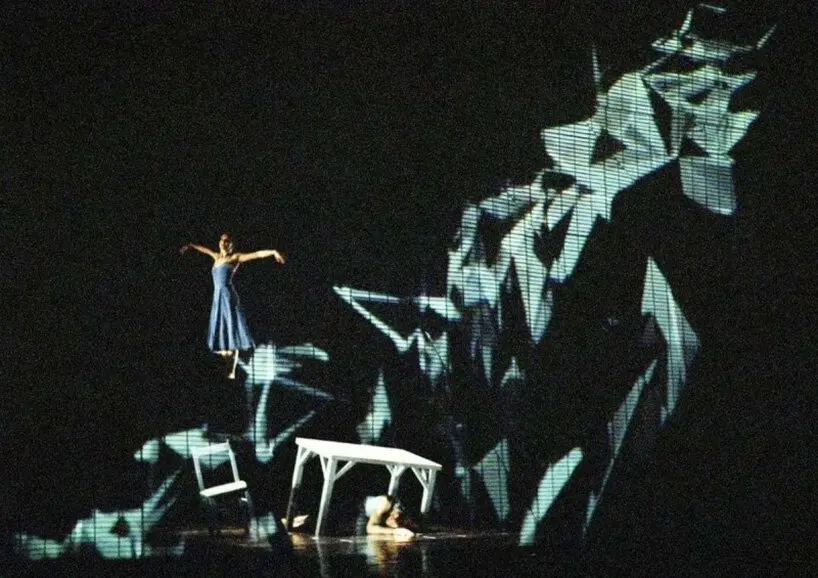
Long before virtual production walls, LED volumetric stages, and immersive mixed-reality installations became standard terminology in contemporary entertainment, a revolutionary theatrical experiment was taking shape in Czechoslovakia. Conceived by stage director Alfréd Radok and visionary scenographer Josef Svoboda, Laterna Magika first captivated international audiences at the 1958 Brussels World’s Fair (Expo 58). By fusing live performance, film projection, music, choreography, and cutting-edge stage technology into a singular artistic vocabulary, Radok and Svoboda effectively dissolved the traditional boundary separating the physical stage from the projected image.
Rather than treating film as a passive background or a simple decorative backdrop, Laterna Magika elevated the screen into an active, breathing component of the physical stage. In this groundbreaking setup, human bodies, cinematic projections, and three-dimensional space occupied the exact same visual field, forcing audiences to rethink the fundamental mechanics of spectatorship, architectural space, and spatial storytelling.
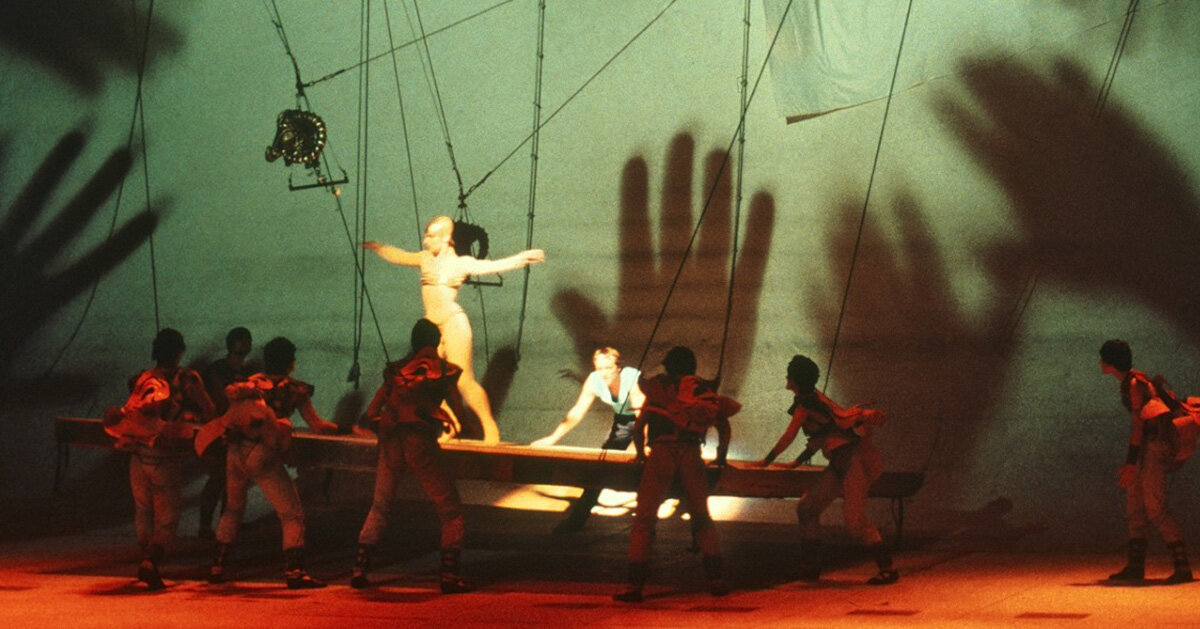
Laterna Magika Made the Screen Part of the Stage
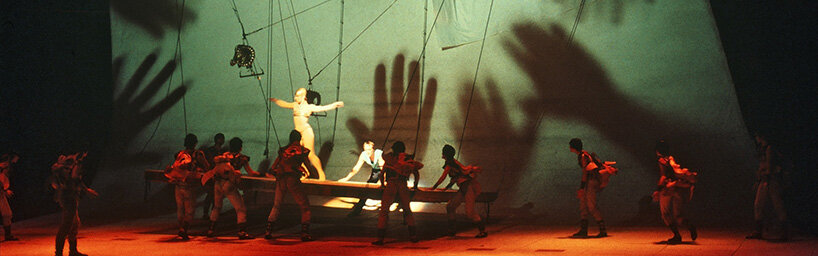
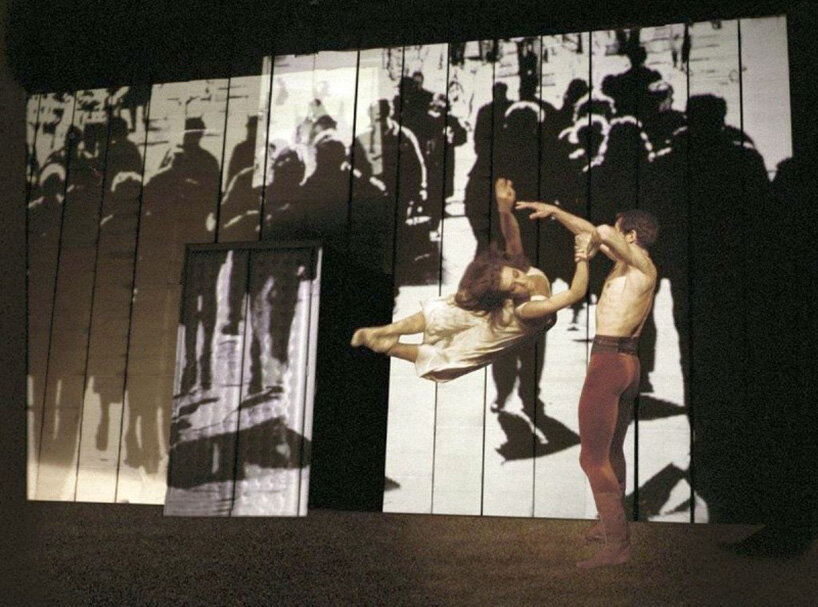
At its core, Laterna Magika was driven by a deceptively simple yet radical premise: that a filmed image could interact with a live performer on stage as though they inhabited the exact same physical reality. In the original Expo 58 program, this concept was executed with breathtaking precision. Filmed figures appeared to converse seamlessly with actors performing live on the boards, while complex cinematic sequences were meticulously timed to match live acting, musical arrangements, and choreography.
The screen ceased to be a flat boundary and instead became an active participant in the narrative drama. Projected visuals could respond directly to a performer’s movements, extend the physical boundaries of a room, or introduce alternative versions of the same space, all while the physical, tangible stage remained fully visible to the viewer. For the audience, watching a Laterna Magika performance required an entirely new mode of cognitive engagement. Spectators had to navigate multiple layers of reality simultaneously, balancing their attention between the flesh-and-blood performers in front of them and the glowing projections unfolding on the screen.
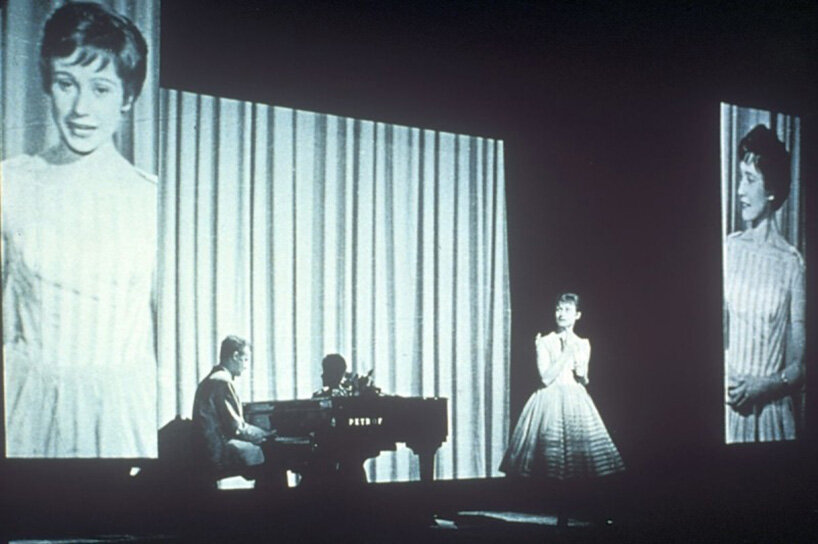
Examining Laterna Magika today, this pioneering methodology feels strikingly prescient. In an era where screens of every scale—from architectural media facades and museum installations to public spaces and digital theaters—permeate nearly every physical environment, Svoboda and Radok’s early experiments offer a profound blueprint. They were among the first to explore the profound psychological and spatial consequences of granting projected images a physical role within a built environment, establishing a paradigm where the performer and their digital double are understood as two inseparable parts of a unified scene.
Josef Svoboda and the Architecture of the Image
To understand the genesis of Laterna Magika, one must look closely at the career and philosophy of Josef Svoboda. Working at Prague’s National Theatre from the late 1940s onward, Svoboda eventually rose to become the head of its artistic and technical operations. In this role, he systematically pushed the theater’s workshops toward a vastly more ambitious, technologically sophisticated model capable of supporting increasingly complex scenographic visions. His approach rejected the traditional notion of painted flats and static backdrops, treating light, projection, kinetic movement, and technical infrastructure as active, living components of the theatrical ecosystem.
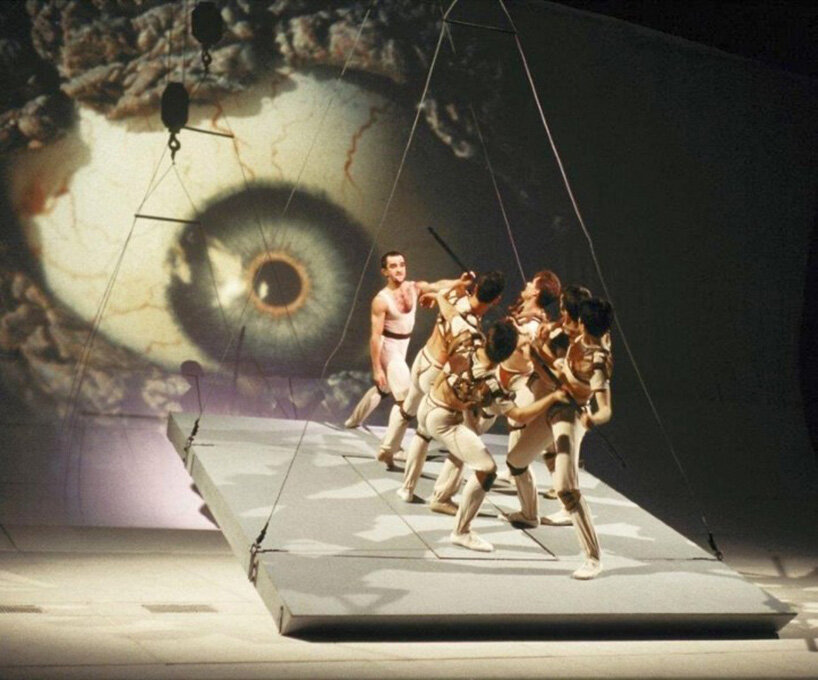
His fateful collaboration with Alfréd Radok for the Czechoslovakian pavilion at Expo 58 emerged organically from this broader quest to expand the expressive boundaries of scenography. Together, they engineered an intricate interplay between live action and filmed sequences where the projected image could either heighten, complement, or actively contradict the live events unfolding on stage. This generated a demanding visual language that relied entirely on split-second timing and flawless technical coordination across multiple disparate media.
The National Theatre would later recognize Laterna Magika as a direct evolution of these foundational principles, with each subsequent production exploring novel ways to bridge the gap between physical space and projected imagery. Concurrently, Svoboda’s restless intellect was also investigating the underlying technical apparatus required to make these illusions possible. His parallel work on Polyekran—a pioneering system that combined multiple independent projection surfaces into a unified, larger-scale image composition—was developed around the same period. While the National Theatre draws a careful institutional distinction between Polyekran as a purely technical framework and Laterna Magika as a complete theatrical form, both belonged to Svoboda’s comprehensive, lifelong investigation into how projected media fundamentally alters human perception of space.
A Theater Built Around Spectatorship
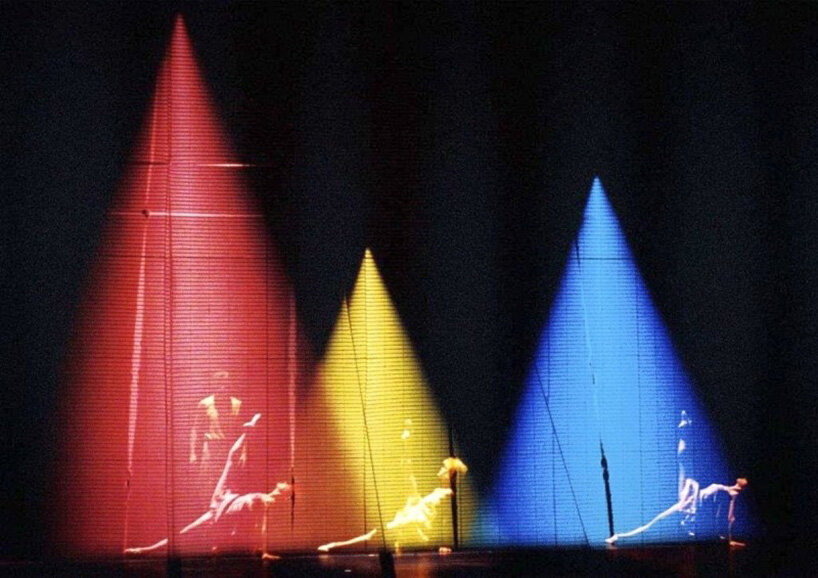
When viewed through the lens of contemporary scenography, Laterna Magika belongs to a rich historical lineage that treats the theater as an architectural instrument capable of directing, shaping, and manipulating human attention. By compelling the audience to oscillate dynamically between what is physically present and what is virtually projected, the medium fundamentally reconfigured the role of the spectator.
In a Laterna Magika production, the audience cannot simply sit back and consume a linear narrative; they are tasked with reading the stage as a complex text. Movement, light, physical architecture, and projected film work in constant concert to determine what is seen, how it is interpreted, and where the eye is guided. The stage ceases to be merely a container for actors and becomes an active, responsive spatial agent.
From Expo Spectacle to an Evolving Theater
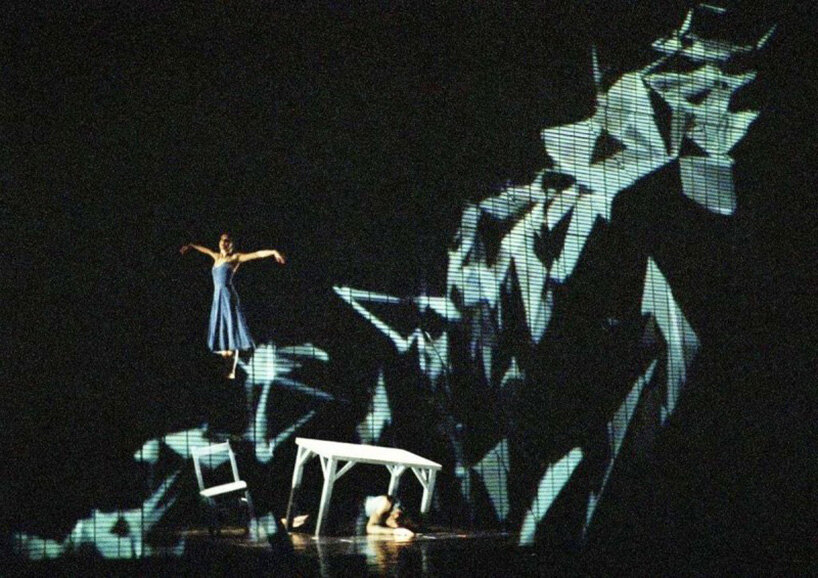
Although the inaugural program was originally engineered to meet the high-stakes representational demands of an international exposition, the theatrical language forged by Radok and Svoboda proved too vital to vanish with the closing of the Brussels fair. In May 1959, Laterna Magika was formally established as an independent artistic company within Prague’s National Theatre.
Initially, the ensemble mounted fast-paced, revue-style programs that showcased its dazzling technical wizardry. Over time, however, the company evolved organically, developing longer, more substantive narrative productions and expanding its artistic repertoire. Among its most celebrated and enduring achievements is Wonderful Circus, which premiered in 1977 and remains an active part of the company’s repertoire to this day. The arrival of Wonderful Circus marked a decisive shift toward multi-themed, highly cohesive theatrical storytelling, proving that Laterna Magika was far more than a fleeting technical novelty.
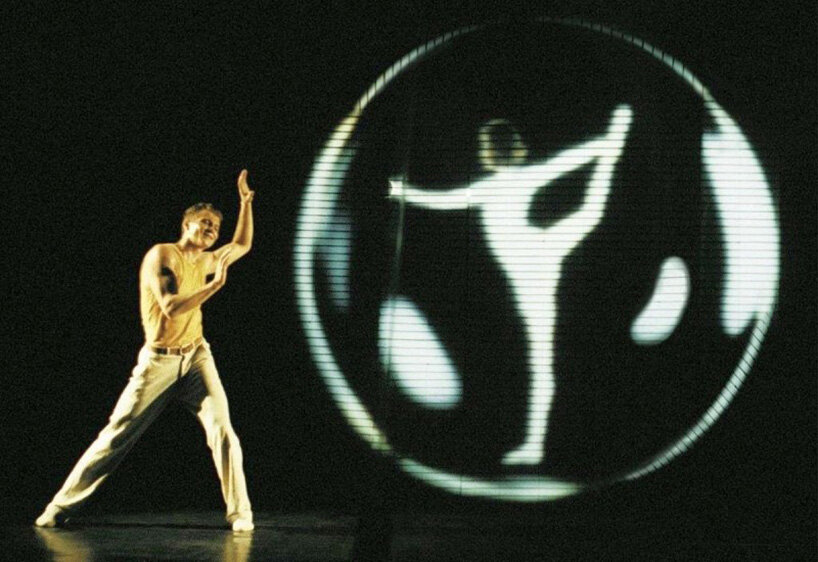
Svoboda assumed the role of Laterna Magika’s artistic director in 1973 during a crucial period of internal transition, remaining intimately tied to its artistic evolution for the remainder of his professional career. His formidable influence also shaped the physical architecture designed to house the company. During the master planning and construction of Prague’s landmark New Stage in the early 1980s, Svoboda fought tirelessly to ensure the building was specifically engineered to accommodate Laterna Magika’s unique technical and spatial requirements.
When the New Stage finally opened its doors in 1983, it provided Laterna Magika with a permanent, purpose-built architectural home. This rare symbiosis—where a specific form of experimental scenography directly helped generate the architectural conditions required for its own survival and growth—stands as one of the most remarkable achievements in modern theater history.
The Stage After the Stage
Revisiting the history of Laterna Magika today reveals just how deeply contemporary performance art, architecture, and exhibition design remain engaged with the very questions Svoboda and Radok posed decades ago. In an era defined by advanced video mapping, massive LED display systems, virtual production environments, and responsive architectural lighting, the experiments of the mid-20th century no longer look like isolated historical anomalies. Instead, they appear as the vital opening chapters of an ongoing, evolving technological conversation.
What remains most striking is how much of this modern dialogue was already fully articulated within the framework of Laterna Magika. While the underlying hardware has shifted from analog film projectors to digital servers and high-resolution panels, the fundamental dynamic remains remarkably unchanged: a live human performer shares a physical space with a projected image, that image radically alters our spatial perception, and the viewer must reconcile both realities simultaneously.
Looking back at these foundational works offers a clearer understanding of how the digital and the physical first merged in public space, long before screens became an inescapable part of our everyday environments. Svoboda’s uncompromising approach to scenography—treating the stage as a fluid, kinetic entity capable of transformation through light, movement, and projection—provides an enduring reference point. As screens continue to embed themselves ever deeper into the architecture of our modern world, Laterna Magika remains a masterclass in how humanity first learned to bridge the gap between the physical stage and the projected image.