



Birds have long been recognized as industrious builders, but a growing body of contemporary research reveals that their construction habits are evolving in tandem with human civilization. From the incorporation of discarded municipal scraps and military debris to the subversion of hostile urban architecture, avian nests are increasingly pointing toward a shared model of construction shaped across species. This phenomenon is altering how designers, architects, and researchers understand the concept of authorship, transforming the bird’s nest into a profound model for posthuman architecture.
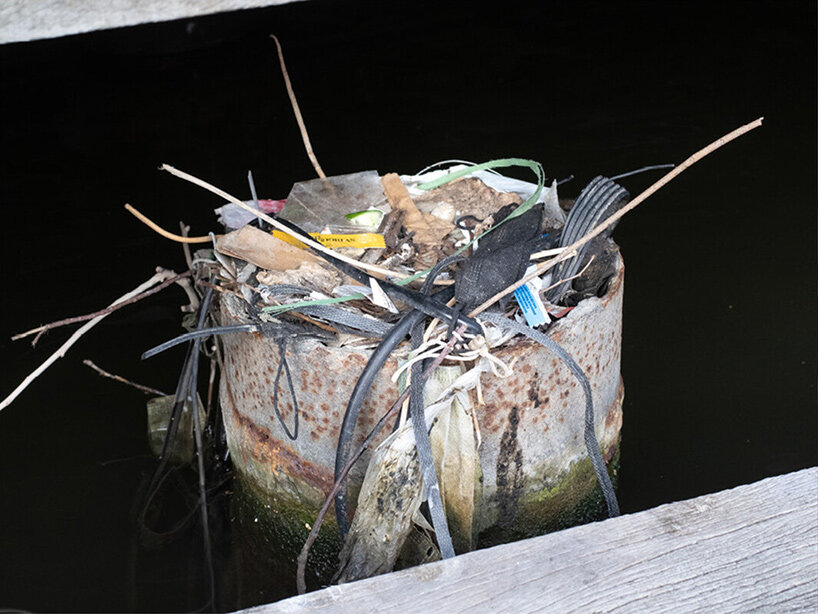
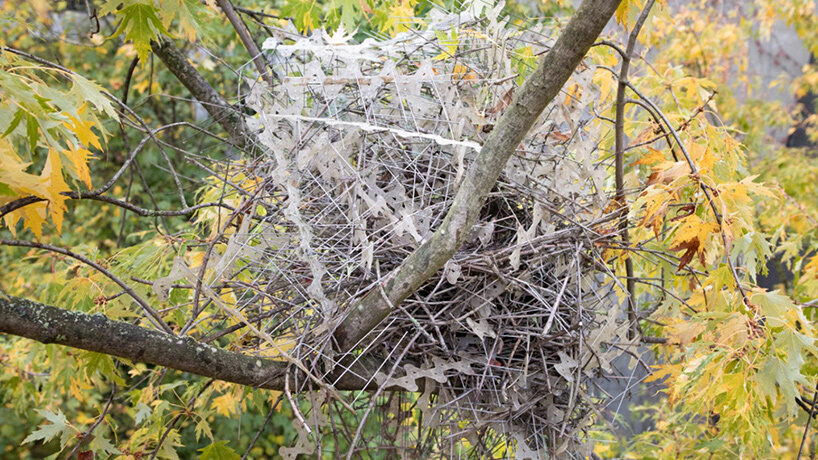
In recent years, these interspecies collaborations have yielded increasingly striking examples. Wire, plastic, fabric, and other discarded urban materials routinely find their way into nests, where they are salvaged and given new utility. Yet, as human environments shift, so too do the materials selected by avian builders. Along the front lines of the conflict in Ukraine, birds have been documented weaving fiber-optic cables discarded by military drones into their nests, creating an uncanny intersection of modern warfare and natural shelter. Similarly, in European cities, carrion crows and Eurasian magpies have begun tearing anti-bird spikes directly off building facades, repurposing the defensive hardware to line their own homes.
These structures offer a literal model for posthuman architecture, one where authorship belongs across species. Humans manufacture the materials, consume resources, and fundamentally alter the landscape, while birds actively gather, select, and reorganize what they find. The resulting nest takes shape somewhere between human intention and animal adaptation, documenting the physical reality of the era in real-time.
Birds Build with the Anthropocene
The deep connections between avian construction and human consumption are the focus of recent academic research. In his 2026 paper, Feathered Architects: Collecting Histories of Anthropogenic Material in Birds’ Nests, historian Matthew Holmes examines how animal dwellings mirror human eras. Holmes argues that looking closely at birds’ nests and the items woven within them occasionally rewards the observer with a precise snapshot of the present state of the Anthropocene.
Human consumption and waste have become deeply entangled with animal survival, leaving indelible traces of changing technologies inside structures built by birds. This phenomenon extends far beyond contemporary plastic pollution. During the Dust Bowl era in the United States, American crow nests constructed from barbed wire offered a stark visual indicator of an agricultural landscape stripped of its native vegetation.
Today, synthetic materials tell entirely different stories, with research suggesting that manufactured items are sometimes preferred over natural alternatives due to their durability. In Amsterdam, researchers studying Eurasian coots have documented layers of plastic waste accumulating within nests that persist across multiple seasons. Traditionally, a coot’s building cycle depended heavily on seasonal vegetation that would naturally decompose between breeding periods. However, the introduction of persistent synthetic polymers has dramatically extended the lifespan of these structures. Investigations into canal-side nests in the Netherlands have revealed an extensive plastic stratigraphy spanning decades, reflecting the shifting composition of urban waterways.
Hostile Architecture Becomes Habitat
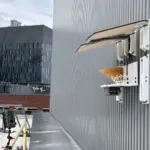
Perhaps the most striking reversal of human design intent can be found in urban centers across Europe, where corvids have weaponized human attempts at exclusion. Anti-bird spikes, installed by property owners to deter pigeons and gulls from landing on ledges and cornices, are being systematically dismantled by carrion crows and magpies.
A magpie nest discovered in Antwerp, Belgium, famously utilized hundreds of metal anti-nesting spikes across its outer perimeter, with the razor-sharp points facing outward. Ornithologists and urban ecologists suggest that the metal serves a functional purpose very similar to thorny branches, helping to defend eggs and vulnerable chicks from predatory birds and mammals. An object meticulously engineered to exclude wildlife from human architecture has effectively been co-opted to become wildlife architecture itself, turning hostile urban planning into secure natural habitat.
When Architects Begin Studying the Bird
As birds adapt to human-made materials, the intellectual exchange is increasingly moving in the opposite direction. Architects and designers are beginning to look closely at avian construction techniques to inform their own professional practices. In Chicago, the ongoing exhibition Best Nest: Design for Nature and Culture explores how bird construction has directly informed architect Jeanne Gang and her studio’s design process.
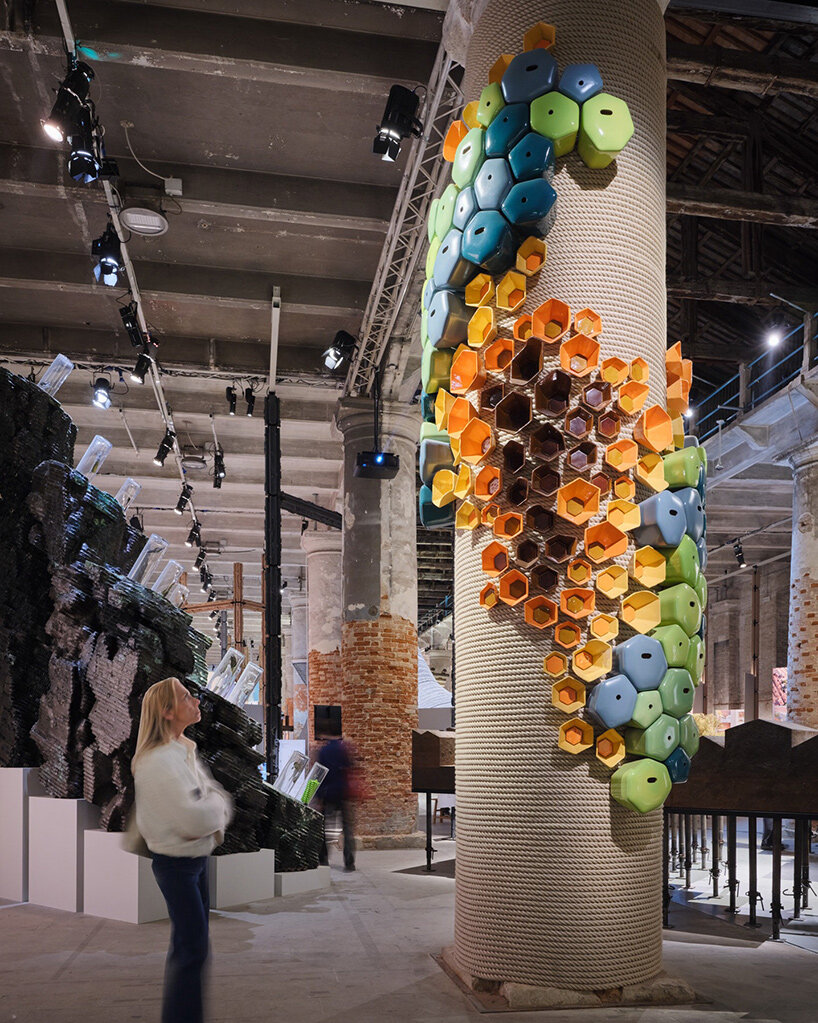
The exhibition features detailed drawings and models sitting alongside physical objects, including more than seventy ceramic nesting vessels originally developed for The Living Orders of Venice installation at the 2025 Venice Architecture Biennale. The showcase approaches the nest as a sophisticated form of architectural intelligence. Different avian species build according to their unique bodily dimensions and specific environmental pressures, producing structural geometries that respond directly to the demands of inhabitation. Studio Gang translates these empirical observations into full-scale building projects and specialized habitat structures designed to support urban wildlife.
This exhibition runs concurrently with Flyway City at the Chicago Architecture Center, where Studio Gang directs its attention toward the realities of cities shaped by seasonal migration, avian vision, and the continuous hazards posed by glass architecture. Together, these exhibitions place birds on both sides of the architectural equation: humans study the intricate structures that birds make while simultaneously rethinking the vast urban landscapes that birds must navigate.
Leaving the Architecture Unfinished
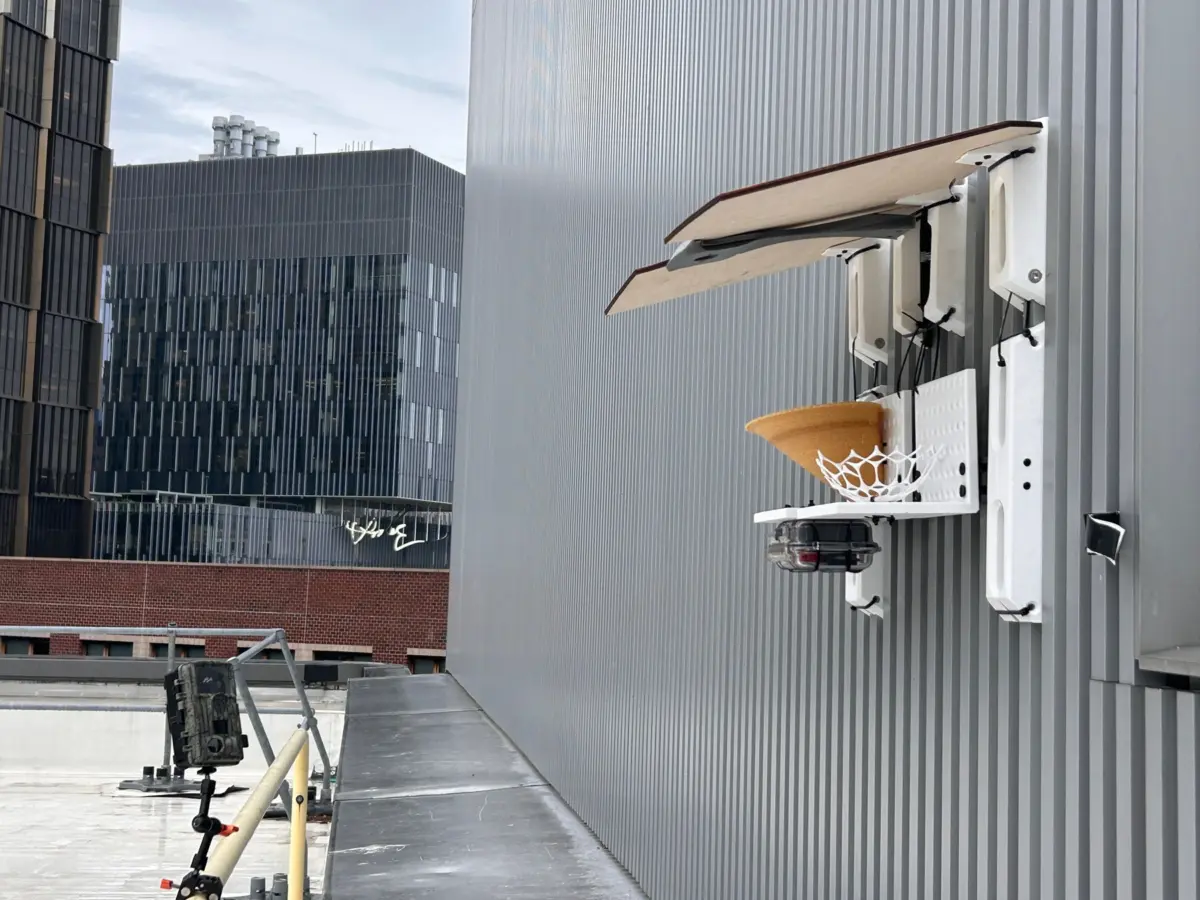
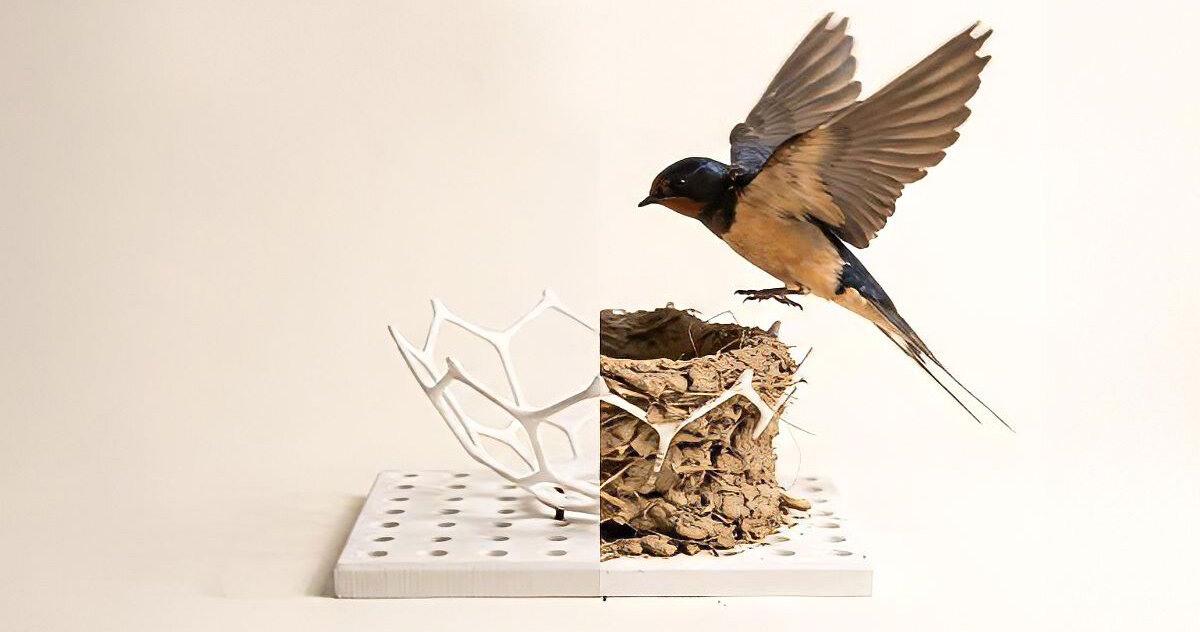
This collaborative design philosophy is being pushed even further through academic research initiatives such as the MIT-LUMA Lab’s Bird+House project. Developed by Hiroshi Ishii, Lucy Li, and Hye Jun Youn in collaboration with the Cornell Lab of Ornithology, the 2026 initiative seeks to create 3D-printed nesting structures for barn swallows, a species facing habitat loss as traditional barns and rural structures disappear from the landscape.
The research team began by executing 3D-scans of existing swallow nests, carefully analyzing their precise dimensions before printing open-ended architectural scaffolds using locally sourced biomaterials. A critical insight of the project is that barn swallows routinely reject artificial birdhouses that are fully completed by humans. To overcome this, the Bird+House framework deliberately stops halfway.
By providing a structural scaffold and leaving the final phase of construction to the bird, the project alters the traditional dynamic between human creators and animal inhabitants. Rather than delivering a finished, static object awaiting passive occupation, the design ensures that occupation continues the act of construction. The human architect provides just enough framework to make coexistence possible before stepping aside for another species to finish the work.
The Nest as a Model for Posthuman Architecture
Across these diverse examples, the bird’s nest transcends its traditional definition as a simple biological shelter, emerging instead as a compelling model for interspecies design. Birds routinely transform industrial plastics and defensive urban hardware into structural components. Architects study these biological forms as legitimate reservoirs of design knowledge, while advanced laboratories experiment with incomplete 3D-printed scaffolds that rely on non-human intervention for completion.
Viewed through the lens of the nest, posthuman architecture has little to do with mimicking organic curves or superficially borrowing the aesthetic of animal dwellings. Its more radical proposition centers squarely on the question of authorship. Human buildings exist inside landscapes that are already occupied, negotiated, and continually altered by other organisms—whether human architects choose to acknowledge those relationships or omit them from their blueprints.
The image of a magpie building its home out of anti-bird spikes makes that shared world impossible to ignore. Human architecture attempted to dictate the boundaries of urban wildlife, only to have its own structures dismantled and rewoven into the fabric of the natural world.