





THE HAGUE — Prime Minister Rob Jetten’s minority government will remain in office after successfully navigating a severe four-day political crisis. Following intense negotiations that ultimately resulted in a mutual "restoration of trust," the three governing coalition parties have agreed to patch up their bitter row over the contentious 2027 tax plan and continue governing together.
The breakthrough was announced on Monday night by the centrist D66, the right-wing liberal VVD, and the Christian Democratic Appeal (CDA). According to public broadcaster NOS, the coalition partners concluded that "intensive talks" had mended enough fences to preserve the current administration, explicitly ruling out the possibility of bringing any other political parties into the governing fold to broaden their base.
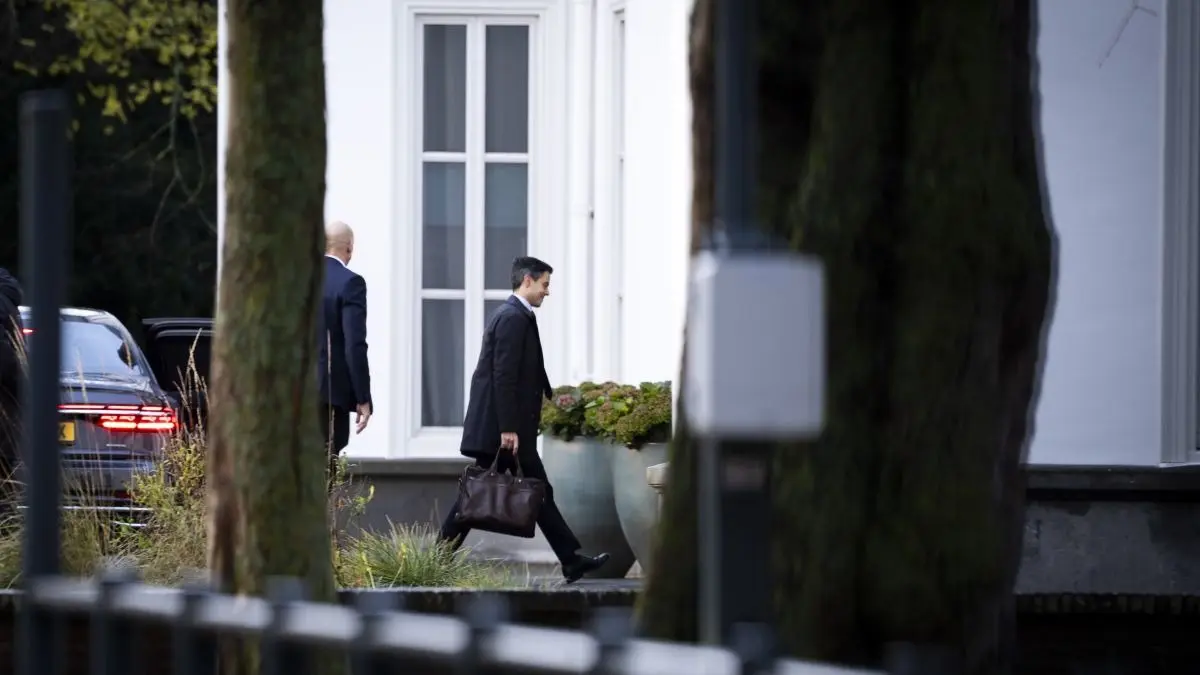
The high-stakes announcement was formally delivered by the government information service RVD at approximately 10:00 PM. The declaration followed more than nine hours of grueling, behind-closed-doors negotiations at the Catshuis, the official residence of the Dutch prime minister in The Hague.
The Tax Deal Row That Triggered the Collapse Threat
The profound political fracture began when D66 and the CDA engineered a separate policy agreement with the left-wing opposition party PRO and the pan-European movement Volt. That unauthorized accord aimed to salvage the broader national budget by raising the wealth tax by €1 billion, utilizing the newly generated revenue to fund targeted income tax cuts for citizens.
However, the VVD fiercely opposed the arrangement, arguing that the maneuver directly violated the foundational rules of the coalition agreement. The friction culminated on Thursday when VVD members of parliament took the extraordinary step of voting against their own cabinet’s comprehensive tax plan. The legislation scraped through the legislative chamber by the absolute narrowest of margins, surviving with just 76 votes in the 150-seat parliament.
The situation deteriorated further the following day when Deputy Prime Minister Dilan Yeşilgöz, representing the VVD, publicly branded the minority cabinet a "failed experiment." She asserted that the administration was in desperate need of a "fundamental reset." In response, Prime Minister Jetten emphasized that the allied parties had to engage in frank, fundamental discussions to resolve underlying grievances on a substantive, political, and personal level.
To heal the deep wounds, the party leaders spent the weekend sequestered at the secluded De Zwaluwenberg estate in Hilversum, before relocating their deliberations to the Catshuis on Monday. According to NOS reporting, the leaders seriously weighed more drastic measures during their retreat, including completely breaking up the coalition or attempting to carry on with a truncated administration without the VVD. Ultimately, both radical options were abandoned in favor of reconciliation.
Opposition Demands Answers and Parliamentary Debate
Opposition leaders were quick to react with sharp skepticism and concern once news of the fragile truce broke. PRO leader Jesse Klaver immediately labeled it "totally irresponsible" for the VVD to vote against its own cabinet’s primary tax blueprint.
"The big question for the whole country is: do we still have a cabinet?" Klaver stated, questioning the governing viability of an administration plagued by such deep internal divisions. He immediately called for a formal debate in parliament to hold the executive branch accountable.
Despite the political turbulence, key economic and institutional stakeholders voiced a strong preference for stability. The local authorities’ association VNG, backed by the logistics lobby Evofenedex and the property developers’ association Neprom, had already publicly urged the cabinet to iron out its internal differences and successfully serve its full legislative term rather than plunging the country into a paralyzing political campaign.
Ministers are scheduled to convene for an extra cabinet meeting on Tuesday morning to receive a comprehensive briefing on the exact parameters of the agreement brokered over the weekend. Following that internal meeting, Prime Minister Jetten, alongside his deputy prime ministers Dilan Yeşilgöz of the VVD and Bart van den Brink of the CDA, are expected to step forward to publicly explain the details of the deal.
Parliamentary leaders have signaled that a full debate on the survival and future direction of the cabinet will likely take place on Wednesday, following the formal request lodged by Klaver.
Navigating a Fragile Legislative Majority
To prevent future legislative standstills, the three coalition parties have taken the strategic step of bringing in Sybrand Buma, the vice-president of the Council of State and a former leader of the CDA. Buma has been appointed to assist the administration in forging reliable working agreements with various opposition parties regarding the broader state budget. Sources in The Hague have clarified that Buma’s role will be strictly advisory; he will provide strategic counsel and help navigate parliamentary dynamics rather than directly negotiating deals himself.
The underlying structural challenge facing Jetten’s government remains acute. The three-party coalition controls a mere 66 out of the 150 seats in the lower house of parliament, meaning it is fundamentally dependent on securing votes from outside the coalition in both legislative chambers to pass any meaningful legislation.
With the political crisis temporarily averted, attention will now pivot toward the upper house, where the senate is scheduled to cast its crucial vote on the controversial 2027 tax plan during the final week before Christmas.