




When it comes to household cleaning gadgets, few appliances generate as much debate over their utility as the steam mop. For years, manufacturers have marketed these heated devices as the ultimate solution for sparkling floors, promising chemical-free sanitization and effortless stain removal. However, according to long-running appliance evaluations and expert testing by reviewers who have tracked the category since 2016, the reality of steam mopping is far more nuanced. Most households simply do not need a steam mop, and using them incorrectly can lead to irreversible damage to certain flooring types.
Despite these limitations, a well-chosen steam mop can still serve as a valuable specialty tool for specific environments. For homeowners managing high-traffic tiled kitchens, multiple bathrooms, or busy mudrooms where children and pets track in daily dirt, a steam mop offers a practical alternative to heavy, cumbersome mop buckets. Furthermore, for households dealing with immunocompromised family members or infants, the intense heat generated by steam can provide substantial peace of mind by aiding in the elimination of surface germs and bacteria.
Evaluating the true value of these appliances requires looking past marketing claims. Testing various models against challenging everyday messes—such as dried pasta sauce, raw eggs, Nutella, cosmetics, and simulated mud and pet accidents—reveals that while steam mops consistently lift invisible daily grime and tackle stubborn stains without manual scrubbing, they struggle significantly with wet messes. Rather than absorbing liquid spills, most steam mops merely push wet messes across the floor, making a traditional mop or a simple paper towel a far superior choice for fresh spills.
When it comes to sanitization claims, consumers should also manage their expectations. While scientific and anecdotal observations confirm that steam can kill germs and viruses through sustained heat exposure, achieving the advertised 99.9% reduction typically requires holding or moving the mop slowly over a specific area for several minutes. For routine cleaning, however, the combination of moisture and heat offers an effective way to sanitize sealed tile and stone surfaces.
How the Best Steam Mops Are Tested and Evaluated
Reviewing the current market requires rigorous testing across multiple performance metrics, including cleaning speed, ease of maneuvering, heat-up time, and long-term durability. In laboratory and real-world testing environments, reviewers examine how quickly a device can dissolve stuck-on debris and whether its design reduces physical strain on the user.
One of the most critical design factors is the method of steam delivery. Models that feature a continuous, steady steam output are generally preferred over trigger-operated alternatives. A steady stream allows the user to rest the mop head over a particularly stubborn spot without fatiguing their hand and arm by holding down a continuous trigger.
Weight and agility also play major roles in user satisfaction. The best-performing units are lightweight enough to lift easily, feature pivoting heads that navigate around table legs and tight corners, and possess a low-profile design capable of sliding flat underneath low furniture. Additionally, appliances that reach operational temperatures within seconds and offer adjustable intensity modes provide a more efficient cleaning experience than those requiring lengthy warm-up phases.
Price is another major consideration in appliance evaluation. Because steam mops occupy a narrow niche in home maintenance, experts advise against overspending. Many top-tier models that balance durability, cleaning power, and ease of use typically retail for under $100.
The Top Pick: Bissell PowerFresh Steam Mop 1940
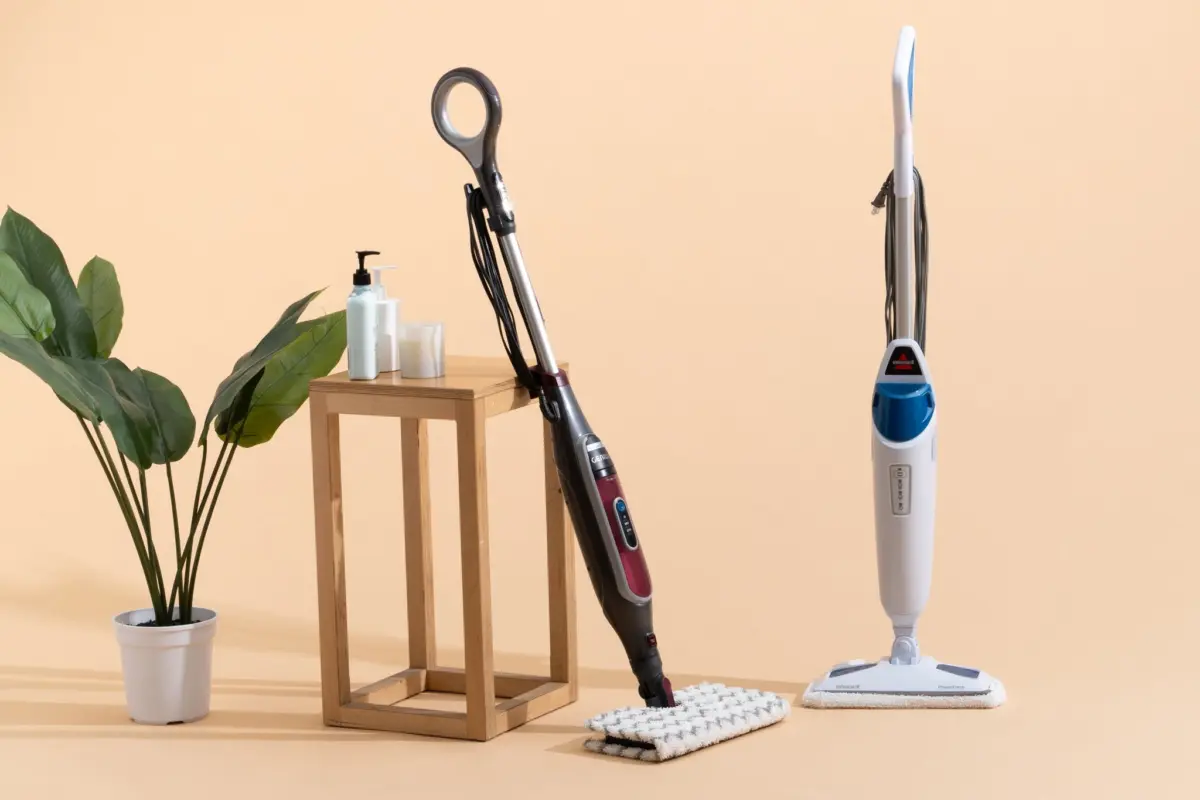
Among the dozens of models evaluated over nearly a decade of testing, the Bissell PowerFresh Steam Mop 1940 remains the definitive top choice for consumers who have determined that a steam mop fits their household needs. Maintaining its position as an industry favorite since 2016, this model offers the strongest combination of performance, affordability, and user-friendly design.
Weighing in at a nimble 6.5 pounds, the Bissell PowerFresh is among the lightest full-sized cleaners available. Its pivoting head and slim profile allow it to maneuver effortlessly around obstacles and lie nearly flat to reach underneath couches and cabinets. Unlike many competing models that feature fixed water reservoirs, the Bissell includes a detachable water tank that can be easily filled directly at the tap and removed between uses to air-dry, preventing mold, mildew, and unpleasant odors from developing inside the machine.
Operation is straightforward and rapid. After filling the tank, plugging in the unit, and selecting a steam intensity setting, the appliance reaches working temperature in approximately 20 seconds. Depending on the chosen intensity level, the tank provides roughly 20 to 30 minutes of continuous steaming time. For extra-stubborn spots on tile or light discoloration on grout lines, a rear-mounted scrub brush provides helpful physical agitation to speed up the cleaning process. Furthermore, the unit features a self-standing design, allowing users to pause mid-clean without needing to prop the appliance against a wall.
While the Bissell PowerFresh excels in most categories, it does have minor limitations. Like nearly all steam mops, it requires a brief cooling period before the microfiber cleaning pad can be safely removed and replaced—a minor inconvenience when tackling exceptionally large floor plans that require multiple pad changes due to accumulated grime.
The Competition and Market Alternatives
The broader steam mop market includes a wide variety of designs, ranging from multi-functional hybrids to budget-oriented alternatives. The Bissell PowerFresh Slim 3-in-1 Sanitizing Steam Mop offers a thinner profile and a detachable handheld steam cleaner, but its higher price point makes it difficult to justify unless a portable handheld unit is specifically desired.
Lower-priced models, such as the Black+Decker HSM13E1, often suffer from build-quality issues, including handles that frequently disconnect during use and non-detachable water reservoirs that complicate filling and drying. Similarly, combination appliances like the Shark Steam Pickup 3-in-1 Hard Floor Cleaner attempt to bridge the gap between vacuuming and steam mopping, but ultimately struggle to perform either function with high efficiency, often leaving floors dripping and requiring unpleasant maintenance of damp debris bins.
Other alternatives, such as the Shark Steam and Scrub S8201 and the Bissell SpinWave 3897A, incorporate spinning mop pads. While these models offer easy maneuverability and can clean dried stains slightly faster in certain scenarios, their larger pad sizes make reaching tight corners difficult. Furthermore, sticky substances can temporarily hinder their spinning mechanisms, and their motorized pads occasionally catch on their own power cords during operation, requiring extra vigilance from the user.
Care, Maintenance, and Flooring Precautions
Proper maintenance ensures that a steam mop and its accessories remain hygienic and functional over time. Microfiber mop pads are machine-washable and can endure numerous cleaning cycles before requiring replacement. To maintain household hygiene, water tanks should be emptied and left open to air-dry completely after every cleaning session.
Consumers must also exercise caution regarding the types of flooring exposed to steam. While manufacturers frequently market steam mops as suitable for sealed hardwood floors, professional flooring installers and wood warranty providers strongly advise against their use. The combination of sustained high heat and residual moisture can warp, discolor, and degrade wooden floorboards over time, stripping away protective finishes and bypassing manufacturer warranties. Traditional mops used in conjunction with specialized wood cleaning solutions remain the safest method for maintaining hardwood.
Similarly, claims that steam mops can sanitize or clean carpets are generally overstated. Rather than lifting deep-seated dirt from soft surfaces, steam mops tend to spread stains and introduce excess moisture into rug fibers. For proper rug and carpet maintenance, homeowners are better served by dedicated upright carpet cleaners or portable spot-cleaning machines.