




Who truly understands the intricate struggles, creative triumphs, and relentless pressures of a professional designer better than another designer? That foundational question serves as the core concept behind ROOM’s ongoing “Designers on Design” video series, a platform that pairs leading creatives together for unscripted, open conversations focusing on the future of architecture, interior design, and human connection within the built environment.
When ROOM first conceptualized and launched the series, the objective was remarkably straightforward yet difficult to achieve in standard media formats: create an authentic space for designers to have the kinds of deep, candid conversations that do not always happen during the rush of day-to-day operations. According to Elyse Heckman, Senior Vice President of Brand and Communications at ROOM, the production deliberately avoids typical broadcast constraints. There is no interviewer, no outside moderator steering the conversation, and no prescribed talking points. Instead, the format relies purely on bringing two brilliant creative minds together to exchange ideas, challenge each other’s perspectives, and explore the philosophical currents moving the broader industry forward.
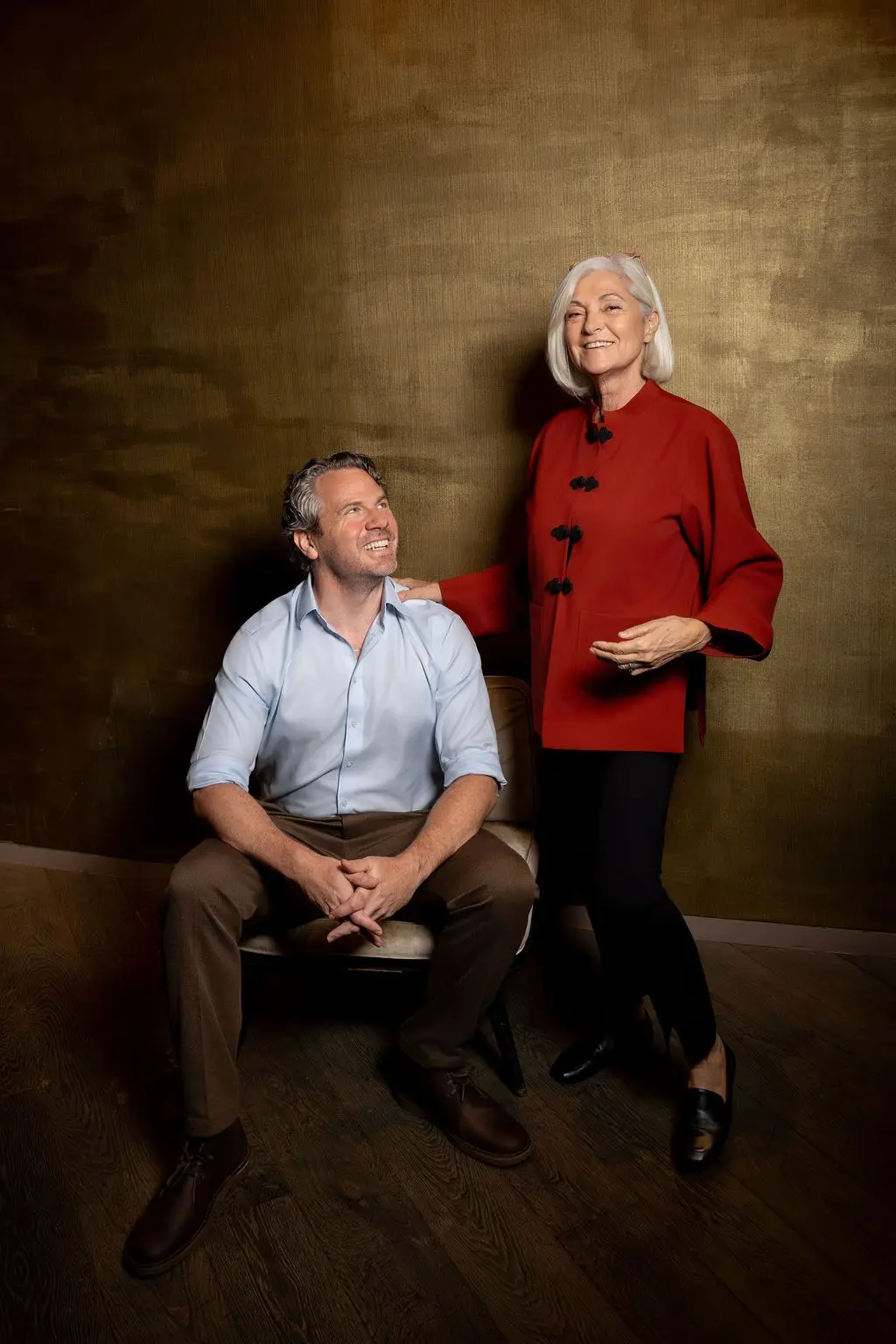
For the most recent installation of the series, ROOM turned its focus to hospitality design royalty, pairing legendary designer Anda Andrei of Anda Andrei Design with award-winning designer Matthew Goodrich of Goodrich Studio. Unlike earlier episodes of the video series, which frequently featured creatives who were meeting for the very first time, Andrei and Goodrich share a deeply established personal and professional history spanning many years. Goodrich openly attributes his initial love and understanding of hospitality design to the groundbreaking hotels Andrei helped create throughout her celebrated career, while Andrei has had a front-row seat to watch the steady, impressive evolution of Goodrich’s career from his early days in exhibition design to running his own prominent studio. Furthermore, their professional portfolios share a distinct creative symbiosis: Andrei’s recent, highly publicized renovation of the Musée Yves Saint Laurent Paris naturally aligns with Goodrich’s extensive background in museum exhibition design.
Heckman notes that shifting the casting strategy for this specific episode offered a fresh, compelling angle for the production team. Rather than introducing two designers who might be total strangers, the brand was naturally drawn to the idea of connecting two individuals who already possessed a shared history and an intimate familiarity with one another’s work. The production team embraced the unique opportunity to explore how long-standing professional relationships and mentorships shape creative perspectives, influence instinctual design choices, and ultimately help practitioners grow over the course of decades in the industry.
Tapping into the spirit of authentic, unvarnished exchange that ROOM set out to foster from the inception of the series, the duo’s conversation naturally meanders back to their first, almost-missed encounter. The anecdote dates back to 2003, when Goodrich was working to help his partner, Thomas Collins—now the Executive Director of the Barnes Foundation—open Zaha Hadid’s iconic Contemporary Arts Center in Cincinnati, Ohio. Goodrich recalls hearing the news that Andrei was scheduled to arrive at the facility in a mere twenty minutes. Overcome by the professional weight of the moment, Goodrich turned to Collins with a sense of urgency, telling him he needed to rush home immediately, take a shower, and put on a suit because Andrei’s impending arrival was an absolute big deal in the architectural world.
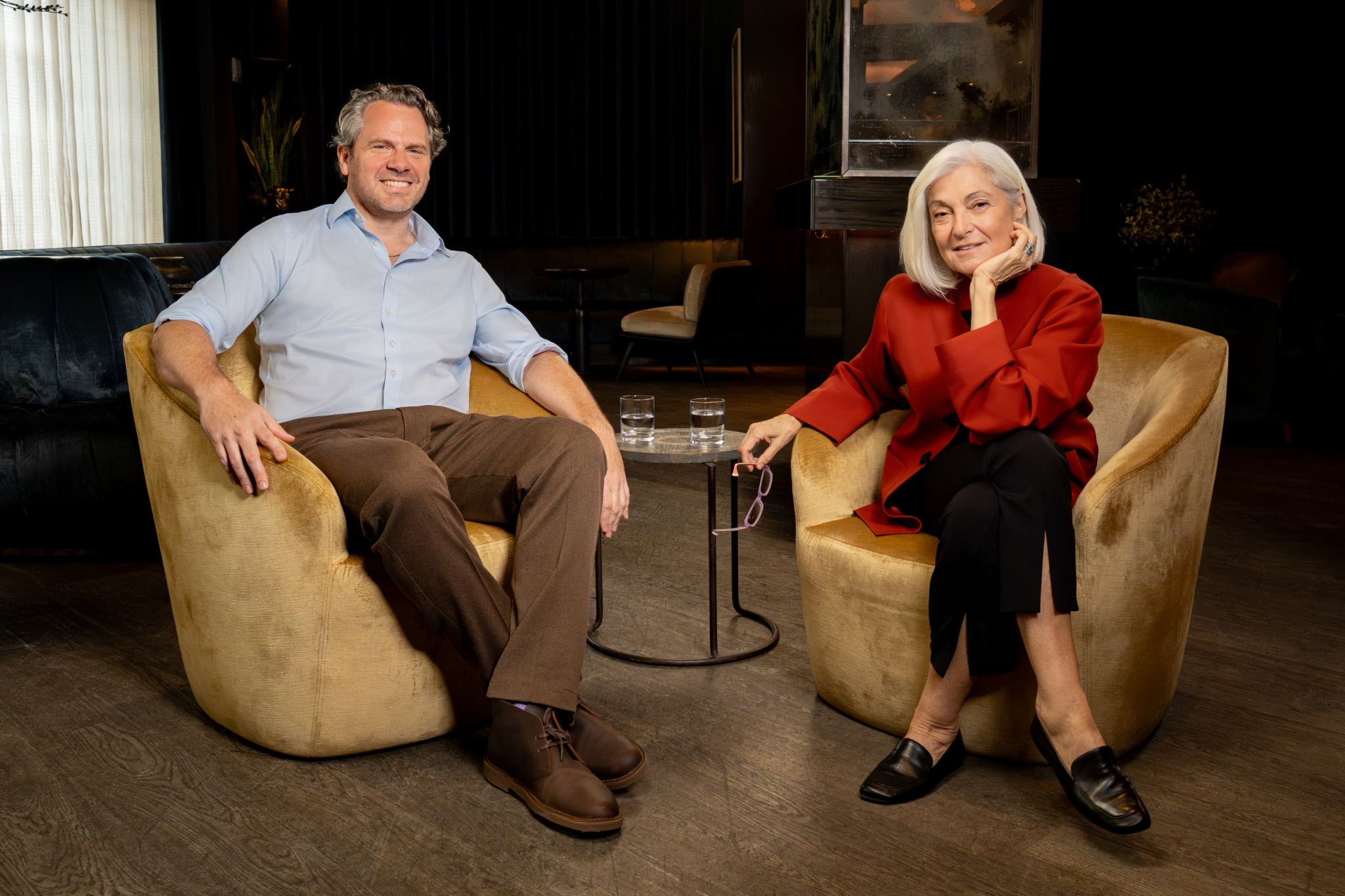
Despite that near-miss, the pair did not officially cross paths and build a working relationship until years later. The formal introduction happened after Andrei had famously departed from the Ian Schrager Company, where she spent decades shaping the boutique hotel landscape, and decided to launch her own independent firm at 59 years old. Remembering their early interactions, Andrei notes that Goodrich came to her heavily recommended by mutual peers, and she immediately wanted to hire him for her nascent enterprise. However, she recalls asking him a crucial, defining question that every aspiring hotelier must face: whether he had ever actually opened a hotel before. Goodrich had to honestly reply that he had not.
Designing, developing, and successfully launching a hotel is widely recognized as an extraordinarily complex feat—a reality that Goodrich quickly learned firsthand when he opened his very first hotel, Arlo SoHo, in New York City in 2016. During their conversation, he opened up about the immense chaos and pressure characterizing the final month leading up to a major hotel opening. Andrei, having spent nearly forty years shaping some of the most influential hospitality projects in modern history, knows that high-stress operational reality intimately well. However, she emphasizes that the design process becomes even more painful when operations begin shifting and changing after the physical design has already been finalized. Like living, breathing organisms, hospitality projects are dynamic entities that must continuously evolve alongside the staff, the changing operational needs, and the guests over many years of operation.
Despite the inevitable hurdles, stress points, and operational friction, the two designers mutually agree that these very challenges provide the most valuable, career-defining lessons. Goodrich notes that deeply understanding how day-to-day operations directly affect the commercial and experiential success of both restaurants and hotels is an absolute, non-negotiable foundation for creating truly great, enduring designs.
Shifting the conversation toward the wellsprings of creative inspiration, Andrei shares her firm belief that the best hotels must fundamentally tell a compelling story. Much like a concise elevator pitch in the business world, she firmly maintains that every major design project should be anchored by a clear, one-sentence conceptual framework. To illustrate this philosophy, she points to her legendary work on the Delano Miami Beach Hotel, which she created in close collaboration with visionary designer Philippe Starck. For that iconic property, the guiding one-liner concept was simply: “a Greek fisherman that finds a diamond in the sea.” Goodrich wholeheartedly agrees with the utility of this specific design tool, noting that having that short, evocative phrase allows a team to constantly return to the core essence of the project, making all subsequent design decisions fall naturally into place.
Throughout the entirety of the episode, a palpable sense of mutual respect and deep, abiding appreciation for each other’s creative output defines the dialogue. Goodrich fondly refers to Andrei as a superhero collaborator, while Andrei returns the compliments by praising both Goodrich’s exceptional design sensibilities and his name. Both creative professionals place a high premium on rigorous collaboration, unbridled imagination, and the value of tackling challenging, ambitious work. Heckman views the natural, affectionate connection between the two designers as clear proof of the series’ larger overarching purpose, describing it as a wonderful example of how seemingly different creative paths can intersect over time, and how the work and people we encounter early in our careers can continue to influence us in unexpected, profound ways.
Reflecting on how far their professional relationship has traveled, Andrei shares a warm memory with a laugh, noting that when Goodrich first started his own company, they had empty desks available in her office and ended up sharing space. Looking across the table at him years later, she expresses amazement that nearly a decade has passed since those early days, and they are now sitting together discussing the incredible work he has gone on to accomplish.

Moments like this highlight what ROOM’s “Designers on Design” series manages to achieve so effectively: it successfully brings the often-intimidating world of architecture and interior design down to a deeply human level. By shifting the focus away from glossy portfolio images and toward the raw ideas, lived experiences, unexpected friendships, supportive colleagues, and influential mentors who leave a lasting impact, each episode explores the genuine human stories behind the portfolio.
Heckman notes that what makes this particular episode especially compelling is how effortlessly the conversation extends far beyond the technical boundaries of design itself. The dialogue gets straight to the heart of how individuals truly become the designers they are—examining the people who influence them, the formative experiences that shape their creative instincts, and the continuous ways that inspiration is successfully passed down from one generation of visionaries to the next. In that sense, she believes the episode perfectly embodies everything the brand hoped the series would eventually become: a trusted platform for authentic exchange, unexpected perspectives, and the rich human stories behind the built work.
And the conversation may not end with the video release. Leaving the door open for future creative partnerships, Andrei mentions during the discussion that she wants to do a project together, to which Goodrich immediately responds that it is his ultimate dream as well.
The full episode featuring Anda Andrei and Matthew Goodrich is currently available to stream on ROOM’s official website.