





Medieval churches across the northern province of Groningen are facing an unexpected and alarming new threat to their structural integrity. While decades of seismic activity linked to natural gas extraction have long been recognized as the primary danger to the region’s historic architecture, a comprehensive new study reveals that prolonged summer droughts are causing ancient walls to crack, shift, and age at an unprecedented rate.
According to research reported by Dutch broadcaster NOS, specialists from the water and soil research institute Deltares and the Hanze University of Applied Sciences have been investigating how intensifying dry periods impact the ground beneath some of the region’s oldest monuments. The ongoing study specifically examines the stability of the wierden—the historic, man-made dwelling mounds upon which many ancient structures in the region were built. The research was commissioned jointly by the province of Groningen and the Old Groningen Churches Foundation, known locally as the Stichting Oude Groninger Kerken, which oversees the preservation of dozens of medieval buildings scattered across the rural landscape.
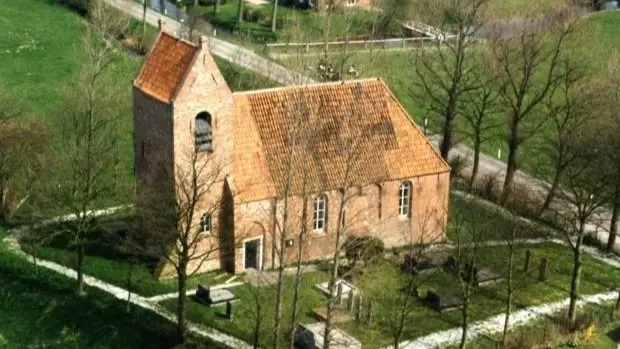
The investigation was launched following an alarming resurgence of structural damage at the historic church in Oostum, a small, picturesque settlement situated northwest of the city of Groningen. In 2018, fresh cracks began to appear in the masonry of the 13th-century building, just two years after repairs had been completed on damage previously attributed to local earthquakes. Intriguingly, regional seismicity had dropped significantly, and no major earthquakes had shaken the area in the intervening period. Yet, despite the relative seismic quiet, the physical damage to the historic structure continued to worsen, prompting heritage conservationists and geotechnical experts to look deeper into the root causes of the deterioration.
The stakes for local heritage are exceptionally high. The nave of the church at Oostum has stood proudly against the elements for roughly 800 years, serving as a steadfast anchor for the surrounding rural community and a prime example of medieval brick architecture in the northern Netherlands. However, the cumulative pressures of modern environmental and mechanical changes have brought the building’s long-term survival into question. Floris Boogaard, a researcher involved in the study, offered a sobering assessment of the situation to NOS, noting that it is no longer a given that the ancient structure will endure for another eight centuries, as it is currently aging at a severely accelerated pace.
To understand the mechanics behind the worsening cracks, the research team conducted a series of detailed laboratory tests and site analyses. Their findings point directly to the complex composition of the soil beneath the foundations. The Oostum church, much like other historic buildings in the low-lying province, rests on layers of clay that possess a high capacity for volume change. This specific type of clay swells significantly when saturated with moisture, but contracts and shrinks severely during extended periods of drought. Beneath or alongside these clay layers lie deposits of peat, which undergo a destructive process of oxidation and compaction when groundwater tables drop below normal historical levels.
The researchers emphasize that the structural distress visible in Groningen’s medieval churches cannot be attributed to a single factor. Instead, the buildings are subjected to a compounding combination of environmental and anthropogenic pressures. Increased heavy traffic on nearby rural roads, ongoing alterations to the immediate landscape and drainage systems, and historical earthquakes all contribute to the mechanical stress experienced by the aging masonry. However, among all these variables, drought stands out as the only major factor that has shifted dramatically in frequency and intensity in recent years, aligning directly with the acceleration of visible cracking in the historic walls.
The shifting climate patterns across Western Europe are playing a direct role in the deterioration of these cultural assets. Long dry spells, which were once relatively rare or short-lived, have become a recurring feature of the Dutch summer climate. Boogaard highlighted the stark contrast between historical weather patterns and modern extremes, pointing out that prolonged dry periods, such as the severe two-month drought recorded in 2018, exert immense physical stress on the ground and the foundations resting upon it. Subsequent summers, including the exceptionally long dry spells observed more recently, have continued to sap moisture from the soil, preventing the ground from recovering its baseline stability.
While the two-year study is still actively underway, the participating scientists emphasize that longer-term observation and data collection will be required before definitive, comprehensive conclusions can be finalized. Nevertheless, the preliminary findings serve as a stark warning for cultural heritage management far beyond the immediate study sites. The researchers caution that numerous other historic buildings throughout Groningen and similar low-lying delta regions face the exact same subterranean vulnerabilities, as shifting groundwater dynamics and dry summers test the limits of foundations that were laid centuries ago under entirely different climatic conditions.
As the scientific investigation progresses, attention is already turning toward potential mitigation strategies to protect these architectural treasures. Researchers are actively examining various technical interventions aimed at stabilizing the moisture levels in the soil immediately surrounding the historic structures. Among the proposed solutions being evaluated for sites like Oostum is the installation of specialized drainage or collection systems, such as pits dug around the perimeter of the church designed to capture rainwater and allow it to seep slowly and evenly into the surrounding soil, thereby preventing the dramatic drops in moisture that trigger clay shrinkage and peat compaction.