





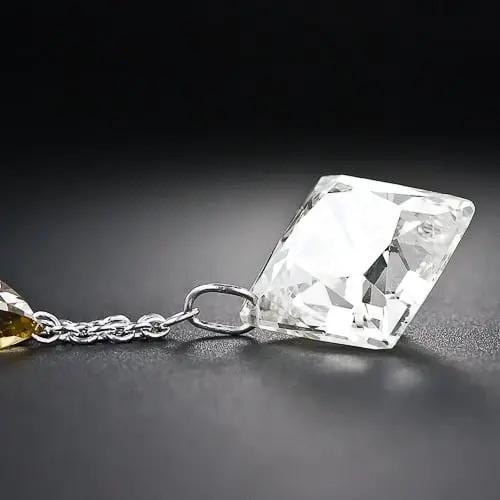
In the world of gemology and mineralogy, the way a gemstone interacts with light dictates much of its visual appeal and scientific classification. Among the various terms used by experts to describe these optical phenomena, "adamantine" stands out as a descriptor of exceptional brilliance and physical resilience. Traditionally reserved for diamonds and other minerals possessing a high refractive index, adamantine luster represents the pinnacle of surface brilliance in natural stones.
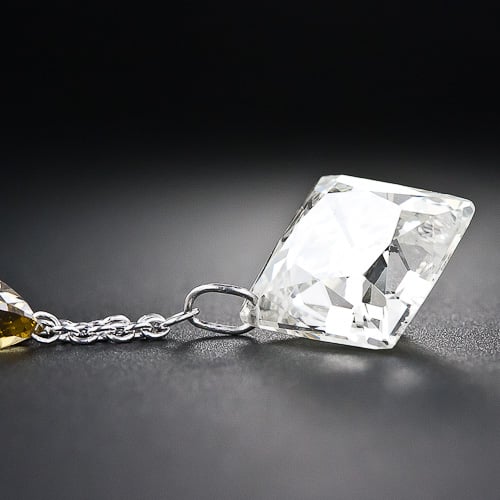
The term adamantine is formally used to describe the distinctive, intensely bright luster exhibited by diamonds and gemstones that possess a refractive index ranging between 1.9 and 2.5. This high refractive index means that light entering the gemstone is bent sharply and reflected efficiently, creating a fierce, almost metallic-like brilliance that sets these minerals apart from those with vitreous (glassy), greasy, or pearly lusters.
To fully understand the origin of the term, one must look beyond modern gemological laboratories and into ancient etymology. The root word "adamant" derives from the ancient Greek word adamastos, which translates literally to "untameable" or "unconquerable." Throughout history, writers, philosophers, and early naturalists used the word adamant in reference to any substance composed of a particularly hard material, whether it was a diamond or another dense, indestructible mineral. Over centuries of linguistic and scientific evolution, the concept shifted from denoting purely mechanical hardness to also encompassing the extraordinary optical properties associated with these unyielding materials.
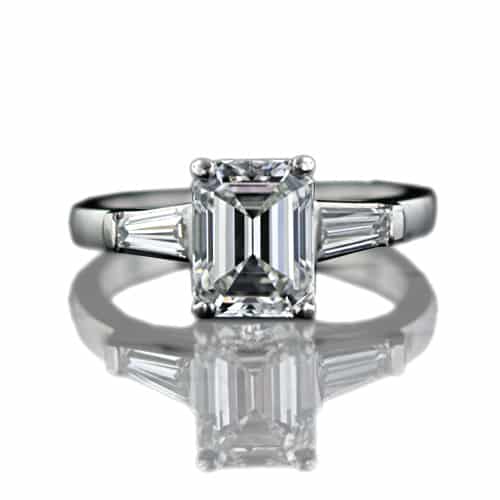
While the diamond remains the quintessential example of an adamantine mineral—showcasing both the maximum degree of optical brilliance and the extreme physical hardness that the historical root implies—the scale of luster is nuanced. Just below the threshold of true adamantine lies the subadamantine luster category. Gemstones with a subadamantine luster exhibit a surface brilliance that is slightly less intense than that of a diamond, yet they still outshine stones with standard vitreous lusters.
A prime example of a gemstone exhibiting this slightly subdued yet striking quality is zircon. Although zircon is celebrated in the jewelry and gemological communities for its remarkable dispersion—the ability to split white light into its component spectral colors, often creating a fire that rivals even synthetic stones—its overall luster is classified as subadamantine rather than fully adamantine. This distinction highlights the precise criteria used by gemologists to categorize minerals based on how light behaves upon striking their polished facets.
The interplay between a gem’s refractive index, its structural hardness, and its surface luster forms a cornerstone of mineralogical study. Whether examining the historical connotations of the word adamant or evaluating the precise optical metrics of modern gemstones, professionals rely on these established classifications to understand the fundamental nature of the materials they study. As gemological science continues to refine our understanding of light and crystal structures, terms like adamantine and subadamantine maintain their enduring significance in connecting the ancient heritage of mineral names with the rigorous demands of contemporary scientific analysis.