






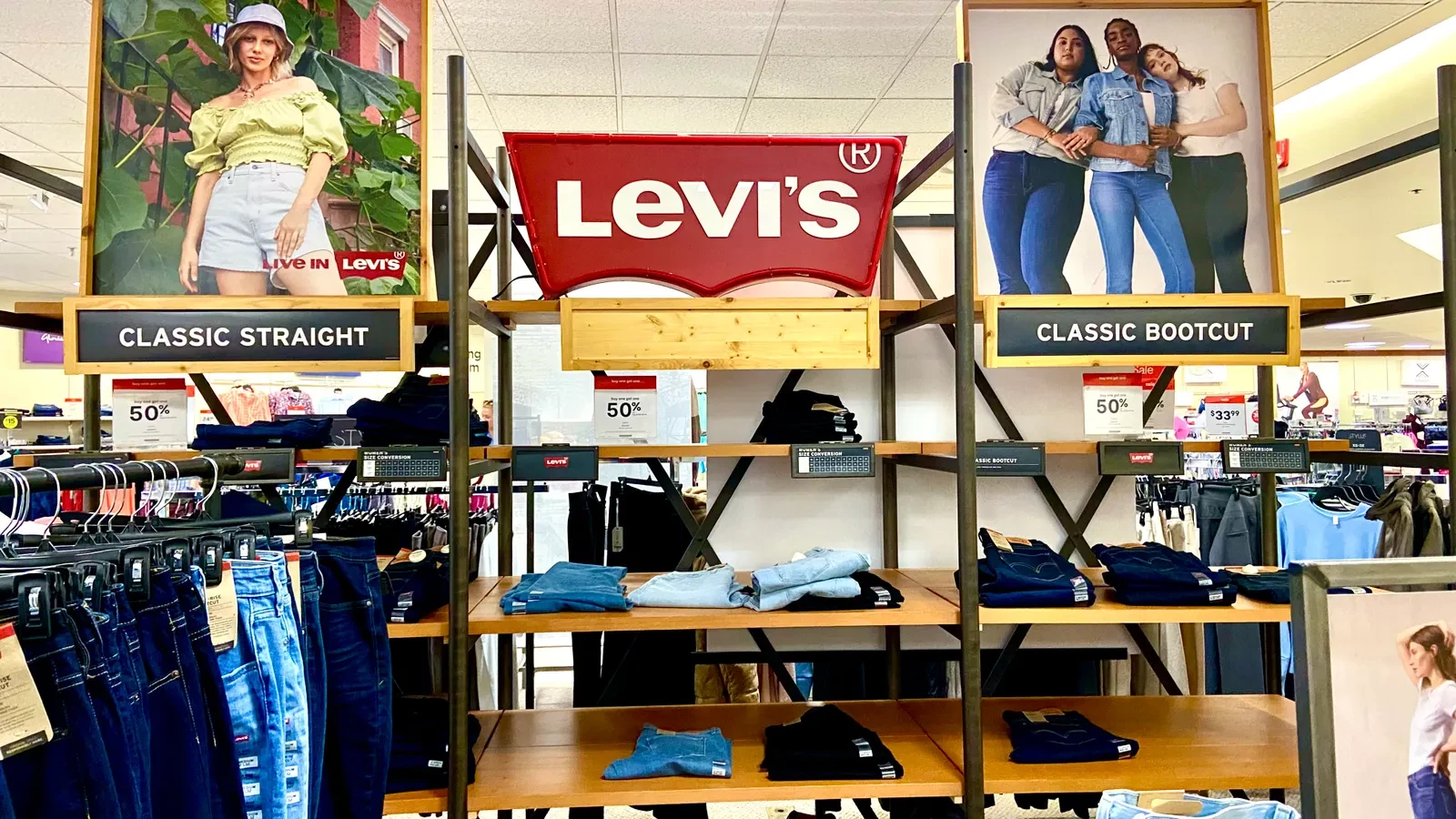
Levi Strauss & Co. faced an unexpectedly challenging third quarter, marked by a rare revenue miss, softer-than-expected direct-to-consumer (DTC) sales, and shifting consumer trends that caught the iconic denim maker flat-footed on fashion silhouettes. However, strong performance in its wholesale channels, combined with a timely influx of tariff reimbursements, helped cushion the blow and protect the company’s profit margins during a volatile period for retail.
According to financial analysts at Wells Fargo, the company’s recent Q3 slump coincided with its first net revenue miss in two years. While Levi’s has spent the past several years aggressively expanding and investing in its direct-to-consumer operations—ranging from standalone retail storefronts to its proprietary e-commerce platforms—it was the traditional wholesale channel that ultimately carried the day in both the United States and Europe.
Wholesale Resilience Versus Direct-to-Consumer Pressures
The stark contrast between wholesale and direct-to-consumer performance during the quarter highlights a fundamental economic reality of the modern apparel industry. Industry research has consistently shown that direct-to-consumer margins often fail to match the efficiency of wholesale margins. When operating through wholesale partners—such as major department stores and multi-brand retailers—brands offload a significant portion of the heavy financial and operational lifting, including the substantial marketing expenses required to drive consistent consumer traffic.
Conversely, running a robust DTC network demands continuous, capital-intensive investments in digital acquisition, storefront operations, and brand positioning. This dynamic was keenly felt by Levi’s during the third quarter, as traffic and demand for the crucial back-to-school shopping season fell short of internal projections.
Adding to the complexity, Chief Financial Officer Harmit Singh noted during a call with analysts that distribution costs within the United States have remained stubbornly higher than anticipated, further squeezing domestic operating margins.
A Timely Financial Lifeline
To help navigate these pressures, the arrival of substantial trade and tariff reimbursements proved instrumental for the denim giant. During the third quarter, Levi’s collected approximately $80 million in tariff refunds, representing nearly the entirety of the expected payout from the government.
Rather than letting the funds simply pad the balance sheet, executive leadership opted to reinvest a vast majority of the capital directly back into the core operations of the business. Approximately three-quarters of the total refund amount is being channeled into strategic initiatives designed to fortify the brand’s competitive footing.
Out of the total $80 million, Levi’s deployed about $25 million during the third quarter, with an additional $35 million slated for expenditure in the fourth quarter. According to Singh, these funds are being specifically directed toward incremental marketing campaigns to stimulate consumer demand, enhanced supply chain capabilities to drive long-term operational efficiencies, and the creation of sharper value propositions for shoppers heading into key holiday promotional periods.

"Our view is, the tariff refunds were timely," Singh told analysts, emphasizing how crucial the liquidity injection has been in stabilizing margins amidst softer retail channels.
Shifting Denim Trends and Weather Headwinds
Beyond structural distribution costs and channel imbalances, Levi’s leadership pointed to specific tactical missteps and external anomalies that hampered performance during the quarter.
Chief Executive Officer Michelle Gass noted that back-to-school momentum was dampened because the brand leaned too heavily into loose-fitting denim styles. At the exact time of the assortment push, a notable shift occurred in the U.S. market, with consumers rapidly pivoting away from looser cuts in favor of low-rise silhouettes.
Gass was quick to praise the agility of the design and merchandising teams in responding to the miscalculation. "The good news is the team got after it very quickly, and we sharpened our focus," Gass said during the earnings call. She was careful to clarify that while low-rise styles gained immediate traction, loose-fitting denim remains an undeniably important part of the brand’s portfolio and continues to serve as a major volume driver across its core consumer base.

Compounding these domestic styling misalignments, overseas markets presented weather-related hurdles. Europe experienced a brutally hot summer season, which severely depressed foot traffic and dampening consumer appetite for heavy denim products within the DTC channel.
However, as meteorological conditions shifted and temperatures finally began to moderate toward the end of the period, consumer behavior rebounded rapidly. Gass highlighted that current quarter-to-date trends across Europe have proven to be exceptionally robust and positive, signaling enduring health for the brand overseas. Furthermore, Europe’s stellar wholesale business throughout the summer months helped offset the temporary weather-induced dip in retail storefront traffic, reinforcing leadership’s confidence in the region’s long-term trajectory.
Thanks in part to the targeted marketing efforts fueled by the tariff refunds and a swift correction in product assortments, Levi’s direct-to-consumer sales have already begun showing signs of a steady recovery as the company looks past its third-quarter stumble toward the critical year-end shopping season.