




Marie-Caroline Locquet approaches jewelry not as a conventional ornament of wealth, power, or social status, but as a conceptual instrument of provocation. In her striking and radical practice, she produces objects that function simultaneously as restraints and defensive weapons. Each piece, she explains, is designed to offer a unique wearing experience that explores our shared human fragility. By intentionally invoking elements of violence and sexual dominance, her creations evoke an immediate sense of psychological discomfort coupled with an undeniable erotic tension.
This uncompromising vision has earned Locquet recognition as a finalist for the prestigious Young Artist Award. Supported generously by Karen and Michael Rotenberg, the biennial award acknowledges promise, innovation, and individuality in the work of an emerging jewelry artist aged 35 or younger. Through this vital prize, the Art Jewelry Forum (AJF) champions new and exciting work that challenges existing boundaries and inspires future developments across the contemporary art jewelry field.
Locquet’s journey into this challenging territory began during her early art studies, when she first encountered works that fundamentally challenged her vision and the traditional definition of jewelry. Rather than being drawn to pieces centered on beauty or the display of wealth, she found herself captivated by works that felt strange, uneasy, and dangerous. Referencing the radical creations of Bernhard Schobinger and Dorothea Prühl, Locquet notes how these artists shifted the foundational understanding of what jewelry could achieve.
"It really changed my point of view on art," Locquet shares. "In a way, jewelry interests me as an object of disruption, reflection, and provocation." Entering the field full of questions and curiosity, she sought to answer a central philosophical inquiry: Why make and wear jewelry that appears so disturbing at first sight? What does it truly mean to craft something deemed "unwearable"? Ultimately, this exploration of un-wearability became the core engine driving her ongoing artistic research.
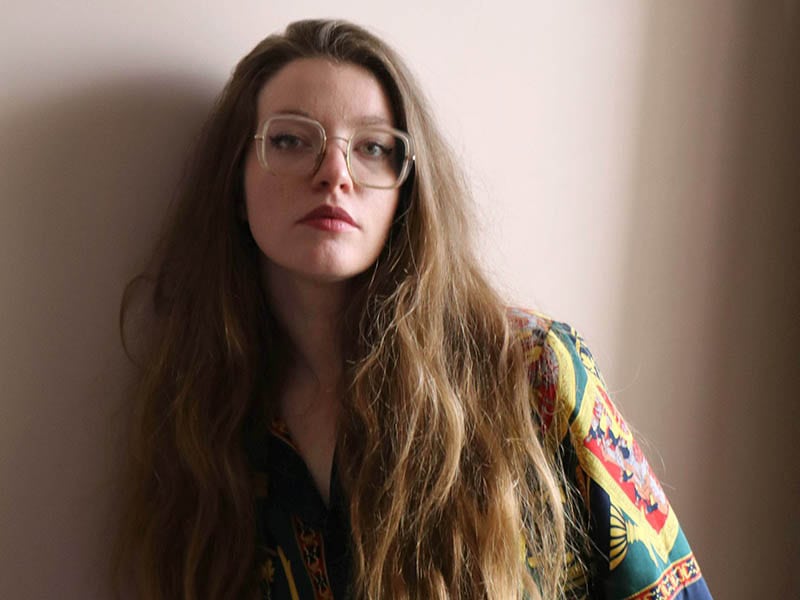
For Locquet, being selected as a finalist for the Young Artist Award is much more than a resume milestone; it is a deeply meaningful validation of a rigorous trajectory she has pursued for several years. She notes that the recognition provides her with the vital confidence to keep moving forward with her radical approach, pushing boundaries further and continuously challenging herself, the wearer, and the viewer.
Growing up in the north of France, Locquet experienced firsthand the societal weight of self-demonstration and the camouflage of social affiliations through everyday adornment from an early age. This background cemented her conceptual interest in jewelry, prompting her to view the medium more as a subject for critical study than an exercise in aesthetic comfort. In her studio practice, every piece deliberately redefines the status of jewelry, stripping away its traditional role as a showcase of affluence and reframing it as a direct confrontation with a highly disruptive potential in public spaces.
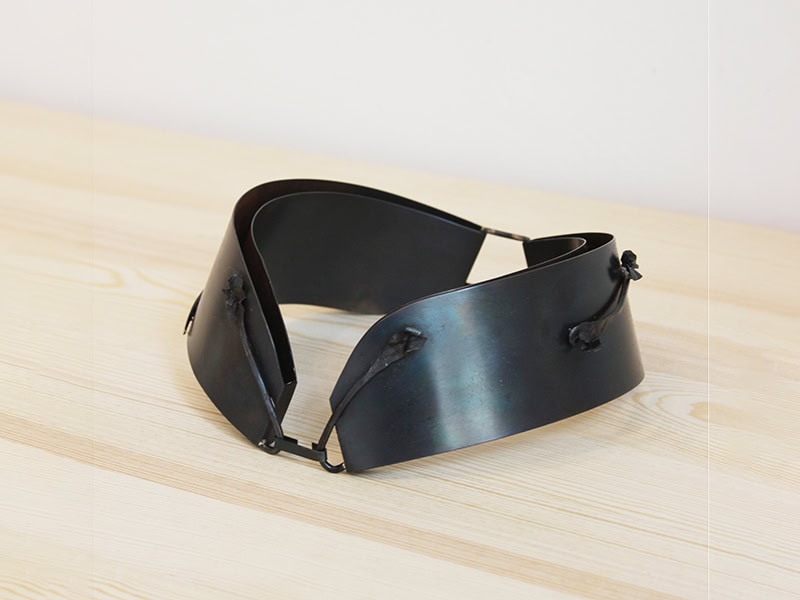
Her work avoids easy seduction or passive representation, focusing instead on disturbance, violence, fragility, seduction, domination, vulnerability, and confinement. By pushing materials to their extreme physical limits, she strips them bare to reveal their true nature through forms that evoke both desire and mortality. Whether functioning as defensive weapons or intricate restraint devices, her creations maintain a perpetual tension between social discomfort and the psychological temptation of embrace.
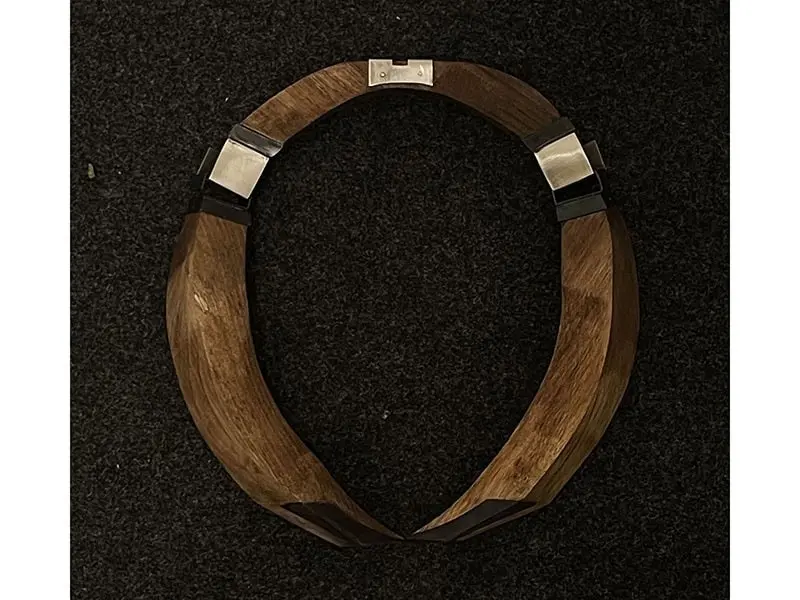
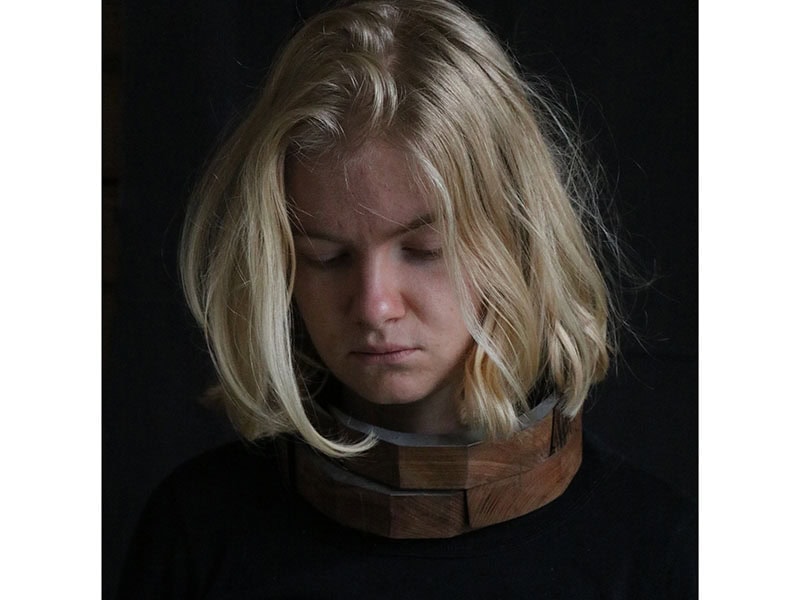
Over the course of her practice, Locquet’s investigations into confinement, violence, and bodily vulnerability have led her to draw inspiration from historical and cultural artifacts. These include the collier d’appartenance—a collar historically given by an individual to someone submitting to them in submissive relationships—as well as the "slave collar" originating from 19th-century Norman and Auvergnat traditions, which was traditionally given to women at marriage as a token of possession. She has similarly examined functional animal-labor tools, such as the heavy collar of a draft horse.
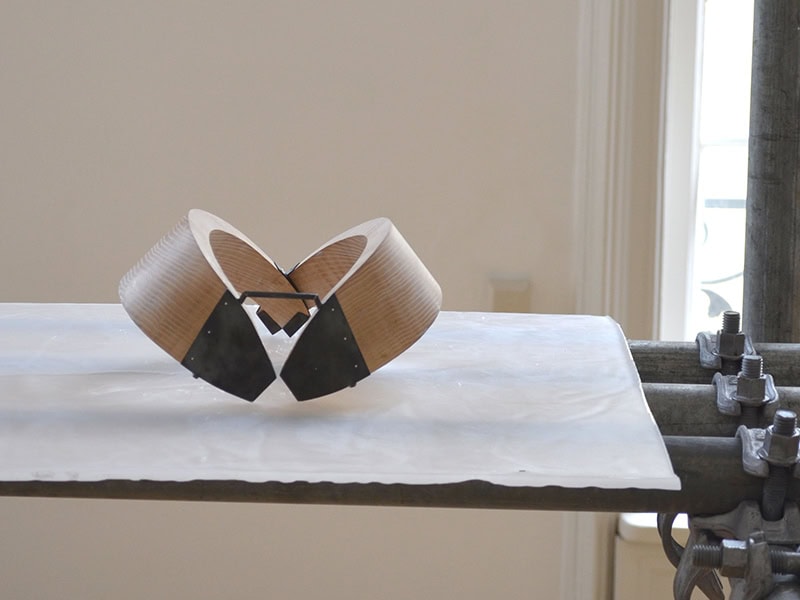
Among her applied works, the neckpiece Hands vividly encapsulates the multilayered nature of her artistic output. The piece showcases her obsessive research into complex mechanical systems, movements, clasps, and the fluid border separating jewelry from sculpture. Hands unfolds and physically occupies space like an elaborate mechanical apparatus before finally closing tightly around the neck—reminiscent of an act of strangulation. Locquet describes it as her most complex and intimate piece to date, directly expressing profound themes of confinement and violence.
What excites Locquet most about the field of art jewelry is its unique capacity to shape a comprehensive, holistic approach. The medium allows her to seamlessly bridge the physical object itself, rigorous academic and iconographic research, and the creation of immersive spatial environments that resonate with the work. More broadly, she is fascinated by how body ornamentation constructs the visual image of a society. Everything humans wear draws directly upon the references, boundaries, and cultural values of the world they inhabit.
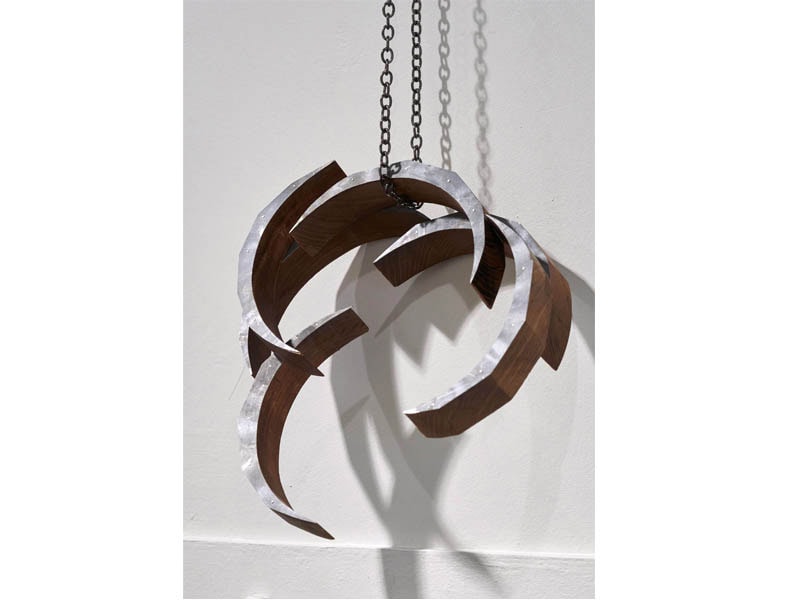
A few years ago, Locquet initiated a sweeping iconographic research project and collection centered on the tension between the wearable and the unwearable. Titled "Unwearable—adornment is impure, makeup is obscene, disguise is an abomination," the project investigates how ornament, when brought into direct contact with the body, reveals volumes about social representations and cultural norms while constantly shifting between the intimacy of the private sphere and the exposure of public space.
Despite her passion for the medium, Locquet remains candid about her frustrations with the broader art landscape. Recalling an exhibition titled Jewelry Is Still a Risky Business that she curated with colleagues and friends during Munich Jewellery Week in 2018—a nod to a seminal work by Paul Derrez—she firmly believes that contemporary jewelry must retain its inherent riskiness.
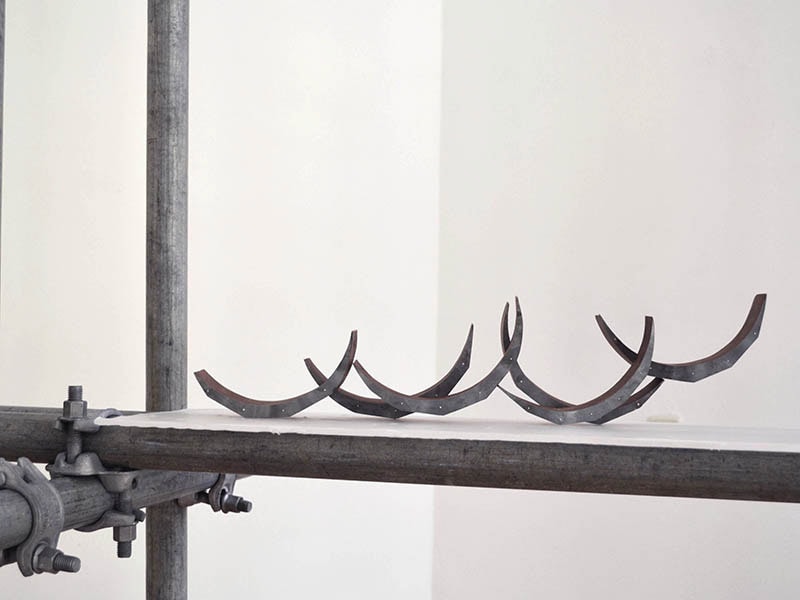
She observes that contemporary jewelry is still frequently burdened by the expectation to justify its presence within the wider realm of contemporary art. During her studies at a French fine art school, she routinely encountered the dismissive notion that jewelry was somehow "lesser," superficial, or overly niche. While she acknowledges that this peripheral status can act as a strength by opening up fresh ways of looking and thinking, it also highlights a persistent distance between the specialized field and audiences beyond its established community.
This very realization informs why certain pieces in her portfolio, such as Panicroom Vector I, are intentionally more literal, acting as accessible conceptual keys for audiences to enter the work. Remaining steadfast on course—exploring uncharted territory, creating meaningful experiences for viewers, and opening up fresh perspectives—remains her primary directive. Being named a finalist for the Young Artist Award serves as a powerful confirmation that she is firmly on the right path.
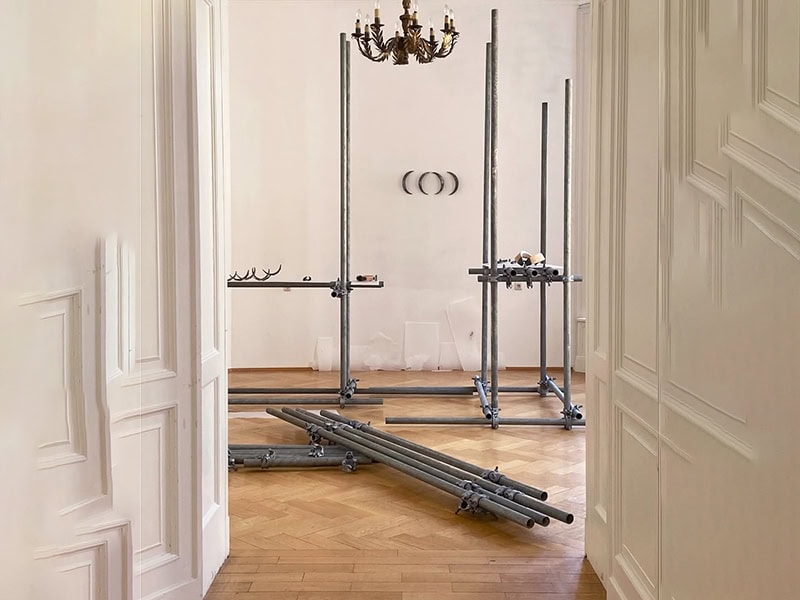
Reflecting on the five years since her graduation, Locquet expresses deep satisfaction with her artistic evolution. Having recently embarked on a new chapter of her practice that extends her conceptual thinking into architectural and spatial dimensions, she is preparing to unveil these environmental works in an upcoming exhibition. Beyond her studio output, she looks forward to pursuing international art residencies, collaborating with fellow artists, and continuing the daily rhythms of life as a working sculptor and maker.
Looking further ahead, academic research and teaching hold significant appeal for her. She views educational spaces as the ideal environments to reinvent and push forward collective notions of body ornament, exploring how creators can continue to extend, deform, shape, and question the fundamental definition of jewelry. Trusting the creative process and expressing deep gratitude to all who have supported her journey, Locquet stands ready for whatever lies ahead in the rapidly evolving landscape of contemporary art jewelry.