





Long before gemstones became the subjects of rigorous scientific inquiry, they occupied a complex space in human civilization. In ancient writings, references to precious stones appeared merely as auxiliary details—embellishments for decorative items, mediums of barter, physical symbols of immense wealth, or mythical sources of supernatural power and divine magic. Gems were rarely treated as subjects worthy of study in their own right until the revolutionary philosophical framework introduced by Aristotle between 384 and 322 B.C.
Aristotle’s systematic division of philosophy into distinct branches—logic, metaphysics, physics, ethics, politics, and art—paved the way for the organized documentation of nature. Concurrently, the physical world was categorized into fundamental elements: earth, water, air, fire, and ether. This nascent categorization allowed scholars to begin classifying and describing the physical properties of gems and minerals. The earliest historical texts attempting to catalog these treasures relied on a fascinating blend of empirical observation and pervasive pseudoscience. As human understanding of the natural sciences expanded over the centuries, the modern disciplines of mineralogy and gemology slowly emerged from the shadows of antiquity.
Origins
The foundational journey of gem literature traces back to Theophrastus, who lived circa 372 to 287 B.C. As a student of Plato and the direct successor to Aristotle at the head of the Peripatetic school of philosophy, Theophrastus authored Peri Lithon (Of Stones), widely recognized as the earliest known treatise dedicated exclusively to gemstones. Although only a fragment of this original manuscript survives, its Aristotelian blend of physics and metaphysics served as the source material for centuries of subsequent lapidary lore. Over time, classical scholarship produced multiple modern translations of the work, moving past the initial English translation by John Hill to subsequent critical editions by E. R. Caley and J. F. C. Richards, and later by D. E. Eichholz.
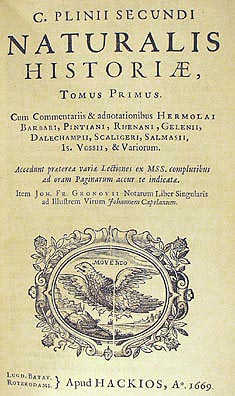
Decisive expansion came with the Roman author and historian Gaius Plinius Secundus, universally known as Pliny the Elder. Writing in 77 A.D., Pliny compiled his monumental thirty-seven-volume Naturalis Historia (Natural History) from an estimated two thousand distinct sources. Embracing the entire expanse of natural history—alongside astronomy, geography, meteorology, fine arts, human inventions, and social relations—the work endures as an indispensable archive for historians seeking to understand first-century life.
Much of Pliny’s data on gemstones, however, was not derived from direct empirical study. Instead, his accounts frequently relied on second-hand sources lost to antiquity, blending disparate stones together based solely on color, geographic origin, or folkloric attributes. Because subsequent medieval writers quoted Pliny’s assertions without question, his observations became the unquestioned baseline for European gemology across the first thirteen centuries of the common era, often embellished with fresh speculations and conclusions.
Despite relying heavily on oral traditions and secondhand lore, Pliny made notable strides in classification. He attempted to group gems by color and external traits—a methodology that occasionally resulted in conflating vastly different minerals. For instance, the general Latin term smaragdus encompassed almost any green stone, leading him to categorize twelve distinct varieties under emeralds, including green sapphire, turquoise, smithsonite, malachite, jasper, and even glass. Conversely, he demonstrated profound insight by recognizing the fundamental chemical and physical connection between beryls and emeralds, noting that beryls share the same nature or close similarities to emeralds. Over the centuries, Naturalis Historia saw more than two hundred and fifty editions in various languages, beginning with its first complete printing in Venice in 1469.
Christian Lapidaries
As Christianity reshaped European culture, scholars sought to harmonize classical learning with biblical texts. Saint Epiphanius, Bishop of Constantia in Cyprus from circa 315 to 420 A.D., authored the first known treatise addressing the gemstones mentioned in scripture. His text established a enduring framework for treating biblical gems and offered some of the earliest written commentary on the composition and symbolic significance of the twelve stones embedded within the Breastplate of Aaron.
Although the Church strictly prohibited heathen worship and magical practices, devout medieval Christians retained an underlying fascination with the supposed supernatural properties of stones. According to historical analyses by scholars like Dorothy Wyckoff, this enduring fascination was effectively legitimized by turning the focus toward the sacred stones cataloged in biblical lists—specifically those on Aaron’s Breastplate and the foundations of the New Jerusalem. Epiphanius’s treatise was eventually published in its entirety within Conrad Gesner’s 1565 compendium, De Omne Rerum Fossilium, long after his earlier insights had circulated widely through medieval manuscripts.
This trend toward encyclopedic compilation continued with Isidore, Bishop of Seville, who lived from circa 560 to 636 A.D. As a towering intellectual figure of his era, Isidore drafted the Etymologiarum sive Originum Libri XX (Etymologies), an expansive reference encompassing more than one thousand manuscripts designed to capture the sum of contemporary knowledge. His precise descriptions and mineral attributes established standard academic benchmarks that endured well into the twelfth century.
By the eleventh century, the scholarly focus shifted toward verse lapidaries. Marbod, the eleventh-century Bishop of Rennes who lived from roughly 1035 to 1123, authored Libellus de lapidibus, popularly known as Lapidaire en Vers. Hailed by historians like Lynn Thorndike as the definitive classical text on the marvelous properties of stones, Marbod’s poetic creation achieved immense popularity across medieval Europe, surviving in more than one hundred and sixty Latin manuscripts alongside several vernacular translations. Comprising over seven hundred hexameters dedicated to sixty distinct stones, the work drew heavily upon ancient traditions attributed to mythical figures such as Evax, King of the Arabs.
Academic rigor returned to the study of minerals with Albertus Magnus, Bishop of Ratisbon, who lived from 1193 to 1280. A pioneering lecturer at the University of Paris and teacher of Thomas Aquinas, Magnus championed scholasticism and argued that reason should complement faith. His seminal work, De Mineralibus, represented an ambitious endeavor to organize the emerging science of mineralogy, attempting to explain the physical formation of gemstones, the natural causes of their distinct coloration, and other material properties, even as it retained traditional elements of medieval speculation and wonder.
Concurrently, King Alfonso X the Learned of Castile and Leon (1221–1284 A.D.) advanced the intersection of mineralogy and celestial mechanics. He composed a major treatise connecting gemstones directly to astrological bodies. Utilizing sophisticated astronomical tables calculated for the Toledo Meridian, Alfonso classified gems by color and assigned each to one of the twelve signs of the zodiac, carefully detailing how planetary influences dictated their medicinal and magical virtues—a structural template that continues to influence modern esoteric gemstone traditions.
Introduction of the Scientific Method
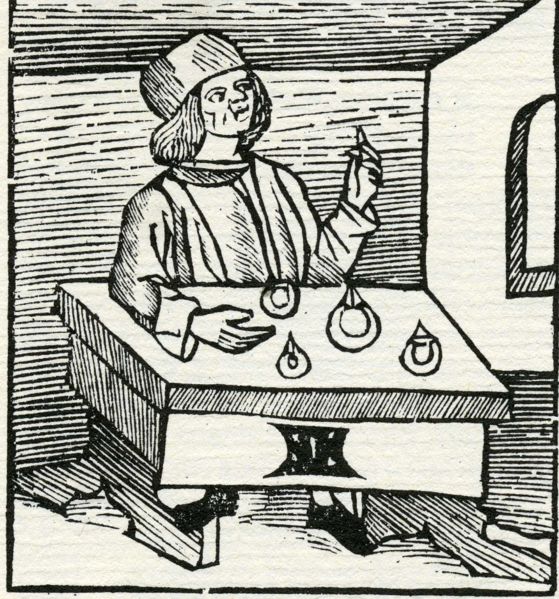
The dawn of the sixteenth century marked a decisive methodological shift. Camillus Leonardus, a physician from Pesaro, Italy, published Speculum Lapidum in 1502—later translated into English as Mirror of Stones in 1750. Leonardus applied emerging scientific principles to differentiate minerals by evaluating their physical properties, hardness, specific gravity, compactness, color, form, and geographic provenance, while still maintaining traditional beliefs regarding the enhancement of stones through engraved magical symbols.
The Science of Mineralogy
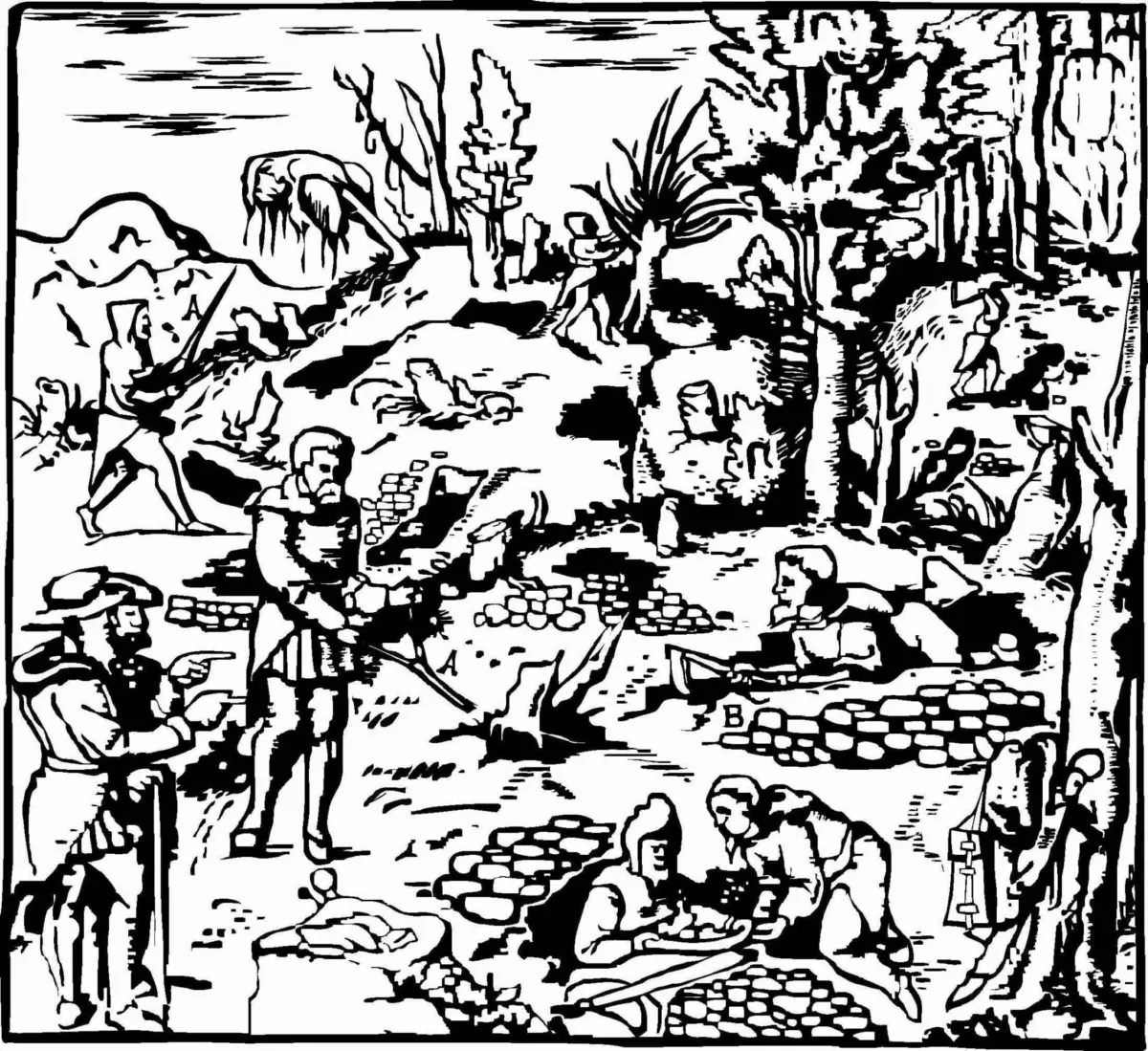
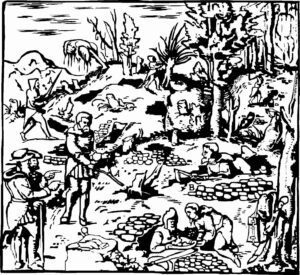
The evolution toward modern empirical science accelerated dramatically with Georgius Agricola (1494–1555), widely celebrated as the father of mineralogy. His landmark 1546 treatise, De Natura Fossilium, provided exceptionally accurate observations concerning the nature, behavior, and physical handling of gemstones. Agricola utilized rudimentary scratch tests for hardness and documented physical characteristics and flaws with a precision that remains respectable by contemporary standards.
Conrad Gesner’s 1565 compilation, De Omne Rerum Fossilium, further advanced the field by incorporating woodcuts depicting minerals, crystals, fossils, and cut gems—marking the first time a mineralogical work relied extensively on accurate visual illustrations. However, Gesner’s text reinforced traditional naming conventions based on color and geography, cementing trade misnomers such as "Occidental emerald" for true emerald, "Brazilian emerald" for tourmaline, "Oriental emerald" for green sapphire, and "Oriental topaz" for yellow or orange sapphire.
The seventeenth century yielded further breakthroughs. Anselmus Boëtius de Boodt (ca. 1550–1632), physician to Emperor Rudolph II of Prague, published Gemmarum et Lapidum Historia in 1609. De Boodt categorized stones into five distinct degrees of hardness, introduced early speculations concerning atomic mineral structures, and expressed open skepticism regarding unfounded mystical and medicinal claims. Shortly thereafter, the pioneering English chemist and physicist Robert Boyle published An Essay About the Origine and Virtues of Gems in 1672, investigating crystal formation through direct observation and challenging the therapeutic use of gemstones by demonstrating their complete insolubility in bodily fluids.
Modern Gemology
By the eighteenth century, mineralogy and geology had firmly established themselves as rigorous, independent sciences, driven by improved instrumentation and systematic documentation. Gemological studies, however, remained closely tied to the retail jewelry trade, where the romance, legend, and lore of precious stones continued to drive commercial success.
Academic revival arrived in the late nineteenth and early twentieth centuries through the extensive research of Dr. George Frederick Kunz. Serving as a gemological expert for Tiffany & Co. and founding the mineral collections at the American Museum of Natural History, Kunz bridged rigorous technical science with popular cultural history through enduring compilations such as The Curious Lore of Precious Stones (1913) and The Magic of Jewels and Charms (1915).
Professional standards within the modern industry were cemented in 1931 when Robert M. Shipley established the Gemological Institute of America, followed by the American Gem Society in 1934. These educational and trade organizations brought standardized grading and reliable gemological data to both professionals and consumers, supported by ongoing academic research published in periodicals like Gems and Gemology.
Spanning more than two thousand years of human inquiry, the transition of gemology from ancient myth to modern material science highlights an ongoing human fascination with the Earth’s natural treasures. Even as contemporary society experiences a persistent resurgence of interest in the metaphysical properties and healing energies of crystals, the foundational insights recorded by historical scholars continue to inform our understanding of the natural world.