






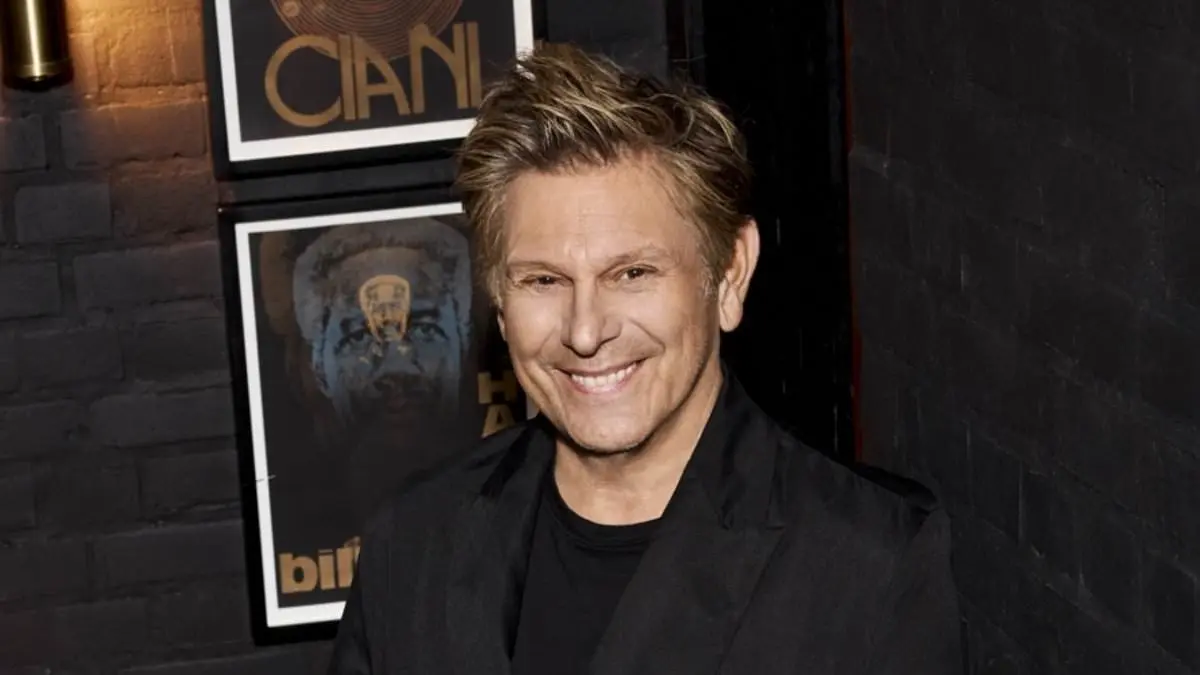
Duran Duran’s legendary drummer, Roger Taylor, has announced that he is stepping down from the band and retiring from playing the drums. The musician, 66, revealed the news via the band’s official social media channels on Thursday, explaining that his decision comes following a worsening of his recently diagnosed tinnitus.
The condition, which affects about 7.6 million adults, causes sufferers to hear phantom noises often described as ringing, hissing, buzzing, or whooshing sounds. Roger played an integral role in the band’s era-defining early records before returning for the celebrated reunion of the original line-up in 2001, remaining with them until the present day.
After careful consideration and medical advice, he has decided that protecting his hearing and long-term health must now come first. Speaking from his home in the United States, Roger reflected on the profound difficulty of his choice.
"This is one of the hardest decisions I’ve ever had to make," Roger said. "Playing drums in this band has been the joy of my life, and I’ll never be able to properly thank the fans for the love they’ve shown us over the years. But the truth is that my tinnitus has been getting steadily worse, and I’ve reached the point where I must now listen to my body and my doctors."
Despite the abrupt and emotional nature of his departure, Roger noted that he feels fortunate about the timing. He emphasized that he is stepping away on a major career high, following a series of monumental milestones for the band.
"Figuring out the timing of all of this has not been easy, but I’m going out on a real high," he continued. "We’ve just returned from a hugely successful UK and European tour, which followed our second headline show at BST Hyde Park, our induction into the Rock & Roll Hall of Fame, and a return to the studio with Nile Rodgers. I couldn’t have asked for a better final chapter, with so many special moments that I’ll treasure forever. I move on with enormous pride, and with nothing but love for Simon, Nick, and John."
Fellow band members Simon Le Bon, Nick Rhodes, and John Taylor issued a joint statement expressing their deep affection and unwavering support for their longtime bandmate.
"Roger is our brother," the remaining members said. "His drumming helped define the sound of Duran Duran from the very beginning, and having him back with us since 2001 has been incredibly important to us all. We completely support his decision and wish him health and happiness. He will always be part of this family, while we continue exploring new and exciting projects with the band."
Fans immediately flooded social media platforms, particularly X, formerly Twitter, to share their shock, sadness, and understanding upon hearing the news. Many expressed gratitude for the chance to witness his iconic performances on recent tours, while others marveled at the sudden nature of the announcement.
"I can’t believe Roger Taylor is leaving Duran Duran! I understand his reasons, though," one fan wrote.
Another shared: "ROGER HAS QUIT DURAN DURAN! Shocking news for us all. Health issues the reason but oh so sudden and with no chance for us to say goodbye."
"From a selfish point of view, gutted. Health has to come first though. Wonder if he has completely retired or could be persuaded to record?" posted another supporter.
A fellow concertgoer added: "So pleased I got to see him play for the last time at the recent Leeds and London shows. Always hoped to see the original 5 one last time."
The retirement announcement follows a period of significant personal milestones for the drummer. In September 2025, Roger generated widespread attention when he walked his daughter, Ellea, down the aisle, leaving fans astounded by his impressively youthful appearance.
Ellea, a 33-year-old makeup artist, married her long-term boyfriend, bodybuilder and personal trainer Shiro Miller, in a breathtaking castle ceremony surrounded by family, friends, and members of the band. Ellea—the daughter of Roger’s ex-wife, Giovanna Cantone—wore a strapless ivory gown with a sweeping train and a delicate veil.
Roger, then 65, found himself in the spotlight as he escorted his daughter down the flower-lined pathway. Sporting a healthy head of brown hair and a classic black tuxedo, he cut a dashing figure, reminiscent of the era when high society magazine Tatler crowned him Britain’s fifth most eligible bachelor in 2004, a list that also featured prominent figures such as Prince William and Hugh Grant. Duran Duran’s official Instagram account commemorated the event, sharing pictures of the wedding held in Italy with the caption: “Ellea + Shiro September 1, 2025.”
What is tinnitus?
The condition causes sufferers to hear phantom noises often described as ringing, hissing, buzzing, or whooshing sounds and affects about 7.6 million adults. There are no approved medical treatments to cure tinnitus, and the condition can persist for years or even decades.
It is not categorized as a disease itself, but rather as a symptom frequently linked to hearing loss, exposure to loud noises, or ear blockages. Although most
commonly diagnosed in older adults, tinnitus cases are steadily rising among younger demographics. Recent studies indicate that tinnitus cases among young adults have grown by more than a third over the past two decades, impacting approximately 2.3 million individuals.
The majority of cases are tied to inner ear damage associated with hearing loss. Experts believe that damage to sensory hair cells within the inner ear triggers the brain to attempt to "fill in" missing auditory signals, with specialists often pointing to factors such as listening to music at excessive volumes through headphones. Additionally, some medical specialists theorize that tinnitus can be triggered by specific vitamin deficiencies—particularly iron, folate, and vitamin B12, three essential nutrients that the human body cannot produce independently.
Four types of tinnitus that should never be ignored
Audiologist Gladys Sanda highlights that certain manifestations of tinnitus can signal more serious underlying health conditions and require prompt medical attention. She advises consulting an Ear, Nose, and Throat (ENT) specialist if patients experience the following specific presentations:
First, tinnitus occurring in one ear only, even if the perceived sound is mild or seemingly harmless, can occasionally point toward a benign, non-cancerous growth on the auditory nerve.
Second, asymmetrical tinnitus, characterized by sounds that differ noticeably in volume or pitch between each ear, may likewise indicate an underlying issue such as an auditory nerve growth.
Third, sudden hearing loss accompanied by tinnitus is considered a medical emergency. Medical professionals emphasize that it is the sudden loss of hearing, rather than the tinnitus itself, that demands immediate therapeutic intervention.
Fourth, pulsatile tinnitus—a distinct thumping, whooshing, or pulsing sensation in the ear that synchronizes with the patient’s heartbeat—can suggest a vascular issue, such as a thinning of the bone separating a blood vessel from the middle ear. Experts stress that if tinnitus intensifies during physical activity, seeking professional medical advice is crucial.