




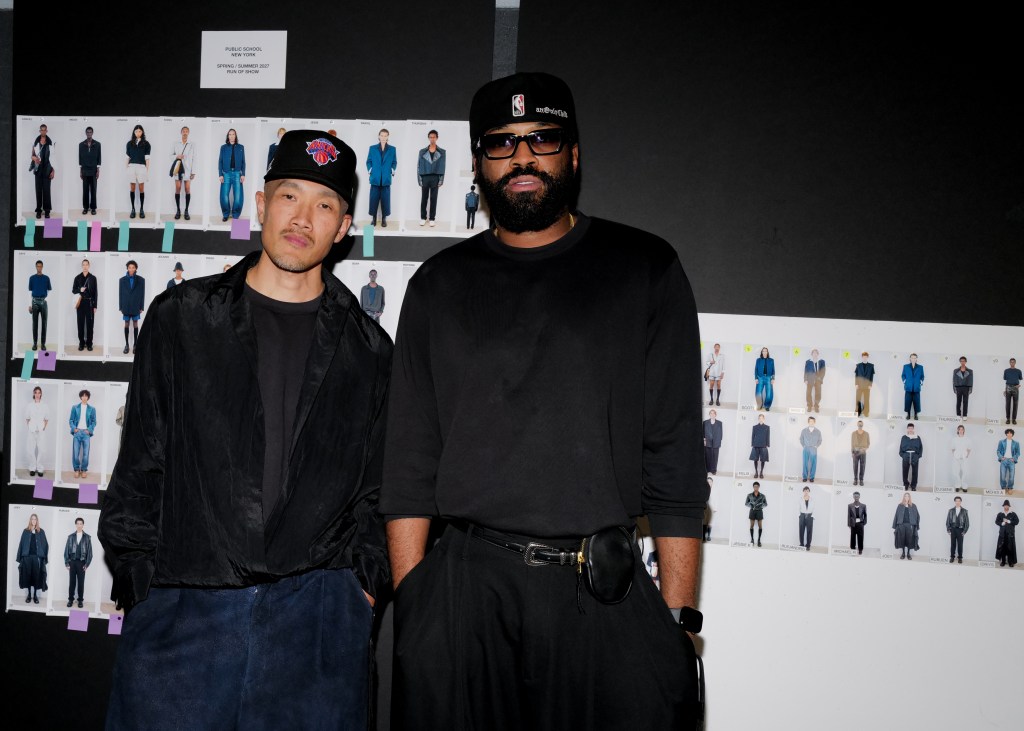
“I think that’s the spirit of New York and us, the resilience and the idea that if you fall down you can get back up and keep trying at getting back to what you love,” Dao-Yi Chow said at the historic Starrett-Lehigh Building, minutes after Public School presented its latest collection, titled Living Proof.
The atmosphere backstage was charged with a quiet energy, reflecting a brand that has weathered both industry shifts and personal hiatuses to return to what its founders consider their true calling. Resilience is a word that fashion brands frequently reach for, especially in the seasons immediately following a major comeback. However, Chow used it to describe something much closer to a fundamental appetite for creation. After going quiet for seven years, the independent label returned to the official New York Fashion Week calendar in February with a collection that its founders framed as a homecoming. This latest presentation, marking the second collection since that triumphant return, firmly points forward, signaling a renewed commitment to the city that birthed the brand.
“This is our first love,” Chow noted, reflecting on the arduous yet rewarding journey of rebuilding. “This is what we love to do every single day.”
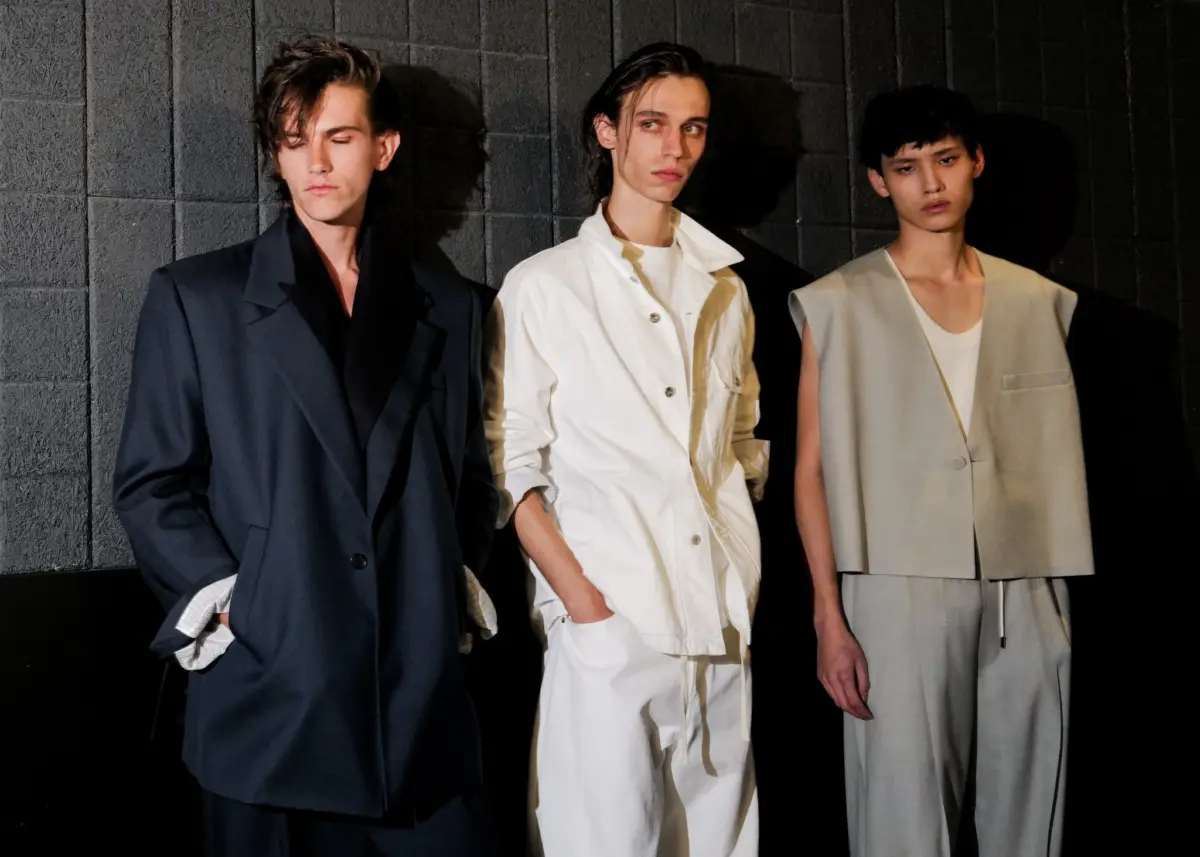
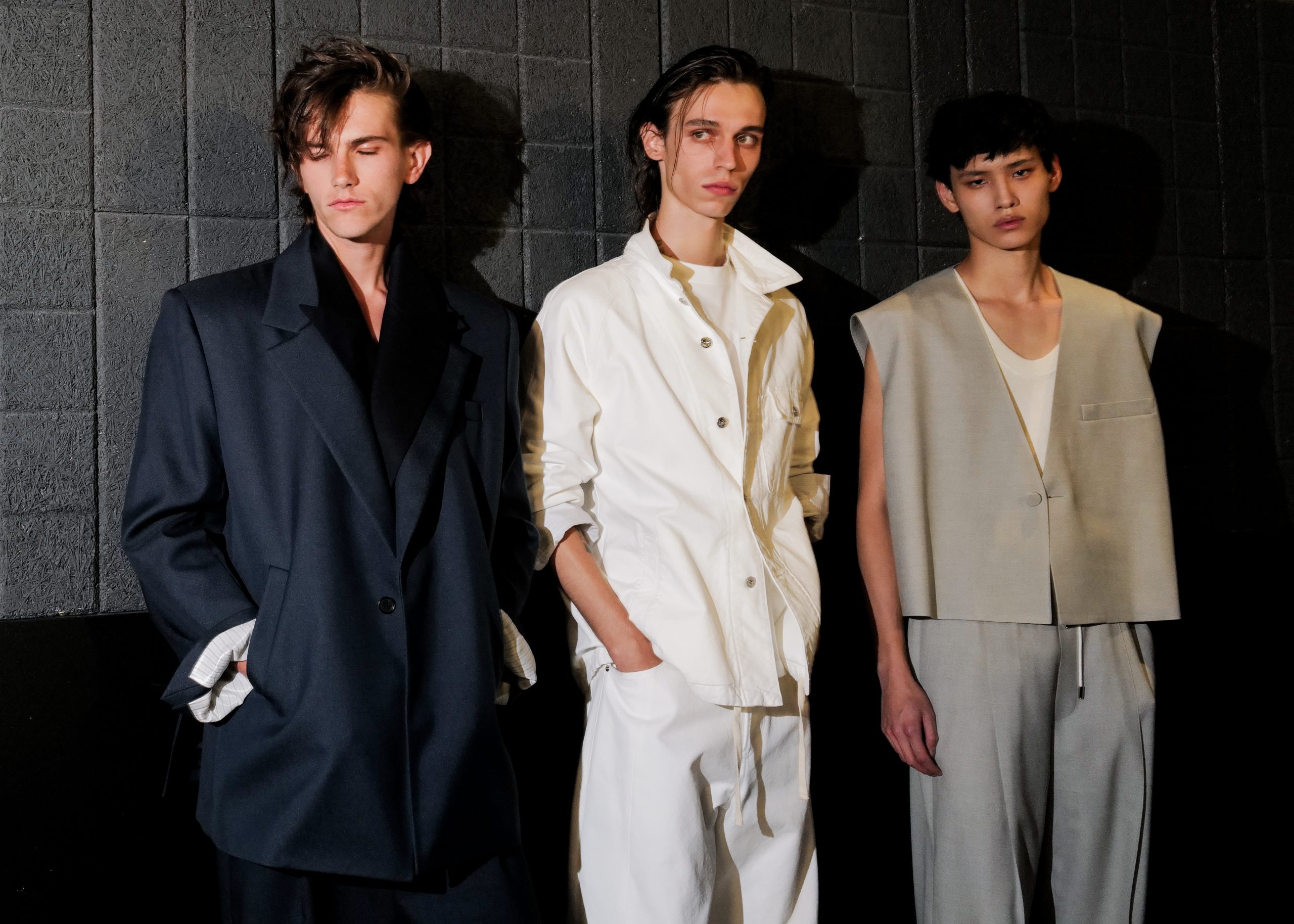
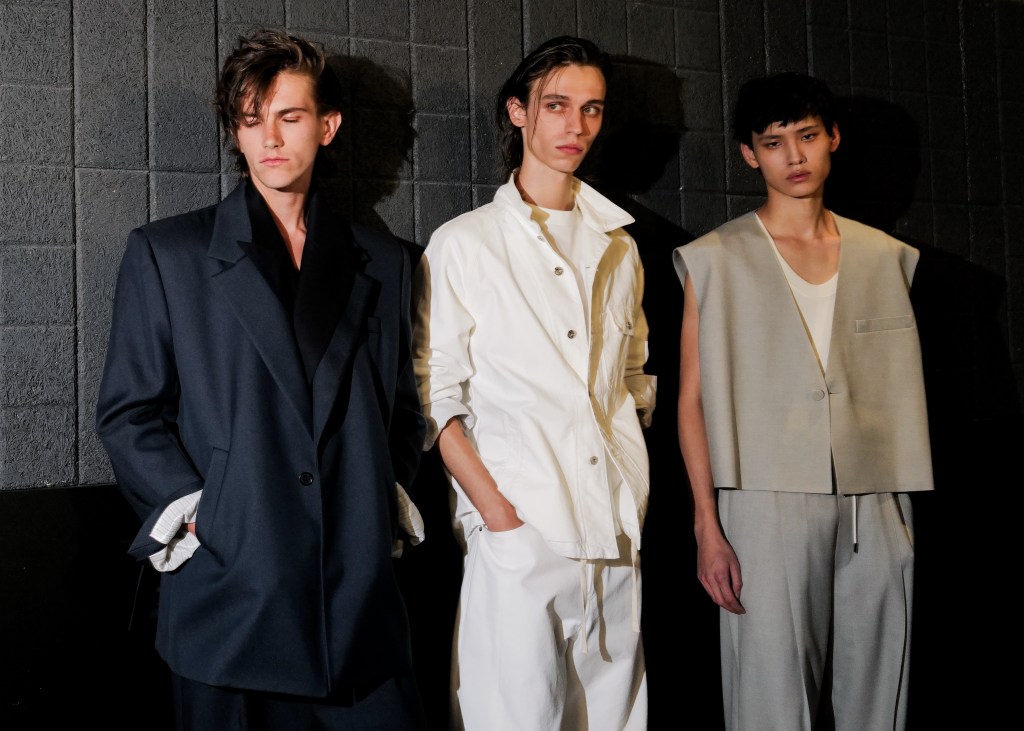
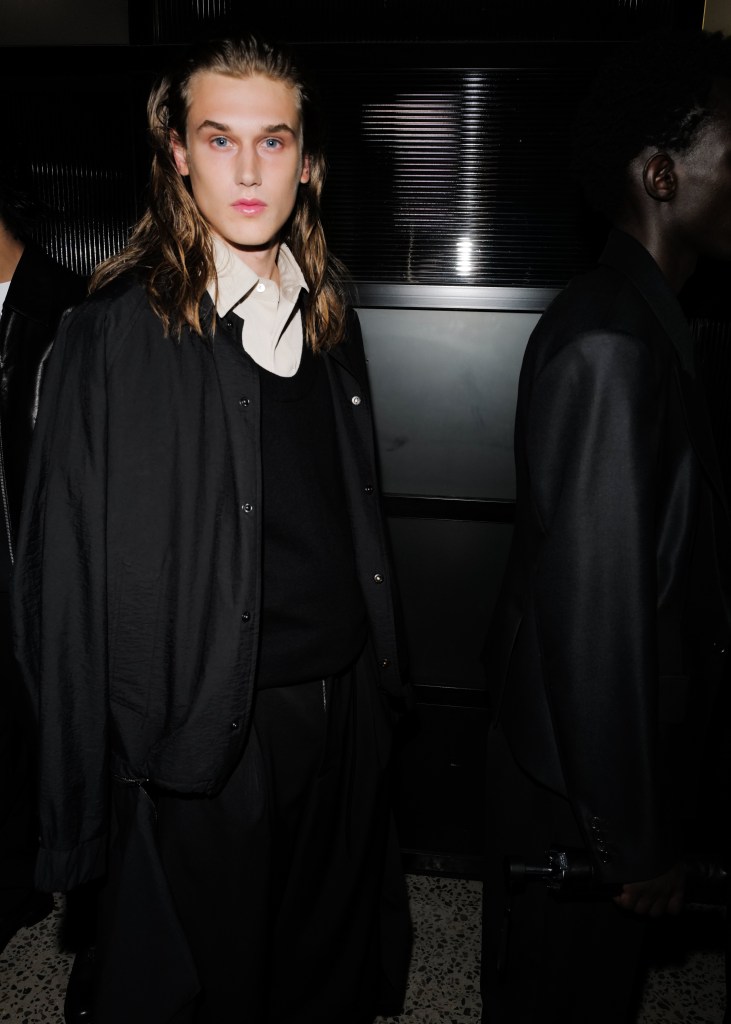
For Spring/Summer 2027, Public School addresses a quintessential urban question: What does a functional uniform do once formal education lets out and the real-world education of city life continues indefinitely? The answer arrived on the runway as a meticulously assembled wardrobe built in modular parts. Layers effortlessly open and close to adapt to shifting environments, trousers feature a clever double waistband designed for stacking, crisp woven shirting converges with relaxed soft jersey, and the color palette stays strictly anchored in navy, black, grey, and stone. These tones are close enough to the actual concrete and steel of New York City to function as genuine camouflage within the urban landscape. Meanwhile, the broad, built-out shoulders that have defined the house code since its inception made a powerful return, grounding the silhouettes in authority and structure.
Weather and the unpredictability of metropolitan elements ran through every facet of the collection. Models walked the runway with intentionally windswept hair and makeup designed to look weathered by the elements. A standout trench coat featured unique embellishments shaped like falling raindrops, while waterproof galoshes covered a run of footwear defined by exaggerated toe springs. This pragmatic approach to design also informed the brand’s second collaboration with Allen Edmonds, which landed in the exact same aesthetic register. The capsule featured the Denzel, a laceless derby crafted from garment-dyed crust leather, and the Russell Longwing in a washed black cordovan. Both styles were masterfully finished to look comfortably lived-in before a wearer even puts them on for the first time.
Preparation, as it turns out, is the core design brief for Public School. Chow locates the origin of that brief directly in the fabric of the city itself. “New York means just being international,” he explained. “New York is the city of the world. It’s the center point for all these different ideas and conversations and thoughts and cultures.” Because of this constant convergence, a functional wardrobe built for a place where the weather, the daily commute, and the social register can shift dramatically several times in a single day must hold up under conditions it cannot possibly forecast in advance.
Chow framed this dynamic as a continuous test administered by the city itself. If a person can successfully prepare for what New York throws at them—whether it is the harsh elements or the relentless pace of city life—they are truly prepared to go anywhere in the world. That foundational philosophy explains why tailored suiting and rich leather sit comfortably alongside technical athletic fabrics, or why luxurious velvet pieces are cut into an elaborate trompe-l’œil that reads as a rugged denim set from across the room. The collection deliberately keeps its stylistic range wide because the environmental conditions it is designed to dress for are constantly changing.
This philosophy of evolution over reinvention has also reshaped how Chow and co-founder Maxwell Osborne operate inside the studio. “We’ve evolved just in terms of our approach,” Chow said, emphasizing a departure from the frantic industry cycle of chasing entirely new concepts every few months. Instead, the focus has shifted toward staying with a compelling idea, evolving it organically, refining it over time, and refusing to abandon a strong concept too quickly. Each successive collection picks up precisely where the previous one left off. Silhouettes carry forward, tailoring gets tightened, and ideas accrue layers of meaning. Refinement is the method, and modularity is what it produces.
This steadfast philosophy is equally evident in how the brand chooses to present itself to the public. Days before the runway show, Public School released its Fall 2026 campaign titled “The City Is Mine,” marking the label’s first major advertising campaign since 2017. Acclaimed photographer Joshua Woods—whom Chow and Osborne watched rise through the creative ranks during the brand’s initial run—captured the campaign after dark. The lens followed Scott Barnhill, MJ Marte, and Chow’s 25-year-old son, Idriys Ali-Chow, as they navigated city streets, waterfronts, and the architectural approaches to the Brooklyn Bridge. Casting Idriys proudly places the next generation of the family’s New York legacy directly on camera.
The decision to shoot the campaign entirely on film was a deliberate counterweight to contemporary digital fatigue. “I think there’s a move back to things that feel a little bit more analog,” Chow noted. Audiences who are constantly worn down by the sheer volume of fast-paced digital media naturally respond to striking images that force them to pause. Everything in the campaign, down to the vintage cars and ordinary touchpoints of everyday city life, was chosen to emphasize physical space and tangible reality.
“We wanted to do a real campaign,” Chow said, harking back to an era when major fashion brands produced substantial, tactile campaigns centered around striking still images and print magazines rather than ephemeral 15-second video cutdowns. By returning to a pre-platform era of fashion advertising—where a campaign meant encountering a powerful photograph at scale on a printed page—the brand embraces the deliberate pace that film demands. Shots are finite, physical results arrive later, and the slow process holds everyone accountable to the medium. Slowness becomes the format itself.
The diverse crowd gathered at the Starrett-Lehigh Building spanned the worlds of sport, music, and design—a cross-section of culture that Public School has effortlessly attracted for years, serving as the clearest evidence that a seven-year hiatus did little to diminish the label’s cultural footprint. Amid the gathering, Chow wore a custom Public School New York jacket meticulously set with sparkling Kay Jewelers diamonds.
Ultimately, Living Proof treats New York not just as a backdrop, but as rigorous training. The city remains the most demanding proving ground for the human spirit and daily attire alike, ensuring that a wardrobe designed to survive its chaotic streets can successfully travel anywhere else in the world.