


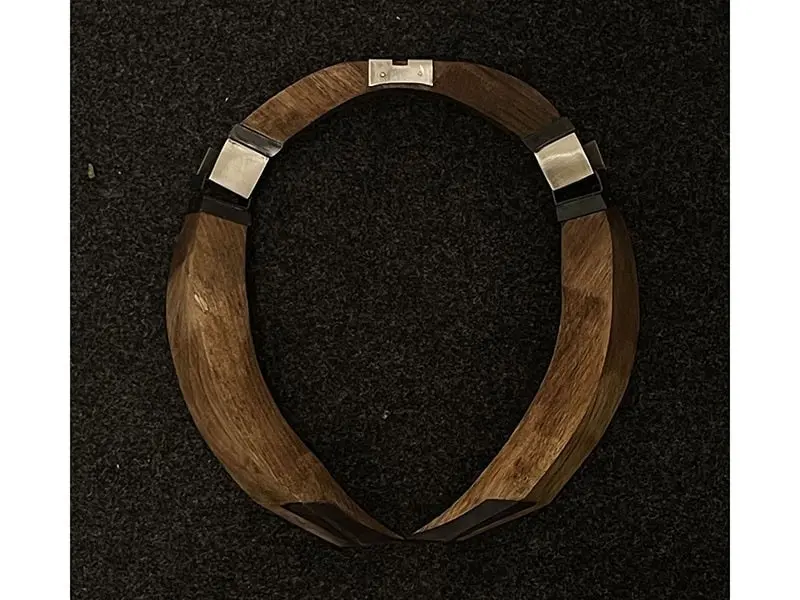
Marie-Caroline Locquet views jewelry far less as a traditional marker of luxury and much more as an instrument of conceptual provocation. In her striking and uncompromising body of work, she aims to entirely redefine the medium, stripping away centuries of associations tied to wealth, power, and social status. Instead, her pieces function as wearable restraints and defensive weapons. Each creation is designed to offer what she describes as a unique wearing experience that actively explores our shared human fragility. By subtly invoking themes of violence, confinement, and sexual dominance, her metalwork and sculptural neckpieces evoke an immediate physical discomfort balanced by a palpable erotic tension.
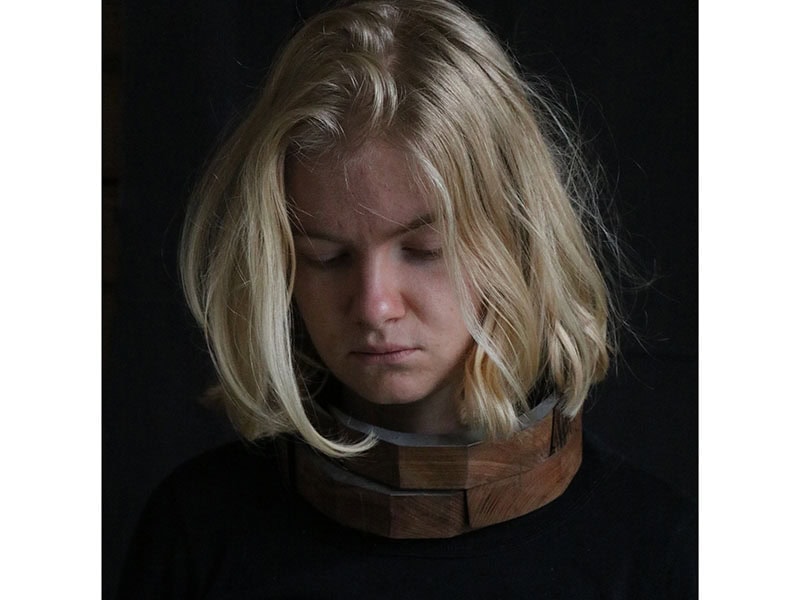
This radical approach to adornment has recently earned her international recognition. Locquet has been named a finalist for the prestigious Young Artist Award, an accolade supported by Karen and Michael Rotenberg. Awarded every two years, the prize acknowledges exceptional promise, innovation, and uncompromising individuality in the work of an emerging jewelry artist aged 35 or younger. Through this biennial award, the Art Jewelry Forum (AJF) actively champions bold, paradigm-shifting work that inspires future developments and challenges traditional boundaries within the contemporary jewelry field.
Locquet’s journey into this subversive artistic territory began during her foundational fine arts studies in France. Growing up in the north of France, she experienced early on the heavy social weight of self-demonstration and the subtle ways people use adornment to camouflage their social affiliations. Rather than drawing her to traditional aesthetics, this cultural observation sparked a deep conceptual curiosity. She began discovering the works of pioneering artists who fundamentally challenged traditional definitions of beauty, wealth, and ornamentation.

She points to radical, unsettling, and dangerous works by figures such as Bernhard Schobinger and Dorothea Pruhl as transformative moments in her artistic education. Pieces like Schobinger’s bottle-neck jewelry completely shifted her worldview, demonstrating how the medium could act as an object of profound disruption, critical reflection, and psychological provocation. This raised an enduring question that would come to form the absolute core of her artistic research: Why make, and consequently wear, jewelry that appears intensely disturbing at first sight? What does it truly mean to craft objects that seem entirely "unwearable"?
Being selected as a finalist for the Young Artist Award serves as a powerful validation of these questions and the trajectory she has pursued for several years. For Locquet, the recognition provides renewed confidence to press forward with her radical vision, continuing to push boundaries and challenge the psychological limits of the wearer, the maker, and the audience alike.
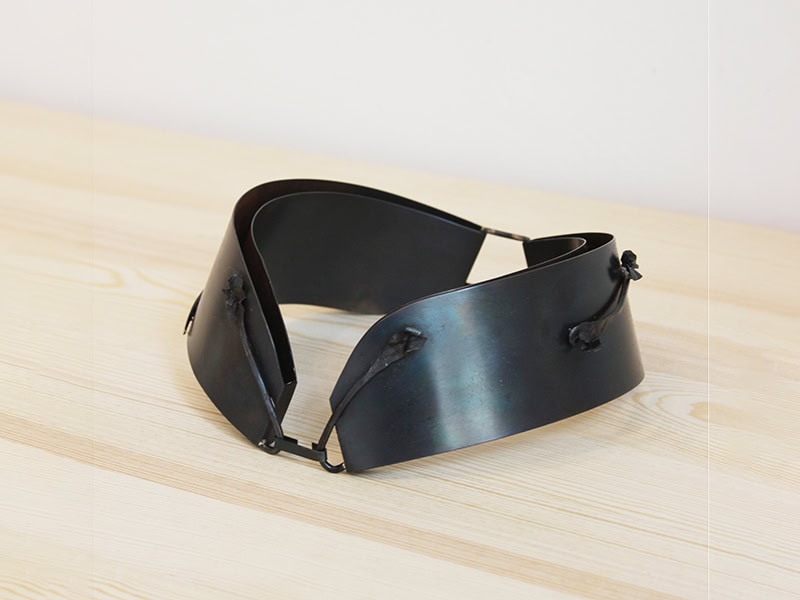
In her application work, Locquet drew deeply from these conceptual underpinnings, presenting objects that deliberately reject seduction and traditional representation in favor of visceral disturbance. Her materials—often pushed to their absolute physical limits—bare themselves to reveal an unvarnished nature, shaped into forms that hover precariously between the allure of desire and the shadow of death. Whether functioning as protective defensive weapons or rigid restraint devices, her creations maintain an unyielding tension between social discomfort and the temptation of an embrace.
This exploration of confinement, violence, and vulnerability has naturally led Locquet to investigate historical and sociological objects of subjugation. Her research has incorporated historical references such as the collier d’appartenance—a collar historically given by an individual to a submissive partner in power-exchange relationships—as well as the "slave collar" originating from 19th-century Norman and Auvergnat traditions, which was traditionally given to women at marriage as a token of possession. She has also examined heavy animal-labor equipment, such as the equine horse collar, translating their heavy psychological and physical implications into wearable sculpture.
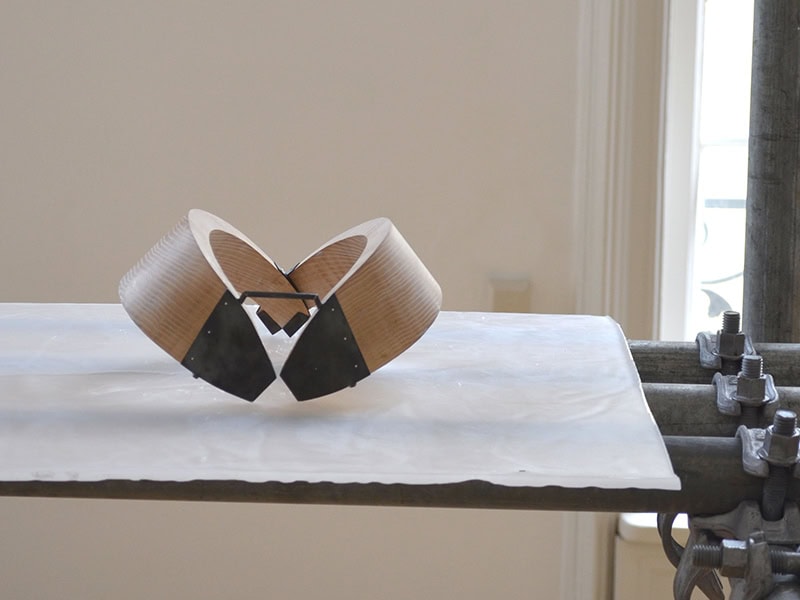
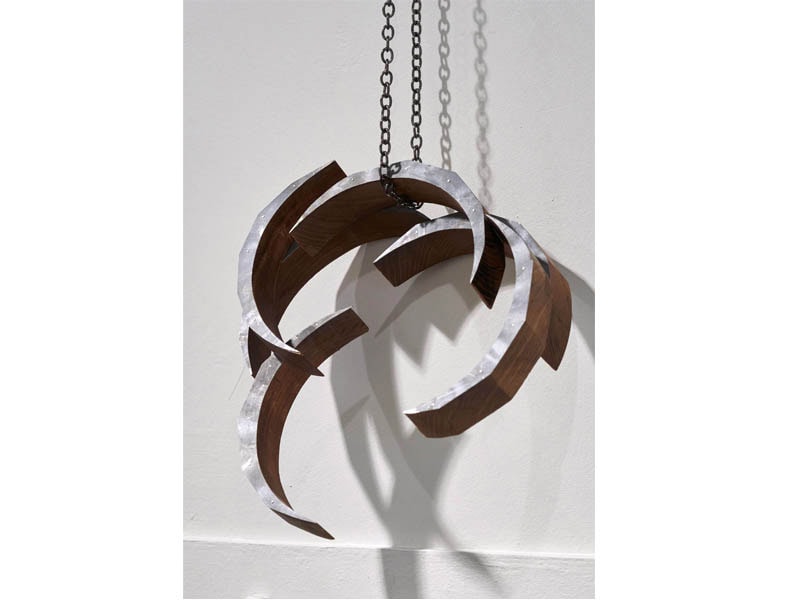
Among the standout pieces from her application is Hands, a 2024 neckpiece constructed from elm wood, zinc-plated steel, and silver. This intricate creation vividly exposes the multi-layered nature of her artistic practice, highlighting her obsessive research into complex mechanical systems, functional clasps, and the fluid border separating jewelry from standalone sculpture. The piece unfolds and occupies physical space like an elaborate mechanical apparatus before dramatically closing around the neck in a motion reminiscent of an act of strangulation. It remains one of her most complex, intimate, and emotionally charged works, directly channeling themes of entrapment and violence.
Locquet’s broader practice extends far beyond individual neckpieces into immersive spatial environments. Her work explores how body ornament actively shapes the collective image of a society, noting that everything we wear draws directly from the boundaries, values, and references of our inhabited world. This fascination led her to initiate an extensive iconographic research project and collection titled "Unwearable"—adornment is impure, makeup is obscene, disguise is an abomination. This ongoing project examines how bodily ornamentation, when intimately connected to the human form, reveals deep truths about cultural representations and the delicate membrane separating the private, intimate sphere from public space.
Despite the vibrant experimental energy found within contemporary art jewelry, Locquet remains candid about the frustrations that occasionally plague the field. Reflecting on an exhibition she co-curated with colleagues and friends during Munich Jewelry Week in 2018 titled Jewelry Is Still a Risky Business—a direct nod to a work by Paul Derrez—she firmly believes that jewelry should retain its inherent sense of risk.
During her time studying jewelry in a French fine arts institution, she frequently encountered the lingering prejudice that the medium was somehow "lesser," superficial, or merely a niche craft compared to fine art. While she acknowledges that this marginal status is partly a strength because it fosters alternative ways of looking and thinking, she also recognizes that it creates a wide distance between the specialized art jewelry community and the general public. To bridge this gap, some of her recent works, such as Panicroom Vector I, incorporate a more literal dimension, acting as accessible entry points for viewers encountering her complex conceptual universe.
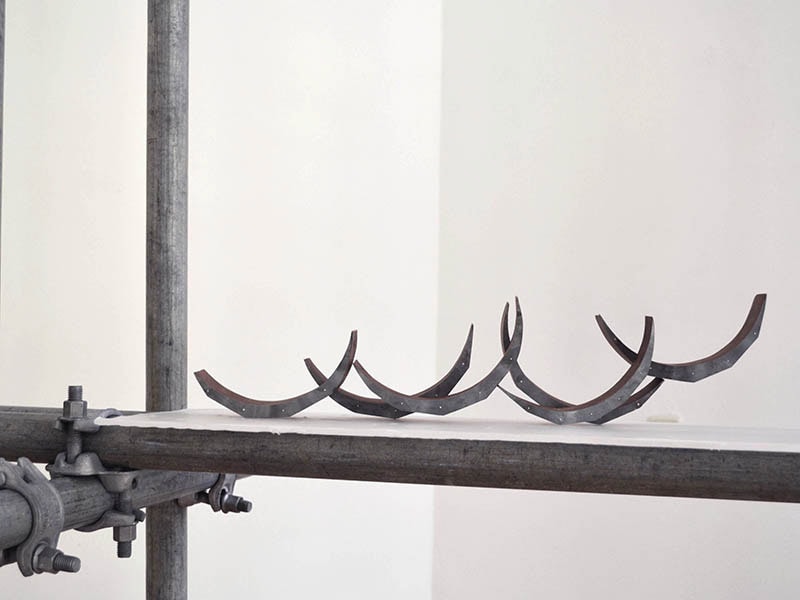
Looking ahead, Locquet envisions a future deeply rooted in artistic growth, spatial exploration, and academic engagement. Having spent the years since her graduation expanding her sculptural vocabulary and integrating her neckpieces with architectural environments—as seen in recent exhibition projects like her presentation at the Institut Français München and A-Galerii in Tallinn, Estonia—she remains committed to pushing the collective notion of body ornament forward. Alongside her studio practice, she harbors a strong interest in research and teaching, viewing educational spaces as vital environments for reinventing how we extend, deform, and question the boundaries of contemporary jewelry. Trusting the artistic process and expressing profound gratitude to those who have supported her journey, Locquet stands poised to continue her fearless interrogation of adornment for years to come.