




More than a decade after first leaving its creative mark on Mandarin Oriental The Landmark in Hong Kong, Joyce Wang Studio has returned to the prestigious property to execute a sweeping, second major renovation. Captured through the lens of Common Studio, the newly unveiled redesign spans all 109 guest rooms and suites, the grand mansion foyer, the hotel spa, and the space formerly known as MO Bar. This ambitious overhaul marks a profound evolution in the interior design narrative of the luxury hotel, pivoting from the studio’s initial vision toward an aesthetic deeply rooted in local history, architectural heritage, and the intimate character of a private residence.
When Joyce Wang Studio first undertook the hotel’s reimagining over ten years ago, the brief established a contemporary standard for luxury within the bustling central district. For this second iteration, however, principal designer Joyce Wang notes that the directives emphasized a much stronger, more intrinsic connection to Hong Kong itself. The design team sought to capture a distinct sense of place by turning their attention to the chapters of the city’s architectural past that continue to command fascination today.
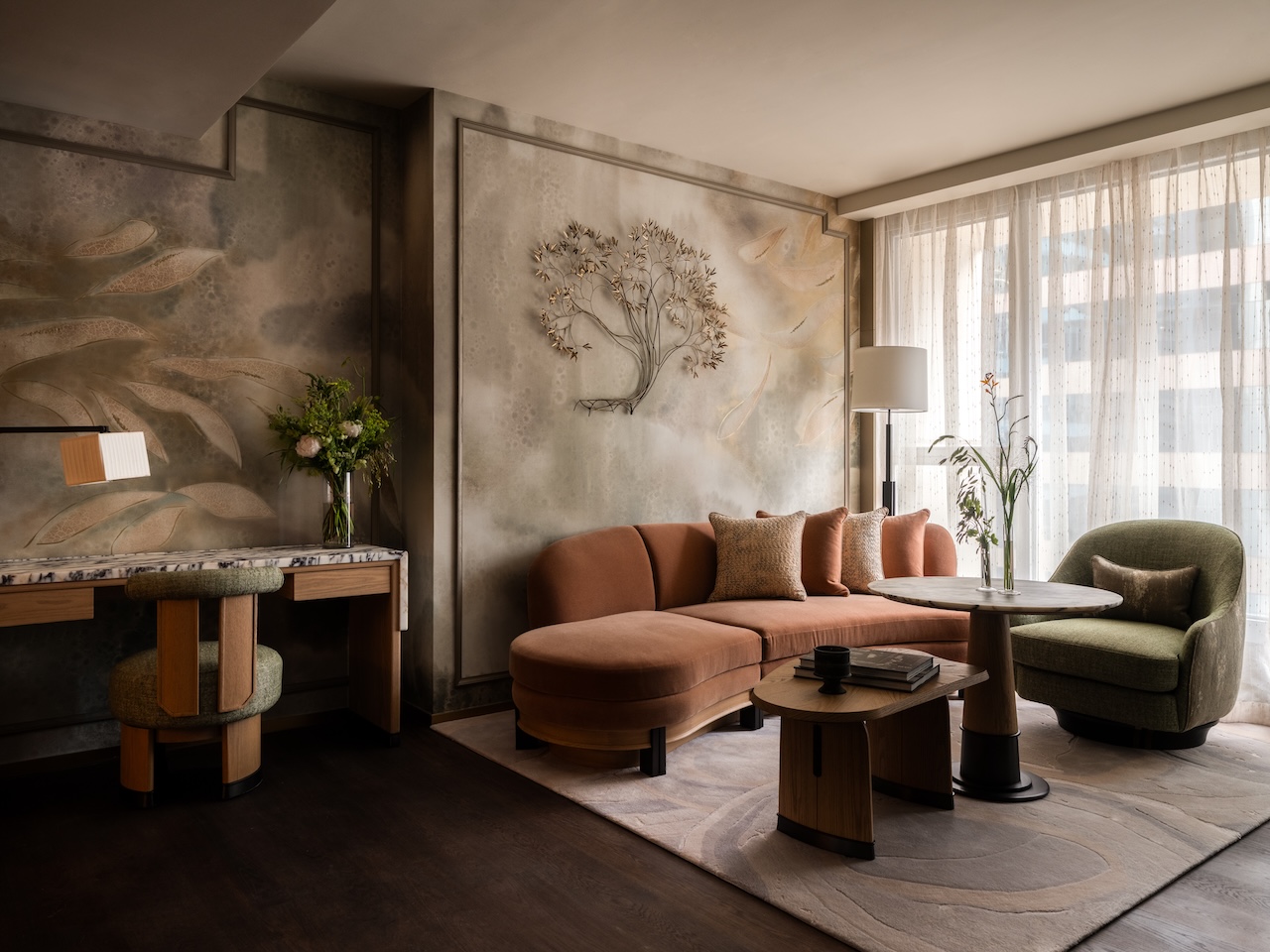
In shaping the concept for the new interiors, the studio drew direct inspiration from the historic colonial country manors traditionally frequented by the influential figures and Tai Kwuns of a bygone era. Wang explains that their vision shifted toward honoring the historic architecture and residential heritage of the region, ensuring that the luxury hotel would resonate deeply with both local relevance and historical context. Rather than simply refreshing or updating the color palettes and soft furnishings from their previous work, the studio undertook a comprehensive reimagining that honors the layered history of Hong Kong’s built environment.
Central to this narrative is the overarching concept of a lived-in mansion—a spatial typology with numerous historical precedents throughout the territory. To translate this domestic grandness into a hospitality environment, the studio established a sophisticated color palette anchored by rich greens and warm oranges. These hues pay subtle homage to Hong Kong’s lush, tropical gardens alongside the distinctive terracotta tones found throughout its colonial architecture.
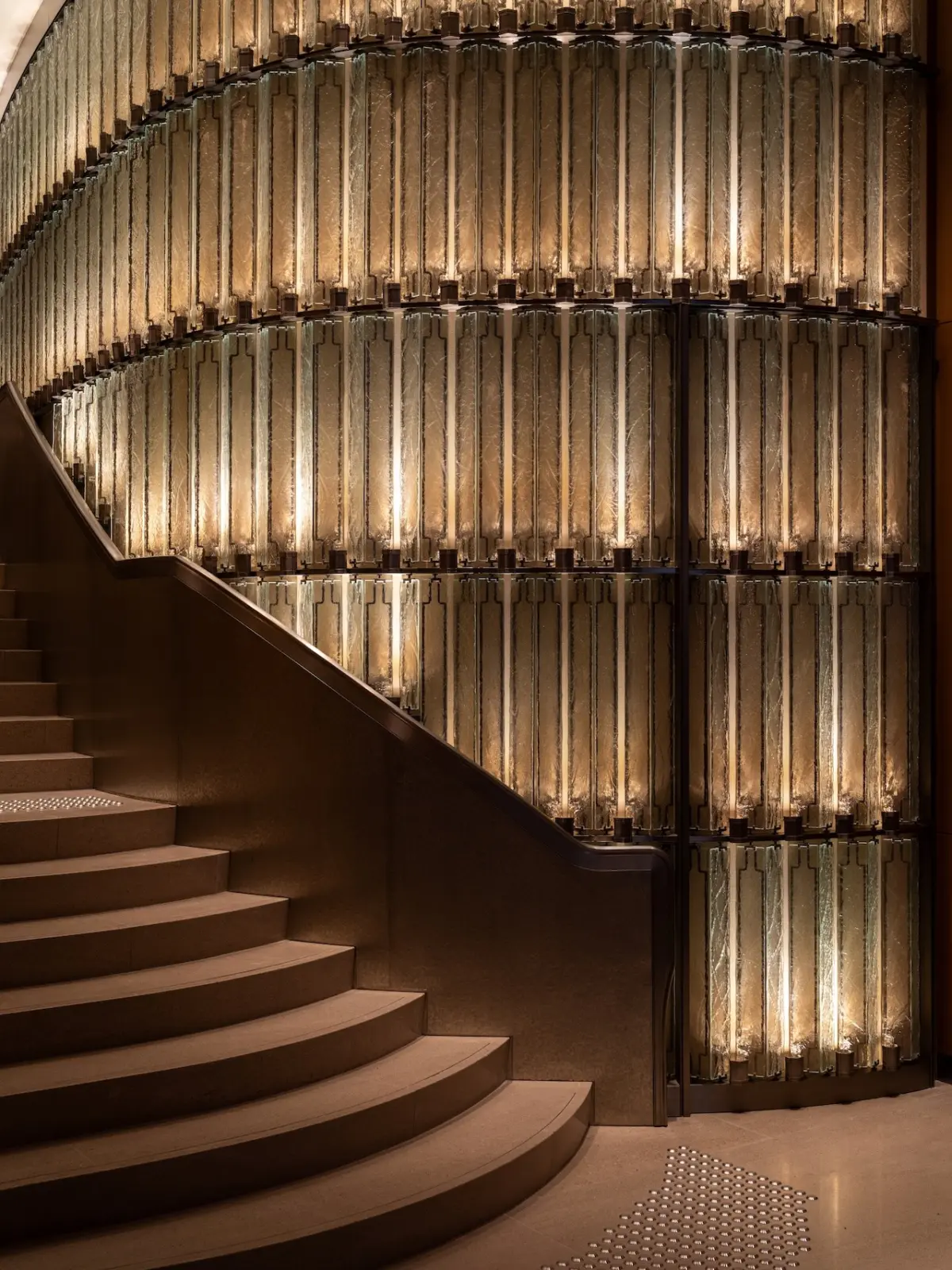
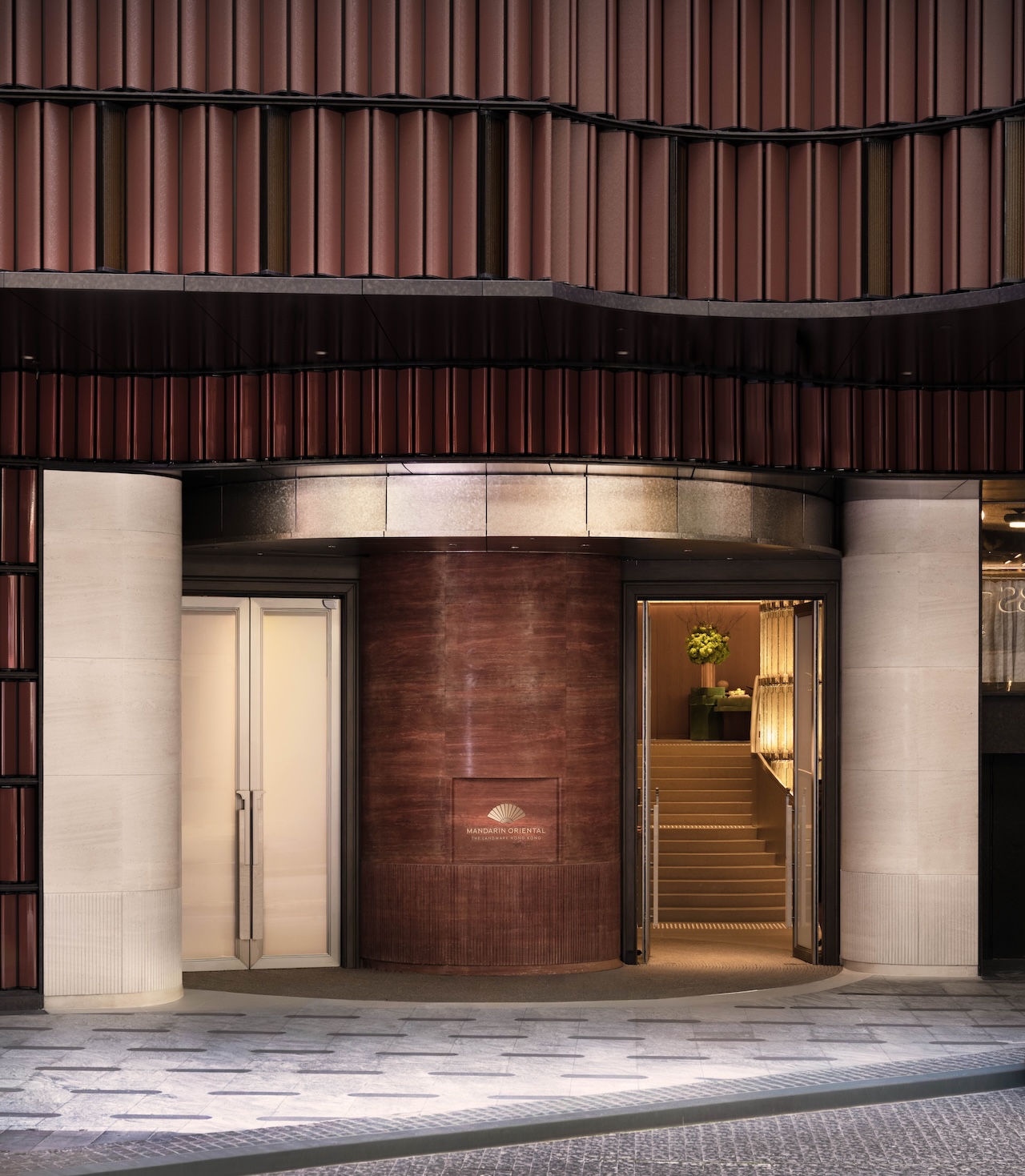
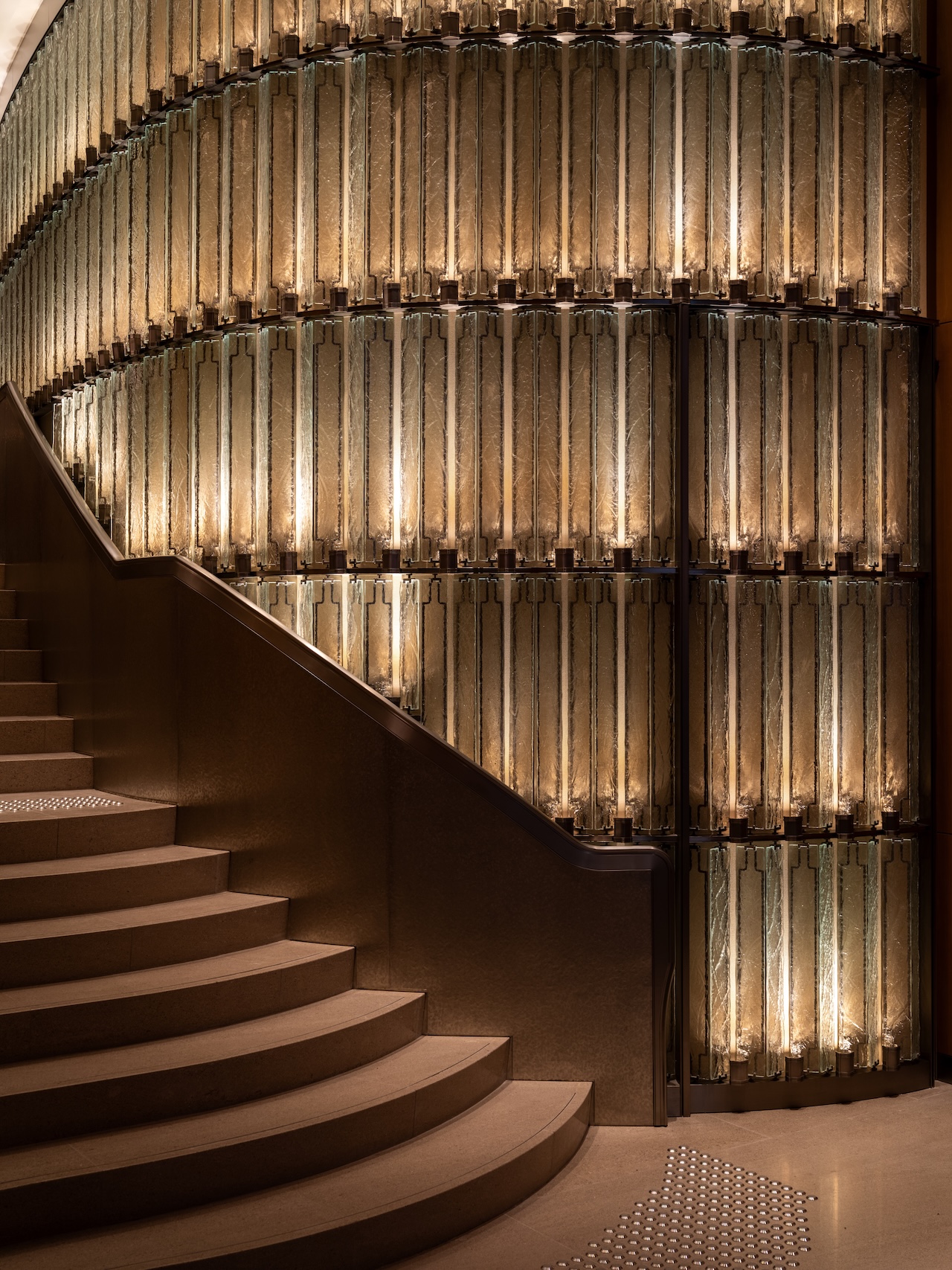
Upon entering the hotel, guests are greeted by a newly redesigned arrival sequence that seamlessly blends classic architectural gestures with contemporary detailing. The lobby features an intricate combination of natural stone, warm timber, tactile textured wallcoverings, and custom eglomisé glass panels that catch and refract the light. Architectural elements such as an undulating staircase, dedicated artwork bays, and sculptural plinths work in concert to guide visitors through an arrival sequence meticulously modeled after the entryway of a grand private residence.
Throughout the public spaces, elevators, and guestroom corridors, the city’s iconic skyline serves as a recurring visual motif. Joyce Wang Studio commissioned custom artworks tracing the familiar silhouette of Hong Kong, transforming these urban outlines into bespoke carpets, intricate tapestries, and luminous eglomisé glass installations. This subtle integration ensures that the city’s exterior landscape maintains a constant, artistic dialogue with the interior environments.
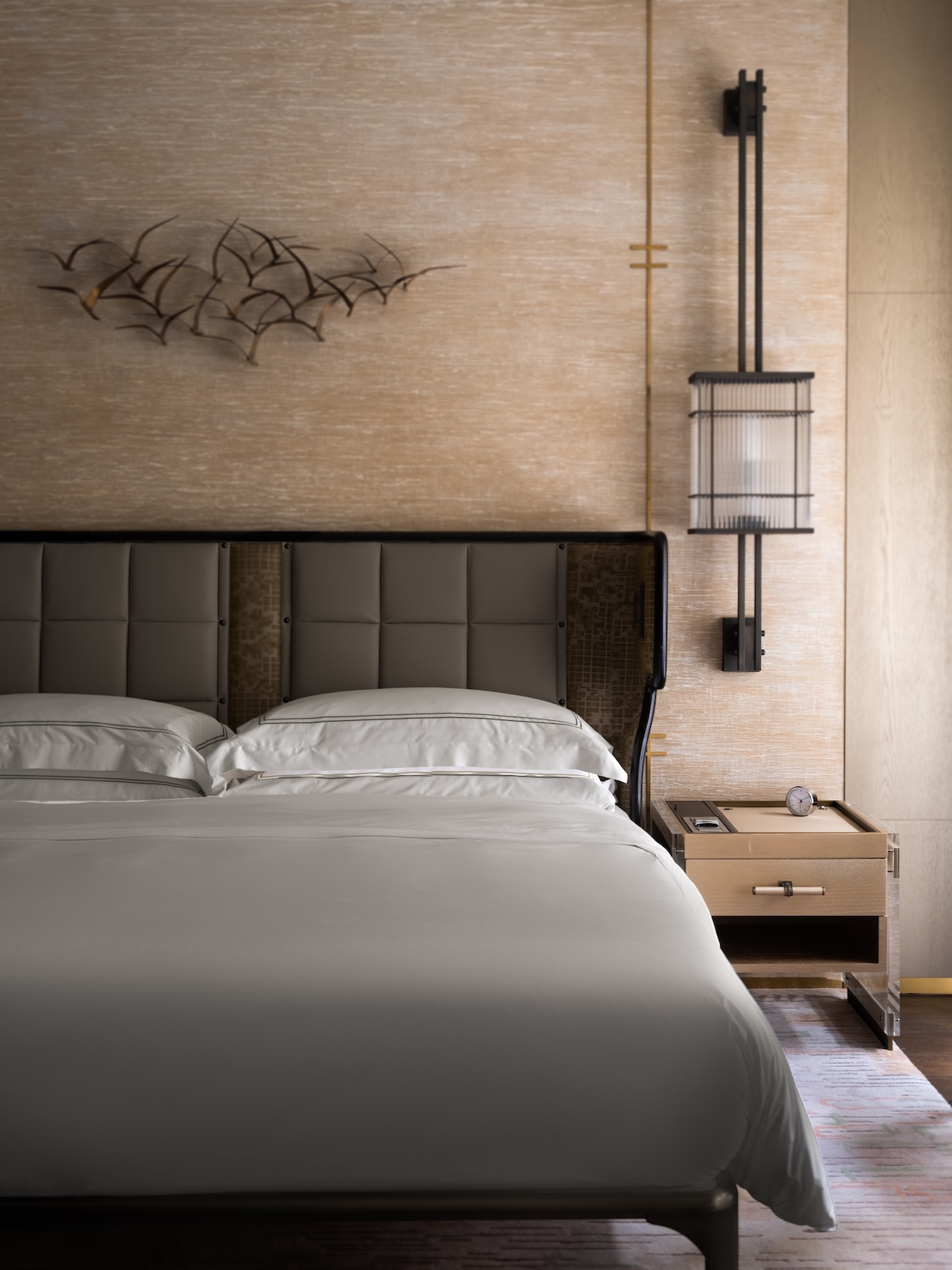
In the guest rooms and suites, the sense of place is further reinforced through tactile materials and bespoke furnishings. Custom-designed rugs resting on lightened timber floors take their specific patterns from the historic brickwork found across Hong Kong, grounding the modern luxury of the rooms in local architectural heritage. These elements are paired with sophisticated wall finishes, including cracked gesso and luxurious Fromental wallcoverings that combine hand-painted motifs with delicate silk elements, creating an atmosphere of refined residential comfort.
Art has been embedded into the core of the design program from the very beginning, functioning as an essential layer rather than an afterthought. According to Wang, the curation of the artwork collection was approached with strict architectural and narrative rigor, ensuring that every piece carries an intentional story. The comprehensive collection brings together works by both emerging and established artists from both local Hong Kong backgrounds and the international creative community.
To complete the illusion of a grand home rather than a commercial hotel, the rooms are appointed with carefully chosen objects, including sculptural vases, artisanal vessels, and decorative pieces that appear as though they have been collected over time by a well-traveled resident. Wang envisions the property functioning as an exclusive pied-à-terre, offering guests an intimate space to experience the city up close while enveloped in residential luxury.
Ultimately, these meticulously curated details coalesce to give the hotel the rich, layered character of a private estate. By weaving references to Hong Kong’s vernacular architecture, natural landscape, and vibrant artistic community into every corner of the property, Joyce Wang Studio has firmly anchored the hotel in its unique setting. Rather than merely revisiting past successes, this comprehensive renovation delivers a nuanced, deeply local interpretation of contemporary luxury hospitality.