





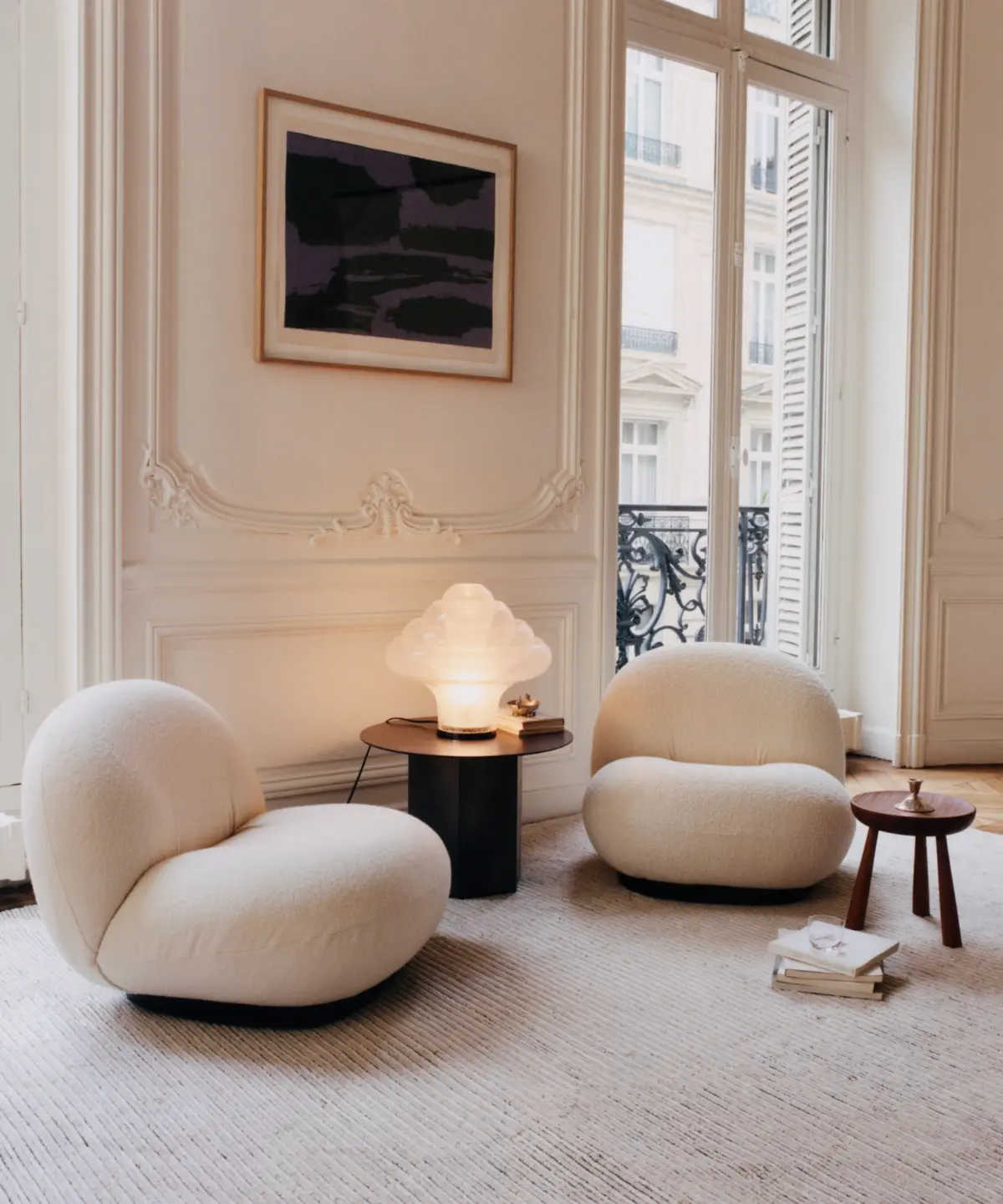
The lotus—a flower celebrated for its ability to bloom triumphantly in challenging conditions—has long stood as a universal symbol of resilience, grace, and enduring beauty. Now, more than five decades after its original debut, another kind of Lotus is experiencing a remarkable second life. Italian design brand Gubi has officially brought Carlo Nason’s sculptural 1969 table lamp back into production, introducing a mid-century masterpiece to a contemporary global audience that has long coveted vintage iterations of the piece.
First introduced by Italian glassmaker Carlo Nason in 1969 as the LT305, the light remained in active production for only a brief period. Despite its short-lived initial run, the lamp went on to develop an intensely devoted cult following among international design collectors and connoisseurs. Over the decades, admirers affectionately nicknamed it the “Lotus lamp” due to its striking botanical silhouette, a moniker that Gubi has now officially embraced for its modern-day commercial revival.
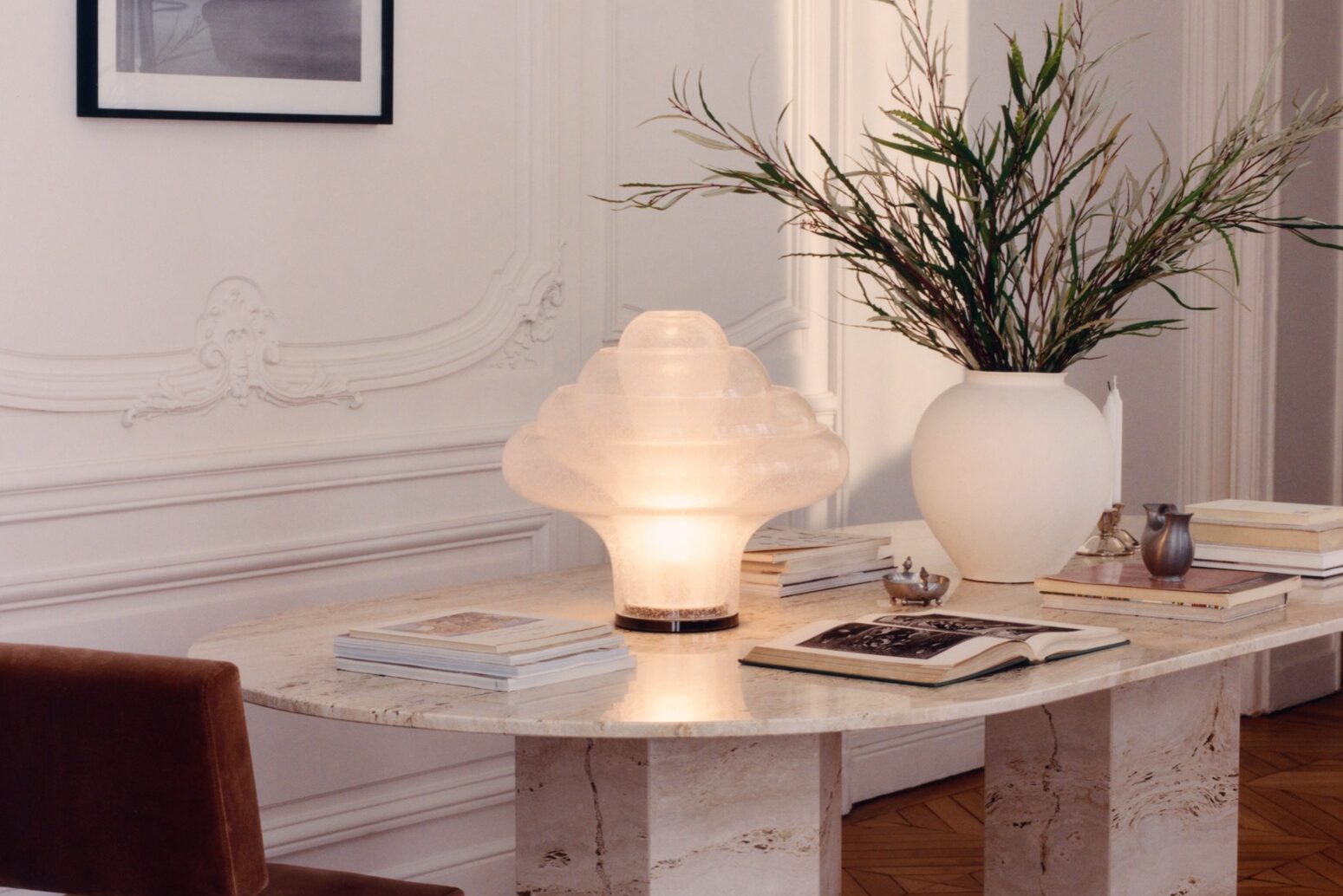
Marie Kristine Schmidt, CEO of Gubi, notes that adopting the collector-given title was an intuitive choice for the brand. Collectors had already given the lamp a name that captured the essence and visual poetry of the design beautifully. The name had organically become a core part of the design’s identity and history over the last fifty years, and the brand wanted to respect that legacy by making it official.
The enduring appeal of the fixture is a direct testament to how ambitious and forward-thinking Nason’s vision was when it first emerged on the European design scene. Growing up immersed in a renowned family of Murano glassmakers, Nason acquired an exceptionally deep, expert command of the Venetian island’s legendary glassblowing traditions. Yet, while most of his family members and industry peers applied these historic skills to highly ornate, decorative forms, Nason was eager to move in more experimental, contemporary directions that reflected a changing world.
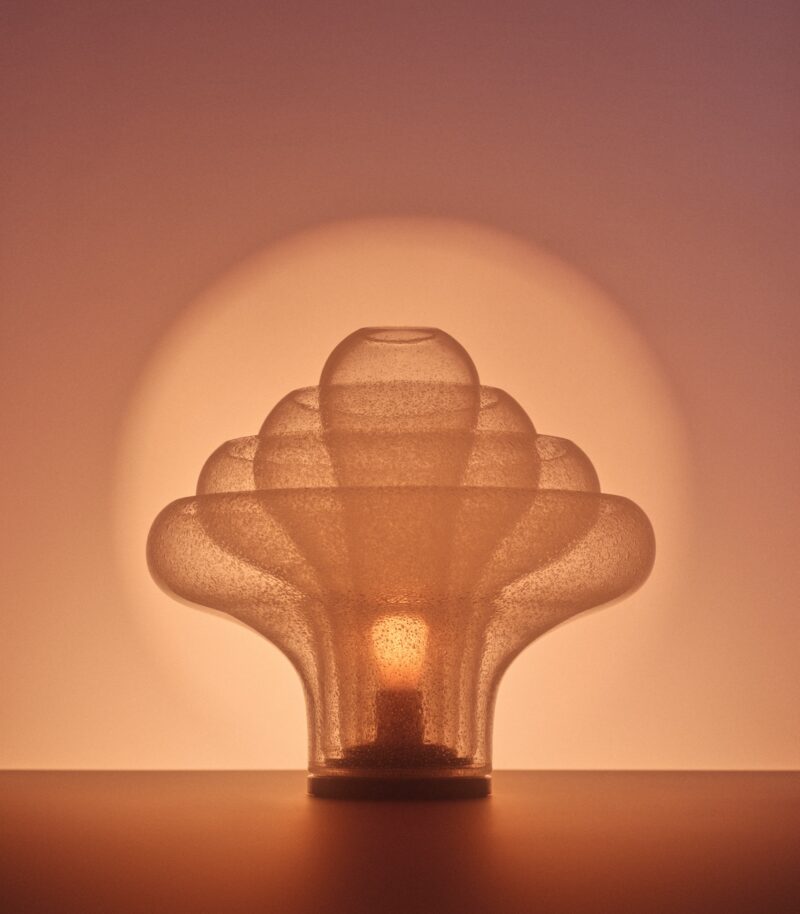
Deeply influenced by the rise of post-war industrial product design—particularly the futuristic, organic Space Age styles that dominated international culture during the 1960s—Nason engineered the LT305 lamp with a bulbous, streamlined, and aerodynamic silhouette. However, beneath this clean and pared-back profile lies a level of technical complexity and sophisticated glasswork that few makers could successfully execute. The light is composed of four distinct, mouth-blown glass shades, with each individual layer meticulously nested within the next to create a staggered, overlapping arrangement that unmistakably calls to mind a lotus flower slowly unfurling in bloom.
According to Schmidt, the four distinct layers of mouth-blown glass give the object an almost architectural presence in a room, turning a functional lighting fixture into an arresting sculptural statement. This sophisticated construction method also plays a critical role in the lamp’s carefully calibrated luminosity, which is entirely free from both harsh glare and sharp shadows. While the design’s opaque central portion—where its four curved shades overlap and obscure the internal light source—completely hides the bulb from view, the fixture’s wider outer curves, expressed through a single layer of clear glass, exhibit a delicate, ethereal transparency.
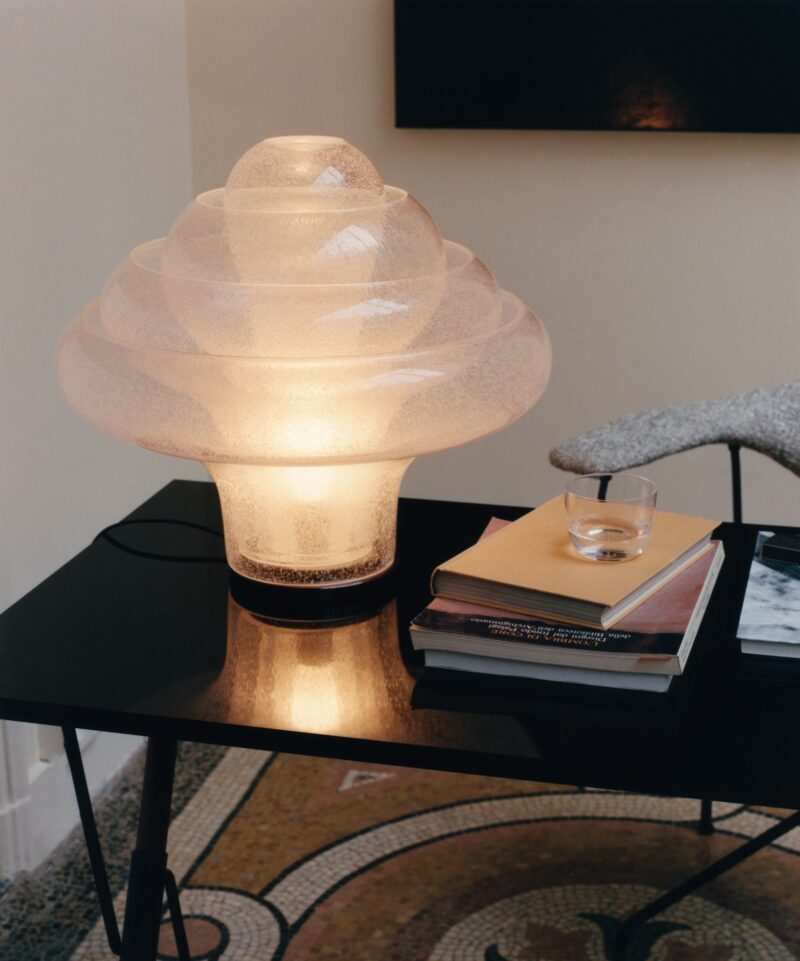
Adding to the design’s dynamic sense of visual depth, each mouth-blown shade is produced using a traditional Murano technique known as “pulegoso.” In this specialized process, small air bubbles are intentionally trapped and blown into the molten glass while it is being worked, giving the material a richly textured, semi-opaque appearance that diffuses light with remarkable softness. Originally developed on the island of Murano in the 1920s, the pulegoso method further highlights the profound human skill and artisanal labor behind each individual element of the lamp.
Because every single one of the four shades is mouth-blown by master artisans, the natural, microscopic variations in the glass and the random distribution of the interior bubbles ensure that no two lamps are ever exactly alike. Schmidt points out that this distinct individuality is a vital component of the design’s timeless appeal, noting that the visible craftsmanship gives each manufactured piece its own unique character and soul.
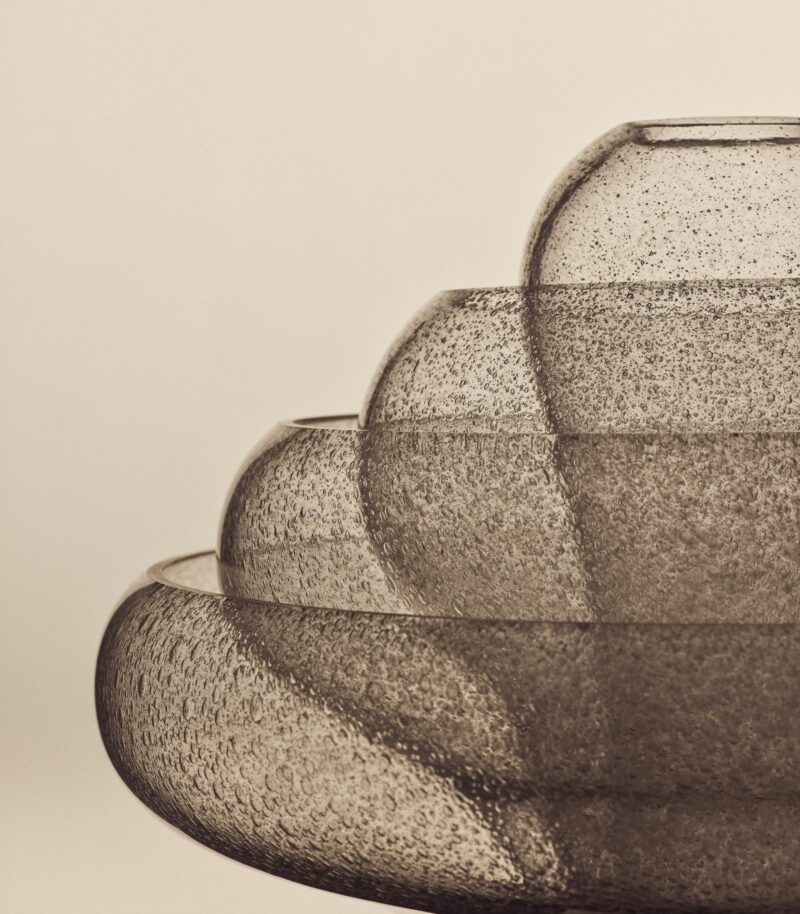
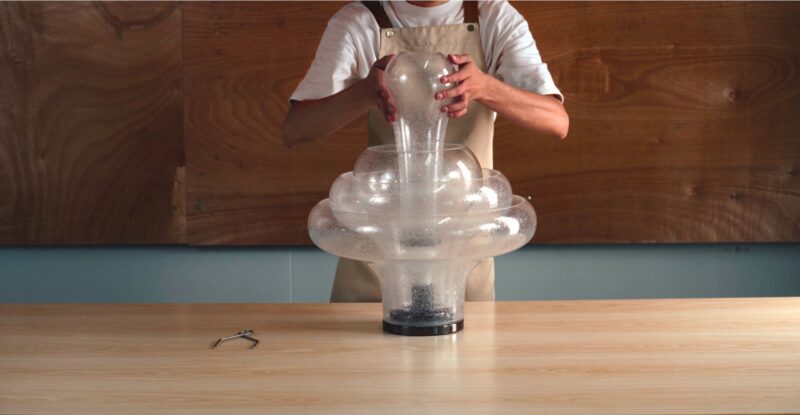
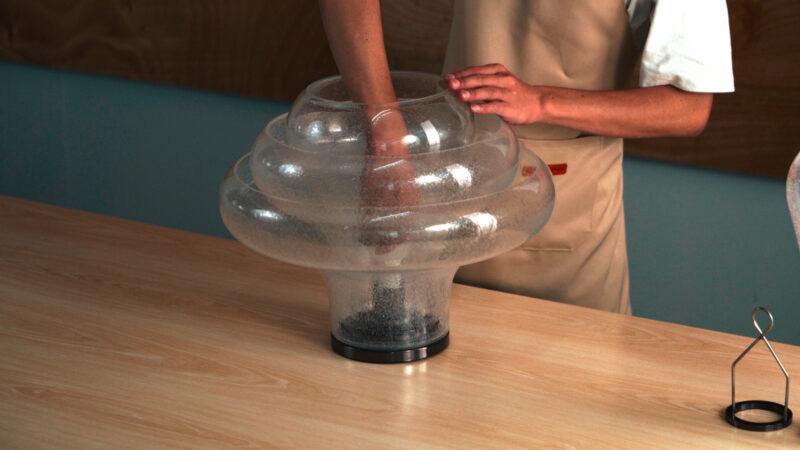
While staying meticulously faithful to Nason’s original technical specifications and aesthetic proportions, Gubi did introduce one key contemporary refinement to ensure the piece meets modern standards of utility. The lamp’s internal steel base, which securely houses the electrical bulb socket and provides structural support for the four heavy glass shades, has been entirely re-engineered for enhanced stability. This updated internal construction also makes it significantly easier to disassemble the lamp safely for routine cleaning and effortless bulb replacement.
These are discreet, thoughtful improvements that do not alter the iconic outward expression of the original design, but rather ensure that it functions seamlessly in everyday modern use. Whenever Gubi undertakes the task of bringing a historic design back into active production, the primary starting point is always to deeply understand the original creator’s intention and preserve the intangible qualities that made it special in the first place. To achieve this authenticity, the brand worked in close collaboration with Nason’s son, Alberto, throughout the entire development and re-engineering process.
The resulting reissue successfully preserves the bold sculptural character that has made the Lotus a holy grail for design collectors for generations. Schmidt emphasizes that a design must truly earn its hard-fought place in the curated Gubi collection. The brand constantly searches for historical pieces with a strong, uncompromising identity, a distinct point of view, and enduring qualities that make them just as relevant and captivating today as they were when they were first conceived. The Lotus lamp possesses all of those rare qualities in abundance.
The revival of the lamp carries profound emotional significance following Nason’s passing earlier this year, framing the reissue not only as a commercial release but as a vital continuation of his artistic legacy. Alberto Nason has expressed deep gratitude that Gubi’s careful restoration will now allow a much wider, global audience to experience his father’s visionary lighting design firsthand, moving it out of private archives and into everyday homes.
Observing the lamp closely reveals how its form continues to unfold layer by layer over time, allowing the viewer to discover its subtle nuances incrementally. There is a quiet magic to the object—a distinct softness, a profound optical depth, and a tactile presence that makes the illuminated light feel almost like a physical material in its own right.
Like the aquatic flower from which it draws its name and inspiration, the Lotus is back in full bloom. The Lotus Table Lamp is currently available for acquisition through gubi.com and select international design retailers.