




In the 1970s, a visionary Dutch publisher embarked on a daring experiment that challenged the standard economics and conventions of the literary world. Theo Knippenberg, a voracious reader who found traditional books entirely unaffordable during his student years, stumbled almost completely by accident into a publishing career that would ultimately produce some 250 novels in a newspaper format over a span of 26 years.
Now 80 years old, Knippenberg often attributes his unexpected entry into the industry to his mother, who had spent years nagging him to find a respectable, stable trade. Instead, he found himself swept up in the countercultural energy of the late 1960s, eventually carving out a unique niche in European publishing history.
Knippenberg’s journey began quite modestly at an arts festival in Utrecht in the late 1960s. There, he sold a series of tiny books by Dutch writers, each bound together simply with an ordinary rubber band. Despite the primitive nature of the product, it sparked a realization that alternative approaches to book distribution might just work.
Determined to expand his horizons, Knippenberg had a fateful encounter at a road crossing with renowned Dutch author Harry Mulisch, later famous for masterpieces such as The Discovery of Heaven. By sheer persuasion, Knippenberg convinced Mulisch to let him publish an excerpt of an essay. Securing the participation of such a literary heavyweight provided Knippenberg with crucial leverage. He used Mulisch’s involvement to convince other famous Dutch writers of the era, including literary icon Jan Wolkers, to contribute their work to his nascent enterprise.
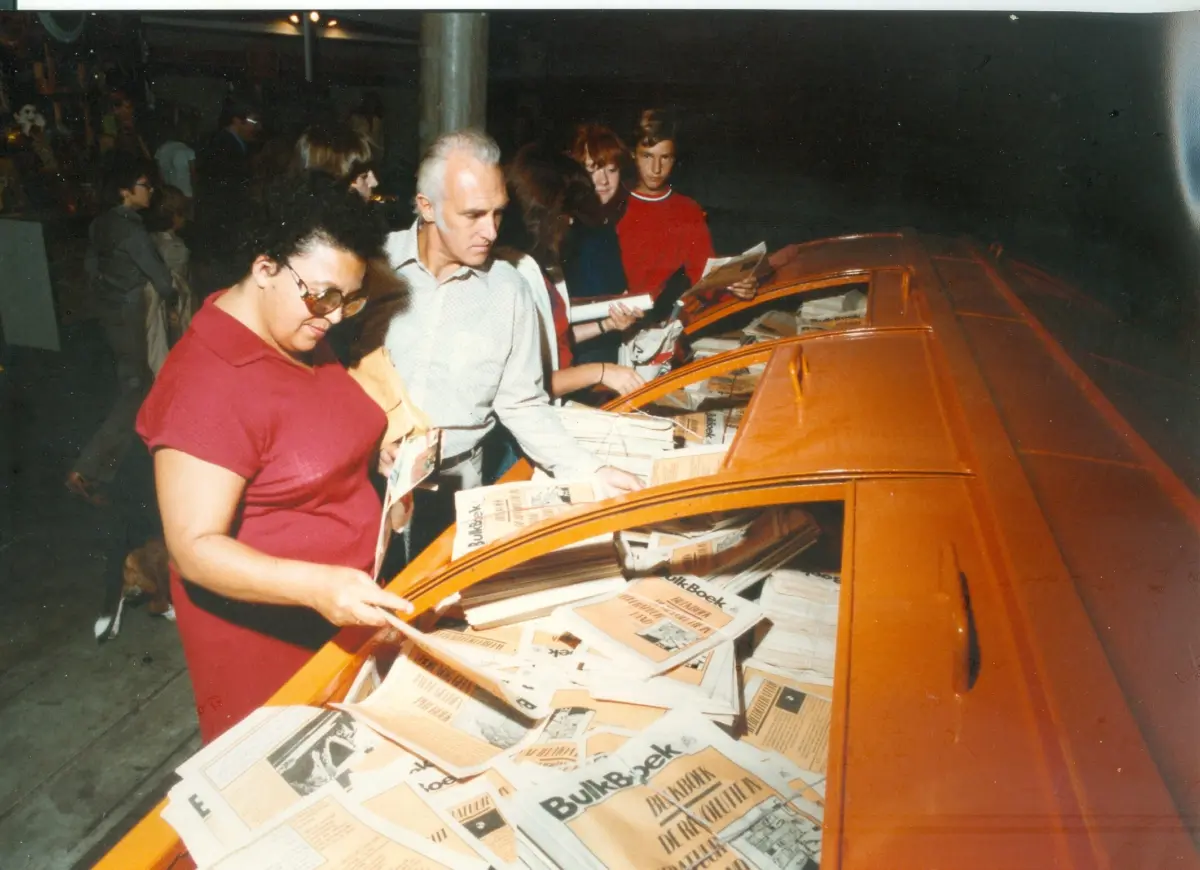
Using the modest proceeds from his mini-book sales, Knippenberg invested in unconventional production equipment. Rather than purchasing a traditional printing press, he acquired machinery specifically engineered to print newspapers. The logic behind the choice was entirely financial: thinner newsprint was vastly cheaper to produce, which meant the final product could be sold to consumers at a fraction of the cost of standard literature. Alongside his wife, Patty Voorsmit, Knippenberg officially launched Bulkboek, an initiative designed to make serious literature accessible to the masses.
The very first edition, published in 1970, was Schroot by Belgian writer Jef Geeraerts. The novel follows a former colonel in the Belgian military who struggles intensely to adapt to civilian life after returning from the Congo. It set a high literary standard for what was to follow, proving that serious, complex fiction could successfully transition onto inexpensive newsprint without losing its intellectual weight or artistic integrity.
Over the next quarter-century, Bulkboek became a publishing phenomenon. Readers could sign up for an annual subscription series consisting of 10 issues, with each issue costing just 1.50 guilders—an amount roughly equivalent to around four euros today. At the height of its popularity and cultural influence, the company boasted more than 100,000 subscribers, cementing its place in the educational and literary fabric of the Netherlands.
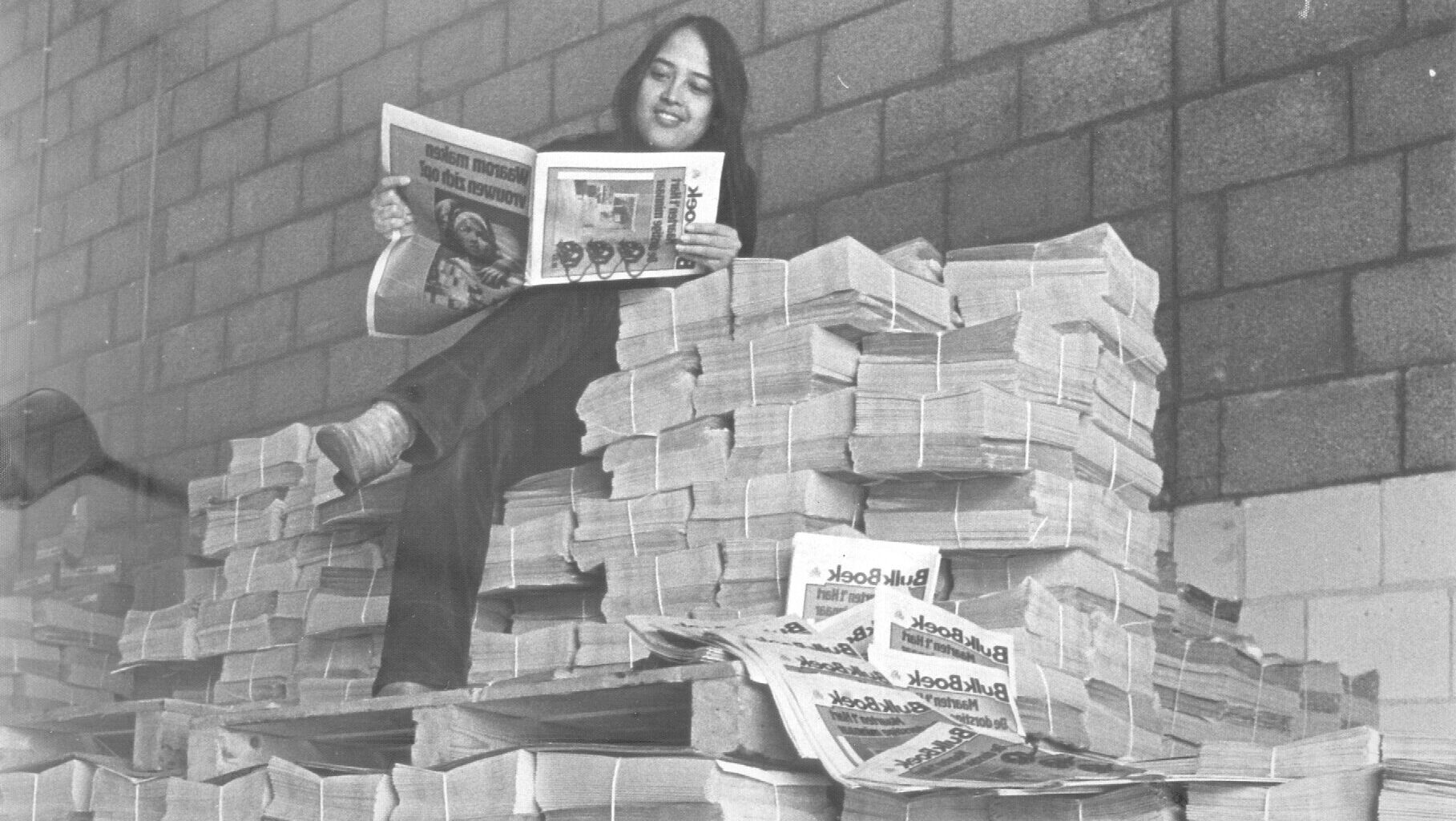
The editions were strategically aimed at secondary students, functioning as an accessible bridge between standard school curricula and contemporary literature. To support young readers, each newspaper edition included supplementary materials such as interviews with the authors, critical essays, and explanatory texts designed to help students deeply understand and contextualize the work.
When asked about his curation strategy, Knippenberg has noted that the works were selected based on a combination of published availability and his own personal tastes. Operating without any formal background in publishing, Knippenberg had to learn the entire trade on the fly, figuring out how to create text sheets, incorporate illustrations, and run the physical print presses himself. He famously describes his early operational setup as having been "so primitive."
Initially, Bulkboek’s print runs focused exclusively on works by Dutch and Flemish authors. However, by the late 1970s, Knippenberg’s ambitions expanded. He began branching out internationally, translating and publishing foreign literary giants. Authors such as Leo Tolstoy, Pablo Neruda, and Iris Murdoch all eventually found their work translated and formatted into the distinctive Bulkboek newspaper layout.
The enterprise eventually moved far beyond the borders of the Netherlands, gaining traction in Belgium, Germany, and France, and beginning to publish books in languages other than Dutch. This international expansion reflected the universal appeal of affordable, high-accessible literature, proving that the newspaper format was not merely a local novelty, but a viable model for cross-border cultural distribution.
By the early 1990s, however, the economic realities of the publishing industry had shifted dramatically. The widespread introduction of cheap paperbacks altered the competitive landscape, making traditional softcover books far more accessible and undercutting the unique cost advantage that the newspaper format had enjoyed for twenty years.
Despite the eventual winding down of its original operational model, the legacy of Bulkboek endured. Last year, the company was taken over by educational publisher BruutTAAL, though Knippenberg maintains a continued involvement with certain aspects of the business. The newly energized enterprise is currently working on a fresh series of publications focusing specifically on short stories, adapting to modern pedagogical needs and shifting reading habits.
Reflecting on the modern literary landscape, Knippenberg notes that students have much shorter attention spans these days, explaining why short fiction represents a more effective modern vehicle to draw in young readers and cultivate lifelong reading habits.
Meanwhile, the physical artifacts of the original Bulkboek experiment continue to circulate. On second-hand book websites, vintage copies of Bulkboeks remain readily available for purchase by collectors and nostalgic readers alike. Titles such as Leo Tolstoy’s Boyhood, Cees Nooteboom’s Half the World, and Willem Frederik Hermans’s The Signet Ring can still be tracked down online, frequently priced at just two or three euros—often costing even less today than they did when they were first printed and mailed out to subscribers by Knippenberg and his wife decades ago.