




Comfort and joy—those two simple yet deeply resonant words encapsulate the essence of Burberry’s latest spring collection. The striking line was born out of a remarkable, cross-generational creative partnership between Burberry’s visionary designer, Daniel Lee, and the legendary British textile designer Celia Birtwell. For this buzzy, highly anticipated seasonal showcase, Birtwell opened up her private archive to share her iconic vintage happy-face designs, while also conjuring an entirely fresh bouquet of botanical patterns. Lee scattered these vibrant motifs liberally across the bright, dynamic collection, offering a masterclass in British heritage meeting contemporary whimsy.
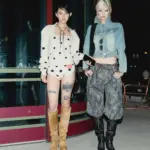
The runway presentation, held at the Chelsea College of Arts, was a sensory explosion of color and texture. Skirts, dresses, classic trench coats, tailored outwear, and even footwear burst forth with playful depictions of mimosas, blueberries, rosebuds, cascading vines, and delicate violets. These botanical elements were brought to life through various innovative techniques, appearing as intricate three-dimensional embroideries on sleek pencil skirts, as charming ditsy prints on traditional trenches, or as blurry, impressionistic patterns brushed across heavier coats. Meanwhile, Birtwell’s notoriously kooky “Halloween” faces made spirited appearances woven into soft knits and repurposed as little dangling medallions suspended gracefully from the collars of coats and the backs of kitten heels.
Never one to shy away from exploring the rich palette of the English countryside, Lee also captured the moody, romantic hues of an English garden—specifically shades of rich burgundy and soft lavender—and worked them into diaphanous, silk-embroidered trenches. Whether they functioned more like ethereal dresses than traditional outerwear was a delightful stylistic ambiguity. While these gossamer garments likely would not offer much protection in a sudden downpour, they possessed an undeniable, otherworldly grace that left fashion critics and attendees spellbound.
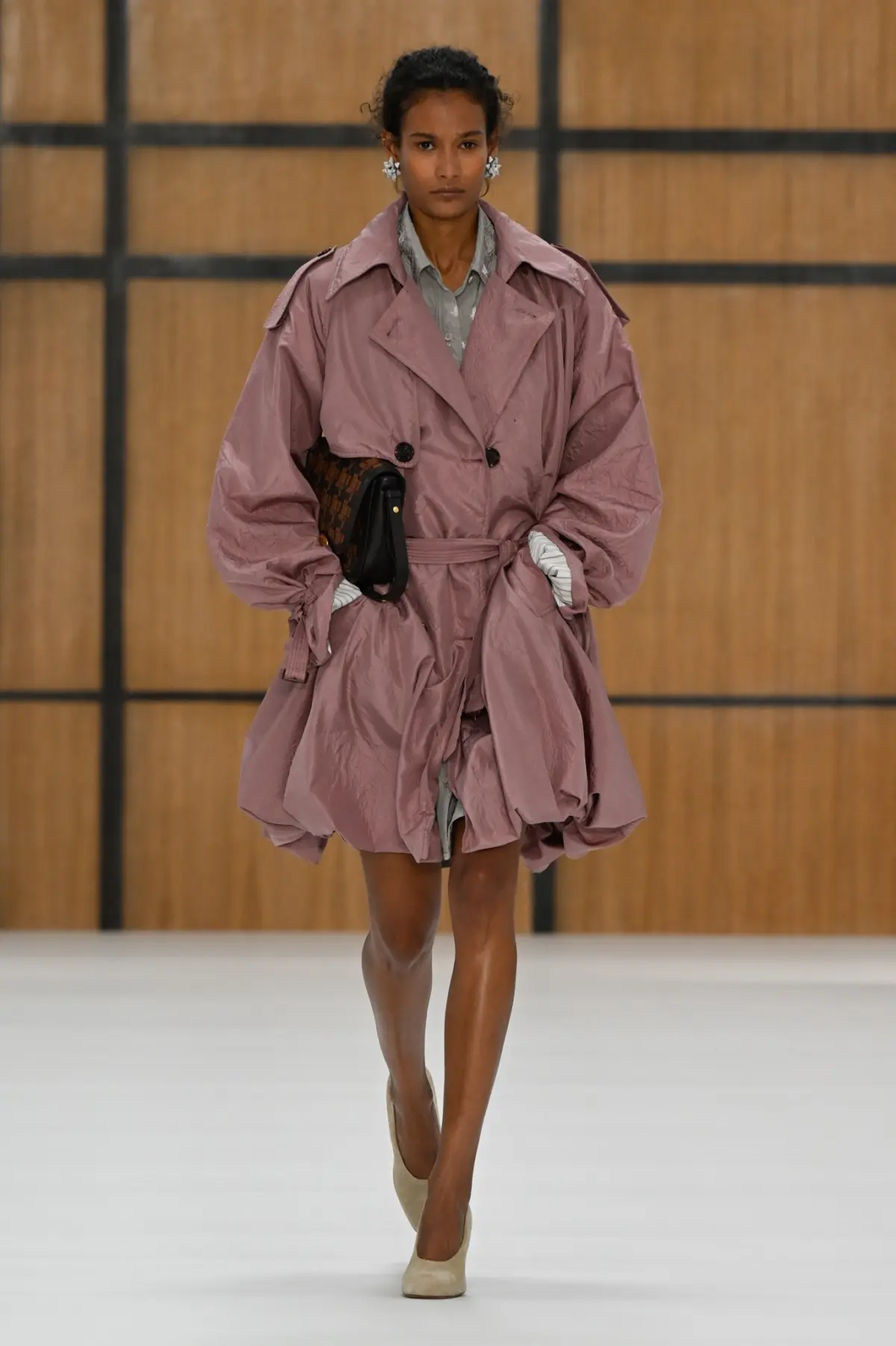
For those seeking something more utilitarian, the collection featured more robust trenches meticulously crafted from silk faille and taffeta. These pieces were deliberately designed to possess a lived-in, effortless feel, complete with authentic-looking wrinkles and soft folds. Several designs boasted soft pouf skirts, while others were accented with braided epaulets that laid flat against the shoulder and arm, creating an optical illusion as though they had been drawn or stitched directly onto the fabric like handmade patches.
Discussing the philosophy behind these tactile choices, Daniel Lee emphasized the emotional resonance of clothing. It is an emotional thing, the designer noted, explaining that minor imperfections ultimately make garments feel more human, grounded, and approachable in an increasingly digital and mass-produced world.
Lee’s decision to tap Birtwell for this specific project was rooted in a desire to do something truly extraordinary to mark Burberry’s milestone 170th anniversary. Once the designer arranged to meet the legendary textile artist, he instantly knew she was the only person for the job. Admitting that he had never truly collaborated with another creative partner on a runway show before—a process he acknowledged can be notoriously difficult—Lee confessed that the barrier vanished because of Birtwell’s universal appeal.
Everybody loves Celia, Lee remarked, noting that she represents the absolute epitome of British fashion. Her prints possess a timeless quality that transcends decades, and during their partnership, she was deeply inspired by Burberry’s iconic check motif. She wanted to interpret it and bring it directly into her own distinctive artistic world, resulting in a fascinating dialogue between two distinct eras of design.
The fruit of this dialogue was immediately apparent as Birtwell’s vibrant, hand-drawn chunky checks made their way onto coats, luxury bags, and skirts. These bold graphics added a striking Pop Art dimension to the storied luxury fashion house’s signature design, bridging the gap between traditional British heritage and modern, graphic-heavy street sensibility.
Sitting proudly in the front row to watch her historic designs glide down the catwalk, the 85-year-old Birtwell expressed immense delight with the final outcome. She shared that she was very thrilled Daniel had asked her to collaborate, noting that pushing her boundaries in this manner is exceptionally good for her creative mind. Working alongside the Burberry team was not only fun but also presented a completely unique and refreshing challenge for someone who has spent decades at the pinnacle of textile design.
Birtwell certainly has a remarkably busy few months ahead of her as her indelible impact on fashion is celebrated on a broader cultural stage. She is the central subject of an upcoming major retrospective exhibition titled “Ossie Clark + Celia Birtwell,” scheduled to open at London’s Design Museum on October 2 and run through April of next year.
During the swinging 1960s and early 1970s, the late Ossie Clark’s visionary clothing designs, coupled perfectly with Birtwell’s romantic, joyful, and deeply playful textile prints, fundamentally shaped the landscape of British fashion. Now, through this inspired collaboration with Burberry at the Chelsea College of Arts, those historic, game-changing aesthetics are poised to capture the imagination and touch the wardrobes of an entirely new generation of fashion enthusiasts.