




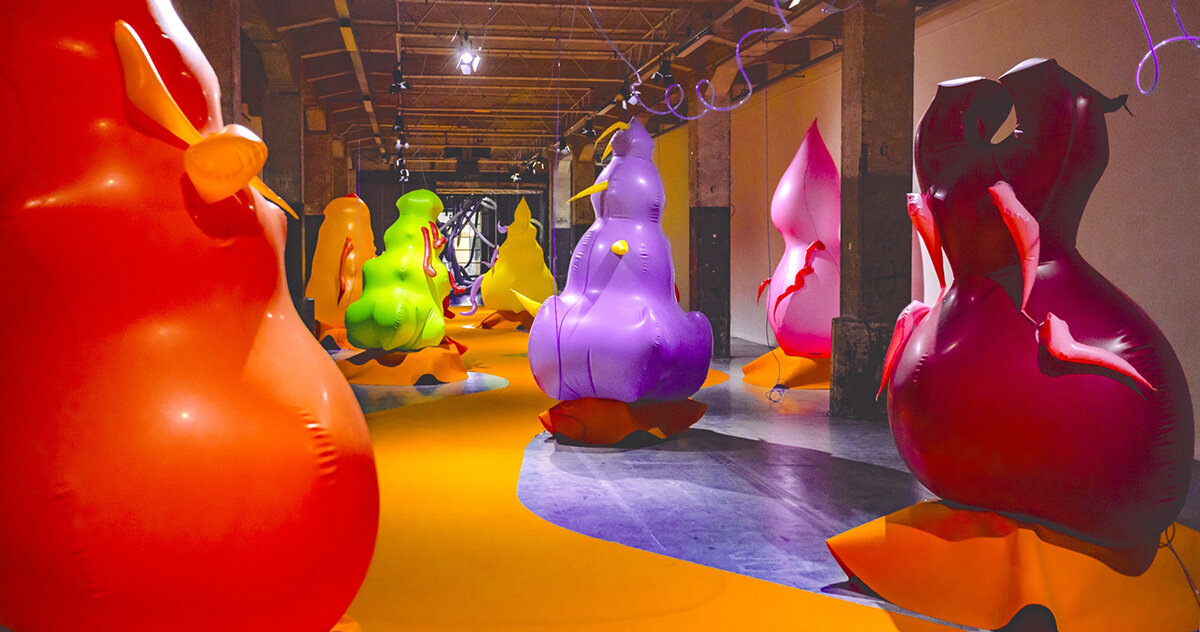
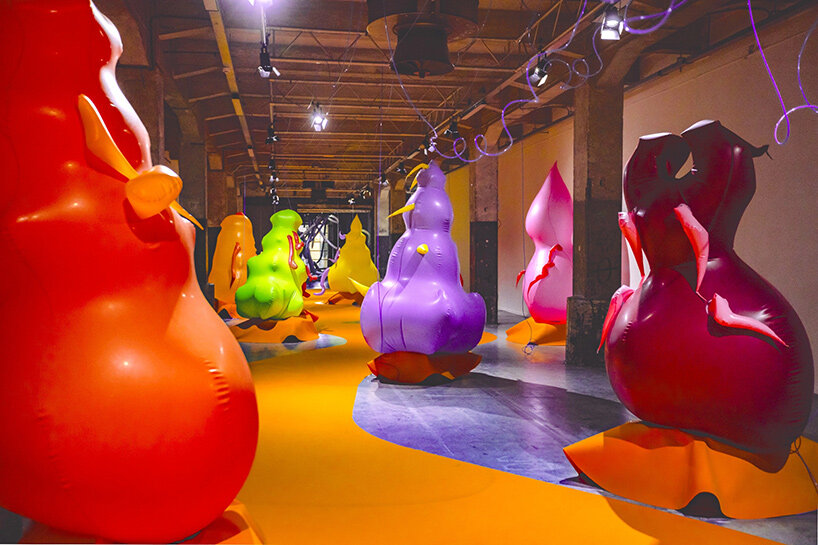
Within the walls of an Amsterdam gallery, a curious population of giant inflatable creatures has taken up residence. Ranging in size and towering in some instances far above visitors, these brightly colored organic forms swell and shrink in a continuous, hypnotic motion. They appear to breathe. Their mechanical respiration is not random; it is directly tethered to the shifting tides of the Wadden Sea along the Dutch coast, creating a living archive of distant environmental rhythms translated into physical space. Yet, these monumental sculptures do not merely mimic nature on a macro scale. Through an intricate network of sensors, gallery visitors can directly influence the behavior of the sculptures simply by breathing.
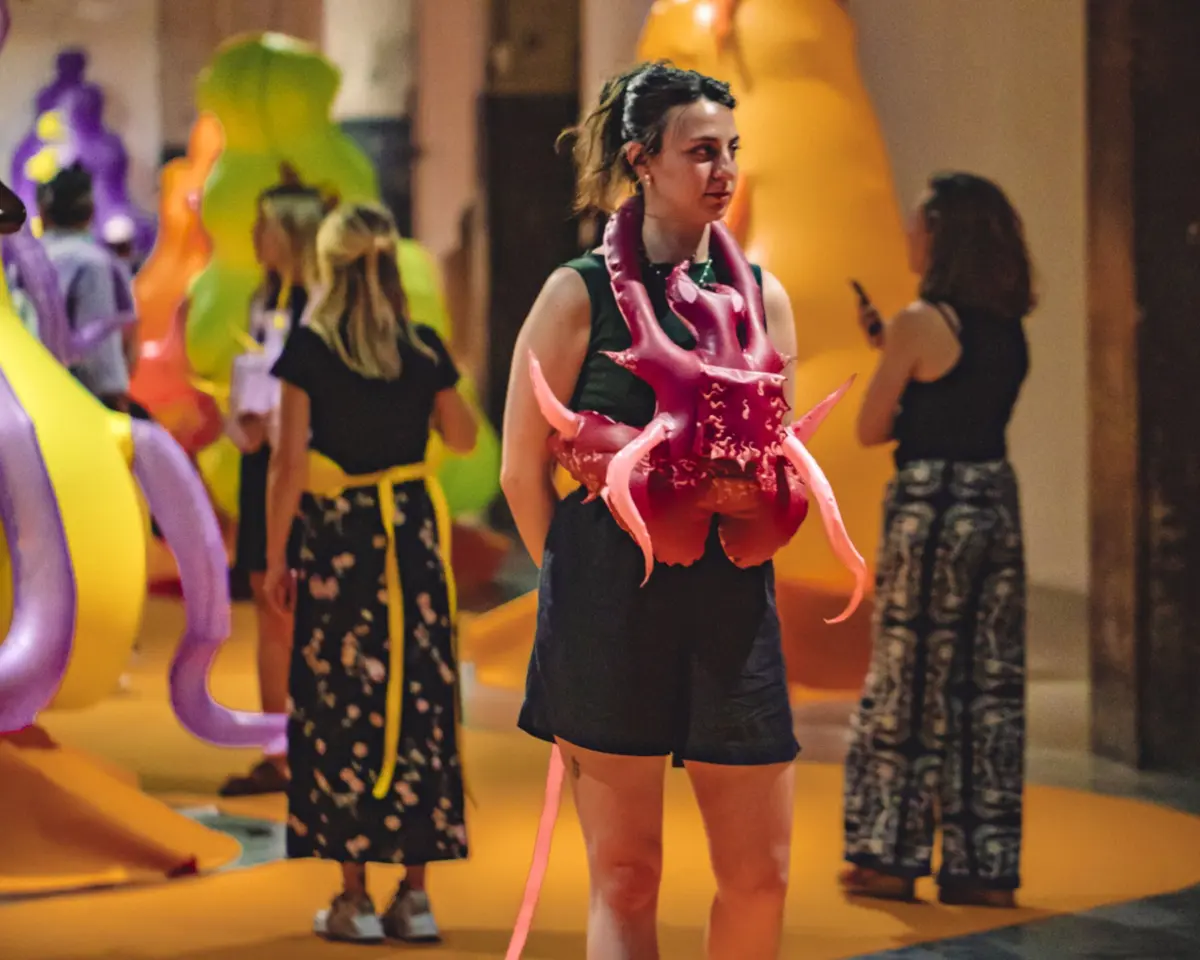
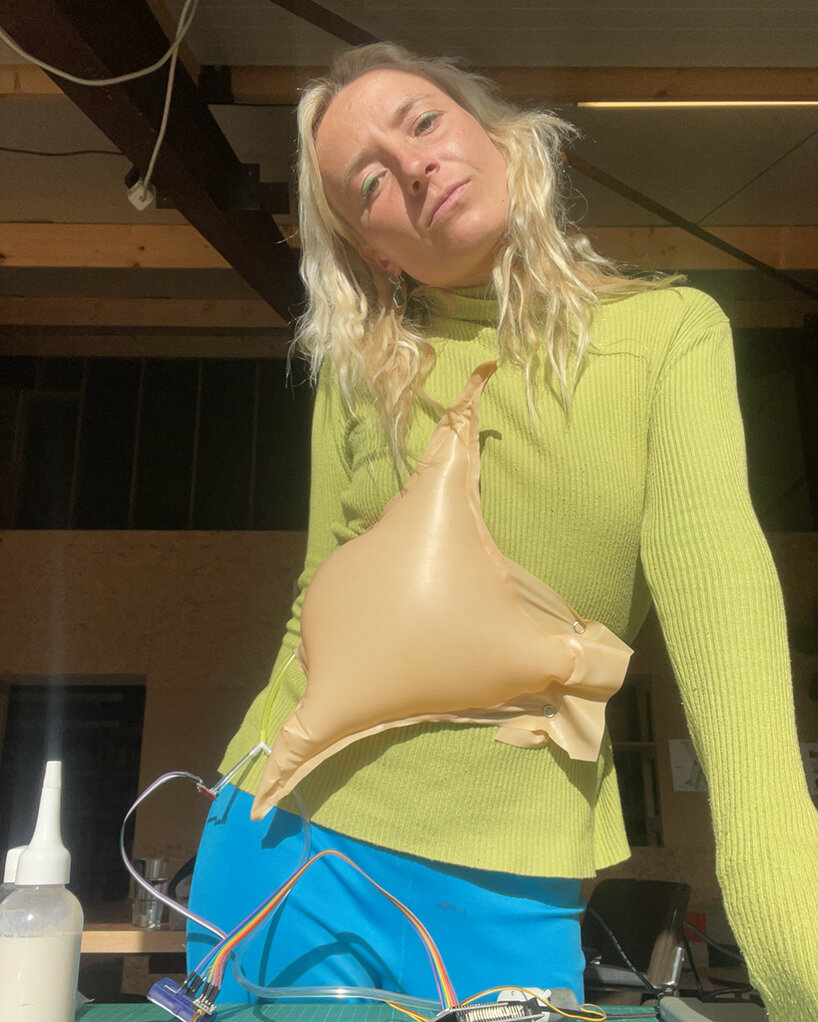
Titled Pneuma (2025) and created by Dutch artist Marlot Meyer, the interactive installation establishes a bridge between two distinct rhythms operating on vastly different scales. By linking human respiration with the tidal pulses of a coastal ecosystem, the artwork transforms abstract environmental data into a deeply physical experience. Visitors are invited to wear smaller inflatable beings fitted closely to the body. These wearable sensors register the wearer’s breathing patterns and translate those biological signals into physical movements within the larger gallery sculptures. The result is an uncanny, intimate exchange: human respiration dictating the expansion and contraction of sea-inspired forms, while those same sculptures appear to possess lives of their own, responding both to a distant coastal environment and to the human bodies present in the room.
Teaching the Body to Feel the Sea
The conceptual foundation of Pneuma stretches back to a period of intense field research undertaken by Marlot Meyer in the northern Netherlands. Prior to designing the gallery installation, the artist spent three months in Friesland during a residency at Het Lage Noorden. Her core inquiry was both simple and radical: could humans learn to physically sense the changing tides of the sea without relying on visual cues?
During this residency, Meyer deployed wetness sensors into the mudflats near the Wadden Sea. These sensors transmitted real-time environmental data via radio signals to wearable devices, forming the backbone of a research initiative she named Project Tidal. Her overarching aim was to introduce a novel form of sensory awareness, allowing the human body to internalize and recognize the constant movement of water intuitively.
Her early experiments in the field were rudimentary, beginning with small vibrating motors worn directly against the skin. In this initial setup, fluctuations in water levels were translated into varying intensities of vibration. However, Meyer soon realized that tactile vibrations lacked the organic quality she was searching for. She transitioned toward inflatable wearables, concluding that pneumatically driven expansion and contraction offered a far more natural interpretation of the sea’s gradual, persistent movement. As water levels in the mudflats rose, an air-filled device strapped to her abdomen would slowly expand, creating a gentle pressure against her torso. As the tide receded, that pressure would gradually ease.
The intended outcome was a slow, cumulative familiarization, wherein the wearer’s sensory awareness would gradually extend beyond their physical skin and out into the surrounding landscape.
When the Sea Takes Over the Experiment
Translating environmental data into physical sensations, however, proved to be an unpredictable endeavor fraught with logistical hurdles. In her field journals, Meyer documented the constant friction of working directly with nature. Sensors frequently lost their connection, delicate batteries failed under harsh weather conditions, and shifting coastal environments made it exceedingly difficult to collect clean, consistent information.
The fragility of the technological setup was underscored most dramatically during an exceptionally powerful spring tide. The surging waters completely submerged Meyer’s equipment, flooding the delicate electronics and instantly wiping out weeks of painstaking recordings. Rather than serving merely as a setback, the catastrophic failure brought the artist face-to-face with the very essence of the sea she had been attempting to capture: its absolute unpredictability, its overwhelming scale, and its total resistance to human control.
Reflecting on the experience in her research journal, Meyer grappled with the inherent tension between technological precision and the raw, unquantifiable reality of being immersed in a constantly changing environment. "How to find the balance between information and meaning?" she asked in her notes. This pivotal question shifted the trajectory of her work. The project gradually evolved away from the objective collection of rigid tidal data and moved toward subjective, experiential interpretations of those natural forces. The overarching guiding principle became clear: the higher the tide and the wetter the land, the more pressure is pumped into the inflatable architecture, binding human instrumentation directly to the pulse of the mudflats.
Microscopic Organisms Become Giant Inflatable Creatures
The distinct visual vocabulary of Pneuma finds its inspiration far from human anatomy, drawing instead from microscopic organisms encountered within the muddy sediment of the Wadden Sea. Specifically, Meyer turned her attention to diatoms—single-celled algae that inhabit the marine ecosystem in vast numbers.
These microscopic organisms are intimately attuned to tidal cycles. As the tide rises and covers the mudflats, diatoms migrate deeper into the sediment to protect themselves from turbulence. When the water recedes and exposes the mud to the air, they travel back toward the surface to capture sunlight for photosynthesis. Remarkably, research has shown that some diatom species can maintain these internal tidal rhythms even when removed from their natural aquatic environment and placed in controlled laboratory settings.
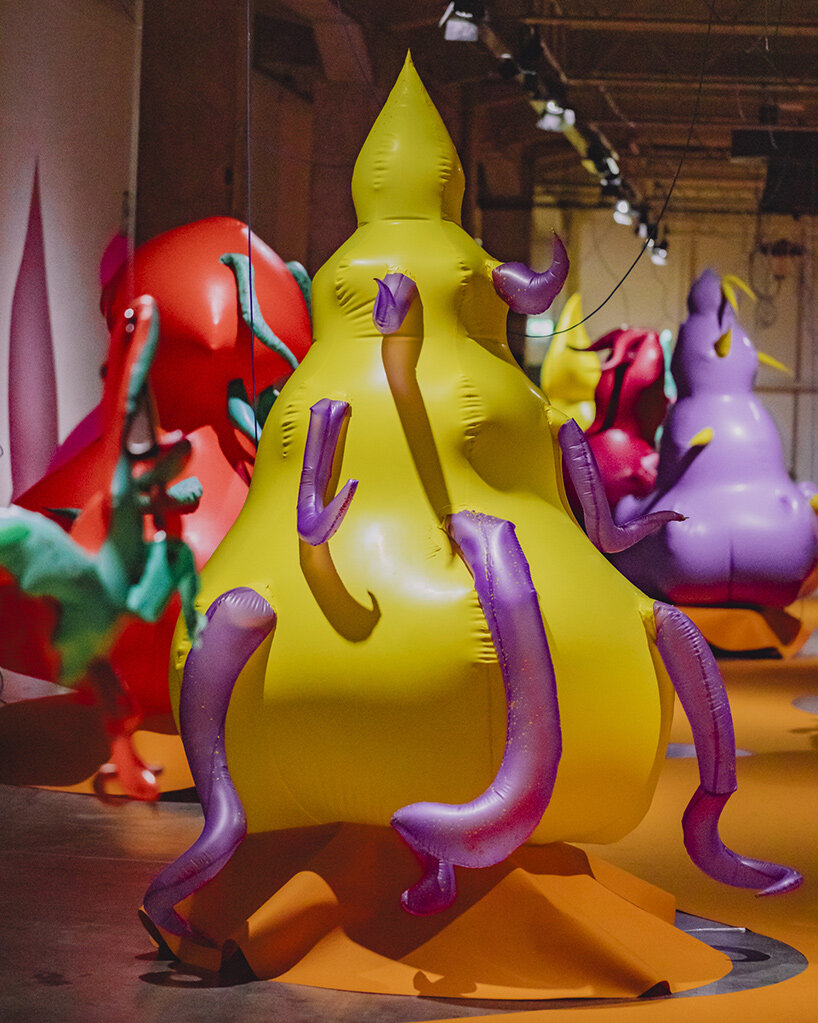
Diatoms play a vital ecological role in marine food webs, driving primary production through photosynthesis. Under a microscope, their intricate cell walls, composed of silica, reveal surprisingly elaborate, geometric, and ornamental shapes. Meyer translates these microscopic wonders into an oversized architectural scale. The resulting sculptures are bulbous, organic forms characterized by rounded protrusions and vibrant, saturated color palettes. By enlarging these invisible organisms to human proportions, Meyer shifts them from the periphery of human awareness into the dominant inhabitants of the exhibition space.
Can Technology Help Us Develop a New Sense?
The title Pneuma is derived from the ancient Greek word denoting both breath and spirit. Within the context of the installation, breathing serves as the primary medium through which participants can engage with an environmental rhythm that persists far beyond the physical boundaries of the gallery walls. A visitor’s inhalation and exhalation directly alter the volume and shape of an inflatable creature, establishing a direct feedback loop between human biology and sculptural form, while the distant tides of the Wadden Sea continue to influence the installation at their own deliberate pace.
Meyer’s work proposes a compelling paradigm for how contemporary society relates to the natural world. Modern environmentalism relies heavily on digital technology to monitor ecological shifts, typically translating complex environmental crises into abstract numbers, statistics, and two-dimensional graphs. Pneuma bypasses pure data visualization by bringing environmental information directly into the human body. By exploring whether physical sensation can foster a more immediate, empathetic relationship with ecological forces that normally escape human perception, the installation challenges traditional modes of observation.
As visitors move through the gallery, interacting with the breathing, pulsating forms, the installation leaves them with a lingering and profound question: if humans could actively learn to physically feel the movement of the sea and the microscopic organisms that inhabit it, would we begin to experience our own place within the wider environment differently?