





In an era increasingly defined by optimized rhythms, predictable digital feeds, and measured efficiency, a fundamental question hangs over contemporary culture: Have we become starved of wonder? When curator Sofia Lekka Angelopoulou opened SPECTATOR AND SPECTACLE—a deeply immersive editorial chapter presented in partnership with SolidNature—she challenged our passive relationship with the built and visual environment. Tracing the trajectory of the night from radical discotheques to the hyper-optimized structures of modern life, the initiative asked what happens when experiences become overly curated and images lose their capacity to surprise.
Over the subsequent weeks, the chapter traversed architecture, art, fashion, and cinema to explore how spectacle can function not merely as a passive visual event, but as a dynamic catalyst capable of unsettling ingrained habits, altering human behavior, and dissolving the traditional barrier between those who watch and those who perform. Through a series of critical guest contributions, historical retrospectives, and encounters with contemporary practitioners, the project returned to a core thesis: true spectacle is not just about what is placed in front of our eyes, but about what happens within us when we encounter it.
The Crowd as Living Architecture
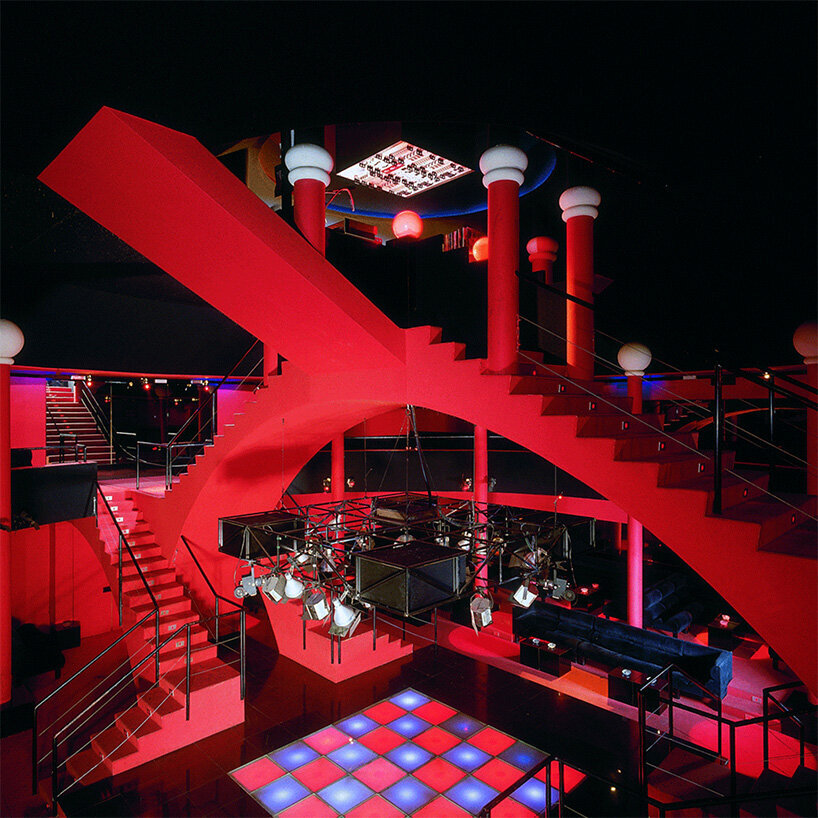
Few physical environments articulate the complex relationship between the observer and the observed quite like the nightclub. Looking back at the rich history of nightlife architecture—ranging from the radical Italian discotheques of the 1960s to New York’s legendary Studio 54 and the industrial concrete bunkers of Berlin—the chapter examined how these nocturnal spaces functioned as genuine laboratories for collective human experience. At Florence’s Space Electronic, architecture, light projections, music, and performance collided in an experimental playground. Meanwhile, Manchester’s legendary Haçienda provided an raw, industrial shell that its occupants actively transformed through their own bodily presence and unscripted energy.
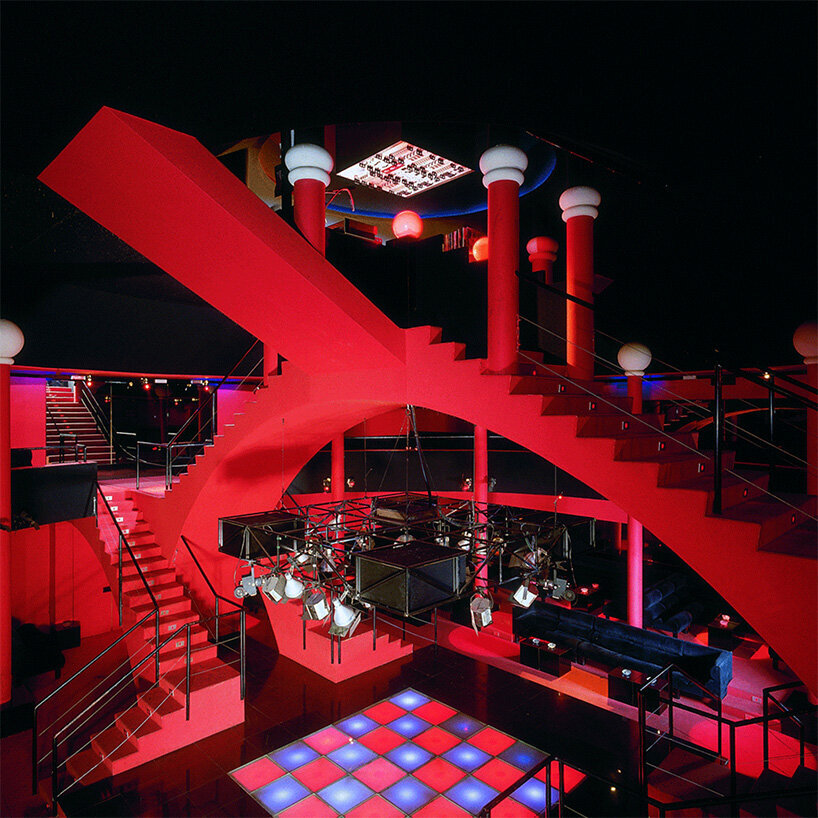
Later iterations, such as Berlin’s notoriously selective Berghain, introduced yet another layer to this dynamic by strictly prohibiting photography within its walls. By banning cameras, the club successfully safeguarded an ephemeral experience that could not be instantly commodified, digitized, or consumed from a detached distance. These spaces collectively demonstrated that while architects and designers can construct the physical containers and technical conditions for a spectacle, it is ultimately the people occupying the room who breathe life into it and determine its outcome.
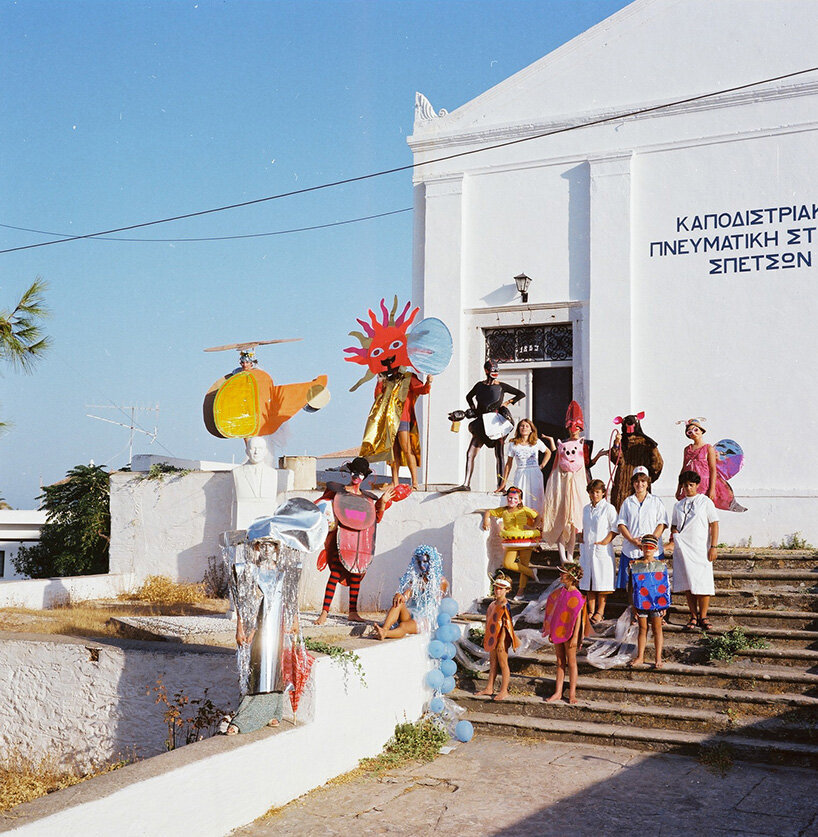
This understanding of collective, participatory performance resonated equally in historical artistic interventions, such as Leda Papaconstantinou’s work with the Spetses Players. During the 1970s, the group transformed a Greek island into an experimental theatrical stage, eschewing fixed scripts and conventional theater houses in favor of localized narratives, immediate social realities, and the island’s existing architecture. Local harbors, historic houses, and even operational discotheques were repurposed as temporary stages where elaborate costumes and unconventional characters invited audiences into unfamiliar imaginative worlds. As performances culminated in shared singing and dancing between cast and crowd, the boundary between art and everyday life dissolved entirely, proving that the true value of spectacle lies in the temporary community it manages to forge.
Illusions That Reshape Our View of Reality
Spectacle also possesses the unique capacity to interrogate the safe distance we typically maintain between fiction and the concrete world we inhabit. In Alejandro G. Iñárritu’s film Digger, production design serves as an active narrative instrument. Crafted by master designers Dennis Gassner and Richard Johnson, the film’s environments shift fluidly between elaborate interiors, overtly theatrical scenery, and deliberately exposed artifices. By laying bare the mechanics of illusion, the film weaves the construction of the set directly into the core of the story. As the boundaries separating staged performance from stark reality begin to fracture, the viewer is stripped of their comfortable position as a detached observer, left to confront the emotional weight of the unfolding catastrophe.
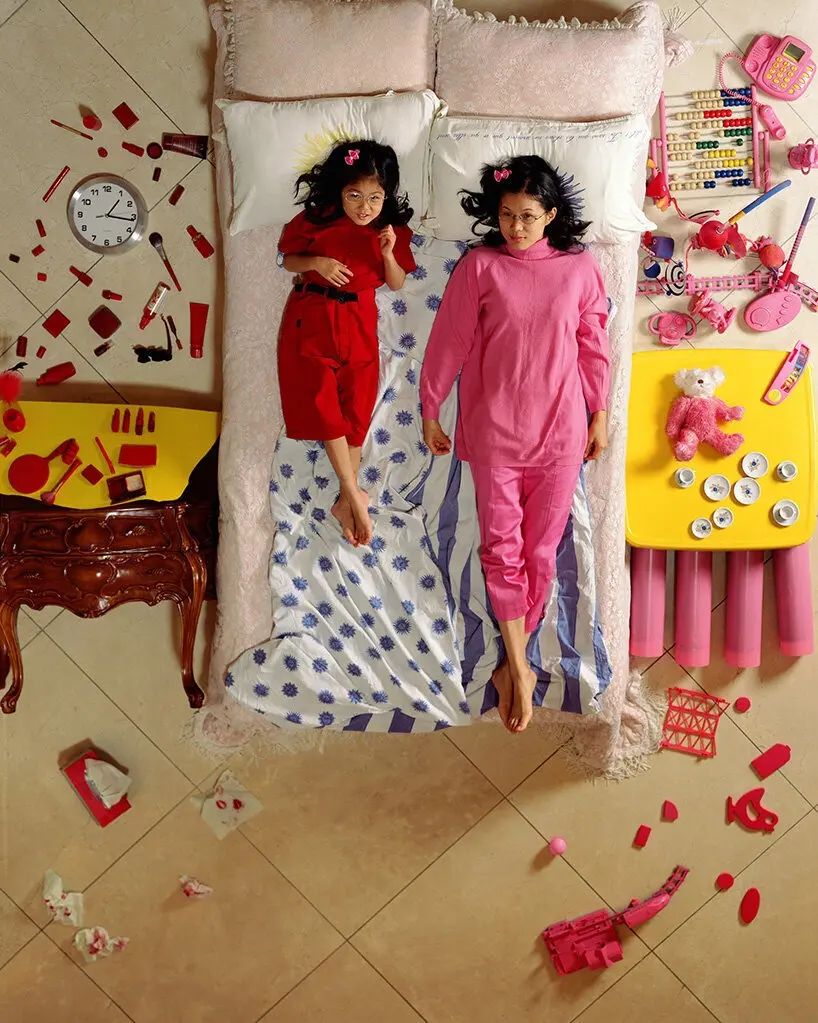
In an entirely different medium, South Korean artist Yeondoo Jung’s Wonderland project demonstrated how meticulously manufactured imagery can unearth profound truths about contemporary society. Jung gathered 1,200 spontaneous drawings created by young children, selecting 17 to recreate as hyper-realistic, fully staged photographs. Utilizing teenage models, elaborate handmade costumes, bespoke props, and locations scattered across Seoul, the artist brought impossible proportions, floating figures, and surreal landscapes into physical existence without smoothing over the quirky logic of the original childhood sketches. Beneath their playful, whimsical exterior, these photographs offered sharp commentary on rapid urban development and persistent social inequality. Viewed today in an era where visually similar scenes can be generated instantaneously via artificial intelligence, Jung’s painstaking, analog process highlights a vital distinction: true wonder often stems not from algorithmic convenience, but from the immense human effort, negotiation, and material reality required to make the imagination visible.
The Body as the Medium of the Spectacle
Throughout the breadth of the chapter, the human body repeatedly asserted itself as something far more complex than a passive viewer. At London’s Tate Modern, HOMME PLISSÉ ISSEY MIYAKE’S OPEN STUDIO transformed Henri Matisse’s iconic cutout masterpiece The Snail into a living choreography of pleated garments, kinetic movement, and intimate audience encounters. Inside the museum’s circular South Tank, professional dancers animated the vibrant colors and geometric forms of Matisse’s composition. Individual museum visitors were seamlessly drawn into improvised performances fostered through direct eye contact and physical proximity, effectively integrating the audience into the changing artistic composition. As the dancers eventually laid the garments flat upon the floor to reconstruct Matisse’s original visual artwork, the performance revealed how a cultural artifact can transition fluidly between static representation and lived, bodily experience.
For artist and speculative designer Lucy McRae, the human body serves as the ultimate launching pad for imagining alternative futures. Moving fluidly across sculpture, film, fashion, and speculative technology, McRae treats clothing and wearable artifacts as a form of invisible architecture capable of fundamentally altering how we perceive ourselves and relate to one another. Her exploratory works question what happens when cutting-edge technological innovation becomes deeply intertwined with physical sensation, and how human identity might be reshaped through what we wear. Rather than casting the future as a distant, intimidating spectacle to be observed from afar, McRae constructs tangible scenarios that invite audiences to inhabit tomorrow today. Her practice underscores the idea that the most profound cultural transformations do not always demand monumental architectural settings; sometimes, they begin directly with the body and the subtle shifts in its relationship to the surrounding world.
Finding Wonder in Restraint
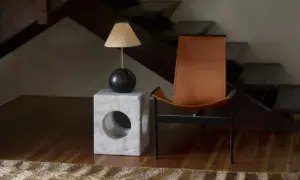
Crucially, the chapter argued that spectacle does not inherently require deafening volume, massive scale, or dramatic theatrical performance. Often, a well-considered everyday object is entirely sufficient to disrupt our habitual ways of looking. French designer JeanBaptiste Fastrez explored this delicate territory through his sculptural mirrors created for Moustache. By casting the recognizable form of an inflatable boat into a glossy ceramic frame or turning ordinary mirror fittings into oversized chrome spheres, Fastrez plays with the inherent paradox of the mirror—an object with a commanding physical presence whose visual identity depends almost entirely on its immediate environment. These reflective surfaces distort, incorporate, and reframe the spaces and people surrounding them, making the viewer an unavoidable component of the artistic composition.
A similarly restrained approach to spectacle characterized the work of Lausanne-based design studio Panter&Tourron. In their projects for luxury houses like Balenciaga and Hermès, Stefano Panterotto and Alexis Tourron interrogate traditional codes of luxury. Eschewing easy extravagance, precious materials, or obvious displays of status, the designers focus intently on craftsmanship, material intelligence, and the narrative threads woven into objects. Their minimalist approach proves that restraint can command just as much attention as excess, effectively dismantling the assumption that visual impact requires overwhelming scale.
Ultimately, these diverse explorations converge on a single realization: wonder cannot be artificially manufactured solely through novelty, high budgets, or visual intensity. True spectacle often emerges simply from entering a room that alters our behavior, recognizing the truths of reality hidden within an illusion, seeing ourselves reflected in an unexpected form, or encountering the familiar as though for the very first time. The ongoing challenge for contemporary designers, architects, and artists is not necessarily to make the world louder or more spectacular, but to help us rediscover our innate capacity to be surprised by it.