Right now, art lovers and collectors alike could certainly use a moment of indulgence. There is a distinct, grounding pleasure to be found in acquiring a terrific piece of art jewelry for oneself while simultaneously celebrating and supporting the visionary artists and dedicated galleries that bring these works to light.
Art Jewelry Forum’s international network of gallery supporters continually champions the vibrant world of contemporary art jewelry through high-caliber exhibitions, retrospectives, and curated presentations. To bridge the distance between these global institutions and enthusiasts everywhere, AJF’s bi-monthly On Offer series allows this extensive network of international galleries to showcase extraordinary pieces. Each work is personally selected by gallerists to tempt, challenge, and inspire collectors. A careful look through the current lineup reveals a diverse array of wearable sculpture, conceptual statements, and masterful craft, ensuring that perceptive buyers are bound to find a fantastic piece they simply cannot live without. For those interested in acquiring any of the featured works, direct contact with the respective gallery is encouraged.
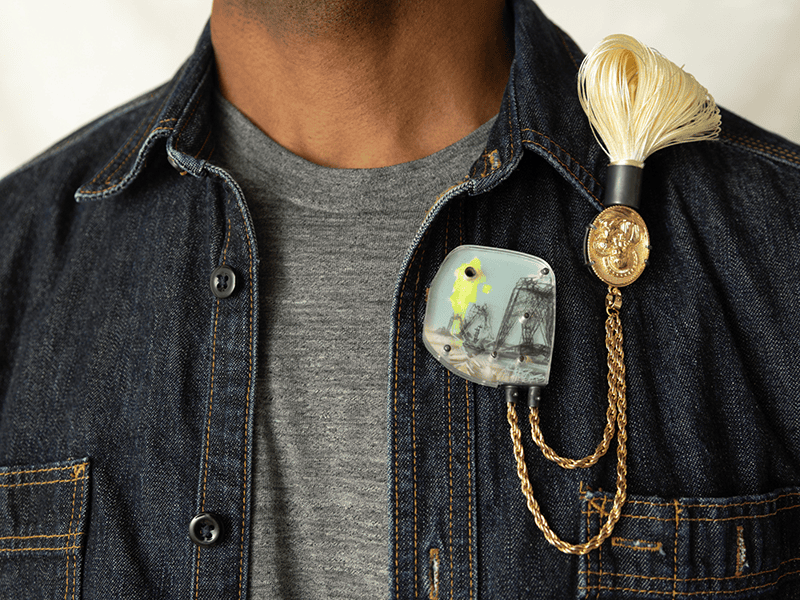
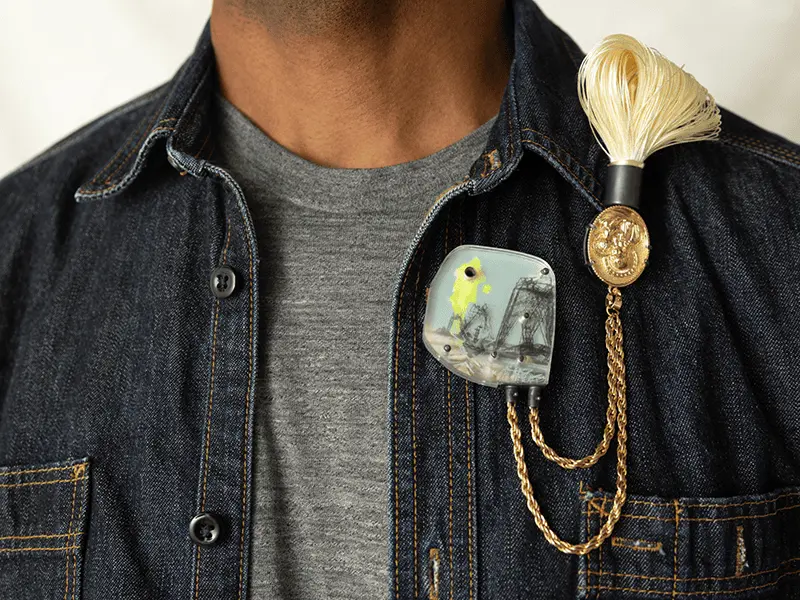
The October 2026 edition opens with a compelling contribution from the Heidi Lowe Gallery, located in Lewes, Delaware, in the United States. Represented through gallery contact Kassadi Williams, artist Melanie Denis presents Vierge Reliquary for an Impossible Mother II, a 2026 brooch priced at US$350. Fabricated specifically for the ReJewelry exhibition hosted by the gallery as part of the Radical Jewelry Makeover initiative, the piece is an intricate collage of materials. Denis utilizes sterling silver, steel, brass, plastic, Plexiglas, photography, ink, silk, a recycled fantasy jewel, and a physical relic to construct the 180 x 80 x 20 mm work, which has been documented by photographers Madison Hoffman and Auriele Gould.
Crossing the Atlantic to Lisbon, Portugal, Galeria Tereza Seabra features the latest creation by artist Catarina Silva, presented by gallerist Tereza Seabra. Priced at 650€ plus shipping, Silva’s untitled pendant in oxidized silver, coralline, and agate measures 50 x 35 x 8 mm, accompanied by a 250 mm chain, with photography by Pedro Tropa. This pendant represents Silva’s most recent work developed for her solo exhibition, Jardin d’agrément, which forms part of the official program of the third Lisbon Jewellery Biennial.
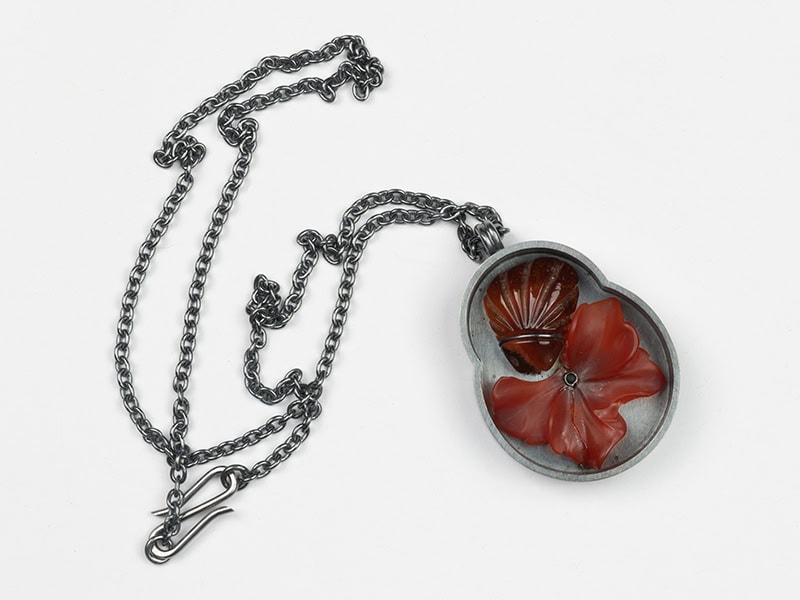
The exhibition imagines a lush, utopian garden inspired by the gardens of paradise and the divine landscapes found across various cultures. Within this conceptual framework, humans, animals, and plants coexist beyond traditional hierarchies, forming a shared ecology characterized by reciprocity and wonder. Jewelry functions as a living constellation of symbols: apples, unicorns, flowers, birds, and Marian imagery evoke knowledge, care, fertility, and transformation. At the conceptual heart of the exhibition, the snake emerges not as a figure of temptation, but as a protective guardian—a powerful symbol of wisdom, regeneration, and the continuous, unbroken cycle of life. Rather than looking backward toward a lost Eden, Jardin d’agrément functions as a poetic fiction, inviting viewers to imagine alternative ways of inhabiting the world where coexistence is practiced as a living reality rather than a distant ideal.
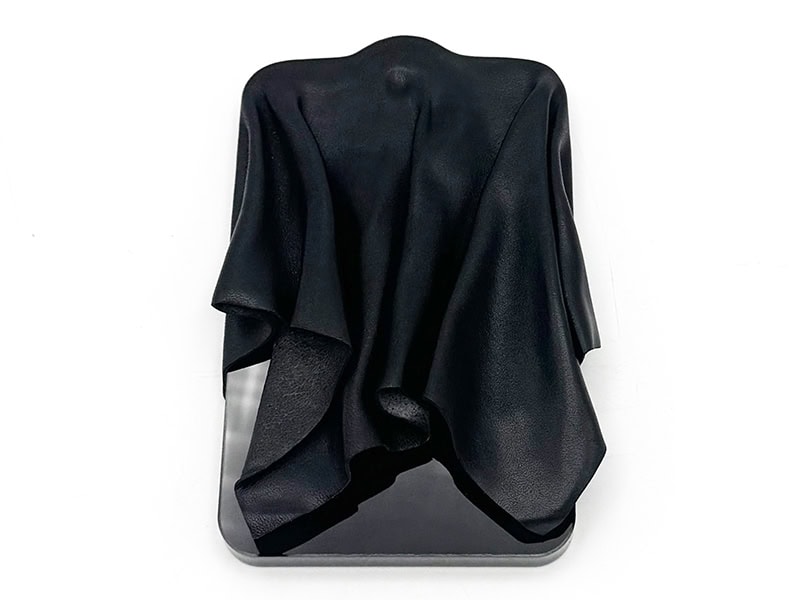
Moving to Brooklyn, New York, In the Gallery at Brooklyn Metal Works, directed by Brian Weissman, presents a striking brooch by artist Kerianne Quick. Titled A Denial and priced at US$550, the 2026 piece is crafted from vegetable-tanned leather, Plexiglas, and a nickel alloy pin, measuring 5 x 3 ¼ x ¾ inches. Quick’s academic and creative research is deeply rooted in craft practice as a form of cultural expression, focusing heavily on "material specificity"—a term defined in their master’s thesis to recognize physical materials as active participants in the generation of meaning. Through object-making, Quick seeks to unearth overlooked and hidden narratives, drawing upon the embedded histories of materials to create profound cultural impact. The black-shrouded "mirrors" from the Nevermind series, to which this work belongs, are constructed from leather and Plexiglas, referencing the historical mourning tradition of covering household mirrors following a death. Rather than shielding the spirit of the deceased from its reflection, these obscured mirrors intentionally turn the gaze back toward the living, materializing complex emotions of shame, culpability, despair, and helplessness.
In Umeå, Sweden, Four Gallery, represented by Karin Roy Andersson, features the work of German-born artist Karin Seufert. Priced at 700€ excluding VAT, Seufert’s Brooch 534.24 l (2026) is constructed from PVC, silver, and steel, measuring 69 x 56 x 24 mm. Much like emptiness itself, time remains an elusive concept to depict visually; it is inherently complex, ever-changing, and immaterial. Throughout human history, the sky has served as a fundamental navigational tool for orienting oneself within the passage of time. The sun dictates the cycle of days, the moon marks broader phases, and the stars allow for spatial navigation across vast distances. Seufert’s latest body of work portrays these celestial bodies directly, capturing the sun as a flickering yellow circle, the moon through its shifting phases, and the stars via multifaceted, intricate forms.
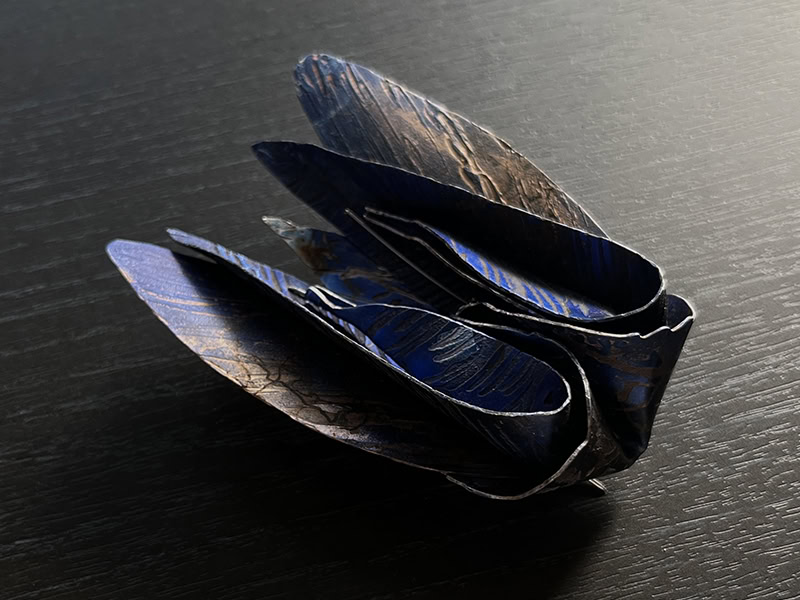
London’s Objects Beautiful gallery, under the guidance of Yael Reisner, highlights the work of Taiwanese art jeweler Mei Fang Chiang, who is based in Tainan. Priced at £760 excluding tax, Chiang’s 2022 brooch, The Other Shore #17, is fabricated from anodized aluminum and stainless steel wire, measuring 80 x 65 x 28 mm. Chiang has established international acclaim for her mastery of anodized aluminum, employing proprietary studio techniques developed over years of dedicated practice to manipulate color in unique and brilliant ways. Her artistic narrative is deeply engaged with the delicate coexistence of nature and the man-made. An awarded artist whose works reside in prominent public collections, including the Gold Museum in Taiwan, Chiang produces jewelry that is praised for being exceptionally light, structurally original, and remarkably comfortable to wear.
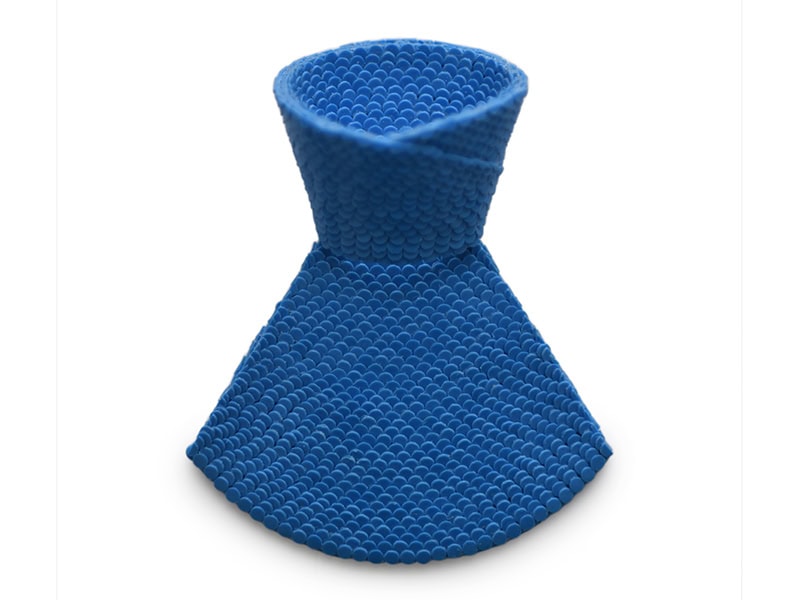
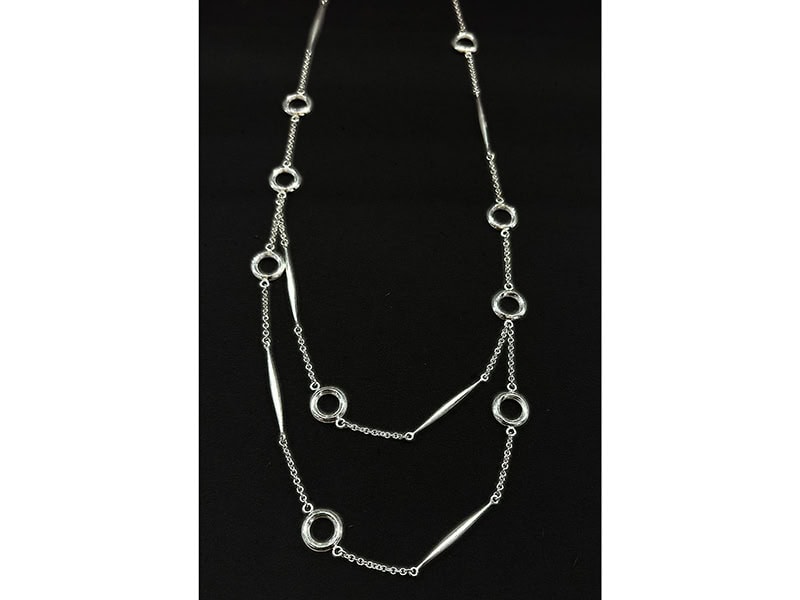
In Philadelphia, Pennsylvania, Gravers Lane Gallery—represented by Mia Chen—presents a major sterling silver piece by Naomi Kurita. Priced at US$3,080, Kurita’s Silver Link Necklace (2025) spans 26 inches in length. Within the discipline of metalsmithing, a simple chain offers nowhere to hide; every individual link must withstand scrutiny regarding its proportion, its join, and the precise way it moves and rests against the next. This quiet, uncompromising precision has defined Kurita’s entire career. Falling well below the collarbone, this layered sterling silver link necklace exemplifies her rigorous approach. Alongside her signature line of jewelry, Kurita frequently redesigns pieces around her clients’ personal precious stones, breathing new life into inherited or long-held gems. This bespoke service stems from the same core conviction that has guided her practice for three decades: that jewelry should remain natural, unpretentious, and meticulously constructed to be worn for a lifetime.
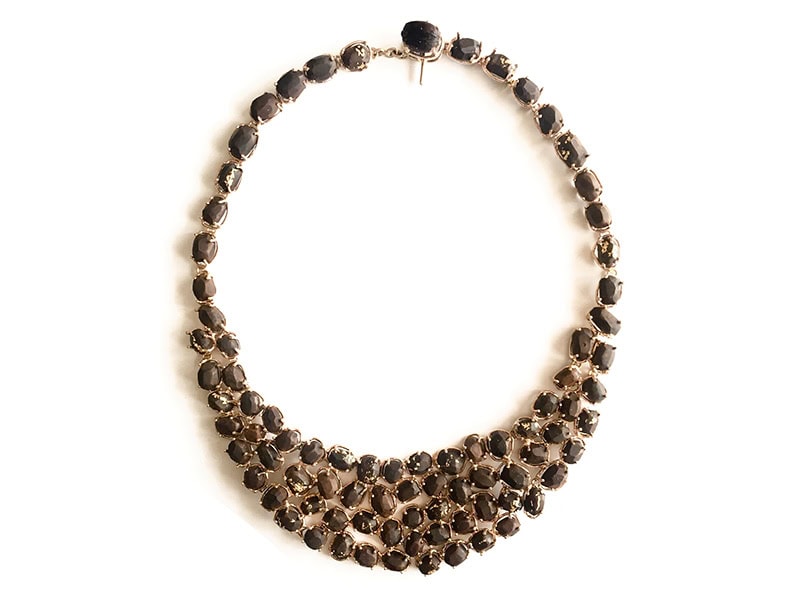
The Wearable Art Museum, directed by Lisa M. Berman, contributes a historically resonant piece by Colombian artist Andrea Ortiz. Priced at US$1,200, Offering a Gem (2001) is a necklace crafted from coffee beans, bronze, and brass, measuring 180 x 230 x 10 mm. Originating from the Linking Realm series—created as Ortiz’s graduate thesis project at the Savannah College of Art and Design (SCAD)—the work addresses the harsh, disparaging conditions faced by coffee bean laborers in her native Colombia, drawing critical attention to human rights violations and unacceptable working conditions within the agricultural sector. Lisa M. Berman curated this necklace to be featured alongside Max Alexander’s acclaimed Coffee Bean dress for the New York Times in 2024. Having earned four prestigious IDA awards since her graduation, Ortiz’s work carries institutional weight, underscored by the museum owner’s standing commitment to loan the piece for future international exhibitions upon request.
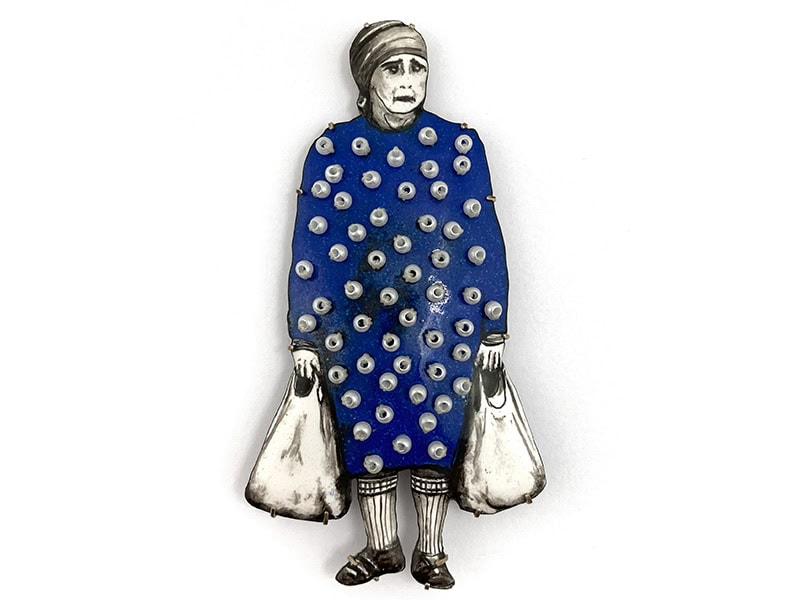
Pistachios Contemporary Art Jewelry in Chicago, Illinois, represented by Meg Nash, showcases the work of Mexican jeweler, enameler, and researcher Esteban Erosky, who is currently based in Madrid, Spain. Priced at US$1,495, Erosky’s hand-painted enamel brooch, And I Dreamed That I Would Be Happy, is fabricated from enamel on copper, glass beads, nickel silver, and steel wire, measuring approximately 3 ¾ x 1 ½ inches. Having studied across multiple countries, Erosky specializes in classical enameling techniques, skillfully adapting traditional methods to address contemporary themes concerning social structures, human rights, gender issues, and the assertion of individual freedom. Despite exploring inherently painful subjects, his pieces function as miniature short stories conveyed through a distinctly playful visual language.
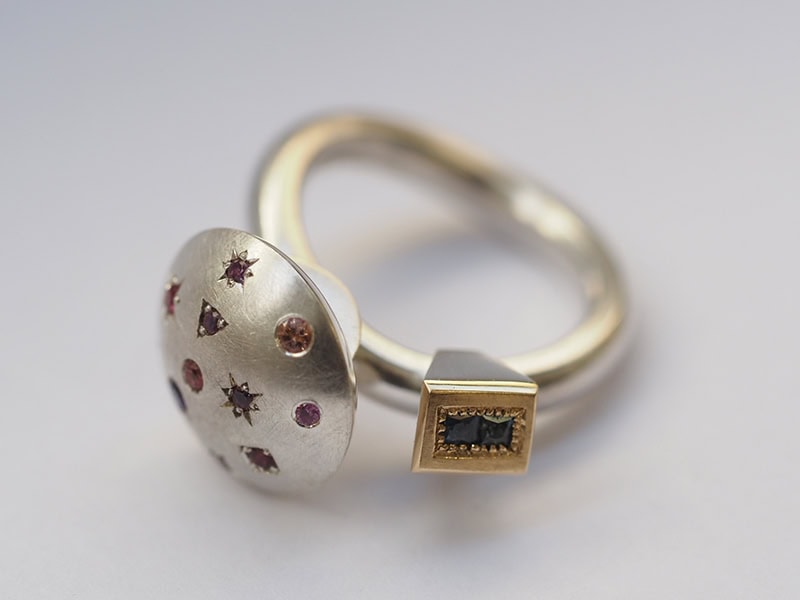
In Adelaide, Australia, Zu design, led by Jane Bowden, presents a ring by Angela Giuliani titled Sapphire and Diamond (2026). Priced at AUS$7,300, the ring is constructed from sapphires, a cognac diamond, 9-karat yellow gold, and sterling silver, featuring a top dimension of 16 x 23 mm and standing 32 mm from base to top. The work is featured in stateMEANT, a contemporary jewelry exhibition for which Zu design invited participating artists to write personal statements addressing their practice, methodology, and underlying philosophies. The exhibition brings together bold, thoughtful works designed to articulate social, political, or environmental perspectives, alongside quieter reflections on material specificity, sustainability, and everyday life.
Describing her approach, Giuliani notes that her work explores structure, form, and geometry through the deliberate application of precious metals and gemstones. Drawn to clean lines, simple shapes, and the inherent balance of geometric design, the artist emphasizes that the physical fabrication process remains just as vital as the completed object. Working primarily with sterling silver, yellow gold, and rose gold, Giuliani selects gemstones not merely for decorative effect, but to introduce color and interest that integrates seamlessly into the architecture of each design. Her overarching aim is to produce thoughtful, durable, and timeless jewelry that fosters a lasting personal connection with the wearer.
Galerie Door in Nijmegen, Netherlands, represented by Doreen Timmers, features an untitled 2025 necklace by Daniel Kruger, priced at 4,200€. Measuring 94 x 94 x 18 mm, the piece incorporates glass vials containing Hindu ritual pigments, pearls, glass flowers, and silver. Kruger’s practice consistently interrogates the boundaries between disparate materials, seamlessly fusing shells, gemstones, plastics, relics, and fetishes into singular ornaments. His work is characterized by an exuberant, mischievous, and seductive energy that invites prolonged contemplation. By combining traditional textile techniques with refined metalwork, Kruger bridges the sublime and the mundane, the precious and the cheap, the classical and the kitsch. His jewelry functions alternately as personal adornment, protective talisman, conceptual statement, or simply an irresistible object intended to bring unadulterated joy to the wearer.
In Auckland, New Zealand, Fingers Gallery—managed by Lisa Higgins—highlights the work of Dunedin-based contemporary jeweler Jane Dodd. Priced at NZ$1,750, Dodd’s 2026 brooch, A Night Out, is fabricated from ebony, bone, sterling silver, marcasite, and spessartite garnet, measuring 73 x 33 x 22 mm. Dodd’s works display the rigorous technical craftsmanship that has earned her widespread acclaim within the international field. In recent years, her practice has centered heavily on the depiction of animals, utilizing the subject matter to examine human impact, extinction, infestation, cruelty, and conflict. Strongly influenced by historic European craft traditions while remaining acutely mindful of the environmental exploitation that historically enabled such decorative arts, Dodd channels these complex, contradictory emotions into works characterized by tension, subtle humor, and deep intrigue.
The Baltimore Jewelry Center in Baltimore, Maryland, represented by J Diamond, presents the Circle Fern Hoops (2023) by metalsmith and sculptor April Wood. Priced at US$160, the earrings are crafted from steel and sterling silver, measuring 1 ½ x 2 ½ x ⅜ inches. Wood earned her BFA in studio art with a concentration in metals and jewelry from Texas State University in San Marcos and her MFA from Towson University. As a co-founder of the Baltimore Jewelry Center, she maintains an active role teaching within the community, alongside past instructional positions at the Maryland Institute College of Art, the Corcoran College of Art and Design, the Penland School of Crafts, and the Idyllwild Arts Academy. Her sculptural work has been featured in publications such as Metalsmith, Surface Design Journal, and Sculpture, with an extensive exhibition history that includes a solo show at the Austin Museum of Art and participation in the SIERAAD International Art Jewelry Fair in Amsterdam.
In Lisbon, Portugal, Galeria Reverso, directed by Paula Crespo, presents an untitled 2026 brooch by Manuel Vilhena. Priced at 2,730€, the piece is constructed from juniper wood, tourmaline, 18-karat gold, steel, and cotton, measuring 150 x 120 x 30 mm, with photography by Eduardo Ribeiro. Addressing the fundamental dualities of human existence, Vilhena reflects on his work by noting the precarious balance between life and death, exploring the theme through the lens of historical outlaws who regularly danced with mortality as an everyday partner.
Finally, the Thereza Pedrosa Gallery presents an untitled 2025 brooch by artist Ela Bauer, available for 1,340€. Measuring 125 mm in diameter, the piece is fabricated from resin, pigments, organic material, and an aluminum pin, with photography provided by the gallery. This brooch captures a pivotal turning point in Bauer’s artistic trajectory, marking a decisive shift away from the powerful two-dimensional works that initially defined her career toward an expansive, three-dimensional sculptural language. Rather than merely extending her previous vocabulary, the piece opens entirely new avenues for spatial and material investigation. This significant evolution received international recognition when Bauer was awarded the prestigious Herbert Hofmann Prize at Schmuck 2026, solidifying the importance of this new creative direction within her ongoing research.
The opinions stated here do not necessarily express those of Art Jewelry Forum. AJF welcomes thoughtful, polite commentary and letters to the editor, which can be submitted electronically through the organization’s official website.