





For anyone outside the tight-knit world of paddle sports, the brand Astral Designs might not immediately ring a bell. Best known for outfitting kayakers, rafters, and river guides, the company has quietly spent more than two decades carving out a distinct philosophy centered on high-performance gear that respects the very natural environments where it is used. Recently, however, that niche mission has begun to ripple outward. Astral has expanded its footprint into technical trail shoes and apparel, bringing its uncompromising environmental ethos to a broader audience of outdoor enthusiasts, hikers, and runners.
The journey of Astral Designs began more than twenty years ago with a radical premise in an industry heavily reliant on cheap synthetics: to produce a life jacket entirely free of PVC and phthalates. By 2008, the company had successfully purged neoprene from its manufacturing lines. Continuing down that trajectory, Astral integrated the rigorous bluesign system across its entire supply chain by 2021, systematically reducing the climate impacts embedded in every step of its operations.
This corporate commitment to ecological responsibility eventually pulled the company into the footwear sector. According to founder Philip Curry, existing water shoes—and eventually, traditional trail shoes—stood in stark philosophical opposition to everything Astral believed in. It made little sense to immerse oneself in pristine rivers, lakes, and forests while wearing gear constructed from petrochemicals that ultimately harm those exact ecosystems.
This realization prompted Curry to develop high-traction paddle shoes, which required the same aggressive materials rethink he had previously applied to life jackets. The momentum eventually gave rise to the Nosobo, celebrated as the outdoor market’s first high-performance footwear to feature a replaceable midsole. While the concept of swappable midsoles was not entirely unprecedented—Nike famously introduced a similar feature with the Kobe 8 in 2012—Astral’s innovation marked a watershed moment for the outdoor industry, tackling the reality that the midsole of a shoe invariably degrades long before the outsole gives out.

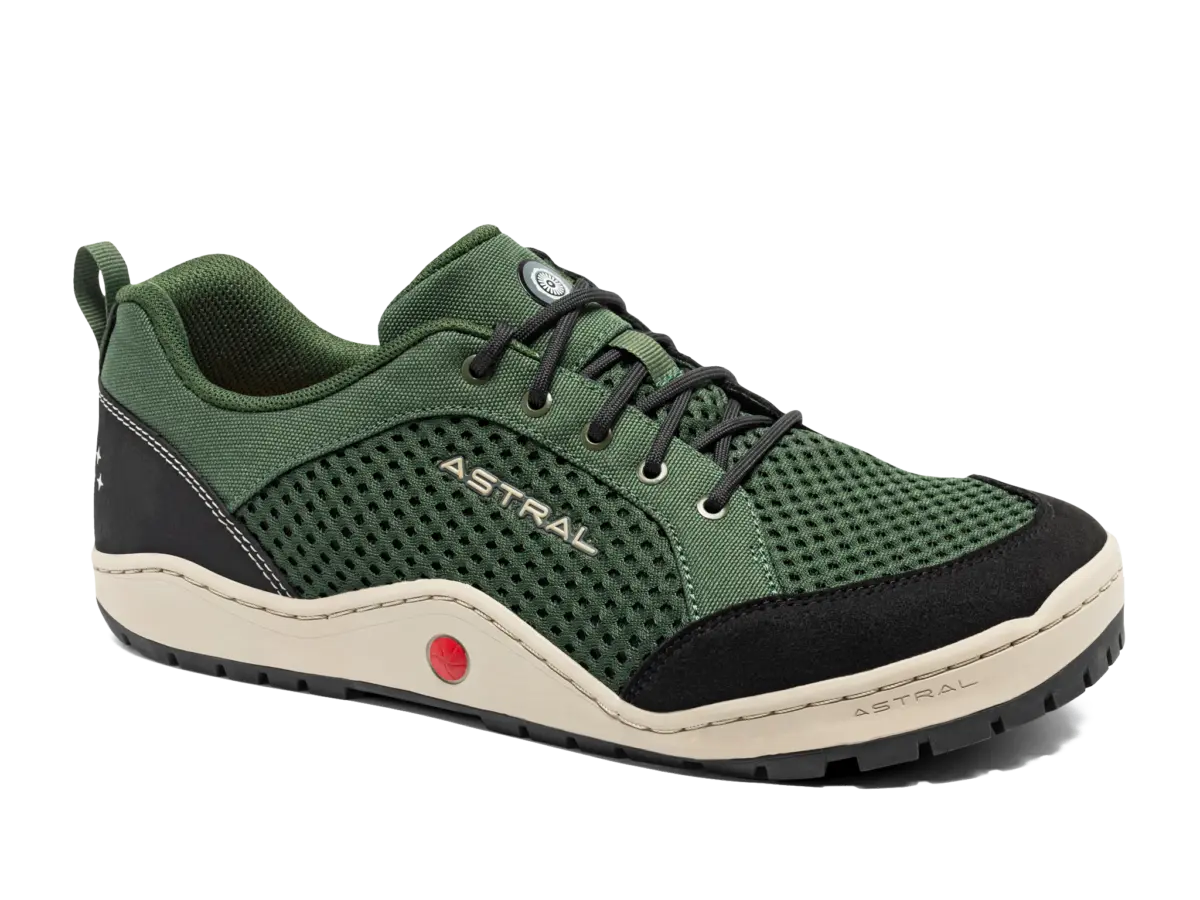
Continuing this trajectory of sustainable innovation, Astral’s latest offering, the Techyak, represents the next evolutionary step in the brand’s footwear lineage. The shoe features a knit upper constructed entirely from 100 percent recycled PET. Notably, the Techyak is built entirely without glue. Chemical bonding agents have long been a staple of footwear manufacturing, but they present significant environmental drawbacks. Beyond their ecological footprint, Curry points out a practical vulnerability: water is remarkably punishing on conventional adhesives, frequently serving as the primary point of structural failure in outdoor footwear.
To help engineer this ambitious project, Curry partnered with legendary footwear designer Tuan Le. A Vietnamese refugee whose storied career includes breaking ground with the Reebok Stomper—the iconic aerobics shoe famously worn by actress Sigourney Weaver in the 1980s sci-fi classic Aliens—Le’s fingerprints are all over modern footwear history. He is the inventor of the Mizuno Wave Rider running shoe and has designed signature footwear for NBA stars Stephon Marbury and Vince Carter during the run of the short-lived brand And1. Since the early 2000s, Le’s design acumen has lent itself to a diverse roster of global brands, ranging from UGG and Bogs to Jack & Jones.
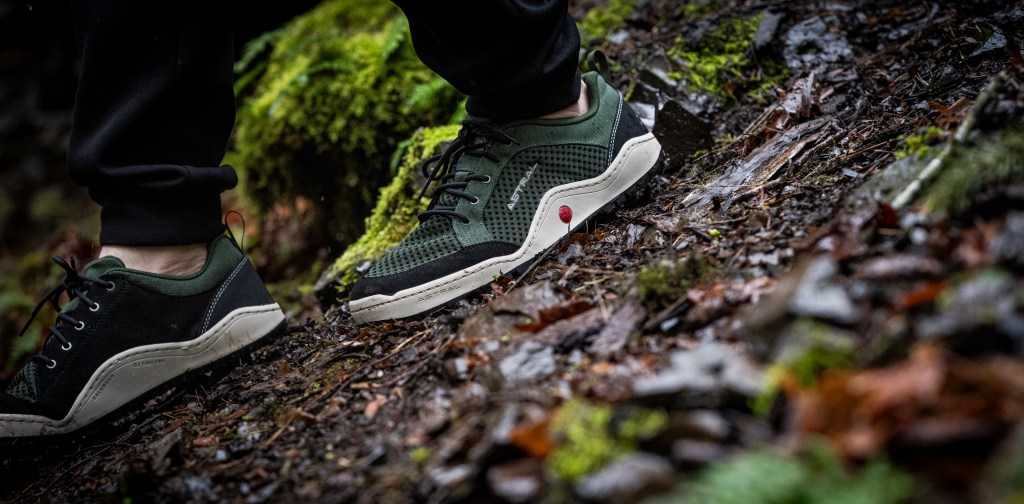
For the Techyak project, Le recalls that he initially drew inspiration from a classic skate shoe silhouette, but quickly pushed himself into uncharted territory as Astral doubled down on zero-drop designs. This geometry places the foot in a more natural, athletic position rather than forcing an artificial posture. The design prioritizes a wider, more rounded toe box, addressing a common critique that many modern shoes restrict natural, anatomical movement.
As an avid runner himself, Le harbors strong opinions about the structural integrity of conventional athletic footwear. He notes that a standard running shoe built with an ethylene-vinyl acetate (EVA) midsole begins breaking down from the very first day of wear, despite being expected to serve as the structural backbone of the shoe. Together, Le and Curry sought to give the Techyak a more resilient spine, offering reliable support without adding unnecessary weight or clunkiness. The objective was to maintain a profile thin enough to keep the shoe svelte, lightweight, and responsive.
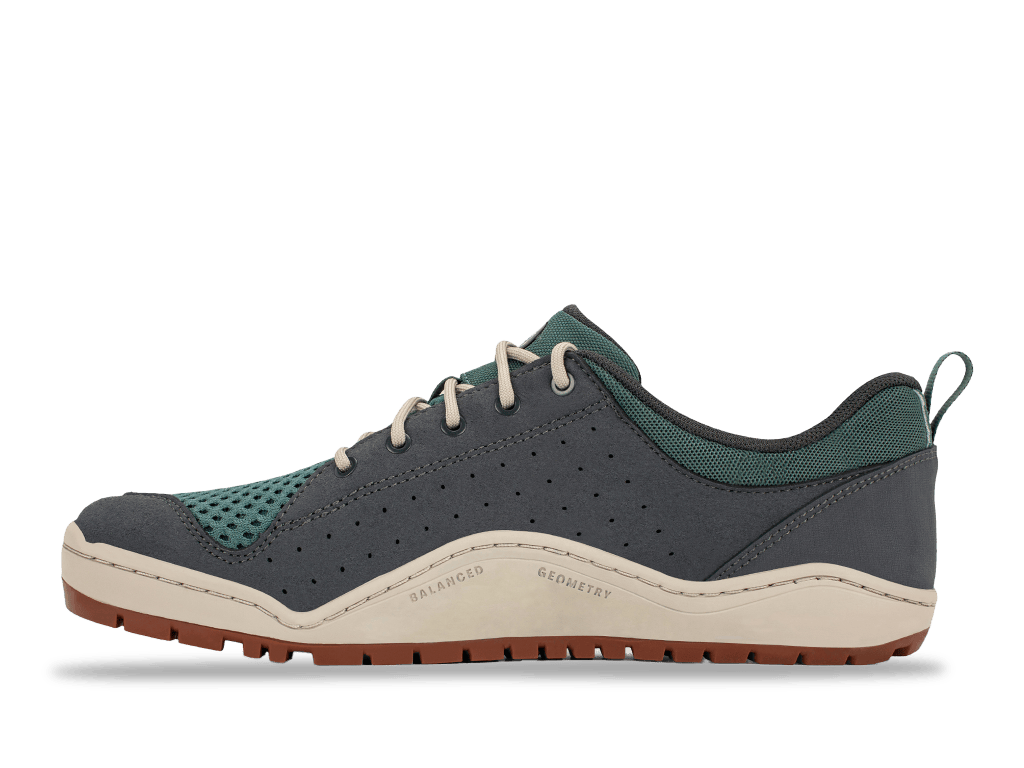
Translating athletic performance into physical design requires a precise understanding of foot anatomy. Le explains that any functional athletic shoe must incorporate a clear visual flex point—the precise zone where the toes naturally hinge during movement, whether the wearer consciously registers it or not. From there, the structural narrative must align seamlessly with targeted arch support.
Reflecting on his decades-long career collaborating with brands across the globe, Le compares the design process to musical composition. Having translated technical concepts into languages ranging from Danish to Japanese, he views footwear terminology as a universal language. Traction, cushioning, and flexibility are constants because human biomechanics remain the same across cultures. For Le, the creative challenge lies in playing a different tune with those familiar elements.
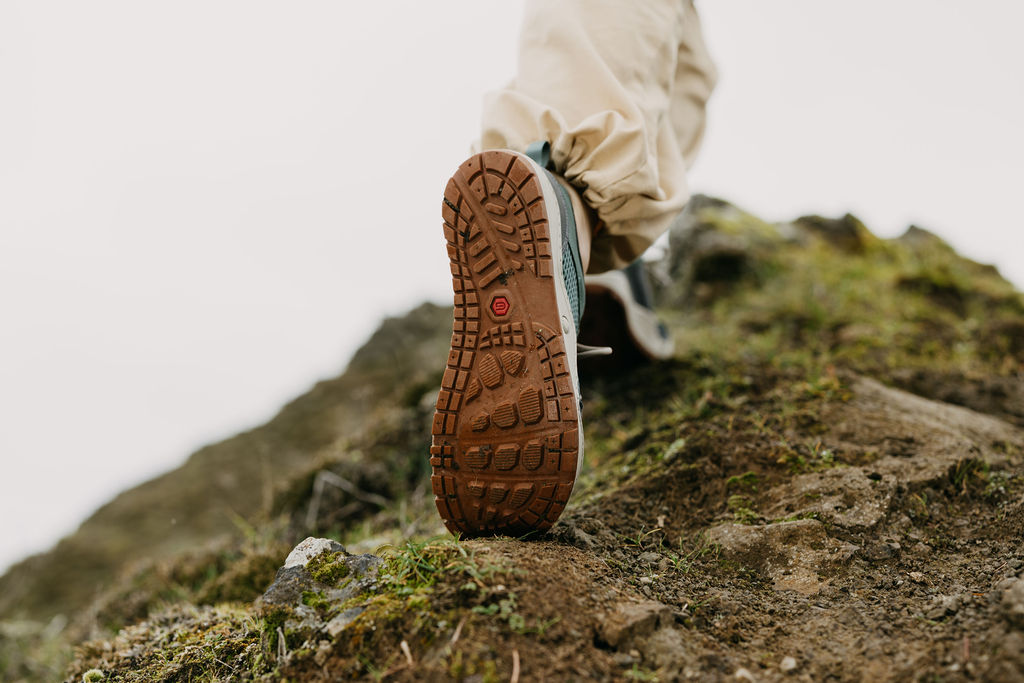
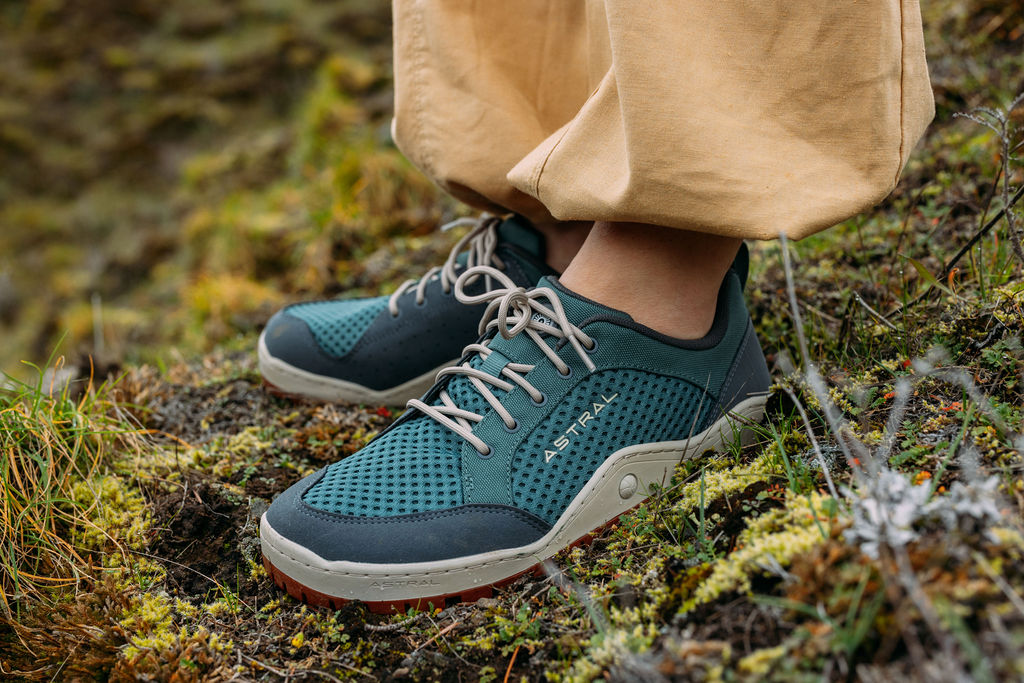
Visual aesthetics and color theory represent another critical dimension of Astral’s design philosophy. Curry explains that the brand’s creative process consistently begins by adopting the perspective of someone standing directly in the middle of water. Consequently, a signature water-inspired hue is always woven into the palette. From that aquatic starting point, the philosophy expands outward to encompass soil and plant life. Rather than relying on neon trends or flashy synthetic tones, the colorways are deliberately organic, drawing direct inspiration from natural flora.
The finer details of the footwear have also evolved through a collaborative dialogue between design and market realities. The Techyak originally featured a distinct red dot on the sole, a nod to Astral’s core iconography and the interplay between a rock, the sea, and the moon. However, because the bold red accent proved visually jarring for some buyers in certain international markets, Le revised the visual elements. The tiny icon is evolving into a lotus flower, a shift that Le embraces with characteristic philosophical ease. As he sees it, the creative process is ultimately about collaboration and experimentation, taking joy in sketching concepts and watching a factory bring them to life while continuously evaluating what the design demands next.