As large language models became widely accessible following the public launch of ChatGPT, the digital landscape shifted overnight. Suddenly, anyone with an internet connection could generate essays, summaries, and entire articles in a matter of seconds. For the vast majority of the internet, this meant a sudden, unprecedented influx of synthetic text. But for Wikipedia—the world’s most widely used collaborative encyclopedia—this technological leap presented an existential crisis.
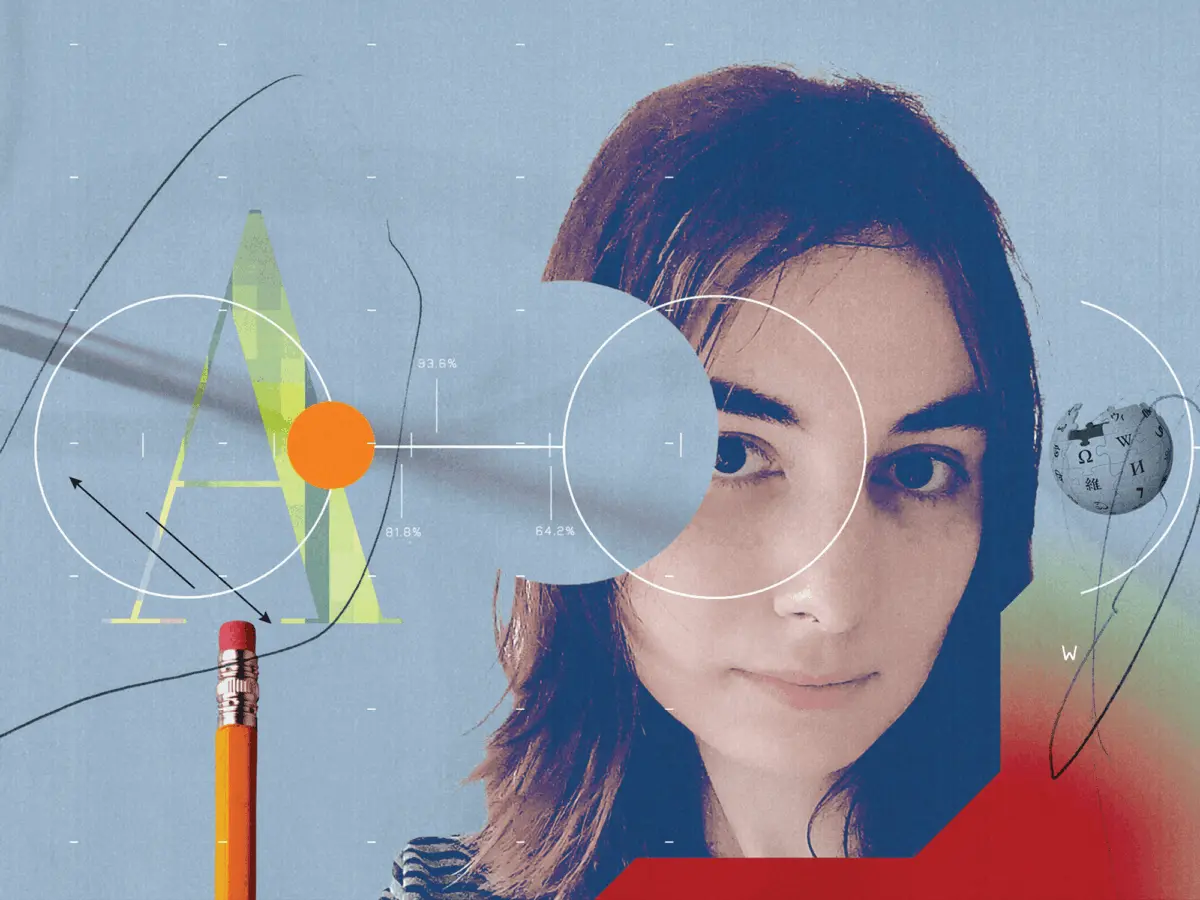
Amid this digital tidal wave, dedicated volunteers mobilized to protect the integrity of human-curated knowledge. Among them is Ellia Lebleu, a founding member of WikiProject AI Cleanup. Launched in 2023, the volunteer-driven initiative was created specifically to scour the digital encyclopedia, identify machine-generated material, and remove content that violates site policies. Lebleu, who is pursuing a Ph.D. in artificial intelligence at the Inria Center of the University of Rennes as part of France’s national research institute for digital science and technology, has spent years on the front lines of this battle.
Reflecting on the early days of the phenomenon, Lebleu recalls that spotting synthetic content was initially a straightforward task. When the cleanup project began, AI-generated writing was routinely betrayed by conspicuous clichés, rigid formatting, and unnatural syntax. Today, however, the challenge has grown significantly more complex. As generative models have evolved, project volunteers have had to develop sophisticated tools to detect subtler forms of machine content, sparking broader debates about the long-term role of automation in the world’s most popular reference site.
The Genesis of the AI Cleanup Effort
The realization that Wikipedia had a serious problem with automated text crystallization came into sharp focus around December 2023. Lebleu and several fellow editors were chatting on Wikipedia’s official Discord server, comparing notes on a growing number of bizarre articles exhibiting identical structural quirks and peculiar phrasing.
These early submissions frequently relied on repetitive, highly characteristic tropes. Phrases like "stands as a testament" or "rich cultural heritage" appeared with suspicious regularity. Furthermore, the articles often featured rigid conclusion sections or standalone subheadings titled "Why is this important?"—structures that were entirely typical of early ChatGPT outputs from late 2023 and early 2024, but profoundly unusual for standard Wikipedia articles. While these early entries were remarkably easy to spot, their sheer volume made manual intervention unsustainable. Recognizing the need for a coordinated defense, Lebleu decided to establish an official project on Wikipedia to mobilize a broader community of editors to tackle the growing flood.
Evolving Tactics: Spotting AI Writing Today
By 2025, the nature of the content had shifted. The glaring clichés of early generative models gave way to subtler, more structural indicators of machine authorship. According to Lebleu, modern AI writing leaves behavioral footprints rather than obvious linguistic markers.
For instance, generative models exhibit a distinct fondness for rhetorical devices like the "rule of three" and negative parallelisms. While none of these stylistic choices are definitive proof of artificial generation on their own, they accumulate in a way that creates a recognizable pattern. Beyond the text itself, volunteers look closely at editing metadata and user behavior. If an account abruptly publishes multiple multi-thousand-word articles within a five-minute window, alarm bells ring.
The infiltration of synthetic text extends far beyond the main prose, presenting critical challenges within the citation apparatus as well. Fake or misleading citations have become a major source of anxiety for editors. In the early days, AI models would routinely hallucinate completely fabricated citations out of whole cloth. While retrieval-augmented generation has made total fabrications rarer by allowing models to query external databases, a more insidious issue has taken its place: misattribution. It has become common for an AI to pull a real, verifiable source but fundamentally misinterpret or misrepresent its contents, generating citations that do not actually support the claims being made in the text.
Policy Prohibitions and the Battle Over Numbers
In response to these mounting threats, the English Wikipedia community officially prohibited editors from using large language models to generate articles. Yet, despite clear policy boundaries, questions remain regarding how much synthetic content continues to slip through the cracks.
To gauge the scale of the problem, Lebleu has collaborated with Pangram, an AI-detection company. By testing the detection software against pre-ChatGPT archival content from Wikipedia, researchers found zero false positives, confirming that the tool provides a conservative lower bound for measurement. Data from late 2025 indicated that the software flagged approximately 20 percent of new articles and drafts as potentially AI-generated. By early 2026, that figure dipped to between 15 and 16 percent.
However, interpreting this downward trend remains complicated. It is still unclear whether the drop is a direct result of stricter enforcement and new policies, or simply a byproduct of rapidly advancing language models that outpace detection software’s current adaptation cycles.
Fighting AI With AI
In an ironic twist, the community is increasingly turning to artificial intelligence itself to combat the wave of machine-generated text.
Another editor within the WikiProject AI Cleanup developed an automated source verifier tool. The program automatically reviews the citations on a given wiki page and checks whether the referenced material actually supports the assertions made in the article. Because the tool is powered by an AI model, it is not infallible and cannot guarantee 100 percent accuracy in every instance. Nevertheless, for filtering out obvious cases at scale, it serves as a valuable first line of defense. Simultaneously, the Wikimedia Foundation has been developing a feature known as "Paste Check," designed to flag text that has been pasted directly from popular AI chatbots.
External measures from technology companies are also providing some relief. Major developers have begun implementing safety guardrails; Lebleu notes that prompts directed at models like Claude sometimes trigger a refusal response, with the AI stating that it cannot write a Wikipedia article because doing so would violate the platform’s policies.
While such prompt refusals do not solve the problem entirely—especially given the availability of open-weight models that can be easily modified to bypass restrictions—they successfully intercept casual users who rely on commercial chatbots without understanding community standards. Determining whether the strict new prohibitions are working will take time, particularly because the vast majority of AI content is submitted by inexperienced, first-time editors. Consequently, the community has amplified its outreach, embedding clear warnings about the AI ban directly into welcome messages, editing tutorials, and helper guides.
Preserving "The Last Good Place on the Internet"
Beyond the immediate administrative headache of cleaning up low-quality drafts, the rise of generative AI has forced Wikipedia’s community to confront deeper philosophical questions about its identity.
When the strict anti-AI guidelines were first enacted, the motivation was purely practical: the platform was inundated with machine content, robust detection tools were lacking, and volunteers needed a way to halt the deluge. Over time, however, the restriction has taken on symbolic weight. Wikipedia has frequently been hailed as "the last good place on the internet." Operating as a space explicitly free from automated text has become central to the site’s cultural brand.
Much of Wikipedia’s current institutional messaging centers on its status as a human-written encyclopedia. Even major AI companies recognize the value of this distinction, noting that having a purely human-curated corpus is uniquely precious for training future machine learning systems. The fact that Wikipedia remains distinctly human-crafted makes it an irreplaceable resource in the digital ecosystem.
This raises a lingering dilemma for the future: Will readers and contributors eventually demand partial AI integration to make the encyclopedia more comprehensive? Lebleu suggests that the community could theoretically preserve its identity as a human-written baseline while simultaneously offering an AI-assisted option for those seeking broader coverage.
Navigating the Era of "Google Zero"
Compounding the challenge of generative text is the shifting paradigm of web traffic, often described as "Google Zero"—a potential future where users obtain answers directly from search engine summaries and AI-driven conversational interfaces, eliminating the need to click through to underlying websites.
If search traffic plummets to zero because users rely exclusively on AI overviews, visibility drops, threatening the pipeline of active human editors. When Google’s AI Overviews cite Wikipedia, casual users frequently read the synthesized answer without realizing that Wikipedia is a living, breathing project built by human volunteers who welcome contributions.
To address this vulnerability, the Wikimedia Foundation is actively exploring a comprehensive attribution framework. Such a system could provide AI users with critical context regarding cited articles—such as when a page was last edited, its overall comprehensiveness, and whether editors have flagged any ongoing disputes or accuracy issues. It could even incorporate direct calls to action, allowing readers to engage with the platform directly through AI models by submitting edit requests or adding newly discovered sources.
Ultimately, Lebleu envisions a deeply symbiotic relationship between Wikipedia and AI models moving forward. While the encyclopedia’s core identity will remain rooted in human collaboration, the tools used to navigate, verify, and contribute to it are bound to transform. Yesterday, artificial intelligence was merely something volunteers had to clean up. Today, it serves as an instrument to assist with that cleanup. Tomorrow, it may well become the invisible infrastructure supporting the entire ecosystem.