






Americans living abroad often grapple with the unsettling sensation of watching their native land’s political drama unfold from a distance, feeling as though they are relegated to the sidelines while monumental decisions are made thousands of miles away. With one of the most contentious midterm election cycles in United States history rapidly approaching next month, the stakes could hardly be higher. To understand how this pivotal moment is resonating far beyond American shores, we spoke with members of the vibrant American community in the Netherlands about how they are organizing, mobilizing, and working to make their voices heard, despite facing a daunting array of logistical and political challenges.
For the past two years, the political landscape has been defined by fierce polarization and continuous national headlines. It often feels as though there is little within or well beyond US borders that has remained untouched by the current administration and its polarizing approach to governance. There is no denying that an immense amount is riding on the country’s midterm elections on November 3. The outcomes across various House and Senate races are widely expected to exert a defining influence on the trajectory of both domestic and global politics over the coming years, shaping international relations, economic policies, and democratic norms.
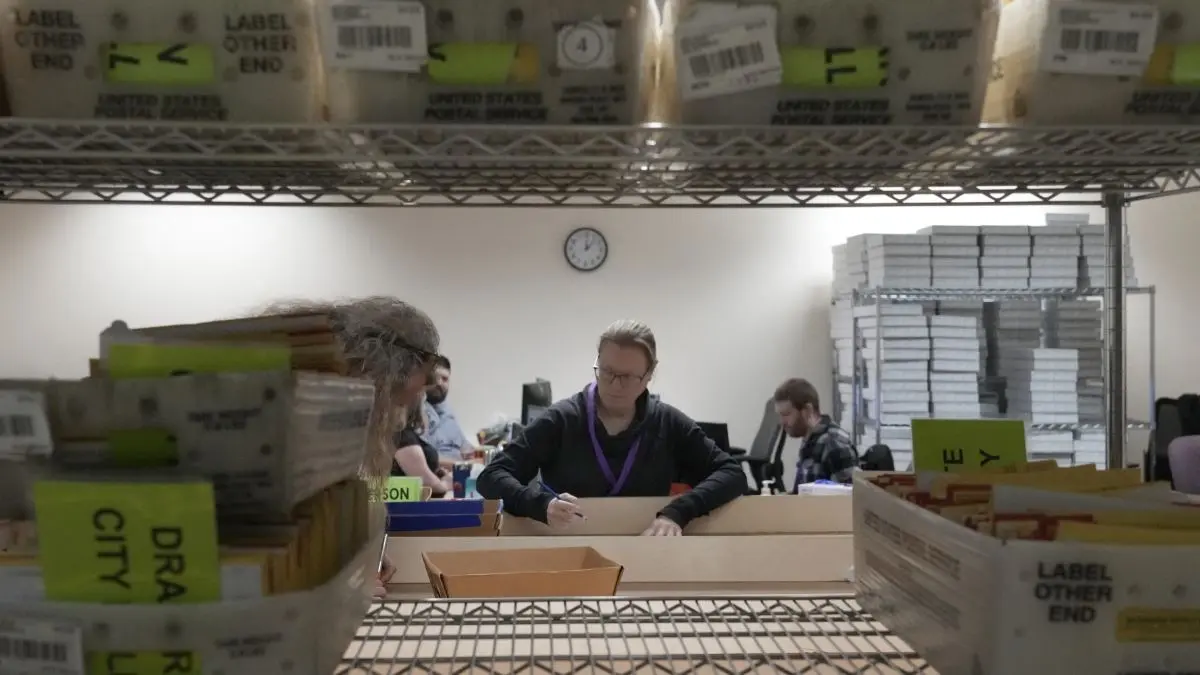
Yet, as has been the case with prior election cycles, Americans residing in the Netherlands frequently confront the reality that participating in their home country’s democracy is rarely straightforward. For many, the primary avenue of engagement remains mailing in an absentee ballot—a process that is frequently complicated, prone to administrative delays, and abandoned by a significant number of potential voters before completion.
The logistical hurdles are substantial. Each of the fifty US states establishes its own unique deadlines, regulatory requirements, and rules regarding whether completed ballots can be returned electronically via email, transmitted by fax, or sent through traditional postal services. Furthermore, any physical ballot posted from the Netherlands must successfully traverse the Atlantic Ocean and arrive at local election offices in time to be legally counted.
These obstacles lead some expatriates to abandon the effort entirely, while others grapple with a sense of alienation that discourages them from participating at all. "One of the reasons why many in the Netherlands don’t vote is because they’ve been here for a very long time," explained Tre’ Shawn Griffin-Noordermeer, vice chair of the Netherlands chapter of Democrats Abroad. "They feel like they shouldn’t be voting because they’ve lived outside the US for so long."
Despite these lingering doubts, federal law explicitly protects the rights of US citizens living abroad, allowing them to continue voting in federal elections within the state where they were last registered residents, regardless of how many years or decades they have spent away. To combat misinformation and ensure that this message reaches every eligible expatriate, various political and civic groups have ramped up their volunteer efforts, organizing informational sessions and community events in the crucial weeks leading up to the midterms.
Reaching out to voters
In response to the complex landscape, dedicated members of campaign groups such as Democrats Abroad in the Netherlands have spent recent weeks deploying comprehensive outreach strategies. These efforts include extensive email campaigns and the organization of virtual "Vote From Abroad" gatherings hosted via Zoom to guide expatriates through the registration and ballot-request process step by step.
Beyond digital outreach, volunteers have been hosting casual lunches and public events in cities across the Netherlands to discuss the critical nature of the midterms. These initiatives are complemented by traditional grassroots organizing tactics, including the distribution of informational fliers, widespread social media campaigns, and intensive phone banking operations designed to track down and assist unregistered or hesitant voters.
"We’ve got hundreds of volunteers here in the Netherlands who have been helping with this," Griffin-Noordermeer told Dutch News, highlighting the sheer scale of the local grassroots effort. "A few weekends ago, we called over 13,000 people."
Originally founded in 1964, Democrats Abroad functions as the official overseas arm of the Democratic Party, dedicated to representing the interests of American citizens residing internationally. With members and potential voters dispersed across 197 countries worldwide, one of the organization’s primary and most enduring tasks is encouraging these far-flung citizens to overcome administrative barriers and cast their ballots. Yet, accomplishing this mission remains far more difficult than it might initially appear to observers back in the United States.
Counting the voters
One of the most persistent challenges facing researchers, political organizations, and election officials is that nobody knows with absolute certainty exactly how many Americans living in the Netherlands are actually eligible to vote. The United States government does not legally require its citizens to register their overseas residency or notify federal agencies when they move abroad. Compounding the issue, individual states frequently drop overseas voters from their active rolls if they fail to respond to routine election mail or miss a single election cycle. Consequently, neither the Department of State nor official voter registration lists maintain a reliable, comprehensive count of the expatriate population.
According to data from the national statistics office CBS, the number of US nationals residing in the Netherlands stood at just over 27,000 in 2026. However, this figure includes individuals who are not yet of voting age, while dual Dutch-American citizens who hold both passports are officially categorized as Dutch in national statistics and are therefore excluded from the total.
On a global scale, the Federal Voting Assistance Program (FVAP)—the specialized Department of Defense office tasked with assisting military personnel and overseas citizens with the voting process—estimates that approximately 2.2 million Americans of voting age currently live abroad. Historical participation rates among this demographic have traditionally been low, and FVAP data indicates that only about 11% of eligible overseas Americans ultimately voted in the recent 2024 presidential election. Participation in midterm elections typically drops to even lower levels, though regional variations exist, with FVAP noting that roughly 14.8% of eligible voters in Europe managed to cast a ballot in 2024.
Preparing for the worst
Despite low national approval ratings for key political figures, the path toward a decisive legislative shift or a sweeping "blue wave" for the Democrats is fraught with uncertainty and institutional hurdles. The administration in Washington has continued to implement policies and actions that critics argue are designed to meddle with the upcoming midterms and suppress overseas participation.
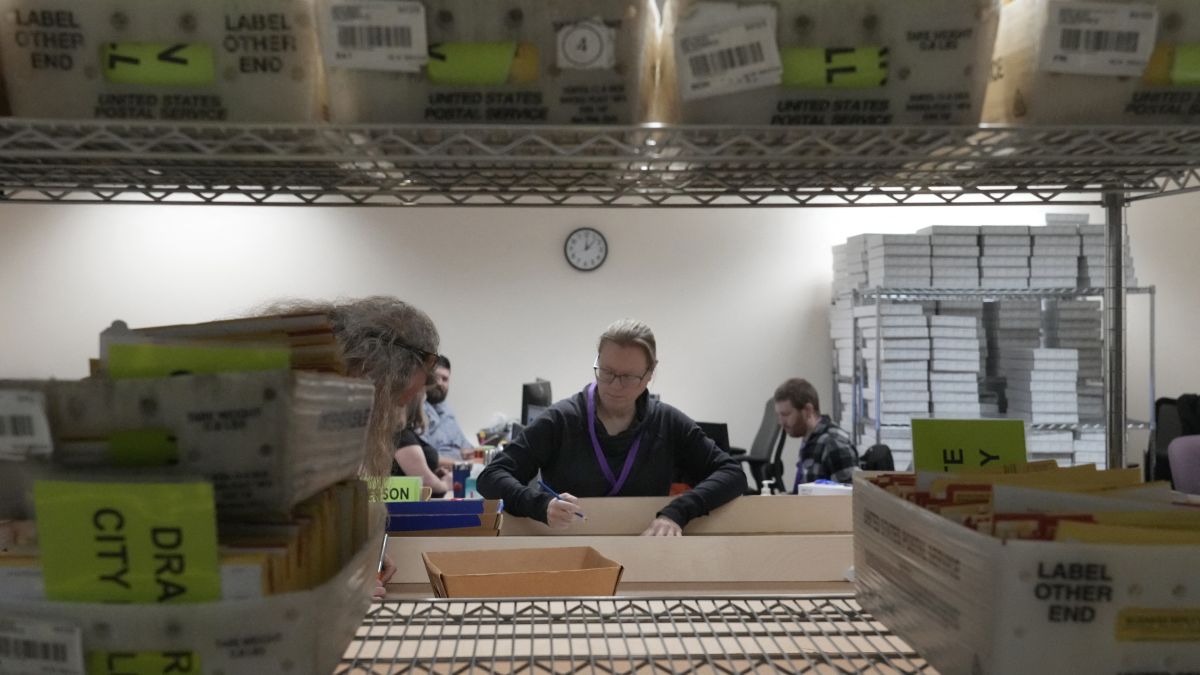
In August, the Pentagon—which oversees the operations of the Federal Voting Assistance Program—instituted last-minute alterations to the Federal Post Card Application, the standardized form that overseas and military voters rely upon to register and request absentee ballots. Notably, the revision removed a specific checkbox designated for US citizens who were born abroad and have never established a physical residence inside the United States. In response to these sudden changes, the Democratic National Committee filed a formal legal challenge in federal court.
This administrative maneuver followed an executive order issued in March 2025, in which the administration sought to impose stringent new proof-of-citizenship requirements onto the same postal application forms. While portions of these requirements have since been blocked by federal courts, the overarching order also aimed to prohibit individual states from counting mail-in ballots that arrive after Election Day, regardless of when they were sent.
The legal battle over ballot counting reached a critical juncture in June, when the US Supreme Court issued a 5-4 ruling affirming that states retain the authority to continue counting validly cast mail ballots postmarked by Election Day, even if those envelopes arrive at election offices days later. This judicial decision carries immense weight for overseas voters whose ballots must navigate the unpredictable timelines of international postal services.
Against this backdrop of legal maneuvering and shifting regulations, Hayley Hughes, the co-founder of the Netherlands chapter of the civic group Indivisible, admitted she harbors deep concerns about how the election process will unfold. She has already engaged in extensive discussions with leaders of other regional chapters to strategize on appropriate responses should the administration actively interfere with ballot tabulation or deploy government agents to monitor polling stations in the United States.
These fears are not entirely unfounded, given that political figures have publicly suggested that partisan allies should "take over the voting" process in numerous jurisdictions across the country, while former advisers have openly welcomed the presence of immigration enforcement agents at polling locations.
"We’re already thinking we might have to mobilise," Hughes told Dutch News, outlining the contingency plans being discussed within expatriate activist circles. "We’re looking at a protest here that week, if needed. In the US, there could be a mass mobilisation of peaceful protests and a general strike where people don’t go to work or school. We all hope that won’t be needed."
The week of the midterms
As the final hours tick down toward Election Day, a series of high-profile events and gatherings have been scheduled across the Netherlands to mark the occasion, bringing the American community together to watch the returns in real time.
In The Hague, the Atlantische Commissie is set to host an official "American midterm election breakfast" on November 4, offering analysts and interested citizens a venue to discuss the early returns over morning coffee.
In Amsterdam, the commission is collaborating with the John Adams Institute to present a major event titled "Midterm Madness" on November 6. Designed to function as a post-election gathering with a festival-style atmosphere, the program features live musical performances alongside in-depth discussions and analytical lectures concerning the election results, featuring prominent guests such as Mark Leibovich, a staff writer at The Atlantic.
Meanwhile, veteran comedian Greg Shapiro is once again partnering with fellow performer Pep Rosenfeld to host a traditional Election Night Party at Amsterdam’s renowned comedy club, Boom Chicago. Having hosted similar late-night election events since the early 2000s, the organizers are once again prepared to keep the doors open deep into the night, with the club vowing to remain open past 4:00 AM "if things get crazy."
"How late, well, we’ll wait and see," Shapiro told Dutch News, reflecting on the unpredictability of election night viewing parties. "I’ve got performances the next day. At some point I’ll have to get some sleep."
Shapiro will be taking a brief hiatus from his ongoing comedy tour, titled KING ME: 250 Years of Donald Trump, to perform at the Boom Chicago gathering. However, he remains acutely aware of the professional challenge he faces in continuously updating his material to keep pace with rapid political developments.
"There’s no telling what could happen," he noted, capturing the anxious anticipation shared by many in the room. "It could become January 6th on a national scale."
For any American citizens living overseas who have not yet participated in the democratic process, opportunities may still remain depending on the specific regulations and deadlines of their home state. Further assistance, registration resources, and guidance on returning absentee ballots can be found by visiting votefromabroad.org.