





The intersection of advanced manufacturing and defense logistics has yielded a breakthrough designed to safeguard lives on the front lines. Print&Live and iSCALE3D have jointly developed "Arkan," a specialized set of 3D-printed airless wheels engineered specifically for unmanned ground vehicles (UGVs). These versatile ground robots play an increasingly critical role in modern combat zones, performing high-risk duties such as casualty evacuation, ammunition transport, and essential logistical support under hostile conditions.
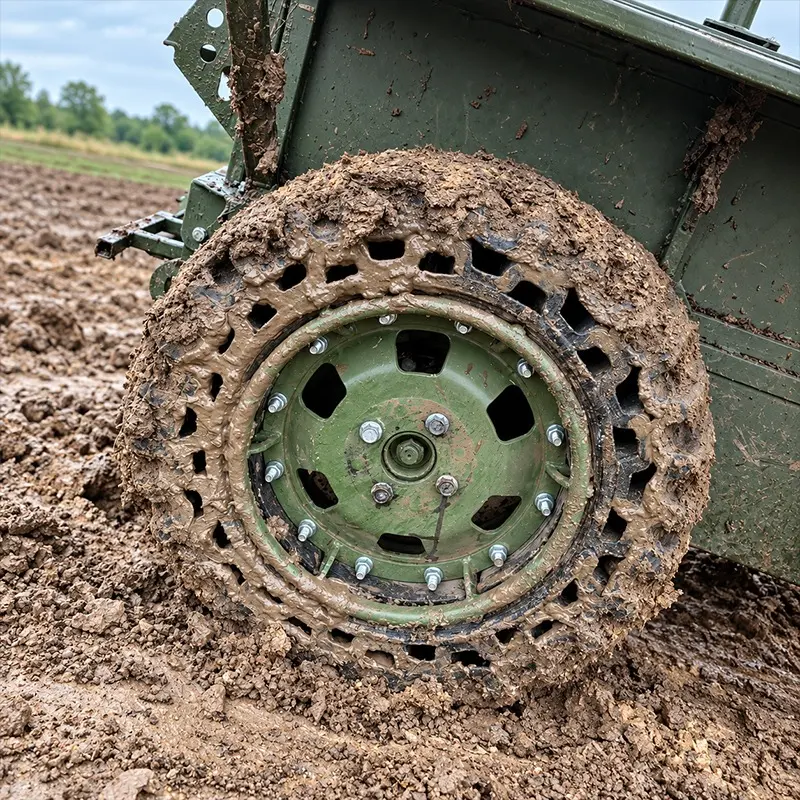
Designed explicitly to withstand punishing off-road environments, the Arkan wheels combine a lightweight lattice structure, a rounded tread, enclosed sidewalls, and an innovative two-piece rim. This multi-faceted engineering approach allows the vehicles to maintain critical mobility even after sustaining damage, while simultaneously streamlining maintenance procedures in the field where specialized repair equipment is rarely available.
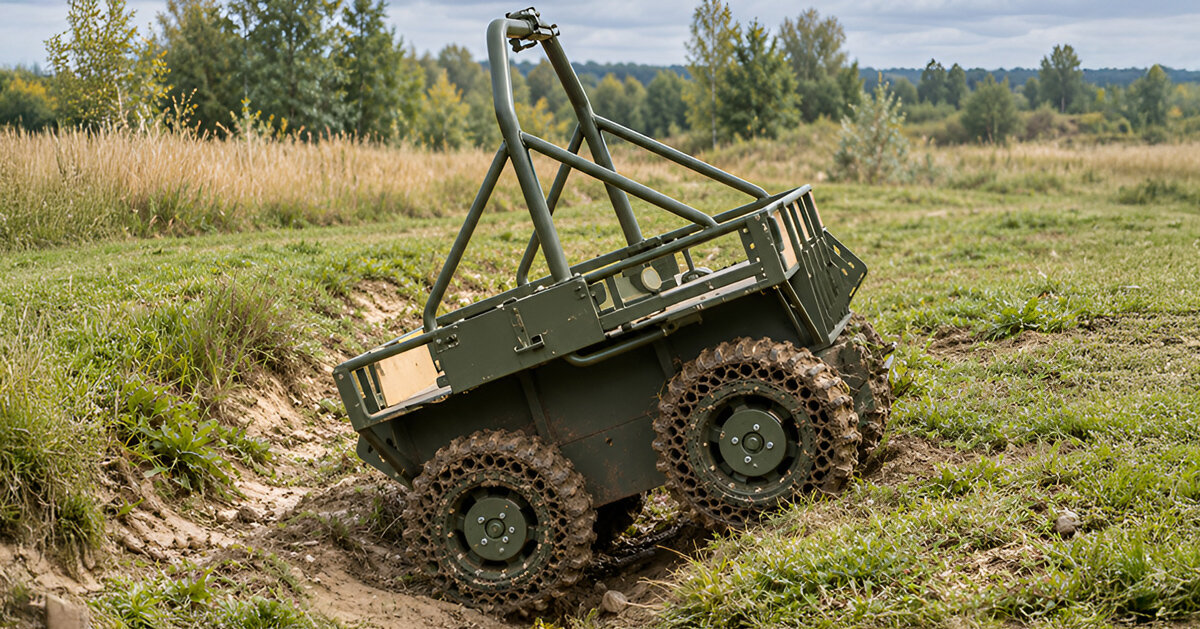
The development of these airless wheels represents a significant leap forward in addressing the mechanical vulnerabilities traditionally associated with robotic logistics platforms. By merging additive manufacturing, mechanical engineering, polymer science, and robotics, the collaborative project tackles the harsh reality of keeping ground vehicles operational across difficult terrain, deep mud, and freezing winter landscapes.
Lightweight Lattice Structures Shape 3D Printed Airless Wheels
At the core of the Arkan design is a sophisticated material and geometric composition. The wheels are manufactured from heavy-duty load-bearing elastomers and polymer composites. Because they utilize an airless construction, the risk of punctures, flats, and catastrophic pressure loss is completely eliminated—a vital advantage when operating in environments strewn with shrapnel, debris, and sharp stones.
To optimize performance, the developers integrated a complex internal lattice structure that provides the necessary shock absorption and load-bearing capacity without adding excessive weight. Accompanying this internal matrix are enclosed sidewalls and a carefully rounded tread profile. This geometry serves a practical operational purpose: it prevents mud, stones, ice, and frozen debris from packing tightly into the wheel, a common issue that can severely hamper vehicle mobility and strain drive motors in cold weather.
The efficiency gains of the Arkan system are equally stark when compared to existing commercial and military-grade alternatives. According to the developers, the optimized design can increase a vehicle’s operational range by up to 30 percent compared to conventional airless options. This efficiency stems from a dramatic reduction in rolling resistance, which subsequently lowers battery consumption—a crucial metric for electric and hybrid UGVs operating far from charging infrastructure.
Weight savings are another defining characteristic of the project. A complete set of Arkan wheels weighs between 32 and 56 kilograms, depending on the specific configuration. In contrast, the Western airless alternatives cited by the developers weigh between 88 and 144 kilograms for a comparable setup. This substantial reduction in unsprung weight lightens the overall payload burden on the robot, preserving battery life and enhancing agility.
Field maintenance has also been reimagined. The wheels feature a proprietary two-piece rim system that allows tires to be installed or replaced directly in the field using only basic, hand-held tools, bypassing the need for heavy hydraulic presses or specialized workshop equipment. Furthermore, because the wheels are produced via additive manufacturing, critical performance parameters such as wheel stiffness, damping characteristics, and physical geometry can be digitally adapted to suit different vehicle weights and specific mission requirements.
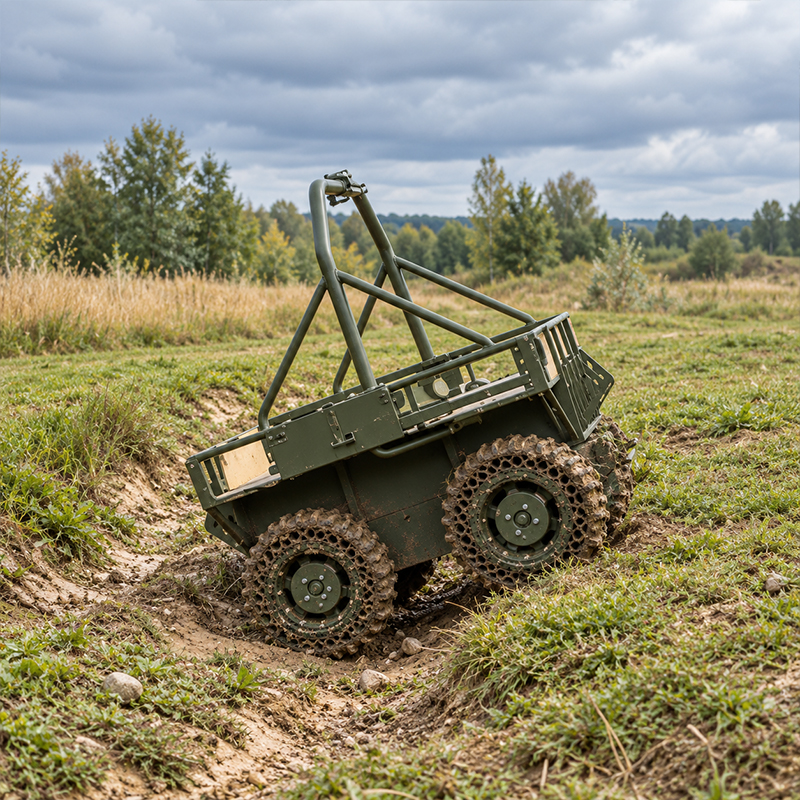
Cost efficiency adds a final layer of practicality to the initiative. A complete set of Arkan wheels costs approximately 680 euros. This price point stands in stark contrast to the overseas alternatives cited by the developers, which typically command prices of 3,000 to 4,000 US dollars or more per set.
Airless Wheels are Designed for Off-Road Military Operations
Moving beyond theoretical design and laboratory testing, the Arkan system has already been subjected to rigorous field and combat trials by units within the Ukrainian Defence Forces. These operational tests put the 3D-printed wheels through punishing scenarios designed to push materials and engineering to their absolute limits.
In one notable trial sequence, a TARGAN 3K 244 EVO 1 vehicle equipped with Arkan wheels covered a grueling 210 kilometers on a dedicated test range. Following that baseline testing, the vehicle went on to log 151 kilometers across 11 distinct winter combat missions. Over the course of these deployments, the UGV successfully carried a cumulative 1,825 kilograms of cargo and performed a critical casualty evacuation, bringing a wounded individual safely back from a hazardous zone. Despite experiencing moderate tread wear over the course of these missions, the wheels retained full structural integrity and operational functionality.
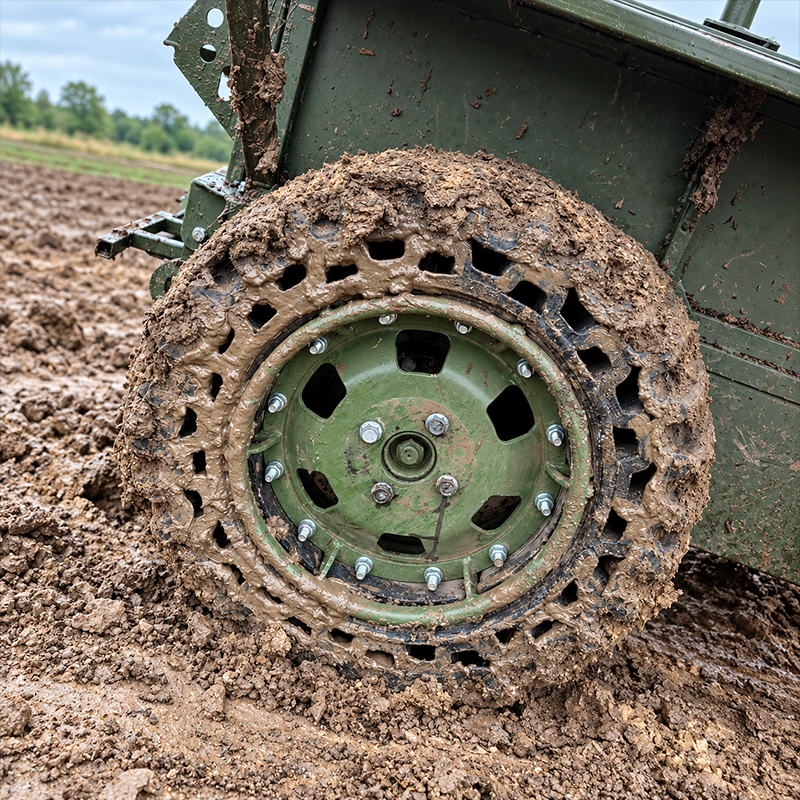
Additional trials involving the Rys Pro UGV demonstrated similar resilience. Operating under heavy loads across boggy and frozen terrain, and even taking on the task of towing another disabled vehicle, the Arkan wheels maintained their robust load-bearing capacity. Inspectors reported no signs of structural delamination or cracking in the composite materials, validating the durability of the elastomeric lattice under sustained mechanical stress.
Having successfully completed the research and development phase, the project has transitioned into small-batch production to supply active combat units directly. To keep pace with demand from both UGV manufacturers and military end-users, Print&Live and iSCALE3D are actively working to expand their printing and production capacities.
The successful deployment of the Arkan wheel system highlights the transformative potential of decentralized, advanced manufacturing in modern conflict zones. By delivering lightweight, highly durable, and cost-effective mobility solutions that can be tailored digitally and maintained with minimal tools, the collaboration is providing vital logistical support where it is needed most.