





At the historic Arena di Verona in Italy, the centuries-old tradition of classical music is undergoing a bold, contemporary transformation. Under the creative direction of renowned producer Marco Balich and his team at Balich Wonder Studio, in collaboration with the Arena di Verona Foundation, the ancient Roman amphitheater has played host to an ambitious series of immersive orchestral experiences. By seamlessly bridging the worlds of tech-driven creative visuals and timeless musical compositions, these productions aim to redefine how live classical music is experienced, proving that centuries-old masterpieces can resonate powerfully with modern sensibilities.
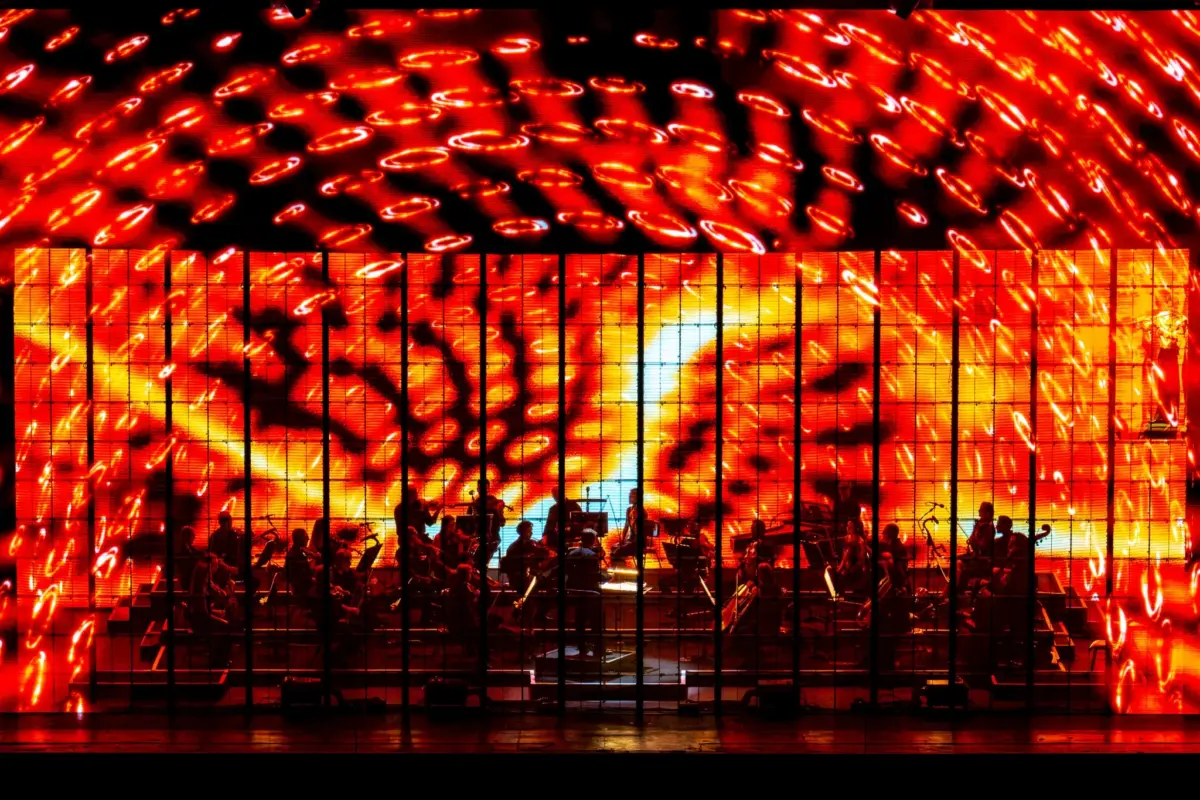
This past August, the spectacular venue presented a dual bill of sensory-rich performances. The returning favorite, Viva Vivaldi, was staged alongside the highly anticipated world premiere of Paganini Paradise, a brand-new production paying tribute to the radical virtuosity, dark romanticism, and unbridled imagination of Niccolò Paganini. Together, these productions utilized cutting-edge technology, including massive projections, transparent LED screens, and three-dimensional visual effects, transforming the ancient stone arena into a dynamic canvas of light, shadow, and sound.
Before the grand premiere of Paganini Paradise, Marco Balich hosted a relaxed aperitivo gathering, sitting down with friends, guests, and journalists at a traditional café in Piazza Bra. The grand yet unpretentious square, exuding the authentic and lived-in charm of la dolce vita, provided a fitting backdrop for a conversation about the future of the classical arts. Balich explained to COOL HUNTING that the core motivation behind these immersive spectacles is to attract younger demographics and new audiences to classical music. While the live music industry as a whole continues to expand, classical orchestras around the world face a demographic challenge, losing older patrons faster than they are able to cultivate younger regulars.
Balich’s deep connection to the Arena di Verona stretches back to the very beginning of his professional journey. The magnificent Roman amphitheater has long hosted major global productions and international music legends—most notably Sting, who has frequently cited it as his absolute favorite venue in the world. Balich first stepped onto that storied stage as a young assistant production manager, facing the daunting and terrifying task of informing a packed stadium that the George Michael concert they had come to see had been abruptly canceled due to a mechanical malfunction in its complex scenic structure.
Decades later, Balich has evolved into one of the world’s most recognized creative producers, celebrated for masterminding major live spectacles, international sports ceremonies, and massive cultural projects. His signature artistic style characteristically blends theater, music, technology, and cinematic visual storytelling. His illustrious career credits include the iconic Tree of Life at Expo 2015, numerous Olympic ceremonies, the Vatican Museums-linked Giudizio Universale immersive show, and high-profile creative projects for luxury houses such as Dolce & Gabbana, Louis Vuitton, Ferrari, Max Mara, and Cartier.
Fresh off his recent work on the Milano Cortina Olympic Winter Games opening ceremony and various FIFA World Cup ceremonies, Balich has channeled his boundless creative energy into the second season of Viva Vivaldi: The Four Seasons Immersive Concert and the groundbreaking conceptual premiere of Paganini Paradise: Superlive Immersive Concert. Both productions successfully integrated advanced stagecraft, high-resolution projections, and transparent LED infrastructure into the historic open-air framework of the ancient Roman amphitheater, creating a visual dialogue between antiquity and the digital age.
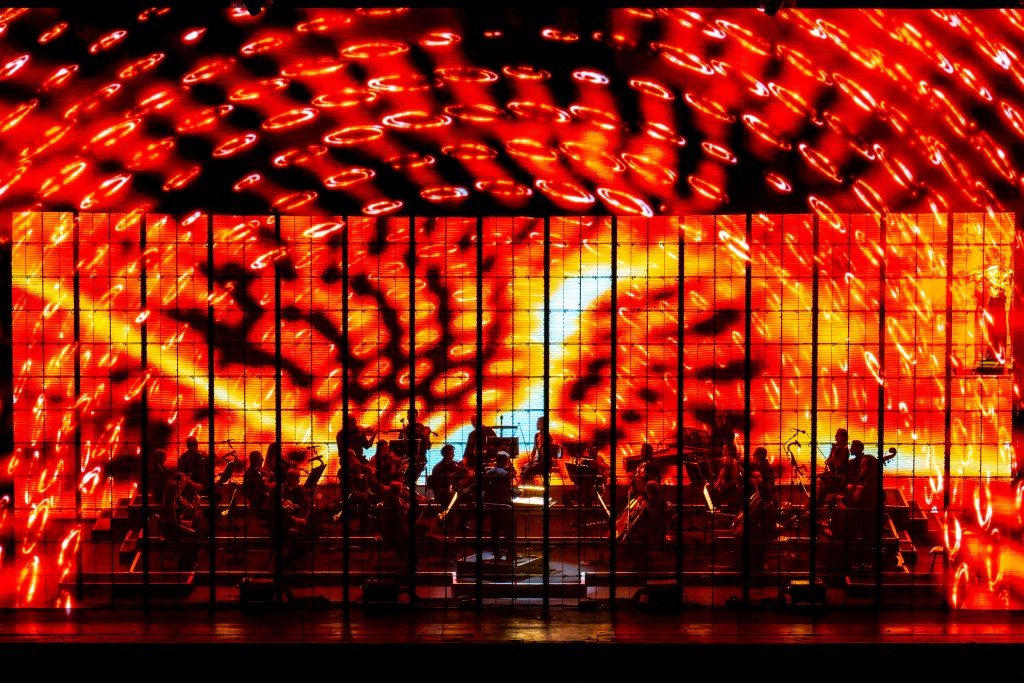
Viva Vivaldi returned to the arena this summer for its third consecutive season, riding the immense momentum of two previous sold-out editions. The production places Antonio Vivaldi’s timeless masterpiece, The Four Seasons, at the absolute center of an immersive theatrical experience. The score is performed live by 29 accomplished musicians from the Arena di Verona Foundation Orchestra, skillfully led by the 28-year-old violin virtuoso and conductor Giovanni Andrea Zanon. While the musical score remains entirely faithful to Vivaldi’s original compositions, the ambitious visual design elevates the concert to an entirely unprecedented artistic scale.
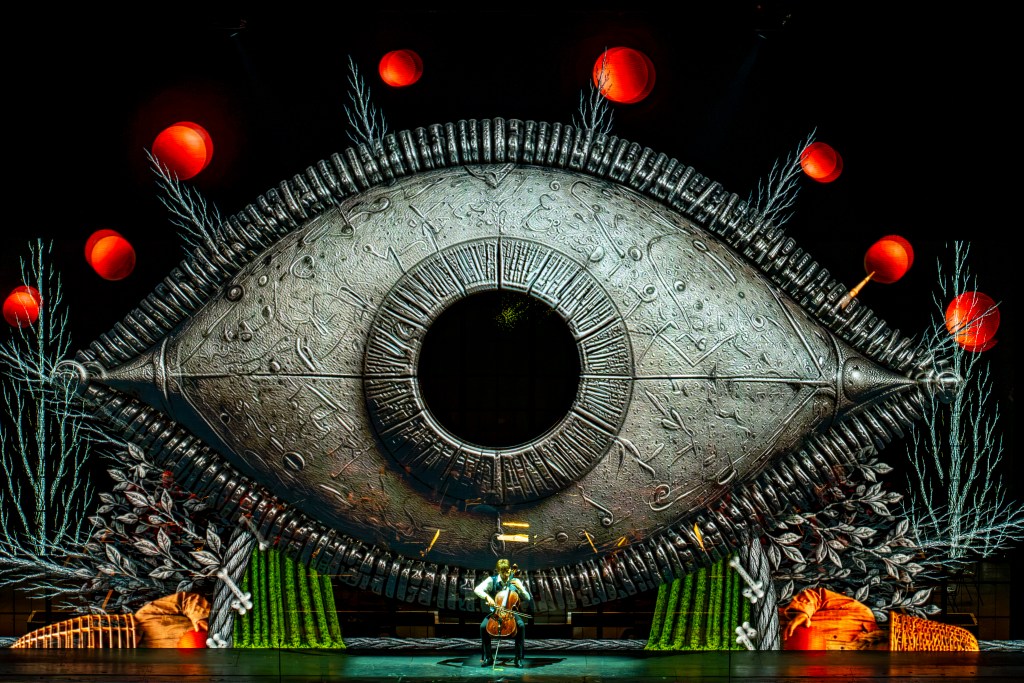
The headline-making novelty of the summer season, however, was Paganini Paradise, which made its world premiere the preceding evening. Structured in three distinct acts, the production embarks on an evocative journey from radiant light into deep darkness, guiding the audience through an introspective exploration of the human soul before culminating in a breathtaking vision of cosmic chaos. Paganini’s notoriously complex and demanding music is woven together with works by other classical masters, including Pachelbel, Albinoni, Handel, Tartini, Fauré, and Barber.

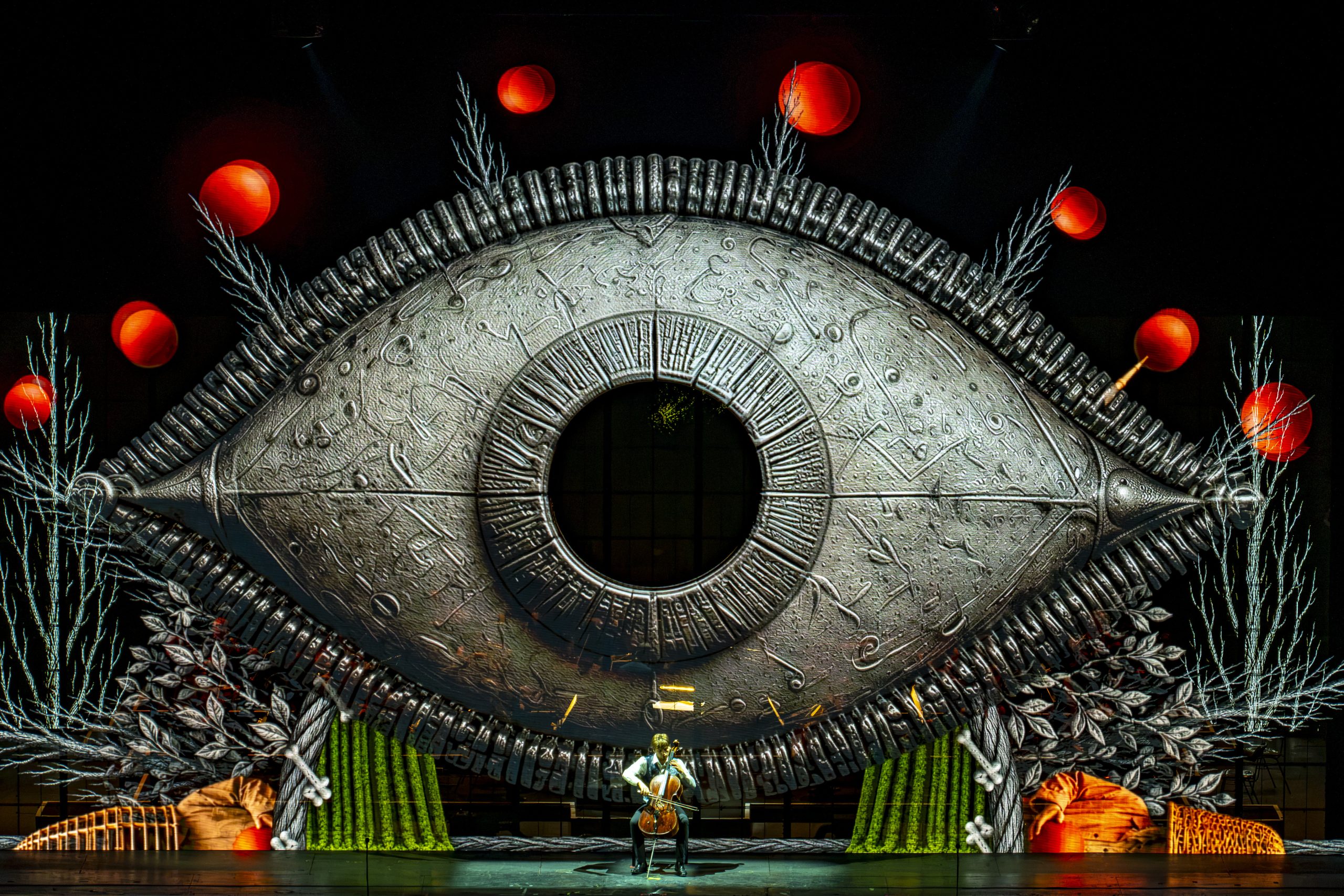
On stage, Giovanni Andrea Zanon is joined by 23-year-old cello prodigy Ettore Pagano. Positioned firmly at the center of the performance, these two brilliant young musicians command the stage with an intensity that matches the visual spectacle. Highlighting exceptionally talented, young artists on stage serves a dual purpose, helping to establish an immediate, relatable connection with younger concertgoers who may otherwise feel alienated by traditional classical performance formats.
Balich remains firm in his conviction that the classical music world must embrace a paradigm shift in how it presents its art. Simply expecting audiences to sit quietly and stare at an orchestra for two hours in a formal concert hall is no longer, on its own, a sufficient incentive to appreciate the music. At the same time, he argues that wider sensory stimulation should not be dismissed as a mere distraction, but rather embraced as a powerful conduit for helping modern audiences feel a deeper, more visceral connection to the music.

Crucially, Balich’s innovative approach remains deeply respectful of the artists and the classical tradition itself. The entire conceptual framework of Paganini Paradise was closely developed in tandem with Zanon, while Cecilia Gasdia—the celebrated former soprano who now serves as the Superintendent of the Arena di Verona Foundation—granted Balich complete creative freedom in an extraordinary gesture of institutional trust.
From a critical standpoint, Paganini Paradise proved to be an undeniably impressive and captivating achievement. Zanon and Pagano consistently stole the spotlight with their sheer technical mastery and emotional depth, ensuring that the elaborate visual elements never overshadowed the music itself. The digital projections were particularly poignant during the first act, where motifs and characters drawn from the intricate, surreal paintings of Hieronymus Bosch were dynamically animated and multiplied. This created a haunting oscillation between celestial and infernal imagery, perfectly mirroring the show’s overarching thematic transition from light to darkness. As the performance progressed into its second and third acts, the visual landscape evolved into something decidedly modern and futuristic, featuring shifting geometric forms, botanical structures, and natural phenomena that coalesced into a striking, turbulent universe.

The production’s only minor point of debate among purists involves the decision to amplify the live instrumentation through a contemporary sound system. While effective for stadium-scale mixing, electronic amplification can occasionally flatten the organic acoustic pathos of watching an orchestra perform live within a historic architectural marvel. Ironically, younger audiences—who are largely accustomed to consuming recorded music through personal speakers and headphones—might view this differently, while purists accustomed to the natural acoustics of the Arena di Verona, celebrated for over a century of open-air opera performances, might yearn for unamplified purity.
Nevertheless, the underlying technique of pairing live classical performance with sophisticated video mapping and transparent LED staging represents a major evolution for the genre. By scaling up these immersive productions to fit a full-sized Roman amphitheater, Balich Wonder Studio and the Arena di Verona have demonstrated how visual media can extend far beyond the physical stage and into the open night air of a historic venue.

The mesmerizing format clearly possesses immense potential to travel internationally, offering a scalable model that could revitalize classical music programming in historic venues around the globe. At the same time, these successful stagings firmly cement the Arena di Verona as the natural epicenter for the development and presentation of groundbreaking cultural hybrids. Building on this season’s triumph, organizers have already announced new performances of both Viva Vivaldi and Paganini Paradise, scheduled to return to the historic amphitheater on August 24 and 25, 2027.