





Straum has flipped its nature-inspired design concept on its head and, in the process, delivered one of the most compelling and adventure-ready mechanical watches seen in recent memory.
Spending time with the new Straum Expedition both on and off the wrist offers a distinct reminder of the call of the outdoors. For many watch enthusiasts, the concept of a tool watch comes down entirely to intent—whether the physical execution of a timepiece truly matches the narrative built around it. Achieving this balance is a complex design challenge, yet when a brand manages to align form, function, and storytelling, the result can feel magical. It is an acknowledgment that wearing a mechanical watch today is largely an emotional choice, as most modern wearers do not genuinely rely on their wristwatches for survival in the wilderness.

This reality helps explain why the market is saturated with dive watches boasting minimal water resistance, or why commuters frequently sport fashion timepieces featuring immobile pushers and non-functional subdials. What elevates a watch like the Straum Expedition is its absolute authenticity. It is precisely the rugged, purposeful instrument that the brand claims it to be, standing as a true outdoor companion rather than a mere lifestyle accessory.
A Brief Primer on Straum
For those already familiar with independent watchmaking, Straum likely entered the collective enthusiast consciousness through the Jan Mayen collection. While the Jan Mayen was not the brand’s foundational debut—that distinction belongs to the now-retired Opphav and its limited-edition sibling, the Rastarkalv—it was the watch that successfully broadened Straum’s international audience.
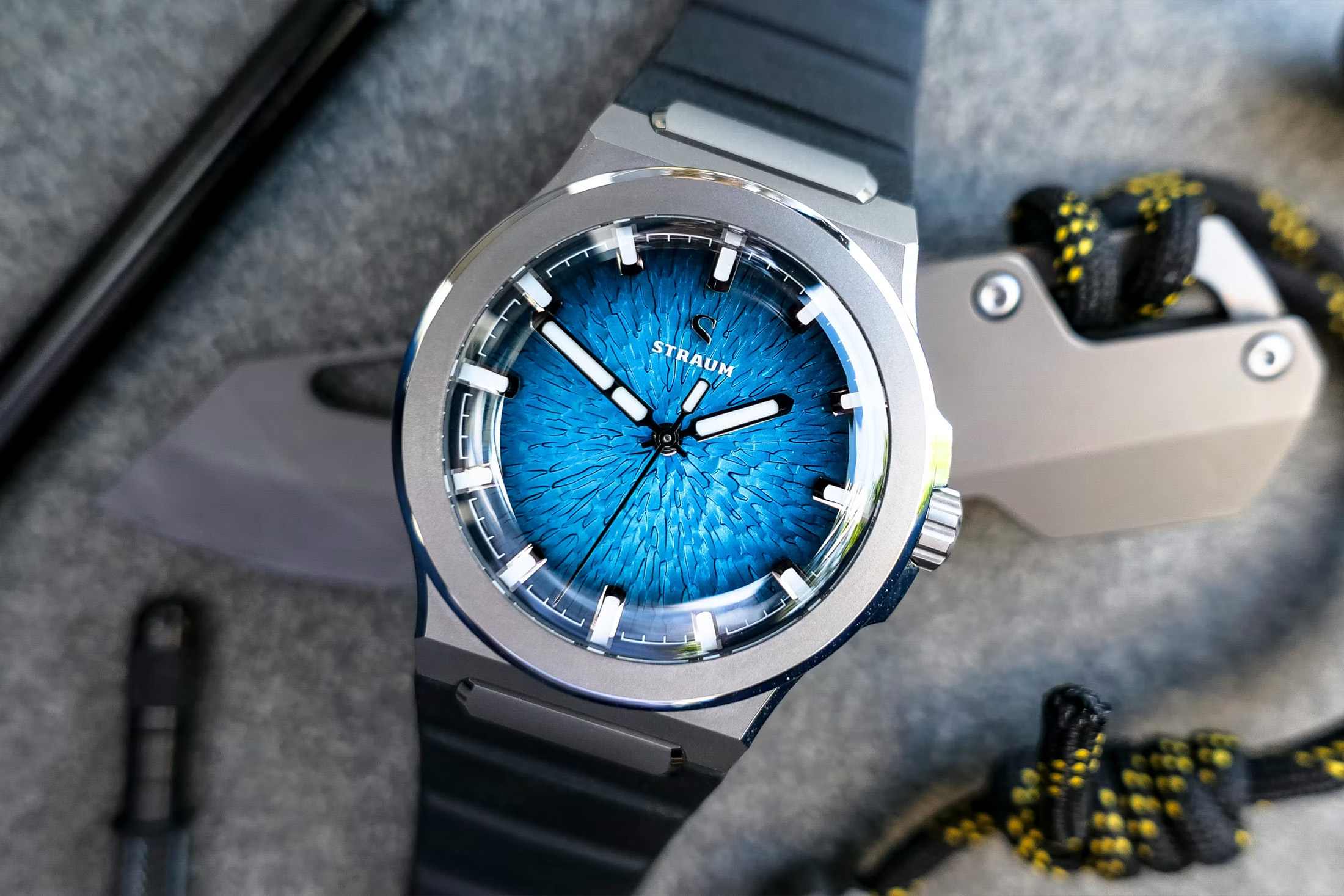
Straum was founded in 2017 by Øystein Helle Husby and Lasse Roxrud Farstad, two friends who met in design school before reconnecting to launch a definitively Norwegian brand. With the Jan Mayen collection, Øystein and Lasse began utilizing their timepieces to tell vivid stories about Norway’s dramatic wilderness. Today, the Jan Mayen lineup is extensive, featuring dials inspired by phenomena ranging from the northern lights to massive glacial formations. The brand has even crafted unique watch dials directly from rock samples harvested during an expedition to climb Beerenberg, the northernmost active volcano in the world, which serves as a majestic fixture of the Jan Mayen island.
These nature-themed watches have enjoyed well-deserved popularity. However, while the Jan Mayen collection excels at evoking the rugged visual beauty of Norway’s wild landscapes, it has never quite been the specific watch one would instinctively strap on to physically explore those harsh environments. That exact operational gap is what the new Expedition aims to fill.
Inspired By Versus Built For
Øystein and Lasse are avid outdoorsmen who spend their time away from the design studio hiking, climbing, sailing, and actively exploring their home country’s rugged terrain. It is hardly surprising, therefore, that the founders eventually turned their creative focus away from purely nature-inspired wristwatches and toward a different category of outdoor gear entirely.
This evolution brings into focus a conceptual distinction that Straum describes as "Inspired By" versus "Built For." Every watch previously released by Straum—including the Opphav, the Jan Mayen, and the Frozen Metal Titanium editions—falls firmly into the first category. These are timepieces designed to evoke memories and sensations of the natural world while navigating everyday urban life. With the introduction of the Expedition, Straum is launching its "Built For" product line in full force: watches engineered specifically to accompany the wearer directly into the wild. For a first attempt at a dedicated heavy-duty field and adventure watch, the brand has executed the concept brilliantly.

Comparing the new Expedition to the Jan Mayen might lead some to assume it is simply a re-skinned version of an existing platform. While the overarching case geometry is recognizably Straum and bears a strong structural similarity to the Jan Mayen, dismissing the Expedition as a mere cosmetic variation ignores what makes it genuinely special. Despite the shared design DNA, the overarching character of the Expedition diverges sharply from its predecessor, offering a tactile and visual experience unlike anything the independent Norwegian brand has produced before.
This transition was previewed by smaller evolutionary steps, such as the introduction of integrated rubber straps to the Jan Mayen line and an increased experimentation with titanium cases. While some purists might argue these developments blur the stylistic lines between the collections, it is commendable that Straum ensured its manufacturing competencies and technical capabilities were fully established before taking such a serious leap forward. Too many emerging brands bypass this crucial phase, and the high level of build quality resulting from Straum’s methodical approach is immediately evident in the final product.

Refined Engineering and Construction
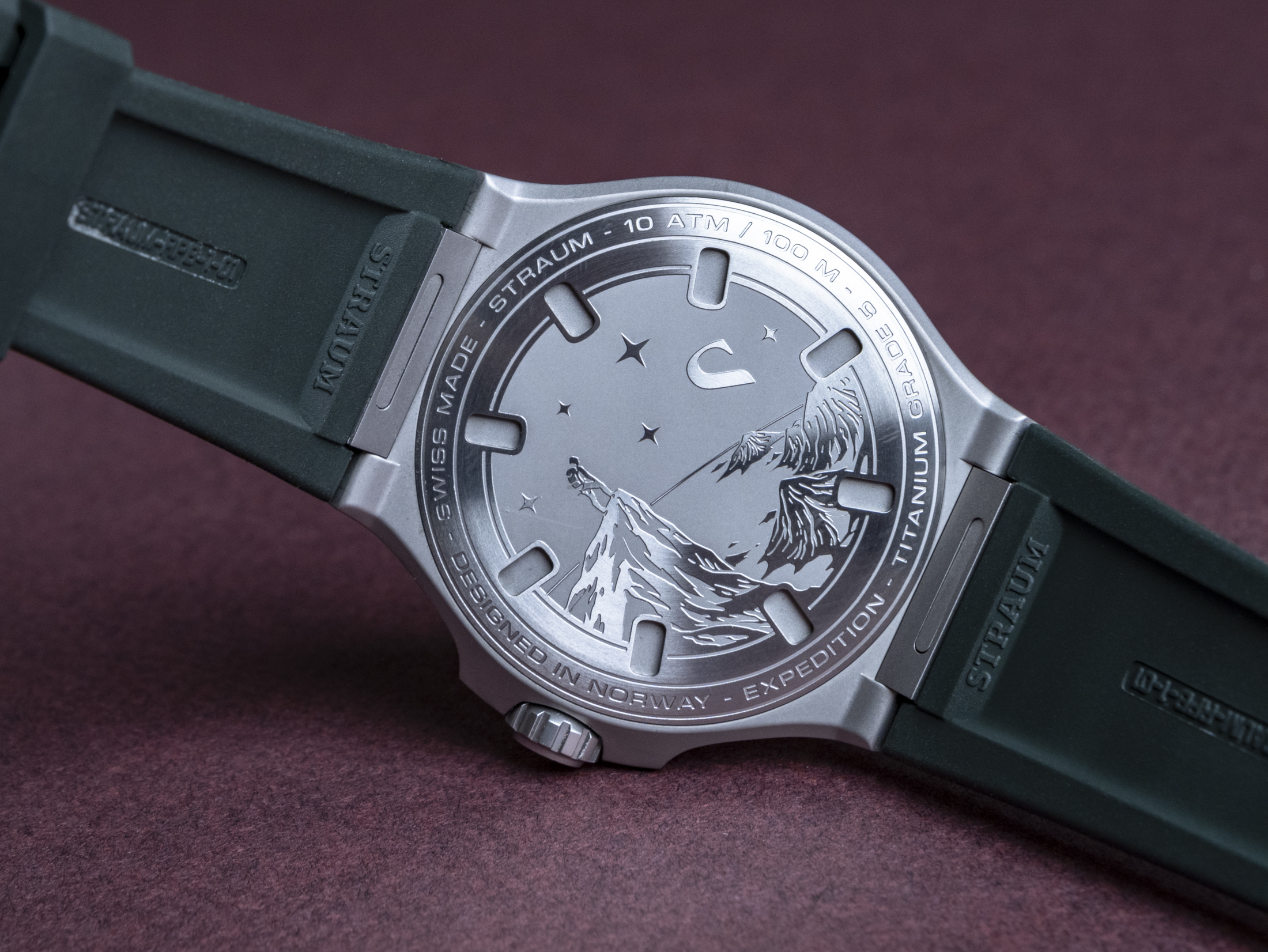
Examining the physical specifications reveals where the Expedition differs significantly. The case measures 39.5mm in diameter, 45.7mm from lug to lug, and 11mm in thickness. While it shares its exact lug-to-lug dimension with the Jan Mayen, the Expedition is slightly thinner and more compact on the wrist, resulting in exceptional wearability. This ergonomic comfort is further amplified by the extensive use of Grade 5 titanium for both the case and the optional matching metal bracelet.
The visual balance between the dial and the case has also been refined, leaning more toward dial dominance on the Expedition. A stepped bezel rises to sit completely flush with the subtly domed sapphire crystal, giving the watch a distinctly robust structural integrity while preventing the crystal from feeling overly prominent. This contrasts with the Jan Mayen, which features a thinner case profile paired with a protruding crystal that adds overall height.

Furthermore, the implementation of a larger crown significantly alters the watch’s aesthetic profile. Functionally, it offers superior grip and utility, though it has not yet been thoroughly tested for operation while wearing thick winter gloves. Aesthetically, the enlarged crown proportions harmonize seamlessly with the integrated crown guards, softening their appearance so they read as an organic extension of the middle case rather than an afterthought. The result is a profoundly cohesive and purposeful tool watch design.
A Purpose-Built Dial Architecture
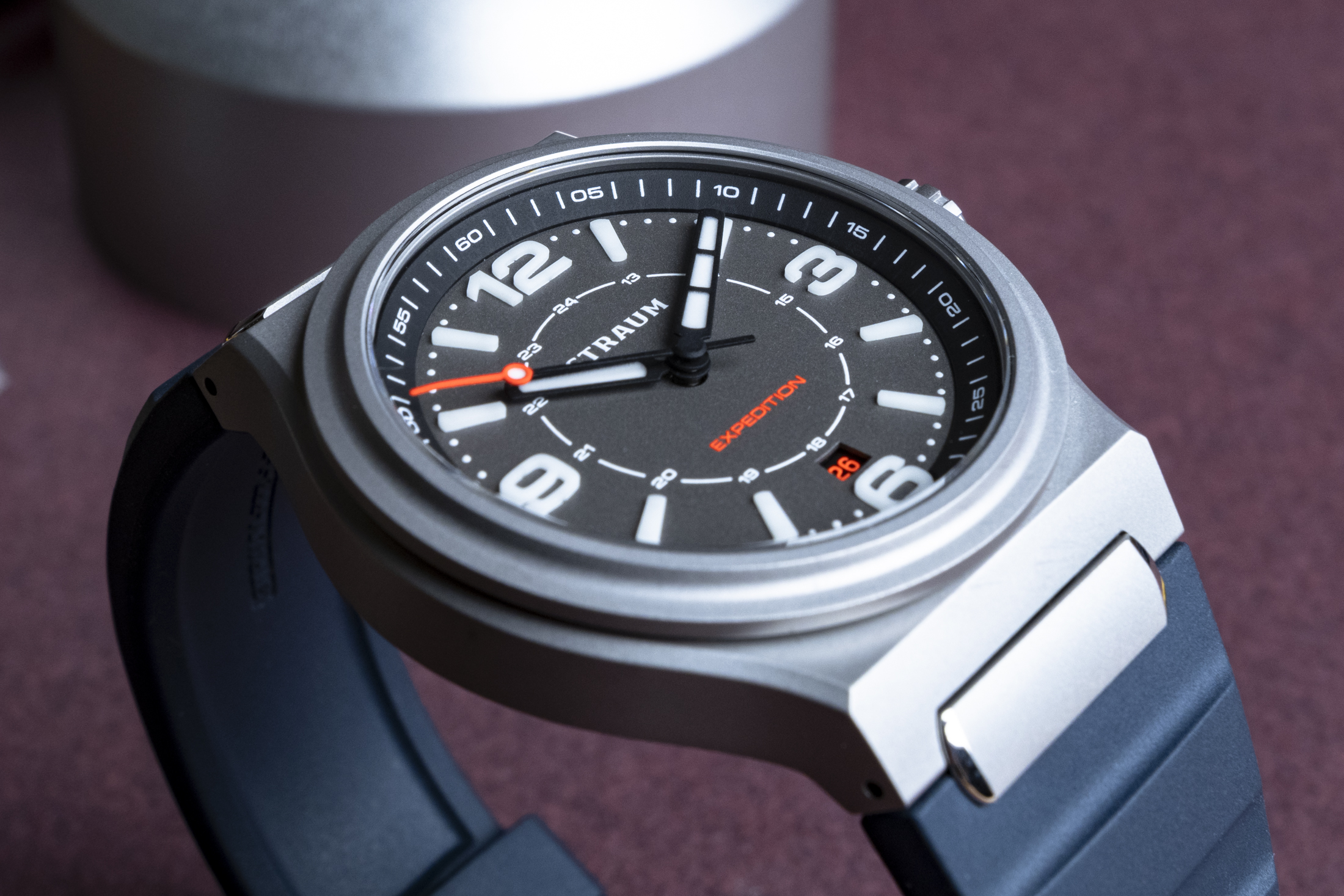
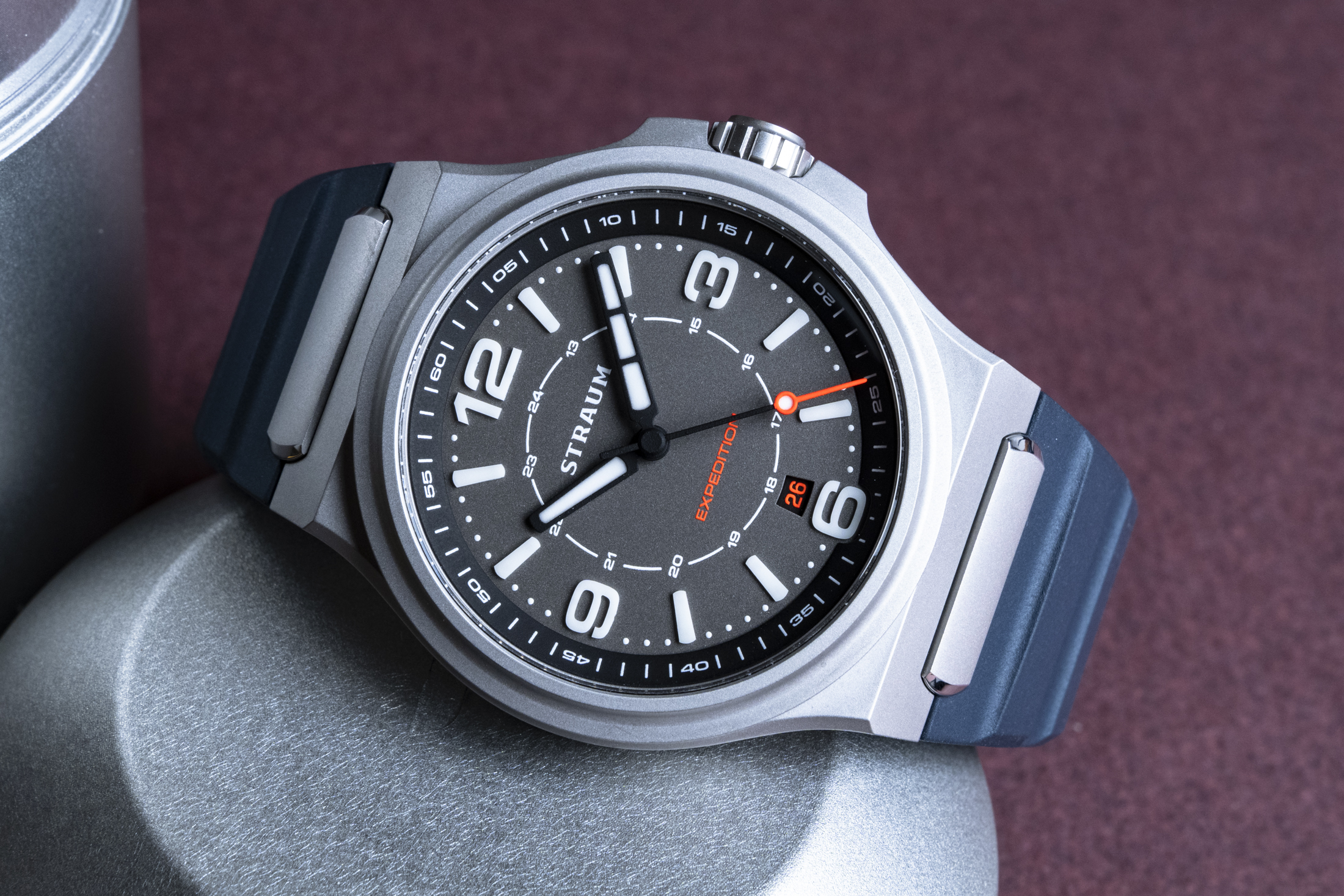
The most transformative change arrives at the dial. The Expedition abandons the highly detailed, colorful, and artistic dial textures found on the Jan Mayen in favor of a starkly legible, fit-for-purpose layout. It incorporates bold block numerals, prominent markers, vibrant splashes of fluorescent orange, and a classic sector layout reminiscent of traditional military field watches, complete with a 13-to-24-hour scale marked on an inner ring.
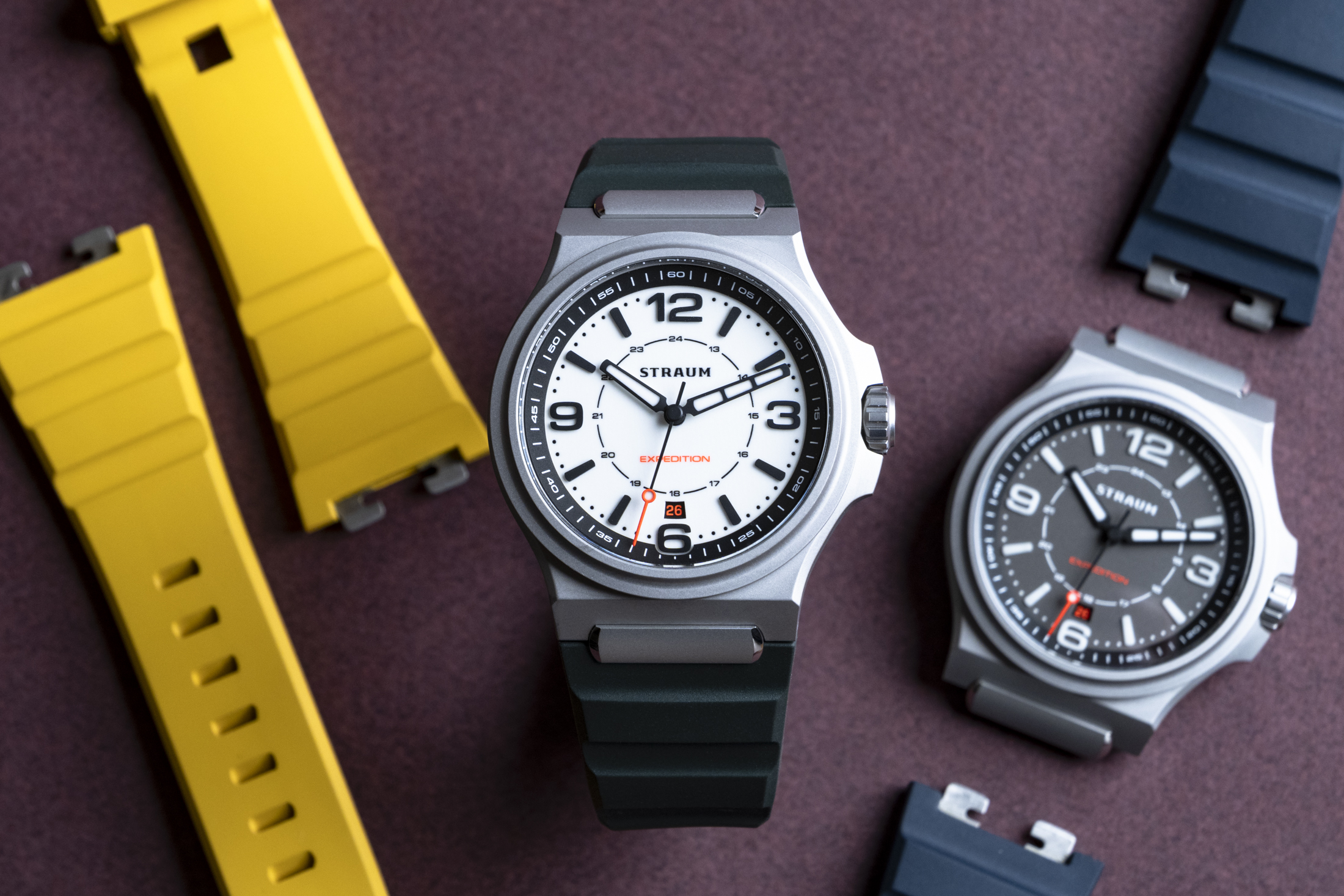
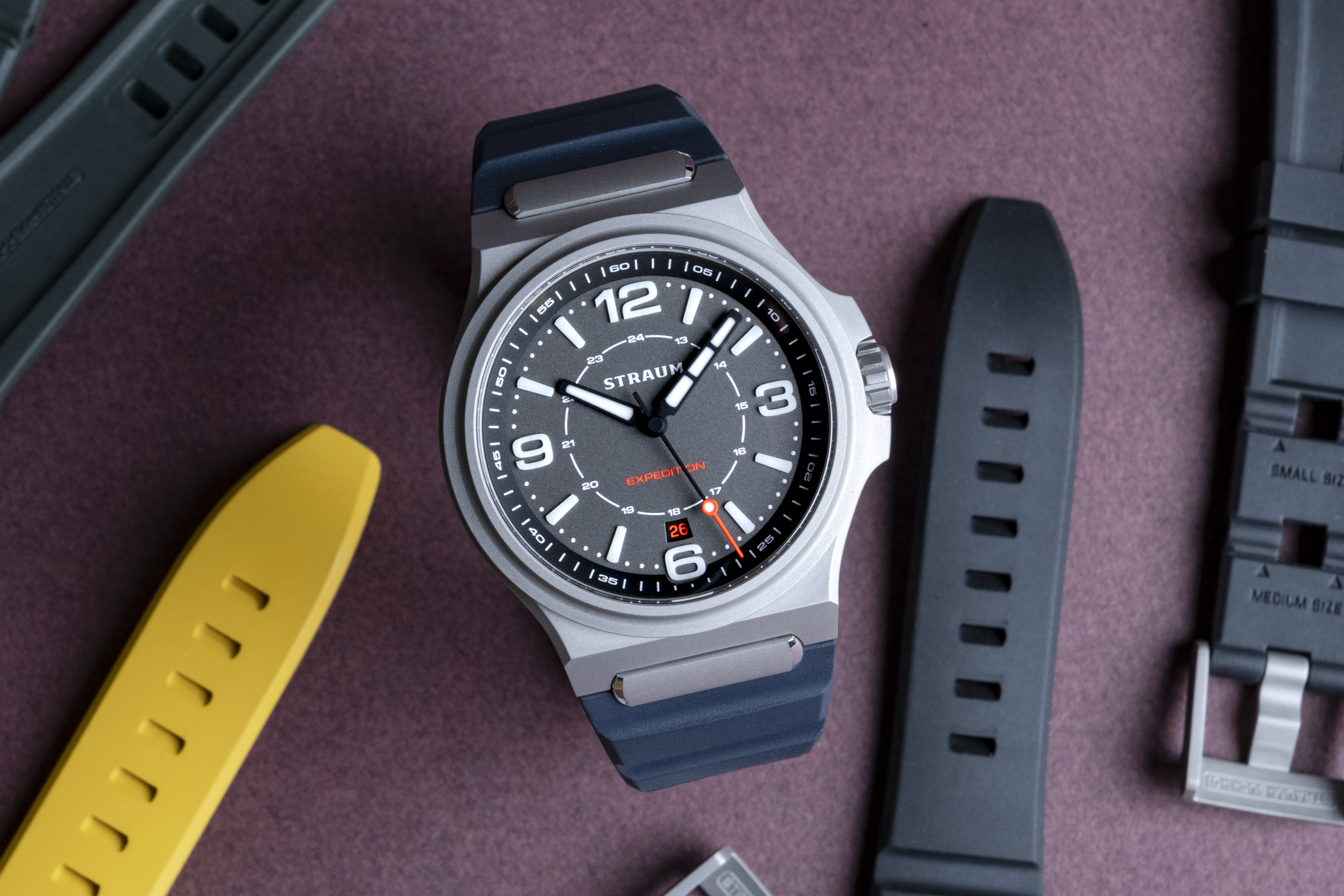
Straum is offering the Expedition in three distinct configurations during its initial rollout. The first is a "Midnight Blue" model produced as a limited edition of 200 pieces. The standard production run comprises two primary specifications. The first is the "White Lume" colorway, featuring high-contrast black numerals and a matching rehaut that delivers a striking visual presence. However, the standout option for many enthusiasts is the "Titanium Gray" model.
Rather than relying on a conventional painted color, the Titanium Gray dial features a raw, bead-blasted titanium surface. Paired with a navy blue rubber strap, this configuration creates a rugged, utilitarian aesthetic.
The White Lume model does present one minor visual quirk: the black numeral "6" sits positioned very closely to the dark inner rehaut. While all models feature the "6" integrated into a cutout within the rehaut, the White Lume version leaves very little visible dial space beneath the bottom of the numeral to separate it cleanly. This issue is absent on the darker-dial variants, where the numerals are formed from a three-dimensional luminous compound. Nevertheless, both variations maintain a high standard of craftsmanship.
Strap Systems and Movement Considerations
Straum deserves considerable praise for ensuring the new Expedition remains fully compatible with the quick-release bracelet and strap ecosystem established by the Jan Mayen. The inclusion of this versatile hardware infrastructure from day one significantly enhances the watch’s personalization and everyday utility. However, it remains a slight operational frustration that, at least initially, the watches can only be ordered pre-configured on either a black rubber strap or the matching titanium bracelet.
While both factory options are exceptionally well-executed—the titanium bracelet is well worth its upcharge, and the rubber straps offer a comfortable cut-to-size design paired with a secure pin buckle—neither dial variant looks its absolute best on a stark black strap. Given the wide array of colorful rubber straps in Straum’s broader accessory catalog, giving buyers the freedom to select their preferred strap color at purchase would elevate the consumer experience.
On the mechanical front, the pre-production sample watches provided for review revealed a few minor pain points concerning the movement. The samples utilized the La Joux-Perret LJP G100 automatic caliber, which exhibited relatively loud rotor oscillation, slightly grainy winding feedback, and—in one instance—a date wheel that failed to center itself perfectly within the aperture, an imperfection made more conspicuous by the bright fluorescent date printing. Straum representatives have confirmed that these pre-production movement inconsistencies are actively being addressed and will be fully resolved before customer shipments commence in March.
Competitive Landscape and Final Outlook
Even within a crowded market segment, the Straum Expedition carves out a distinct identity. While it occupies a different pricing tier and philosophy than ultra-luxury outdoor companions like historical Vacheron Constantin Overseas models, it faces direct competition from contemporary independent releases. These include the Laventure Marine Type 3 Chronometer, the Benrus Type 3X GMT, and rugged field offerings from specialized manufacturers like Micromilspec.
Any of these alternative timepieces would serve admirably as an outdoor companion, but the Straum Expedition possesses a unique voice and compelling design language. The fact that the Expedition represents a foundational starting point for a dedicated utility line rather than a standalone novelty is an encouraging sign for the future of the brand.