






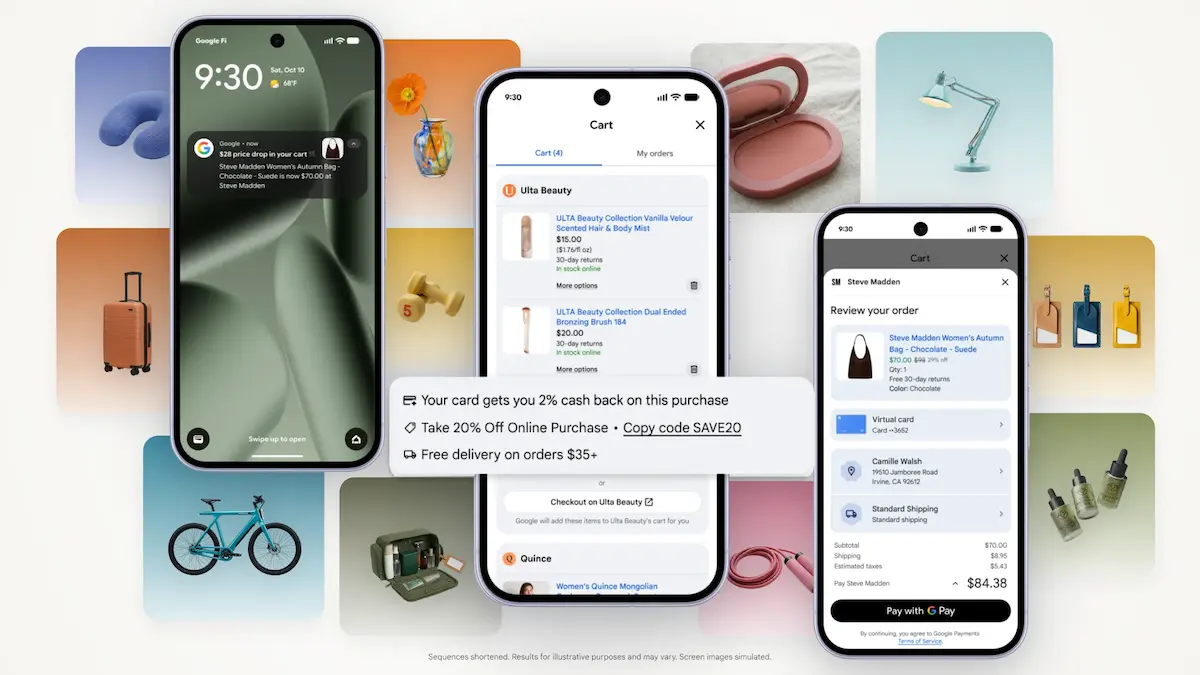
Google announced on Thursday that "Universal Cart," an innovative tool designed to help users collect, track, and monitor products discovered across Google Search and the Gemini application, is now officially available to users in the United States. The tech giant first previewed the tool earlier this year in May at its annual Google I/O developer conference, where it generated significant interest for its ambitious approach to managing online retail journeys that span multiple websites and platforms.
The core concept behind Universal Cart is to alleviate the friction and fragmentation traditionally associated with online shopping. Consumers frequently browse across dozens of different websites, comparing items, reading reviews, and weighing options over the course of days or even weeks. Universal Cart aims to simplify this process by allowing shoppers to seamlessly find an item they like, save it directly to a centralized cart, and then move on with their browsing. When the user returns to Google or the Gemini app at a later time, their saved items and ongoing shopping progress remain intact, eliminating the need to hunt down previously viewed products, recreate search queries, or start the shopping process completely over from scratch. By aggregating items from multiple distinct retailers into a single interface, the tool functions as a comprehensive central hub for browsing, planning, and keeping track of potential purchases without forcing users to juggle multiple open browser tabs or separate merchant accounts.
Beyond simply storing items in one place, Google stated that the cart is engineered to help shoppers proactively stay on top of shifting market conditions, pricing fluctuations, and inventory levels. The tool includes intelligent notification capabilities designed to alert users when a saved product undergoes a price drop or when an item that was previously out of stock becomes available for purchase again. This proactive tracking ensures that consumers do not miss out on favorable deals or have to manually check back on the status of hard-to-find items.
Furthermore, Universal Cart is built to deliver a more tailored and intelligent level of assistance throughout the entire decision-making and purchasing process. According to Google, the system can factor in specific credit card perks, rewards programs, and membership benefits when helping users evaluate and select the most advantageous payment method for their purchases. In addition to optimizing payment choices, the tool can automatically surface relevant promotional codes and discounts, ensuring that shoppers are getting the best possible value when they decide to finalize a transaction.
The underlying architecture that handles checkout processes within this new ecosystem is tied directly to Google’s Universal Commerce Protocol, commonly referred to as UCP. Introduced by the company earlier this year as an open standard, UCP was specifically engineered to facilitate seamless collaboration between autonomous AI agents and various online retailers. The protocol is designed to support multiple stages of the modern shopping journey, extending all the way through to secure and streamlined checkout experiences across disparate merchant platforms.
This launch underscores Google’s deep and ongoing investment in artificial intelligence-driven commerce, positioning Universal Cart as the latest strategic effort to make digital retail significantly more convenient for everyday consumers. The new cart tool joins a rapidly expanding suite of AI-powered shopping features developed by the company. These include conversational product discovery experiences embedded within Search’s AI Mode, as well as specialized tools like Google’s "Let Google Call" feature, which deploys an AI agent to place phone calls to nearby brick-and-mortar stores on behalf of the user to verify whether specific merchandise is currently sitting on shelves in-store.
Google is far from alone in its pursuit of agentic commerce and AI-enhanced retail experiences. Major technology competitors have similarly recognized the immense potential of transforming how consumers interact with the digital marketplace. Rival companies such as Amazon, OpenAI, and other prominent players in the technology sector have introduced their own agentic commerce features and advanced shopping systems over the past year. These industry-wide moves highlight a broader strategic push by major tech firms to find practical, high-utility ways to make artificial intelligence chatbots and assistants deeply useful for everyday tasks far beyond simply answering informational questions or generating text.