



In recent years, the open call has become an almost unavoidable fixture within contemporary jewelry. Across the globe, jewelry exhibitions, competitive awards, professional residencies, and festival weeks rely on the format as a seemingly democratic mechanism for discovering new artistic talent and generating public visibility. Yet, beneath the surface of this ubiquitous system, a growing wave of critical voices is beginning to emerge from artists, curators, and cultural workers alike.
Why is the industry starting to question a format long praised for its inclusivity? Behind the rhetoric of openness often lies a heavily skewed economic and administrative structure—one in which participating artists carry an increasingly disproportionate share of the administrative labor, financial risk, and emotional investment.

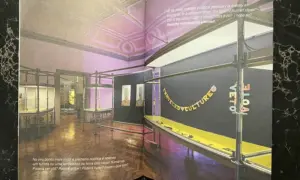
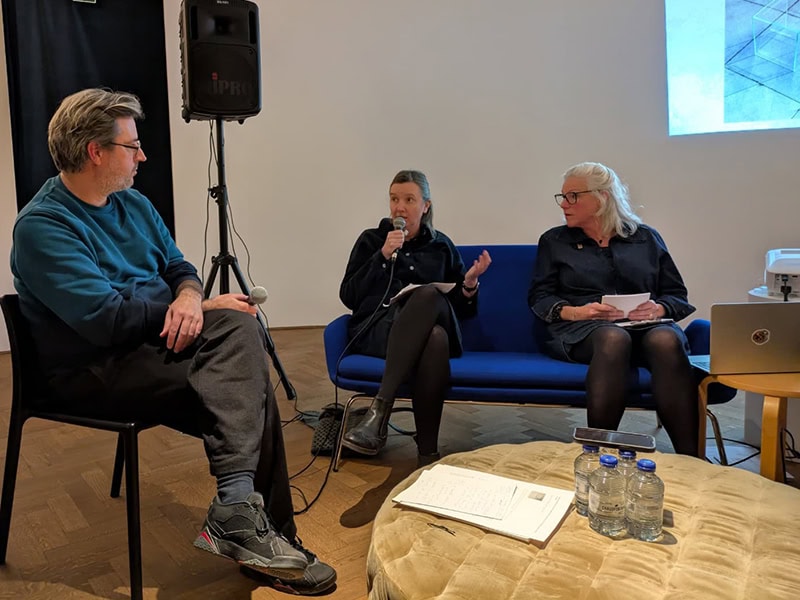
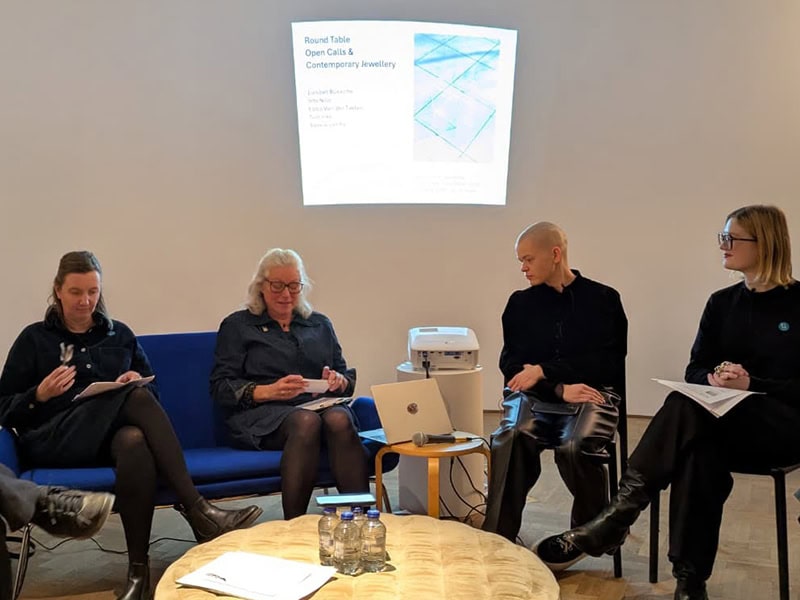
These pressing concerns took center stage during a roundtable discussion titled Open Calls and Contemporary Jewelry, held on November 22, 2025, at the DIVA museum in Antwerp during the Obsessed! festival. Moderated by art historian Saskia van Es, the panel brought together a diverse group of industry voices, including artists Into Niilo and Liesbet Bussche, freelance curator Ebba Van der Taelen, and Tom Iriks, curator at DIVA. From the outset of the conversation, it became abundantly clear that organizers and applicants frequently view and experience the open-call format through fundamentally different lenses.
Rejection as Part of Professional Life
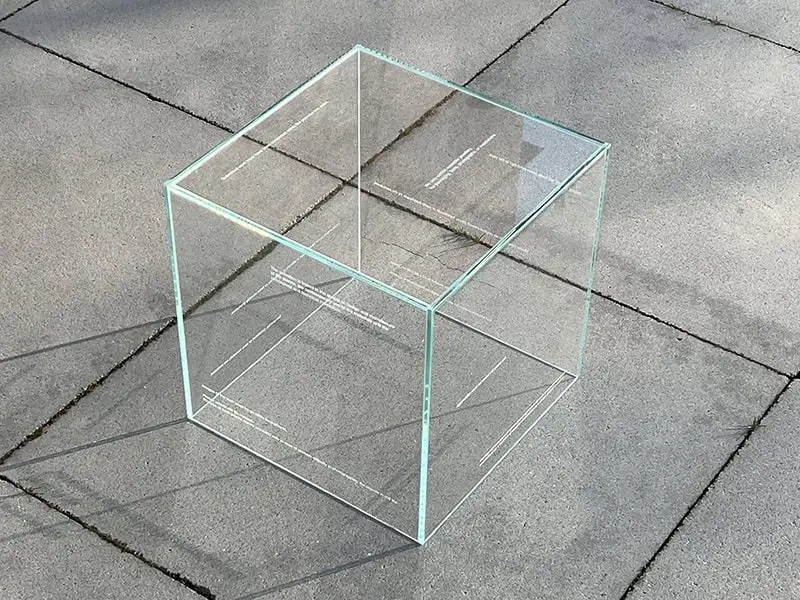
The discussion commenced with Van Es presenting slides of the provocative artwork Open Calls, created by Ana Escobar Saavedra. The installation draws direct inspiration from Rachel Mason’s foundational essay, Artist as Applicant, which describes a shifting cultural paradigm in which the daily labor of the contemporary artist gradually migrates away from hands-on creation and toward the endless submission of administrative applications.
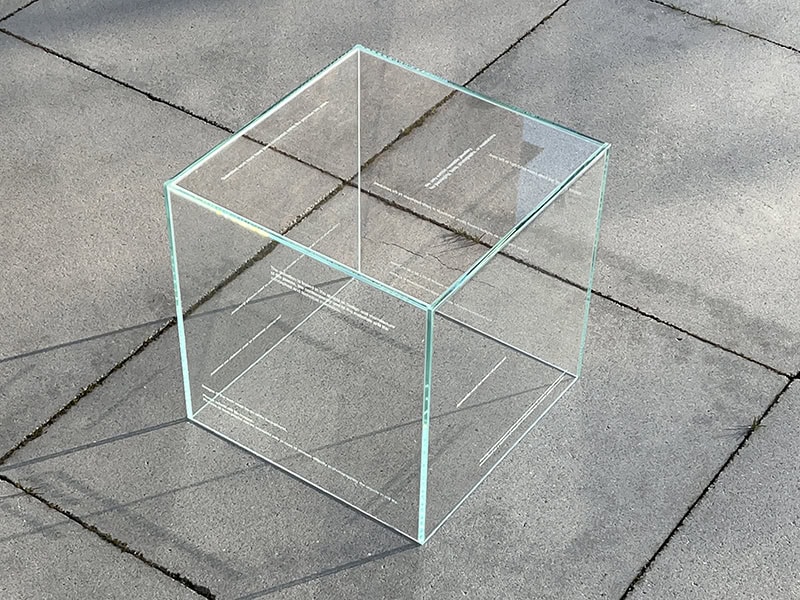
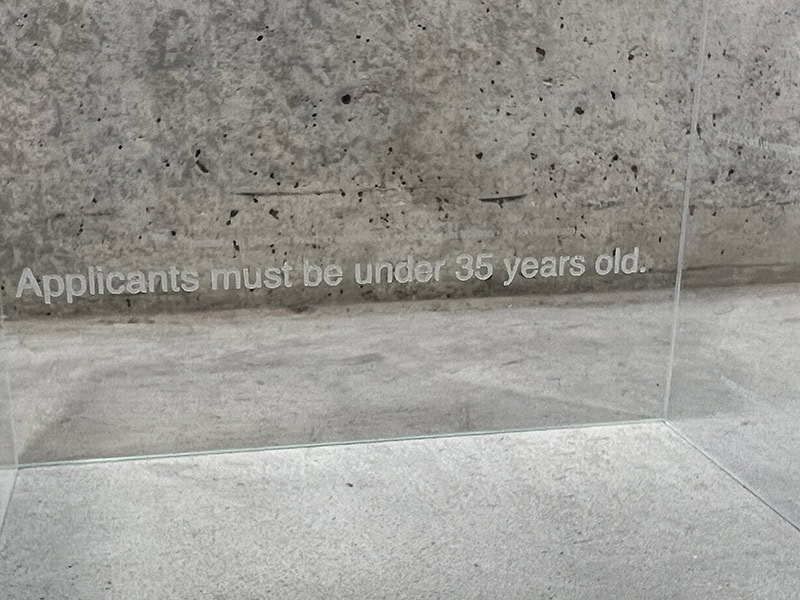
Escobar’s installation features a glass cube engraved with verbatim phrases extracted from real open calls. Viewers encounter stark, limiting mandates such as "Work must fit in 30 x 30 x 30 centimetres," "We only exhibit wearable jewelry," and the ubiquitous age restriction, "Applicants must be under 35." The sculpture functions as an uncanny, powerful metaphor for the open-call ecosystem itself: the operational rules and bureaucratic limitations are permanently trapped inside a transparent container, leaving the enclosed contents with barely enough room to breathe.
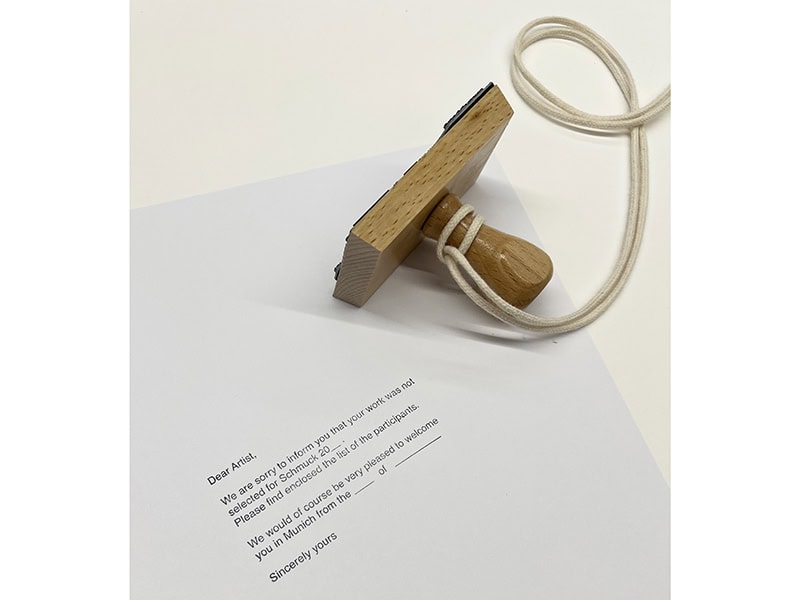
The second component of Escobar’s installation, titled Maybe Next March, addresses the psychological weight of the process by reproducing the standard, automated rejection emails sent out year after year by the organizers of Schmuck in Munich. The template reads, "Dear Artist, we are sorry to inform you that your work was not selected for Schmuck," followed immediately by a polite invitation for the rejected artist to travel to Munich anyway. Through this iteration, rejection is institutionalized into a routine administrative chore—an automated form of politeness that simultaneously produces professional distance while maintaining a superficial sense of community proximity.
A bitter, knowing laugh moved through the audience as these themes were unpacked. Most contemporary artists have reluctantly learned to accept rejection as an unavoidable aspect of professional life. However, the arbitrariness of specific selection parameters becomes painfully evident when examining standard criteria such as age limits. Frequently defended by institutions as a necessary measure to support "emerging artists," these caps casually operate on the assumption that being emerging is synonymous with being young. In reality, many contemporary jewelry artists begin their creative journeys later in life, transition from entirely different careers, or gain access to formal education and vital resources much later. Consequently, a mechanism intended to foster support easily transforms into an engine of exclusion.
The Open Call Fan Club
Open calls reveal a tremendous amount about how contemporary jewelry understands, values, and organizes its professional community. Throughout the Antwerp roundtable, the term "open call" was stretched to accommodate a dizzying variety of practices, functioning simultaneously as a democratic opportunity, a practical administrative selection tool, a curatorial method, a commercial business model, and an expansive networking platform.
From his vantage point as a curator and public mediator at DIVA, Tom Iriks views the open call primarily as a pragmatic instrument. Scouting individual artists globally is exceptionally time-consuming, whereas an open call reliably surfaces unfamiliar work and fresh perspectives. At the same time, Iriks acknowledges a desire to rescue the format from its worst systemic abuses, noting during the playback of the roundtable recording that he remains fundamentally a fan of open calls—provided they are executed thoughtfully and equitably. The nuance is vital: the core problem rarely lies in the existence of open calls per se, but rather in their deployment as a lazy default solution for structural shortages of time, resources, and institutional creativity.
For panelist Ebba Van der Taelen, founder of Unpolished—a dedicated platform for emerging Belgian jewelry artists—the open call initially served a specific ideological purpose. Driven by a desire to carve out space for marginalized or unfamiliar voices, an open call felt like the natural launchpad for a thematic exhibition centered on identity and transformation. The resulting selection operated not merely as a group presentation, but as the platform’s foundational curatorial statement.
Yet, even within independent platforms, the idealized concept of openness quickly collides with stubborn practical limitations. Van der Taelen’s call was launched immediately prior to the summer holidays, a period when academic institutions and cultural organizations are dormant. Promotion relied heavily on Instagram advertisements and digital circulation. Long before a jury ever convened to review submissions, digital visibility actively shaped the final outcome. Artists first had to encounter the call organically, meet rigid criteria, and possess the surplus time and financial stability required to assemble a professional portfolio during the summer months. Despite striving for universal accessibility, the platform remained inextricably bound to the algorithms and institutional calendars that govern modern visibility.
Open Call Season
In stark contrast to the institutional and curatorial perspective stands the lived reality of the applicant. Artist Into Niilo characterized contemporary application processes as an exhausting marathon concentrated heavily around the months of October and November—jokingly dubbed "open call season." Niilo also compared the submission cycle to a game of chance, evoking the vivid mental image of artists casting messages in bottles into an open ocean in the desperate hope that someone on the distant shore might eventually reply.
Beyond the metaphor, Niilo emphasized that this professional "gambling" reflects a punishing economic reality. Artists routinely pay non-refundable application fees, steep international transport costs, and mandatory artwork insurance. Furthermore, selected participants are frequently expected to absorb their own travel and accommodation expenses to attend exhibition openings in person. This financial burden stacks directly on top of the vast quantities of unpaid labor required to prepare high-resolution portfolios, artist statements, professional photographs, and labyrinthine online application forms.
As a result, a massive shift of operational risk occurs: the burden moves away from the organizing institution and lands squarely on the shoulders of the individual artist. For cash-strapped cultural institutions and festivals, the open call provides an undeniably efficient mechanism for harvesting thousands of submissions with minimal overhead. For the artists, however, participation transforms into a speculative financial investment devoid of any guaranteed return in visibility, sales, or financial compensation.
Curatorial Poverty
Panelist Liesbet Bussche voiced deep skepticism regarding her own participation in open calls, directing her criticism not only at the mechanics of the format, but also at what open calls have systematically replaced. Bussche noted a troubling scarcity of thoughtfully curated exhibitions defined by rigorous thematic frameworks, substantive critical criteria, and long-term collaborative engagements between curators and artists.
According to Bussche, open calls routinely generate what she terms "one-piece shows"—exhibitions constrained to accepting just a single object per artist. Within these crowded displays, artworks can rarely be presented as their creators originally intended, leaving virtually no room for contextual nuance or overarching narrative development. A complex jewelry piece is reduced to a solitary token, forced to represent an entire creative practice while fighting for visual scraps of attention among dozens of similarly isolated submissions.
In such environments, contemporary jewelry runs the severe risk of becoming entirely divorced from the intellectual stories, conceptual frameworks, and material philosophies that generated them. This dynamic amounts to a form of narrative theft, wherein jewelry is stripped of its storytelling capacity and transformed into a mere distribution mechanism for isolated objects rather than a genuine curatorial proposition. The resulting exhibition reads as an uncritical accumulation rather than a cohesive intellectual argument. Bussche further argues that contemporary craft and art schools must actively equip students with the critical tools needed to evaluate open calls, helping them recognize when a format detaches ideas from context and treats art merely as a circulating image within a hyper-competitive economy of visibility.
Transparency and Responsibility
A turning point in the Antwerp roundtable arrived when the participants closely examined two distinct calls issued by respected organizations: a themed group exhibition organized by the WearHouse in Amsterdam and the Italian Montebello Award. Comparing the two revealed that they operated under fundamentally different economic and structural premises—one functioning as a curated group exhibition, the other operating strictly as a competitive prize.
This distinction highlights a broader confusion within the field: the label "open call" is currently applied indiscriminately to a wide variety of operational models, including exhibitions, cash prizes, international residencies, seasonal festivals, and digital networking platforms. Each format carries vastly different expectations, power dynamics, and financial implications.
Throughout the discussion, the conversation continually pivoted back to the central question of institutional responsibility. What does "openness" truly mean when selection criteria remain opaque, when organizers provide little to no feedback, or when artists are expected to subsidize the production, transit, and presentation costs of an institution’s programming? True openness without operational clarity does not generate accessibility; it breeds confusion, frustration, and systemic burnout.

The panelists ultimately advocated for a much-needed cultural shift—moving away from "openness as a marketing strategy" and toward "openness as an institutional responsibility." This calls for a return to practices where transparency, contextual care, fair compensation, and shared logistical responsibility form the bedrock of public programming. If contemporary jewelry is to maintain its historic intimacy with the human body, tactile materiality, and the social life of objects, the field must critically evaluate which infrastructures genuinely sustain those core values.
To assist both organizers and applicants in navigating these structural dilemmas, the insights gathered during the roundtable have been translated into a practical checklist. Hosted on the Art Jewelry Forum library platform, the checklist offers concrete questions addressing transparency, artist compensation, equitable selection procedures, and curatorial accountability. Rather than functioning as a rigid bureaucratic framework, the tool aims to support more sustainable and accountable open-call practices across the international community.
Ana Escobar Saavedra’s engraved glass cube stands as a lasting symbol of the current landscape: a transparent structure that simultaneously encloses and restricts. As contemporary jewelry continues to grow, the central challenge facing the field is no longer how to make the glass container visually appealing, but rather how to ensure that the artists inside it can still breathe.