






If you have ever paused to wonder how advanced artificial intelligence systems like Claude manage to process complex queries, synthesize vast amounts of information, and generate nuanced responses in a matter of seconds, you are far from alone. Behind the seamless interactions of modern generative AI lies a massive, intricate web of data engineering, architecture design, and rigorous safety protocols that most end-users never get to see.
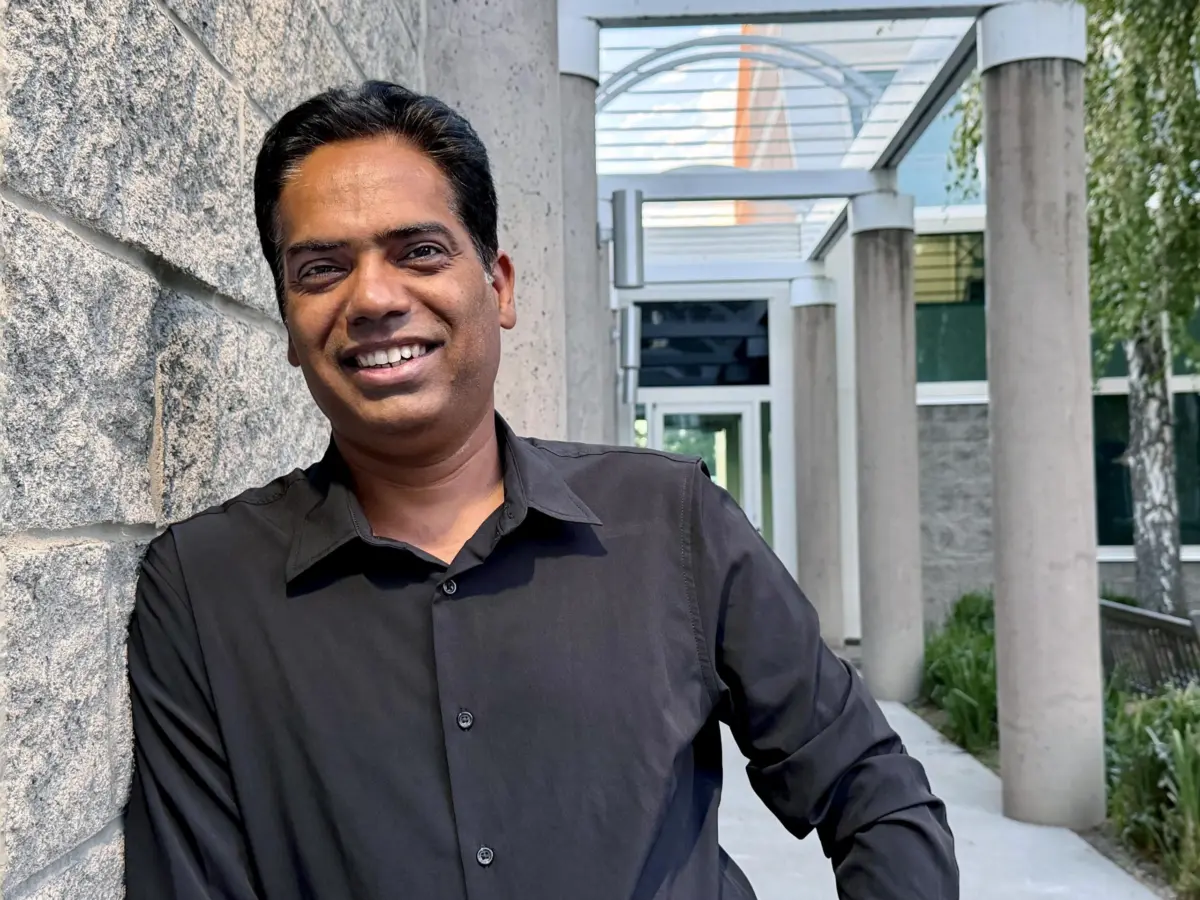
For Gurmeet Saran, uncovering the answers to these mechanics is a daily professional pursuit. Working as a member of the technical staff at Anthropic in San Francisco—the renowned AI research and safety company behind the Claude family of AI models—Saran is tasked with building the robust infrastructure necessary to understand the complex behaviors of these systems. As an IEEE senior member, his primary objective is to ensure that the underlying architecture of these powerful AI agents consistently produces reliable, predictable, and trustworthy outputs.
In the fast-paced and rapidly evolving world of artificial intelligence, where model capabilities often capture public attention and media headlines, the unglamorous work of data integrity and system observability remains foundational. Saran approaches this challenge with a philosophy forged over more than two decades in the software and data infrastructure industry.
"My job is to make sure the data is accurate, structured, and trustworthy, and that private data stays private," Saran explains. Reflecting on lessons learned throughout his career, he emphasizes that security cannot be treated as an afterthought. "As I learned earlier in my career, privacy can’t be a layer you bolt on—it has to be part of the architecture from the start." If engineers cannot fully trust the underlying logic of a system, he adds, it becomes impossible to make reliable claims about its overall behavior, introducing significant safety implications down the line.
Safety is deeply embedded in Anthropic’s organizational DNA. According to Claude’s official mission statement, the company explicitly strives to ensure that its AI agents are genuinely helpful to the people they work with or on behalf of, as well as to society at large, while actively avoiding actions that are unsafe, unethical, or deceptive. Achieving this mission requires that researchers and engineers have the capability to closely observe, audit, and thoroughly understand how large language models behave in real-world scenarios—a formidable challenge given the inherent complexity of generative AI.
"We have decent tools to monitor databases and web services," Saran notes, acknowledging the maturity of traditional software monitoring. "But for LLMs, we’re still figuring it out."
Solving Data Quality Problems at Yahoo, Intuit, and Meta
Saran’s lifelong fascination with computing systems traces back to his childhood in Kolkata, India, where he spent every spare moment he could logging hours in his school computer lab. That early exposure left a lasting impression on how he viewed technology and problem-solving.
"I remember the first time I used one of the computers," he recalls. "What struck me was that you could write instructions, and the machine would follow them exactly. No ambiguity. That felt magical to me."
After completing his high school education in 1999, Saran chose to remain in India to pursue advanced academic training in engineering and technology. He earned a bachelor’s degree in electronics and telecommunication engineering in 2004 from the University of Kalyani. Several years later, while already working in the technology sector, he pursued further academic credentials, earning a master’s degree in software engineering in 2010 from the prestigious Birla Institute of Technology and Science in Pilani, India.
While still immersed in his graduate studies, Saran launched his professional career in 2007 by joining Yahoo as a technical lead for the data team in Bengaluru. It was during this tenure that he encountered a systemic data problem that would ultimately shape the trajectory of his entire professional career: working extensively on web analytics and business intelligence reporting solutions.
"We kept running into a frustrating problem," he recalls, highlighting a common pain point in early web-scale data architecture. "Different teams would calculate the same website metric—something like daily active site users—using slightly different logic, and end up with conflicting answers. It sounds like a small issue, but when leadership is making decisions about resource allocation and product development using that data, not knowing which number is correct becomes a problem."
To resolve these discrepancies, Saran and his team designed and built a centralized data repository featuring strictly defined metrics, effectively establishing a single source of truth for the organization. Saran created a comprehensive model that definitively established what "daily active site users" meant, meticulously breaking down which specific user events counted, how to handle edge cases when standard code failed, and how to maintain consistency across different products.
Armed with this new data model, engineering and product teams across the entire company could finally rely on a standardized, uniform method to determine user metrics for their respective projects, resulting in reliable and comparable data. This foundational work culminated in the creation of Yahoo! Digits, an internal web analytics tool deployed across all of the company’s consumer-facing products.
In 2010, Saran departed Yahoo to join financial software giant Intuit as a staff engineer based in Mountain View, California. In this role, he helped construct the unified analytics infrastructure that harmonized data across the company’s flagship products, including TurboTax and QuickBooks. During his time at Intuit, the company developed an advanced feature designed to detect fraudulent tax filings in real time. This critical capability required Saran and his engineering peers to build a highly secure system capable of protecting sensitive taxpayer data while strictly complying with the rigorous regulatory policies of the U.S. Internal Revenue Service.
The experience cemented a core professional principle for the engineer. "This taught me that privacy and governance can’t be layers you bolt onto software after the fact," he observes. "They have to be part of the architecture from the start."
Seeking new challenges, Saran joined Meta—then known as Facebook—in 2016 as a lead software engineer in Menlo Park, California. At the time of his arrival, the company was navigating a major public relations controversy regarding its video metrics after acknowledging a significant measurement error that had inadvertently overstated the number of views for posted videos.
"This wasn’t a coding bug; it was an architectural problem," Saran explains. Drawing directly on his previous experiences, he engineered a systemic solution that mirrored the unified data frameworks he had previously developed at Intuit. The system established a single, authoritative truth to govern all video view metrics across the entire platform.
The resulting infrastructure, known as Metric360, gradually integrated into the core architecture of the social media platform. By the time Saran concluded his tenure at Meta in 2021, Metric360 had become the enterprise-wide standard utilized across the company to accurately calculate video consumption metrics. Following his departure from Meta, he served as a principal software engineer at Wealthfront in Palo Alto, California, where he contributed to the development and scaling of the digital wealth management firm’s underlying data infrastructure.
Building Trustworthy AI Systems at Anthropic
Building upon two decades of specialized experience in data architecture, governance, and system reliability, Saran joined Anthropic in 2025 as a member of the technical staff, turning his attention to the unprecedented challenges of generative artificial intelligence.
To vividly illustrate the high-stakes implications of his current work, Saran frequently relies on a medical analogy. "Imagine a doctor is monitoring a patient’s vital signs and making treatment decisions based on those numbers," he explains. "What if one or a few of the medical devices used were slightly miscalibrated? Even if most readings are fine, it’s a serious problem because the difficult decisions happen in the margins."
He applies this same rigorous logic to artificial intelligence. "It’s the same with AI systems. My job is essentially to make sure the instruments are giving accurate readings—that the data means what it says it means."
The professional challenge is uniquely demanding. Traditional software systems, databases, and web services operate on deterministic logic and predictable execution paths. AI agents, by contrast, present entirely new dimensions of observability.
"AI agents are especially tricky to observe," Saran notes. "When a system is taking sequences of actions, generating conversational responses with different users, you need a way to capture what it did, what information it was working from, and whether outcomes matched what the end user expected. And you have to do all of that without exposing anyone’s private information—the systems are designed to recognize sensitive data and keep it protected as it flows through. It’s a much more demanding observability problem than anything I’ve worked on before."
Solving these complex problems of system reliability and transparency while the broader artificial intelligence industry is still in its relative infancy remains both Saran’s primary professional passion and the engineering challenge that occupies his thoughts long after standard working hours have ended.
"I think making AI systems genuinely auditable and transparent is one of the more important engineering problems of the next decade," he says, "and it doesn’t get talked about as much as model capabilities do."
IEEE Can Play a Role in Shaping AI Development
In March 2025, Saran formalized his longstanding connection to the engineering community by joining the IEEE as a senior member. After more than twenty years of building critical data infrastructure at prominent technology organizations such as Yahoo, Intuit, Meta, and Wealthfront, he felt a strong professional desire to give back to the technical community through peer review, academic publishing, and active engagement with the broader global engineering research ecosystem.
Looking toward the future, Saran firmly believes that organizations like the IEEE have an essential, proactive role to play in shaping the trajectory of artificial intelligence development, particularly through standards-setting initiatives.
"We have standards for everything, from building codes to software testing," he points out. "AI infrastructure needs something similar, and IEEE has the credibility and the reach to do that."
Furthermore, Saran emphasizes the critical importance of global inclusivity and professional access as artificial intelligence technologies expand rapidly beyond a small handful of dominant technology companies concentrated in a few major metropolitan hubs.
"IEEE operates in a lot of countries where engineers don’t have easy pathways into the global professional community," Saran notes. "That kind of connection matters, especially as AI development spreads beyond a handful of organizations in a few cities."