





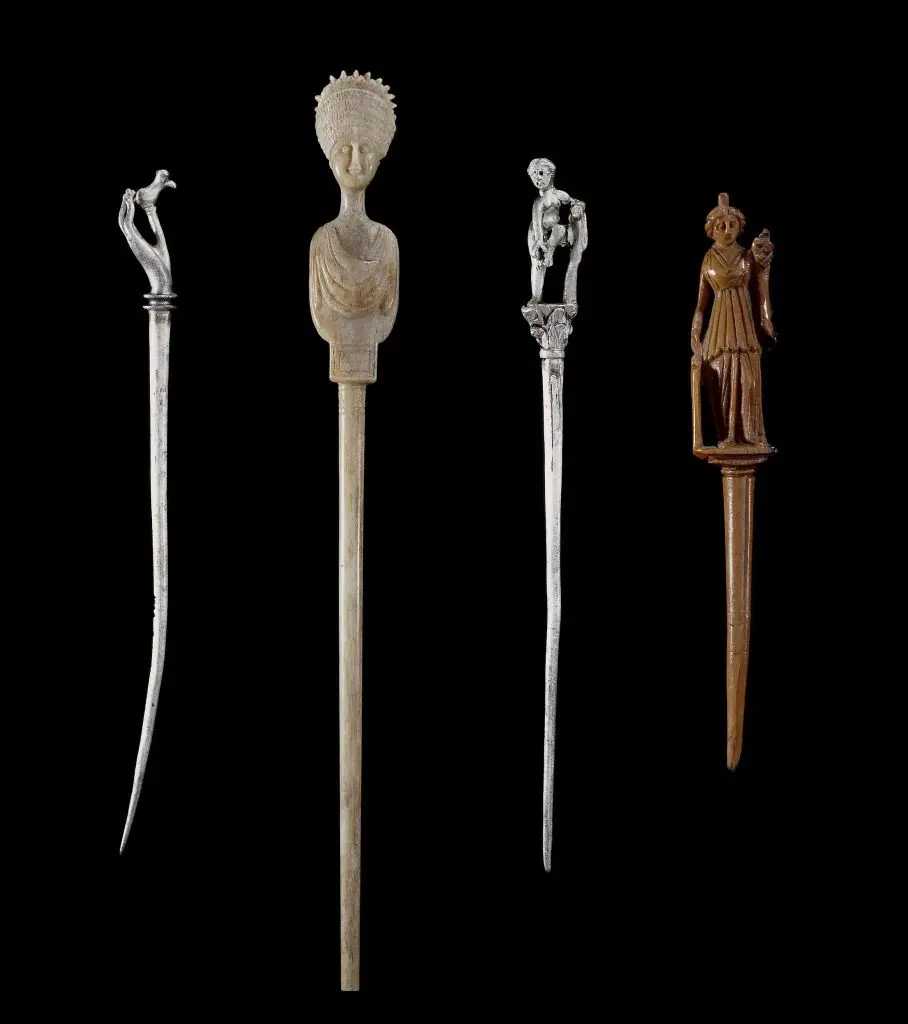
London — Deep within the vast and meticulously curated collections of the British Museum, a quiet yet fascinating testament to daily life in antiquity rests in the form of delicate, elongated artifacts known simply as the acus. Originally crafted to secure the elaborate hairstyles of the ancient Roman world—where they were specifically referred to as the acus crinalis—these remarkable objects offer a tangible link to the personal grooming, fashion, and craftsmanship of the Romano-British era and the broader Roman Empire. Measuring anywhere from six to nine inches in length, these substantial pins were far more than mere decorative flourishes; they were essential tools of daily life, utilized by individuals navigating the practical demands of Roman dress and styling.
To understand the role of the acus in antiquity, one must look closely at the archaeological record, which reveals a striking diversity in both materials and design. Master artisans of the period fashioned these pins from an array of substances, ranging from precious metals like gold and silver to more utilitarian organic materials such as bone, wood, and ivory. Each material carried its own implications regarding the status and wealth of the wearer. While a finely worked silver or gold pin would have belonged to a member of the upper echelons of society—reflecting both personal vanity and economic standing—pins carved from bone or shaped from everyday wood served the broader populace, demonstrating how deeply ingrained personal adornment was across various social strata in Roman Britain.
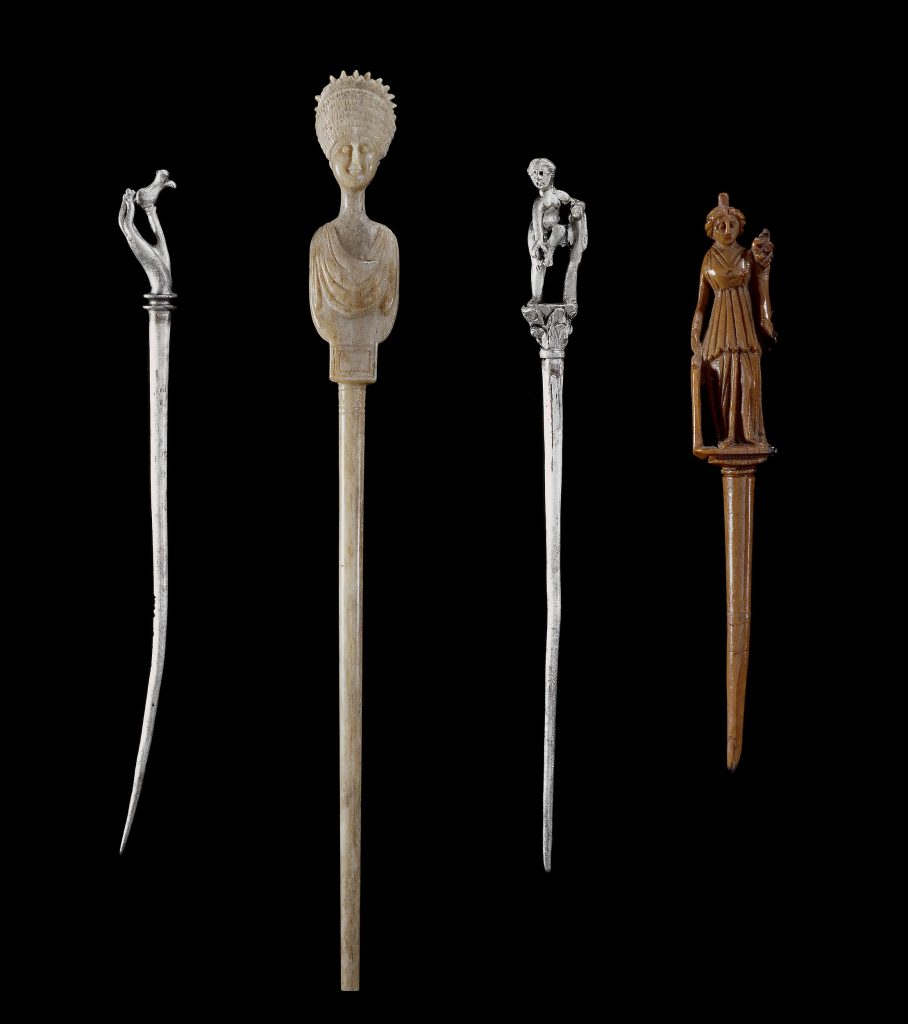
The primary function of the acus crinalis was structural. Roman hairstyles, particularly for women during periods such as the Flavian and Antonine eras, were famously complex, involving intricate coils, braids, and towering edifices of hair that required significant reinforcement to maintain their shape throughout the day. The substantial length of the acus—stretching up to nine inches—allowed these pins to pierce deeply through dense arrangements of hair, anchoring heavy buns and elaborate updos securely to the head. Without such sturdy implements, the iconic silhouettes of Roman fashion would have been nearly impossible to sustain during daily activities, public appearances, or formal court functions.
However, the utility of the acus extended far beyond the realm of hairstyling. Archaeological findings and historical analysis indicate that these versatile implements were frequently pressed into service as garment fasteners. In the context of ancient Roman and Romano-British clothing, garments were typically draped, folded, and pinned rather than heavily tailored and stitched in the modern fashion. While the fibula—the ancient precursor to the modern safety pin—was the standard device for fastening tunics, cloaks, and stolas, the long and sturdy acus could be deployed either in conjunction with a fibula or entirely on its own. By piercing overlapping layers of wool, linen, or other textiles, the pin could secure a toga, cloak, or shawl, holding heavy fabrics firmly against the body against the chill of the British climate.
The inclusion of these artifacts in collections such as that of the British Museum underscores the rich material culture left behind by the Roman occupation of Britain. Objects like the collection of Romano-British era bone and silver hairpins provide contemporary historians and archaeologists with invaluable insights into the daily routines, aesthetic values, and manufacturing techniques of the past. From the artisan working a piece of animal bone down to a slender, polished shaft in a provincial workshop to the elite silversmith hammering precious metal into an ornate, ornamented pin for a wealthy Roman matron, the acus remains a potent symbol of the ingenuity that characterized the ancient world. As researchers continue to study these enduring artifacts, the humble pin continues to reveal the intricate details of how ancient people presented themselves to the world, bridging the vast expanse of centuries through the simple act of holding hair and garments in place.