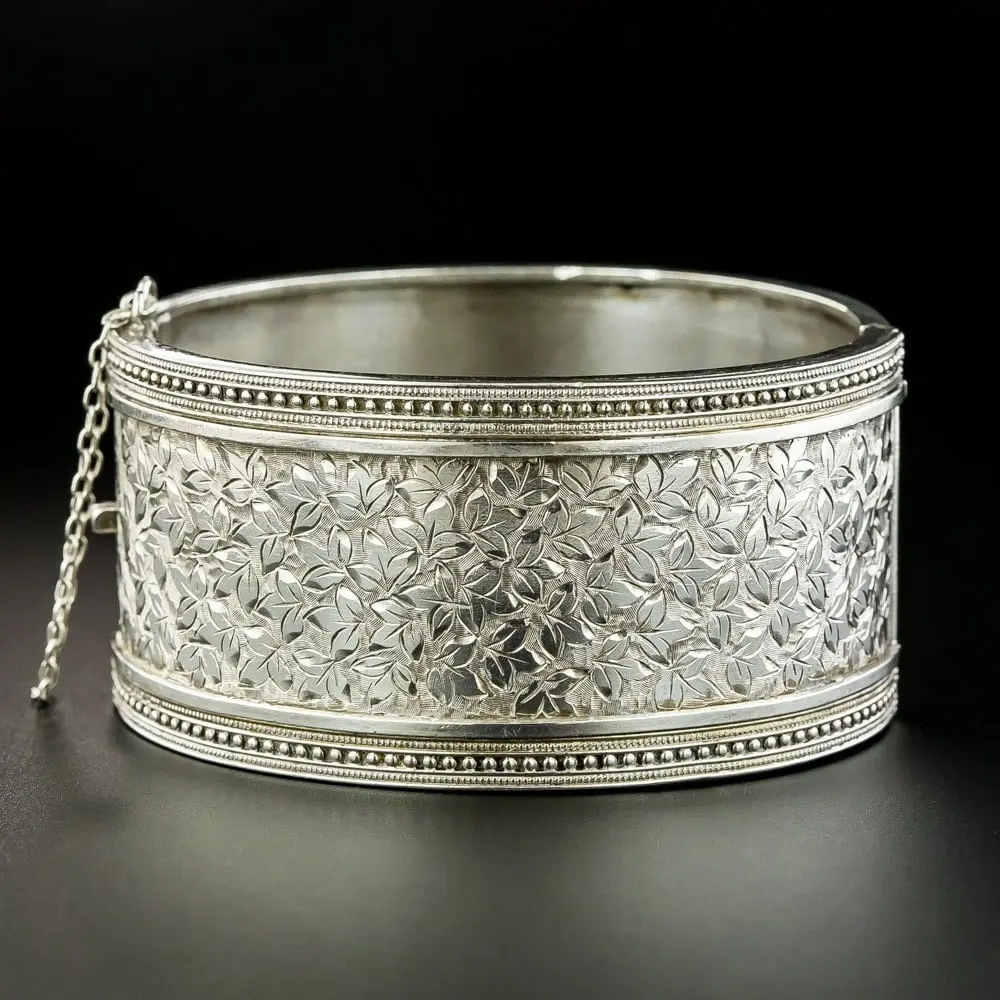
Silver has captivated humanity for millennia, serving as a pillar of ancient economies, a canvas for master artisans, and a cornerstone of technological evolution. While it is often overshadowed today by the exorbitant market values of gold and platinum, silver holds a monumental place in human history. Represented on the periodic table by the symbol Ag, this white metallic element is harder than gold, softer than copper, and second only to gold in both malleability and ductility. It is also an exceptional conductor of heat and electricity. Classified as a noble metal due to its remarkable resistance to oxidation, silver has historically been alloyed with other metals to achieve the structural integrity needed to maintain intricate shapes and fine artistic details.
Silver Significance
Despite its relative affordability in the modern era, viewing silver as a minor metal is a grave historical misconception. Across various epochs, silver has occasionally commanded a higher valuation than gold. When looking at the sheer volume of metal utilized in jewelry and decorative objects throughout history, silver outstrips all other precious metals by a substantial margin. Furthermore, the quest for silver deposits has driven monumental advancements in mining and metallurgy, dictated the rise and fall of entire economies, and shifted the outcomes of geopolitical conflicts and wars.
Bronze Age Silver: Mesopotamia, Egypt, and the Aegean
The historical narrative of silver begins in the late fourth millennium BCE, when ancient innovators in modern-day Turkey discovered a method to extract silver from lead ore through a metallurgical process known as cupellation. Though surviving artifacts from this nascent period are rare, they offer a profound glimpse into the capabilities of early Bronze Age silversmiths.
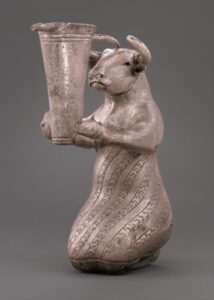
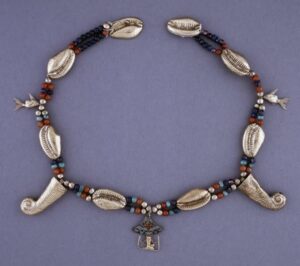
At the dawn of written history, silver functioned as a standard currency in Mesopotamia. Rather than circulating as minted coins, it was measured out by weight or shaped into rings. The workshops of Mesopotamian silversmiths often doubled as goldsmiths’ shops. Although silver is slightly less ductile than gold and requires more frequent annealing during creation, it can be cast, hammered into exceptionally thin sheets, engraved, embossed, and decorated using repoussé, filigree, and granulation techniques. Archaeological excavations have revealed vessels, statuettes, and high-purity silver jewelry that underscore the delicate nature of these early creations.
In ancient Egypt, value was largely attributed to the rare and exotic. Because gold was readily accessible in the mountains of the Eastern Desert and Nubia, pure silver had to be imported alongside prized foreign commodities like Afghan lapis lazuli. Consequently, silver was initially valued higher than gold and was restricted exclusively to the elite. By roughly 1600 BCE, however, the influx of silver caused its market value to drop to about half that of gold, establishing it as a reliable abstract currency. The fluctuating popularity of silver is reflected in Egyptian burial customs; while King Tutankhamun’s tomb contained very few silver objects, later pharaohs like Sheshonq II were entombed in all-silver sarcophagi.
As Mediterranean civilizations evolved, the Minoans and Mycenaeans incorporated silver into extensive trade networks, leaving behind a rich archaeological record of early Greek silver jewelry on the mainland, Crete, and Cyprus. Later, the Phoenicians transformed the Mediterranean landscape by colonizing and trading across the region. Their systematic exploitation of Spanish silver deposits flooded the classical world with unprecedented quantities of the metal, permanently altering its status from an exotic luxury to a widely accessible commodity.
Classical Silver: Greece, Rome, and Pliny’s Chronicles
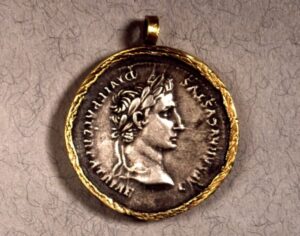
For both Greek and Roman societies, silver was the lifeblood of commerce, underpinning the stability of minted coinage. While gold frequently dominated surviving jewelry collections—partly due to the continuous cycle of remelting and recycling silver items—historical artifacts confirm that silver was fashioned into finger rings, anklets, and armlets.
The Romans developed a particular fondness for niello, a surface decoration technique resembling enameling but executed using silver sulfate rather than glass. Niello yields a tough surface with a distinctive metallic luster, producing high-contrast designs that later spread throughout Northern and Eastern Europe via Roman military expansion.
Historical insights into Roman attitudes toward the metal are vividly preserved in the writings of Pliny the Elder. In his Naturalis Historia, Pliny details the grueling nature of silver extraction, noting that silver ore was found exclusively deep underground without the surface indicators associated with gold. He recounts how Hannibal’s ancient silver mines in Spain—such as the mine named Bãbelo—yielded three hundred pounds of silver daily, sustained by perpetual shifts of water-bearers working by torchlight.
Pliny also documents the strict testing methods used by Romans to determine silver quality, noting that inferior metal would turn reddish or black when exposed to extreme heat. Furthermore, he laments the rapid evolution of Roman luxury, contrasting the austere habits of early generals—who possessed mere fractions of a pound of silver—with later elites who utilized silver-plated banquet couches, silver-chased carriages, and massive table services weighing thousands of pounds. He pays homage to legendary master artisans such as Mentor, whose famed embossed silver vases became legendary before being lost to historic fires.
Celtic and Medieval Silver
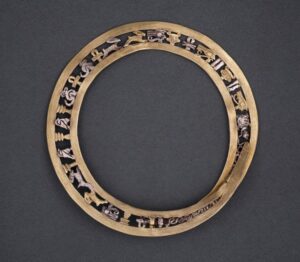
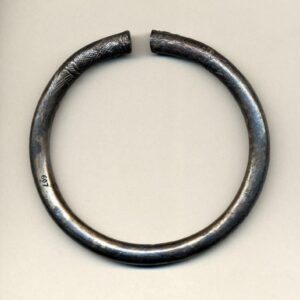
Celtic tribes utilized silver extensively alongside bronze to craft decorated brooches, torcs, and lunulae. Prior to Roman conquests, the Celts relied on "ring money"—standardized rings of silver, copper, bronze, or gold—as a medium of exchange rather than traditional coinage.
Following the collapse of Roman supply lines, gold grew exceedingly rare across Europe, propelling silver to the forefront of jewelry production. Germanic jewelry during this era favored functional items such as fibulae, disc brooches, penannular brooches, and belt buckles fashioned from silver, occasionally gilded or inlaid with gemstones like garnets.
By the ninth century, Viking expansion into northwest Europe channeled vast quantities of silver into Scandinavia, giving rise to a flourishing silversmithing tradition. Concurrently, the popularity of niello persisted among Germanic tribes, who used the black-and-white contrast to accentuate intricate engraving patterns. A prime example of this craftsmanship is the ninth-century Anglo-Saxon Fuller Brooch housed in the British Museum, a circular silver-and-niello piece featuring detailed personifications of the Five Senses surrounded by geometric and animal motifs.
As medieval society evolved and Eastern trade routes reopened, gold reclaimed its status as the premier metal for fine jewelry. Nevertheless, increased trade fostered a prosperous middle class eager to adorn themselves, creating a booming market for more affordable silver accessories. By the end of the Middle Ages, the proliferation of silver jewelry and silverware led to the establishment of formal assaying and hallmarking systems to guarantee metal purity.
Renaissance and Baroque Silver
The Renaissance witnessed a profound cultural and economic resurgence across Europe, fueled by recovering populations, expanding trade networks, and the influx of knowledge brought by Byzantine exiles following the fall of Constantinople in 1453.
The Age of Discovery dramatically altered the global silver market. Following Christopher Columbus’s expeditions, Spanish conquistadors such as Pizarro and Cortés subdued the Incan and Aztec empires, unlocking massive mineral wealth. The discovery of rich silver deposits in modern-day Mexico in 1546 initiated a transoceanic trade boom, channeling vast quantities of American silver into Europe and onward to China in exchange for Asian goods. This steady supply allowed silver to remain a vital currency and an accessible medium for European artisans.
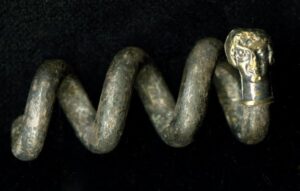
During the Baroque period of the seventeenth century, European powers—including England, France, and the Netherlands—competed fiercely for control of Atlantic trade routes, frequently intercepting galleons laden with South American silver. While manufacturing techniques remained largely traditional, the era introduced notable innovations. Portable timepieces began appearing in silver housings, and silversmiths increasingly utilized silver settings for diamonds. Intensified trade with India following the establishment of European footholds on the subcontinent allowed direct access to diamond merchants, and the white brilliance of silver perfectly complemented the colorless stones.
Georgian and Victorian Silver
The Georgian era experienced an explosion in South American silver production and a parallel surge in diamond imports, first from India and subsequently from Brazil after 1727. While fine jewelry frequently combined gold bodies with silver-topped fronts, entirely silver items remained commonplace. The characteristic cut-down collet settings of Georgian jewelry were almost universally crafted from silver to accentuate the white fire of the diamonds they encased.
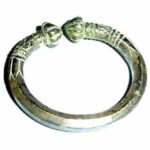
Technological progress culminated in 1777 with the introduction of die striking, a manufacturing method that utilized presses and drop hammers to stamp and cut precious metal components for manual assembly. This innovation lowered production costs and launched the first mass-produced jewelry lines, making silver ornaments accessible to a broader segment of the population.
During the Victorian era, the Industrial Revolution accelerated the use of stamping and die-striking techniques. The cultural fascination with Scottish agate jewelry, popularized after Queen Victoria and Prince Albert acquired Balmoral Castle in 1848, led to a surge of regionally inspired silver ornaments. Toward the end of the Victorian period, the Arts and Crafts movement emerged as a deliberate aesthetic reaction against industrial mass production. Artisans of this sub-period prioritized artistic design over the intrinsic material value of metals and gemstones, favoring cabochon-cut stones in bezel settings and elevating silver as their metal of choice.