






In the cockpit of Beta
Technologies’ Alia CX300, pilot Chris Caputo steers onto Runway 33 at Patrick Leahy Burlington International Airport in Vermont. Cleared for takeoff, he releases the brakes and nudges the throttle forward. At the back of the aircraft, the five-blade pusher propeller snaps awake, and the Alia bolts down the tarmac. There is no shriek of a turbofan spooling up, no shudder of a piston engine, and no waiting for the development of thrust. Instead, there is only the low hum of an electric motor and a decisive shove of instant acceleration.
Within a few seconds, the aircraft reaches 85 knots—almost 160 kilometers per hour—and Caputo rotates the nose upward. The runway drops abruptly away as the plane climbs. Gaining speed and altitude, the aircraft heads northwest over Lake Champlain. Through the wraparound canopy, the hunched shoulders of Vermont’s Green Mountains shrink under the right wing, while New York’s taller Adirondacks loom to the left.
Caputo, a former Air Force fighter pilot, flicks the control stick hard left and then right. Despite its 15-meter wingspan, the Alia feels remarkably snappy, its fly-by-wire system automatically coordinating aileron and rudder inputs. The machine, he notes, is far simpler to manage than the Cessna 182 he once flew around Australia during his student-pilot days.
Furthermore, this half-hour flight in the Alia consumes only about US $9 worth of electricity. By comparison, the exact same flight in a comparable Cessna 208 Caravan would burn roughly 25 to 30 gallons of Jet A fuel, costing between $210 and $255. Even at full throttle, the electric aircraft burns no fuel, generates no environmental pollution, and creates virtually no noise pollution.
This demonstration flight is taking place during an unusually lively period for electric aviation. The promise of lower operating costs and cleaner flight has pushed electric aircraft from a fringe experiment into one of the aviation industry’s most closely watched frontiers. After years of digital renderings, physical prototypes, and overly optimistic timetables, companies are finally flying full-size aircraft, submitting hardware to regulators for certification, building dedicated factories, and testing routes alongside prospective commercial customers.
Among the top three U.S. developers of electric planes, Archer Aviation and Joby Aviation have concentrated heavily on piloted vertical-takeoff-and-landing air taxis, commonly known as eVTOLs. Meanwhile, Beta Technologies is taking a broader and in many ways more pragmatic path into the market. Rather than betting its entire enterprise first on urban air taxis, Beta is looking to break into commercial electric aviation through short-haul freight planes that use conventional runways. These operations are designed to be supported by an open charging network intended to make electric aircraft—both Beta’s own models and those of its competitors—part of an interconnected working transportation system.

To achieve this, the company is developing two distinct variants of its Alia airframe: the runway-based CX300 and the A250, which adds four dedicated lift propellers for vertical takeoff and landing. Beta reports that its test pilots have flown the Alia family more than 300,000 kilometers, completing multiple U.S. continental crossings and overseas demonstrations. The company currently claims an order and option-to-buy backlog of 991 aircraft.
"We’re taking a pragmatic stepwise approach for both certification and market entry," says Beta’s CEO and founder, Kyle Clark. " extérieure We’re ready to go today with medical and cargo aircraft that fly from airport to airport." According to Clark, the subsequent phases will introduce passenger aircraft with conventional takeoff and landing capabilities, followed by cargo eVTOLs, and finally passenger eVTOLs.
Reducing the Risk of FAA Certification
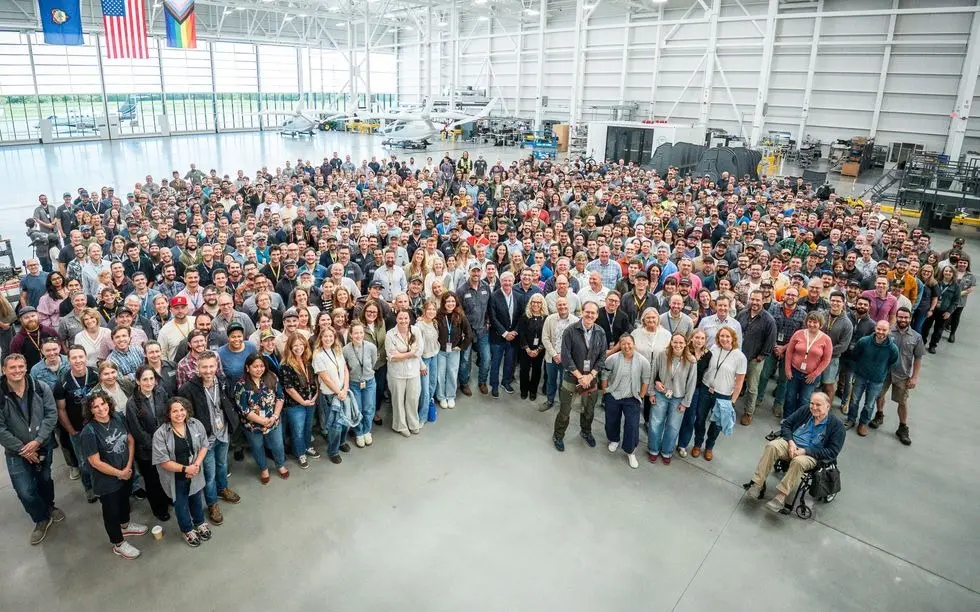
Beta’s 17,500-square-meter production facility sits directly beside the Burlington airport, resembling a giant sunlit workshop rather than a traditional, heavy-machinery-laden airplane factory. Geothermal heat pumps help regulate the internal temperature of the structure, and the roof is slated to hold a megawatt of solar panels. On the factory floor, technicians fabricate composite structures and join aircraft sections together beneath American and Pride flags.
Kyle Clark, a native of Vermont, founded Beta in 2017 to realize his long-held dream of building a hybrid-electric aircraft. For his bachelor’s thesis at Harvard University, he had previously designed a flight-control system for such a vehicle. Martine Rothblatt, CEO of biotech firm United Therapeutics and co-founder of SiriusXM satellite radio, subsequently invested $48 million in Beta to fund its first prototype, driven by the ultimate goal of utilizing the aircraft for the rapid and clean transport of organs for transplantation.
The company has deliberately kept much of its design and manufacturing in-house, partly because the components are tightly integrated and partly because suitable commercial aviation components simply did not exist when development began. This vertical integration gives Beta’s engineers direct control over system interfaces and failure data. However, it also means the company must master several complex businesses simultaneously, encompassing airframes, electric motors, inverters, batteries, software, chargers, and final aircraft production.
The production line is versatile enough to build both the fixed-wing CX300 and the vertical-lift A250. Both models share the same fuselage, wings, pusher motor for horizontal propulsion, batteries, avionics, and a significant portion of the tooling. This creates deliberate design crossovers: the CX300 features twin booms connecting the wing to the tail surfaces that might look superfluous on a standard fixed-wing plane, but they directly mirror the structures required to mount the A250’s four vertical lift propellers.
On the CX300, those booms add a marginal amount of weight and drag without serving a direct lift function. Nevertheless, the trade-off yields a simpler overall design that serves Beta’s central risk-reduction strategy. Rather than applying immediately for Federal Aviation Administration certification for the complex A250—with its multiple lift systems and the intricate transition phases between hovering and wing-borne flight—the company is bringing the conventional runway version forward first. By certifying the motor, batteries, fly-by-wire controls, and the core airframe through the simpler aircraft, Beta can reuse the accumulated evidence and manufacturing experience when it eventually pursues certification for the A250.

Logistical realities provide another major incentive for starting with the CX300. The United States features more than 5,000 public-use airports, meaning the CX300 can immediately operate from existing infrastructure. Furthermore, the cargo and medical missions targeted for initial deployment involve tightly defined flight profiles where lower energy and maintenance costs vastly outweigh the need for cabin amenities. This pragmatic calculus explains the company’s decision to omit cabin air-conditioning from the CX300, at least for initial operations.
"Things that don’t exist on an airplane don’t weigh anything," Clark notes. "They can’t break. You don’t have to service them… You don’t have to certify them."
Industry analysts have taken note of this methodical blueprint. Sergio Cecutta, a managing partner at SMG Consulting, observes that while the strategy was initially misinterpreted by some observers as a setback for their VTOL ambitions, it proved to be a masterclass in risk mitigation. By dividing the certification process into manageable pieces, Beta retired massive amounts of regulatory risk, noting that a vast majority of the CX300’s parts are shared directly with the VTOL variant, allowing documentation to be seamlessly transferred.
How Redundancy Enhances Safety
More than a decade after electric cars began making significant inroads into the automotive market, electric aircraft technology is advancing rapidly. In certain respects, an electric car faces more complex power-engineering demands than an electric aircraft because automotive power requirements fluctuate constantly, whereas an electric airplane operates within a much narrower set of predictable power regimes: takeoff, level flight, and descent.
However, if an electric car’s drivetrain fails, the driver can simply pull over to the side of the road. That is not an option for a pilot flying 1,000 meters in the air. The primary hurdle is not that electric motors are inherently fragile, but rather that aviation safety standards are extraordinarily demanding. Catastrophic failure conditions generally must be restricted to roughly one chance in a billion flight hours or less.
Because individual electrical components cannot meet that stringent threshold entirely on their own, electric aircraft must rely on layered redundancy, featuring duplicate power paths, independent inverters, fault isolation, active monitoring, and backup capacity. Each safety layer helps close the reliability gap, though each also introduces additional weight and system complexity.
To satisfy regulators who possess limited historical experience with electric propulsion, Beta’s engineers have built redundancy directly into the motor architecture itself. Technicians assembling the H500A pusher motor split critical components such as the inverters and stator sections into distinct, isolated sectors.

"You could lose an entire half of the system, and it would still function the same," explains Adam Lowe, Beta’s flight operations lead.
The H500A’s broad diameter gives its magnetic forces greater mechanical leverage, producing high torque at low rotational speeds—an ideal trait for turning large propellers efficiently. Weighing approximately 75 kilograms, the motor generates about 640 kilowatts of power and achieves a remarkable 97.5 percent efficiency rating based on internal testing, vastly outperforming conventional turboprops, which typically operate within an efficiency range of 25 to 35 percent.
Securing clearance from the FAA remains a rigorous obstacle for any company bringing electric aircraft to market. The regulatory path requires separate approvals for the propeller, the motor, and finally the complete aircraft airframe. Following that, manufacturers must secure a production certificate from the FAA, proving their ability to repeatedly build identical approved aircraft using validated tools, maintenance records, strict inspections, quality controls, and parts tracking.
To bridge the gap before full certification, Beta has utilized targeted pilot programs. Under the FAA’s eVTOL Integration Pilot Program, companies and public agencies can execute supervised, real-world trials to evaluate advanced air mobility operations within the national airspace. Beta utilized this framework for July flights along a Virginia-to-Maryland corridor to transport manufactured transplantable organs in specialized medical containment systems, alongside participation in six other FAA-backed trials.
Customer trials for the fixed-wing CX300 are moving forward in parallel. Following 23 successful flights over 10 days linking six Scottish cities on Loganair routes, the regional airline signed a term sheet for five Beta aircraft, with options for an additional five and commercial service anticipated to start by 2029.
Innovation in eVTOLs
Beta’s pursuit of the A250 underscores the unique engineering demands of vertical-lift aircraft. Helicopters and traditional VTOLs operate in complex flight regimes that require hovering, sidestepping, turning in place, vertical climbing, and holding position purely through mechanical force. Conventional helicopters rely on rotor speeds that vary by only a few percentage points because their engines, transmissions, and rotor systems are engineered around a single narrow operating point.
Anubhav Datta, an aerospace engineering professor at the University of Maryland who studies electric propulsion and vertical flight, notes that varying rotor RPM has long been a foundational dream of vertical flight. Electric motors have advanced sufficiently to make that concept practical. A rotor capable of slowing down or speeding up dynamically in response to changing flight conditions can waste significantly less energy, lower noise emissions, and better manage the varied demands of vertical flight.

Electric propulsion also allows designers to distribute mechanical work across multiple motors. Because the weight of an electric motor is closely tied to its torque output, spreading that torque among several smaller motors reduces individual motor size, resulting in a combined weight that is often less than a single massive engine. This explains why many modern electric aircraft designs feature multiple propellers distributed across the airframe.
Nevertheless, using smaller motors introduces certain trade-offs. If one motor fails, the individual rotor it drives possesses relatively little stored rotational energy compared to the massive inertia found in a conventional helicopter’s single large rotor. That inertia is critical in an engine failure scenario, allowing a pilot to execute an emergency controlled descent via autorotation.
Electric-aircraft manufacturers compensate for this through redundant motors and isolated electrical channels, while leading designs also incorporate traditional wings to facilitate gliding. In Beta’s A250 configuration, the inclusion of fixed wings ensures that even in a worst-case scenario, the pilot retains the aerodynamic capability to glide toward a suitable landing site.
Beta’s Approach to Batteries
In Vermont, electricity is generated almost entirely from renewable sources, positioning the state as a fitting birthplace for clean aviation. However, the true climate advantage of electric aviation depends not only on a clean power grid, but also on how efficiently the aircraft utilizes its stored energy. While conventional jet turbine engines are marvels of engineering, they reject substantial amounts of energy as heat and require extensive thermal management infrastructure—such as inlets, ducts, radiators, and oil coolers—that creates aerodynamic drag.
By contrast, an electric design eliminates combustion chambers, gearboxes, and oil circuits, avoiding much of that energy penalty. The resulting aircraft achieves a lift-to-drag ratio more than twice as efficient as comparable legacy designs. While chemical batteries will likely never match the energy density of petroleum fuels, electric drivetrains are sufficiently efficient that batteries do not need parity with liquid fuel weight to remain commercially viable.
The primary constraint facing electric aviation is not software, imagination, or motor efficiency, but the physical weight of stored energy. As analyst Sergio Cecutta points out, electric airplanes are built small not out of market preference, but because battery weight imposes strict physical limitations on scale.
In a conventional aircraft, fuel constitutes a significant percentage of takeoff weight, but that weight steadily burns off during flight. In an electric plane, battery packs also account for a massive share of total mass—representing nearly half of the CX300’s total weight—yet a depleted battery weighs the exact same upon landing as a fully charged battery at takeoff. Consequently, the rest of the airframe must be engineered to be lightweight enough to lift a heavy power source that never sheds weight, while remaining rugged enough to withstand vibration, turbulence, hard landings, and years of structural fatigue.

The CX300 carries five liquid-cooled battery packs of approximately 45 kilowatt-hours each, providing a rated capacity of roughly 225 kWh, housed beneath the cabin floor across roughly 14,000 individual cylindrical cells. To manage this weight, the CX300 utilizes a 15-meter composite wingspan and aggressively strips away non-essential creature comforts and heavy auxiliary hardware.
On Beta’s battery assembly line, standard 21-millimeter-diameter, 70-millimeter-long commercial cells are thoroughly tested, grouped into modules, and integrated into subpacks to form the final 45-kWh units. Integrated cooling plates manage thermal loads during standard operations, while passive barriers and electrical isolation provide containment during edge-case testing. The modular design ensures that as battery chemistries improve, Beta’s aircraft can seamlessly adopt higher-density cells currently being evaluated at the company’s testing facility in St. Albans, Vermont.
Beta Technologies’ Electric Ecosystem
What distinguishes Beta Technologies from many of its competitors is the broader industrial ecosystem it is cultivating alongside its aircraft. The company intends its motor business to serve the wider aerospace industry, having delivered lift motors for Eve Air Mobility’s proof-of-concept aircraft and secured a supply contract valued at up to $1 billion for pusher motors as Eve’s program develops. Furthermore, Beta supplies flight-control computers and software to Horizon Aircraft, alongside propulsion systems for defense customers, including the hybrid-electric autonomous MV250.
Visible inside Beta’s South Burlington manufacturing facility are units of the company’s 1.5-meter-tall Charge Cubes, designed for airport deployment. Each cube converts 480-volt AC grid power into up to 320 kW at 1,000 volts DC, enabling a full charge for either Alia aircraft variant in roughly 35 minutes. A companion thermal-management cube circulates water-glycol coolant to maintain optimal battery temperatures during fast charging.
Utilizing the open-standard Combined Charging System (CCS), Beta’s charging hardware is designed for cross-industry compatibility. Major aviation infrastructure providers such as Atlantic Aviation, Signature Aviation, and Archer, alongside government entities, have purchased or installed Beta charging equipment, bringing the network to 138 operational fast-charge locations with numerous additional sites currently undergoing permitting or construction. For remote applications, Beta also produces mobile wheeled Mini Cube units capable of charging any CCS-compliant vehicle, including ground transport.
High above Lake Champlain, the CX300 levels off as the motor drops to a gentle hum. Caputo cuts power entirely, leaving only the sound of rushing wind across the canopy as the aircraft glides on its long wings. The coasting propeller turns the motor into a generator, feeding roughly 9 kW back into the battery packs.
Turning eastward, the aircraft slips smoothly into the landing queue behind a National Guard C-130 Hercules. Caputo nudges the throttle forward, bringing the motor back to life as the airplane glides smoothly toward the runway, carrying both Beta Technologies and the broader future of aviation toward commercial reality.