




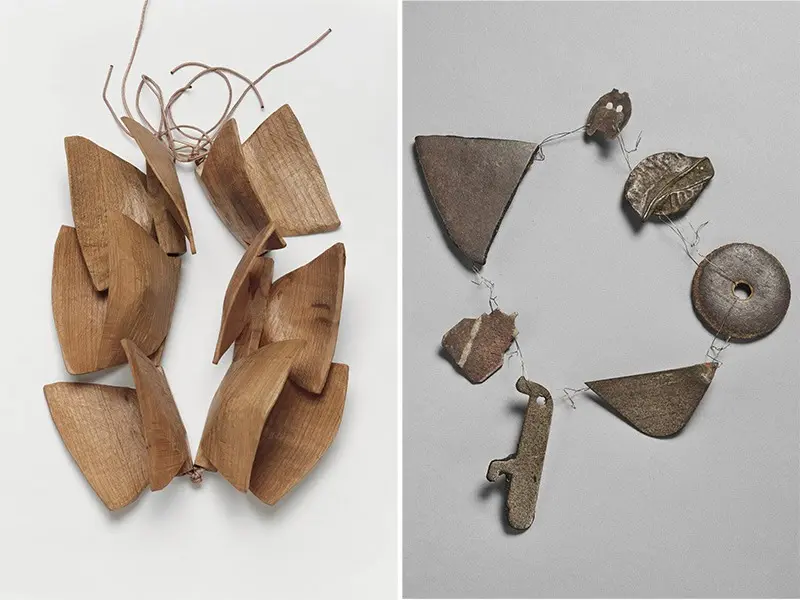
Bernhard Schobinger and Dorothea Prühl came to the world of art jewelry from opposite sides of a divided postwar Europe. Schobinger came of age amid the Swiss avant-garde, while Prühl developed her distinguished practice in East Germany, working first as an industrial designer and later as an influential educator at the art school in Halle where she had completed her own rigorous training. In 1962, the year Prühl graduated, a 16-year-old Schobinger was just beginning his artistic education at the School of Applied Arts in Zurich.
Though both artists made jewelry the absolute center of their creative lives, they ultimately arrived at strikingly divergent philosophies regarding material, value, form, and wearability. Schobinger has famously pried metal directly out of a city street to incorporate it into a necklace and set a rare meteorite into a polished ring; conversely, Prühl meticulously carves organic wood harvested from fallen trees in remote forests. Each artist, working entirely on their own terms, continually challenges conventional assumptions about where true preciousness in jewelry actually resides.
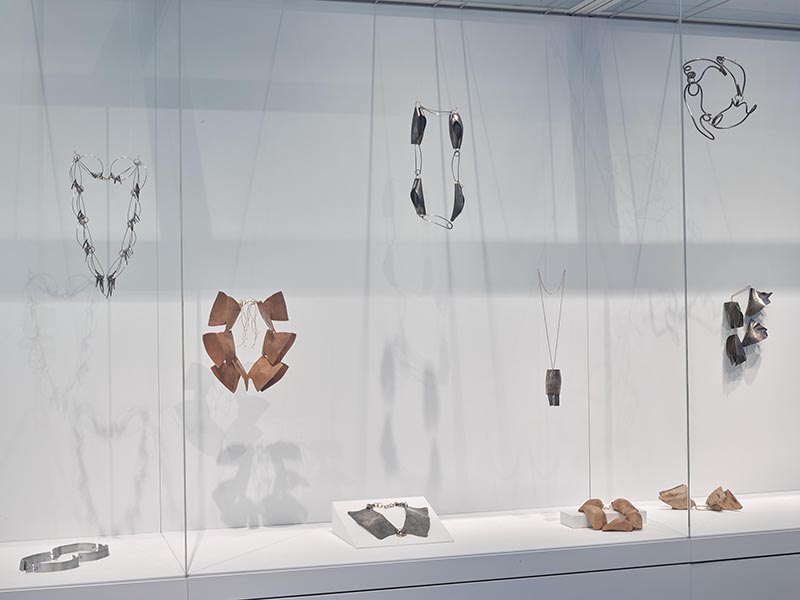
The Museum of Fine Arts, Houston (MFAH), is now highlighting these profound artistic trajectories by presenting concurrent solo retrospectives of both makers: Going Underground: The Jewels of Bernhard Schobinger and The Jewelry of Dorothea Prühl. Both exhibitions are on view through January 3, 2027. Significantly, these presentations mark the very first solo museum exhibitions in the United States for either artist.
Art Jewelry Forum recently spoke with the co-curators of both exhibitions—Cindi Strauss, the MFAH’s Sara and Bill Morgan Curator of Decorative Arts, Craft, and Design, and Elizabeth Essner, the museum’s Windgate Foundation Associate Curator of Craft. The conversation explored the contrasting cultural worlds in which each artist developed, how the two ambitious exhibitions ended up running in tandem, and the ways both visionaries have fundamentally expanded the possibilities of contemporary jewelry.
How These Landmark Exhibitions Came to Be
The genesis of the dual retrospectives began with a major institutional acquisition. When curator Cindi Strauss learned a few years ago that the Rotasa Collection Trust—noted collector Susan Cummins’s renowned repository of contemporary art jewelry—was being gifted to the Museum of Fine Arts, Houston, she immediately began envisioning the wide range of exhibitions the institution could mount to celebrate the transformative addition.
In discussions with Cummins, Strauss proposed two dedicated solo shows to kick off the public celebration of the gift. She had long aspired to mount a major retrospective for Bernhard Schobinger, and with the museum soon housing more than 30 pieces of his jewelry drawn from both the Rotasa and Helen Williams Drutt collections, the timing was ideal. Furthermore, the Rotasa Collection holds the largest institutional holding of Dorothea Prühl’s jewelry in the United States, making her a natural pairing.
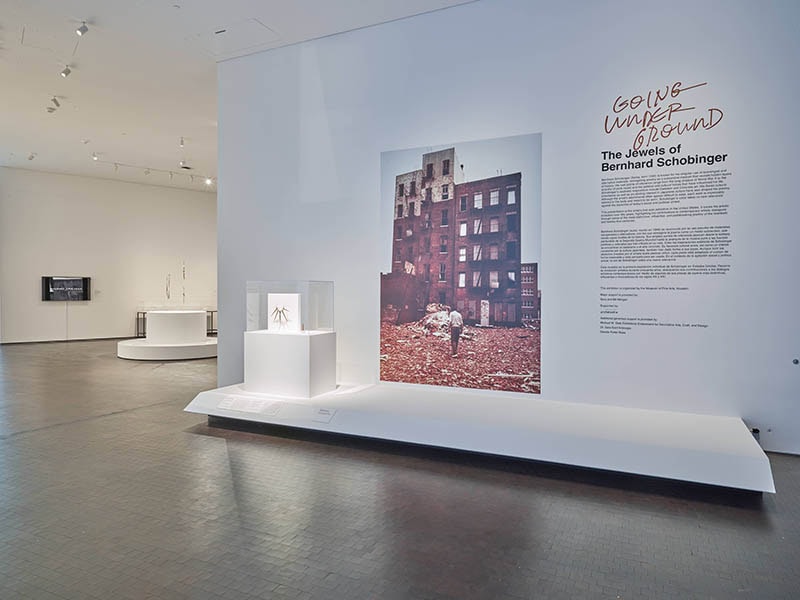
While scheduling the two exhibitions simultaneously was initially a matter of museum calendar logistics, Strauss and Essner quickly realized the tremendous curatorial dialogue that would emerge by placing the artists side by side. Although their aesthetic languages could hardly be more different, their practices share a singular, unwavering dedication to their craft, as well as a profound reliance on place, personal history, and lived experience. Both creators came of age during tumultuous historical eras in Europe, and though their daily realities were vastly different, those turbulent eras indelibly imprinted themselves on their creative outlooks.
Shaping Forces: Behind the Iron Curtain and the Swiss Avant-Garde
Elizabeth Essner notes that the cultural and political climates in which Prühl and Schobinger developed were worlds apart, despite the artists being separated by less than a decade in age.
Dorothea Prühl was born in 1937 in Breslau, Germany—a territory that is now Wrocław, Poland. Consequently, the devastation of World War II and the realities of life within the German Democratic Republic (GDR) profoundly shaped the course of her existence, casting a long shadow even after German reunification in 1990. Essner points out that it is impossible to completely untangle Prühl’s artistic achievements from her daily lived experiences behind the Iron Curtain. Yet, Prühl remains an artist who looks deeply inward for inspiration rather than engaging in overt political messaging. Instead, she takes an expansive, long view of civilization, exploring how jewelry has historically expressed the fundamental essence of the human condition.
Bernhard Schobinger, meanwhile, was born in Zurich in January 1946, coming of age alongside the vibrant cultural movements that surged across the West following the conclusion of World War II. When he enrolled in Zurich’s School of Applied Arts, he was immediately immersed in the avant-garde. He felt a strong affinity for the geometric Concrete Art pioneered by Swiss artists Max Bill and Richard Paul Lohse, elements of which heavily influenced his earliest jewelry designs.
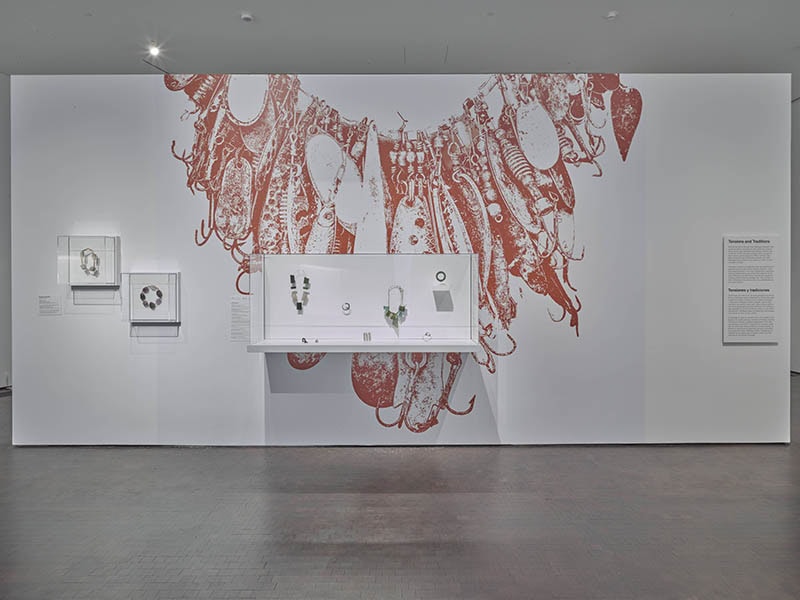
However, Schobinger’s artistic trajectory shifted radically during the 1970s. Finding kinship with the burgeoning international punk movement, he forged a distinct countercultural vision. Everyday detritus, industrial scrap, and discarded objects suddenly became his primary materials as he set out to aggressively redefine the parameters of what jewelry could be.
Embracing Paradox, Craft, and Form
Schobinger has frequently described himself as “a human paradox.” His striking jewelry juxtaposes rigorous, traditional Swiss goldsmithing techniques with raw, disruptive elements like broken glass, jagged saw blades, and urban debris. His intellectual framework was further shaped by the radical philosophy of Paul Feyerabend, whose influential 1975 book Against Method aggressively challenged the existence of fixed, dogmatic rules in science and reason.
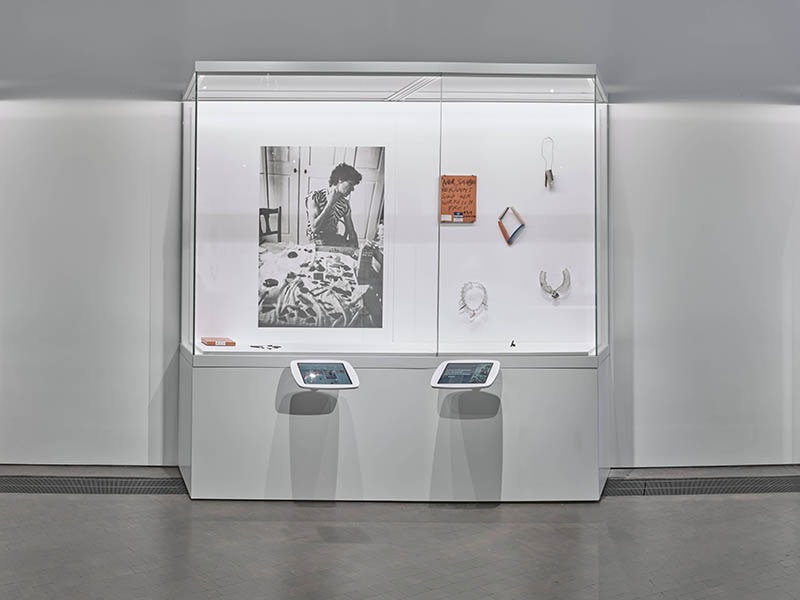
According to Cindi Strauss, Feyerabend’s writings and Schobinger’s own lived experiences are essential for understanding his practice, but superficial glances often miss the deeper complexities of the work. For instance, while Schobinger incorporates found objects that can initially make a piece appear unwearable, uncomfortable, or potentially hazardous, every single object is designed with meticulous attention to ultimate wearability.
Underpinning his rebellious aesthetic is an uncompromising commitment to traditional craftsmanship. Trained as a traditional goldsmith, Schobinger’s mastery is evident in the structural integrity of every piece, particularly in the precision of his clasps, hinges, and connections.
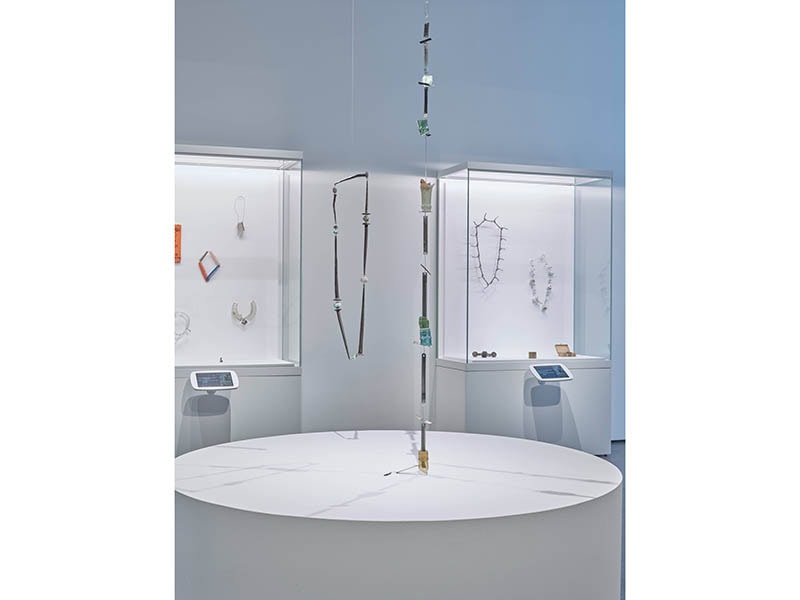
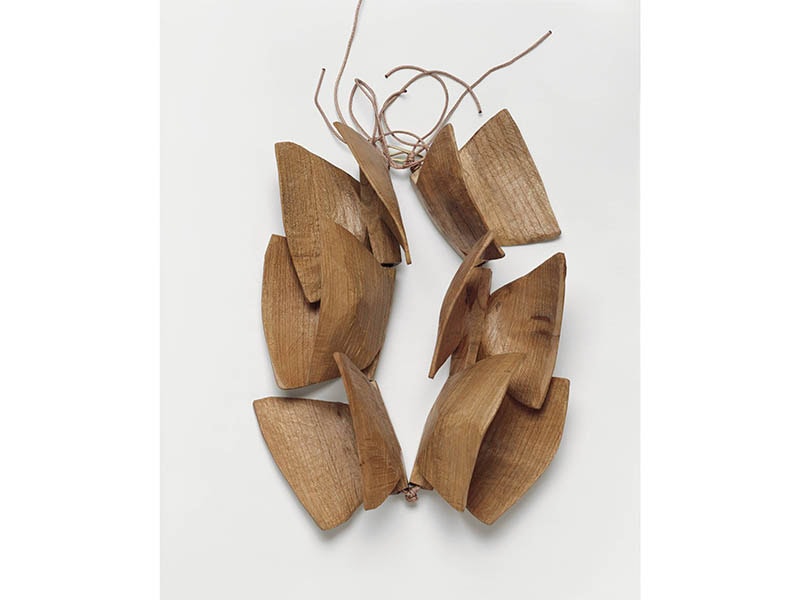
Prühl’s work presents a different kind of intensity. Crafted from carved wood, titanium, and other select metals, her jewelry often appears deceptively simple. Yet Elizabeth Essner emphasizes that this visual simplicity masks a profound depth of knowledge. Prühl produces only a handful of pieces each year, bringing decades of mastery to every phase of creation. She carefully considers not only how her chosen materials embody specific forms, but also how the pieces will sound, how they will move with the body, and, above all, how they will make the wearer feel.
This relentless dedication stems from her rigorous training at the renowned Burg Giebichenstein art school in Halle, where formal perfection was paramount. Prühl often maintains that if she has to verbally explain a piece of jewelry, she knows the underlying form is simply not strong enough.
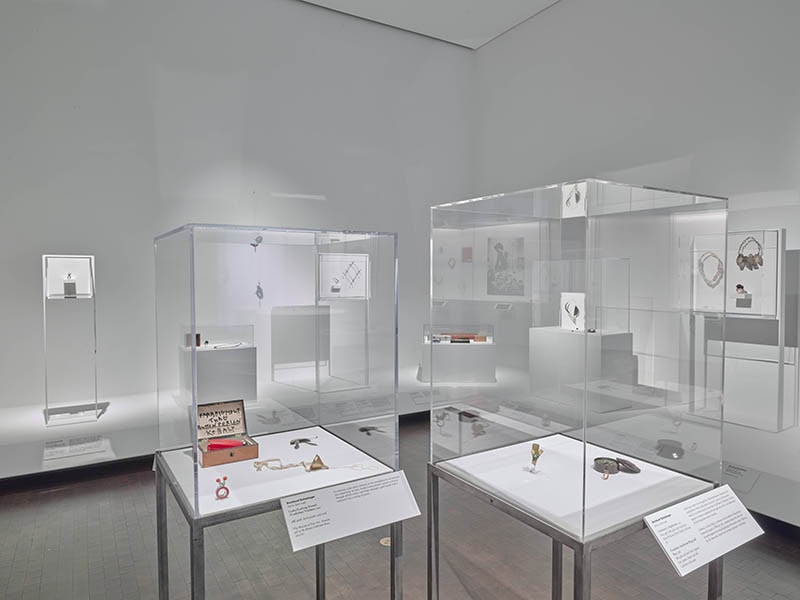
Close Looking: Pivotal Works in the Galleries
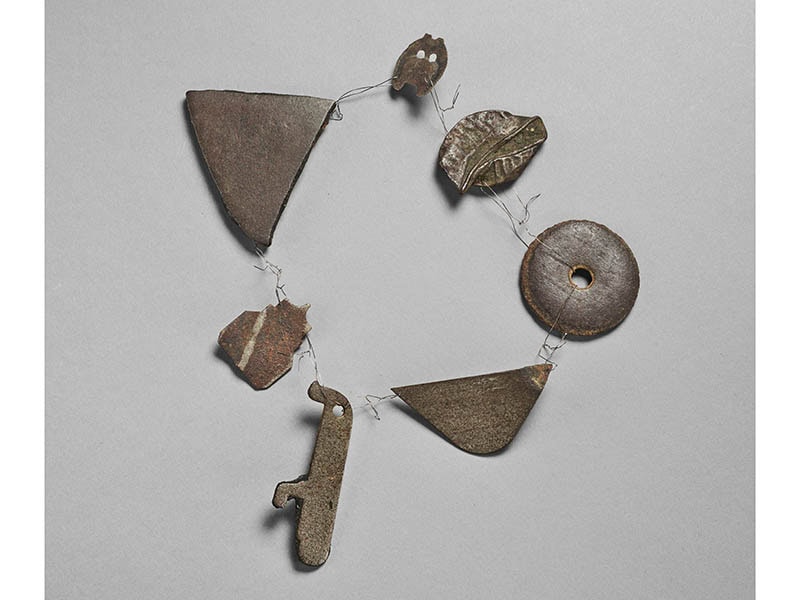
Visitors navigating the adjacent galleries at the Museum of Fine Arts, Houston, are encouraged to spend time examining specific masterworks that define each artist’s career. For Schobinger, the 1980 necklace NYC 1980 stands as a pivotal milestone. Created while the artist was shuttling between his home in the Swiss village of Richterswil and the underground punk scenes of Zurich, London, Berlin, and New York City, the jagged chunks of metal incorporated into the piece were literally pried out of the asphalt on West Broadway.
Resembling a hybrid of ancient amulet and modern armor, the necklace carries faint structural echoes of Swiss Concrete Art. Yet, upon closer inspection, the viewer notices the nearly invisible twists of wire holding the heavy metal fragments together. The connections are functional but precarious, as if Schobinger was frantically trying to capture the raw, explosive energy of a fleeting cultural moment while acutely aware of its fragility.
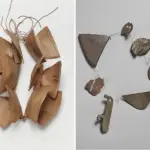
Prühl’s working methods reflect an equally profound, albeit quieter, dedication. While she constructs her metal pieces in her urban studio in Halle, she carves her wooden jewelry in rural isolation, deep within the forests located three hours north. Working alone in a simple farmhouse lacking running water and featuring only a single source of heat, she relies on an endless supply of wood gathered from fallen trees. Works like Flowers from Augustenberg (Blumen aus Augustenberg) from 1989—named after her rural hamlet—serve as tender, poetic odes to her surroundings, translating the quiet spirit of the landscape into an understated wooden garland.
The Long Arc of Creativity
Reflecting on the profound impact of mounting these dual retrospectives, Cindi Strauss notes that the experience has deepened her appreciation for the daily discipline required to maintain an elite artistic practice over decades. Both Schobinger and Prühl exhibit an unyielding, singular dedication to their craft that never truly pauses.
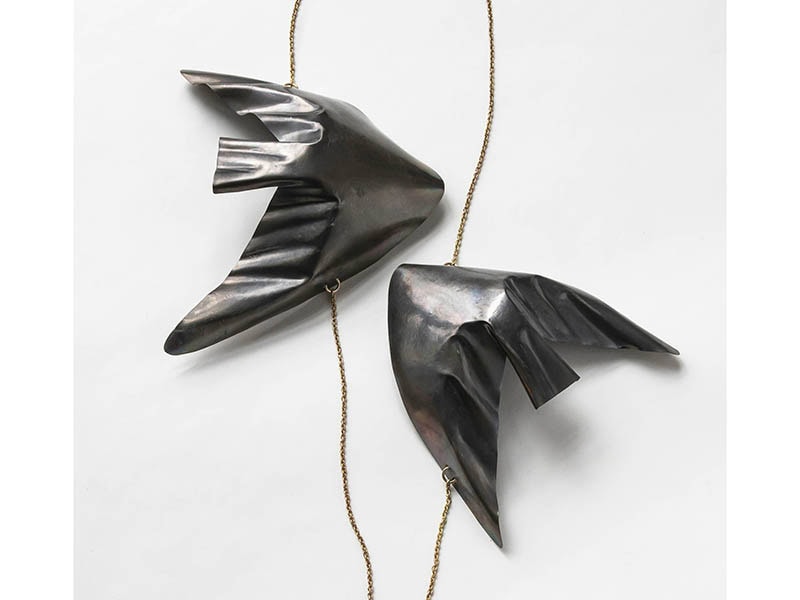
Elizabeth Essner observes that the exhibitions have reinforced her understanding of jewelry’s unique capacity to hold both intimate personal narratives and humanity’s deepest philosophical meanings. By setting a fragment of a meteorite into a simple band in his 1993 Meteor Iron Ring, Schobinger connects personal adornment to a cosmic timeline far exceeding human civilization. Meanwhile, through her quiet depictions of birds in flight, delicate flowers, and fluttering butterflies, Prühl offers an invitation to slow down and contemplate the quiet miracles of the natural world.
The Jewelry of Dorothea Prühl is on view through January 3, 2027, and Going Underground: The Jewels of Bernhard Schobinger runs through January 3, 2027, at the Museum of Fine Arts, Houston.