






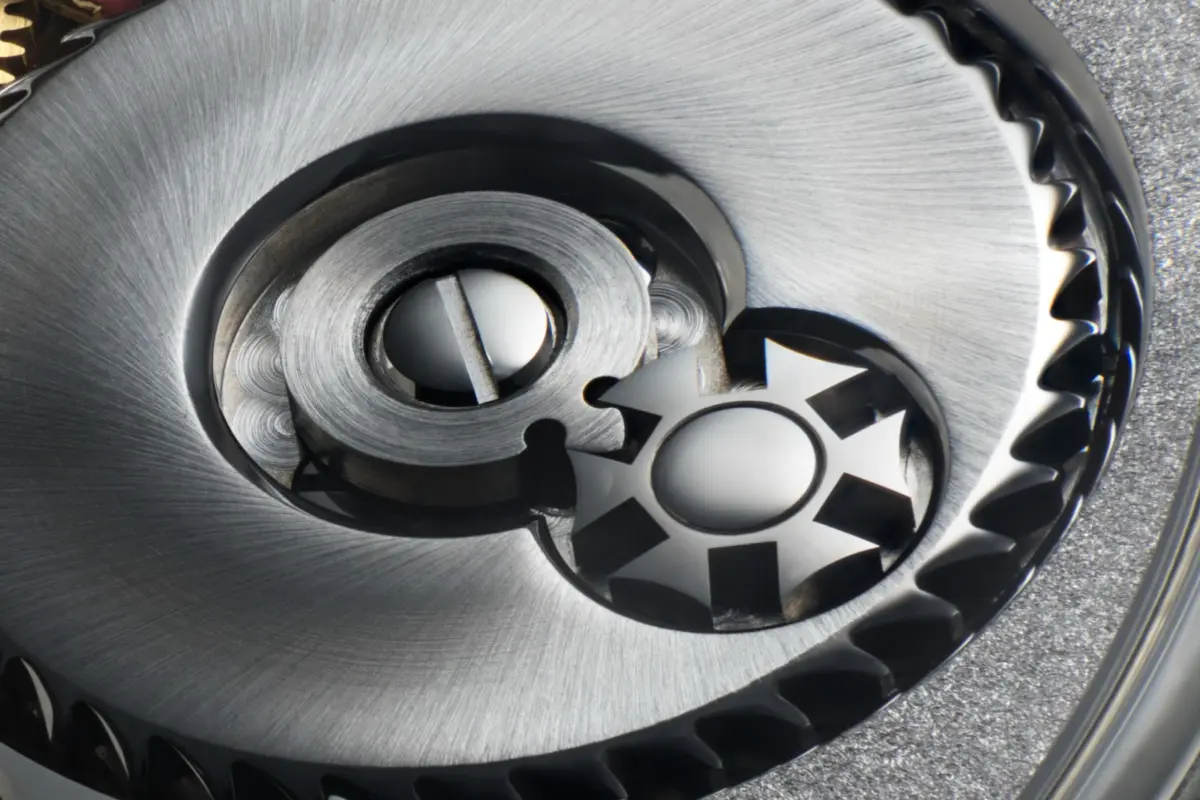
The Maltese cross is a ubiquitous device found inside all sorts of mechanical movements. Originally devised to limit a mainspring’s working range, it also makes an appearance in perpetual calendars and unconventional jumping hours complications. The elegant mechanism is both simple and clever, warranting a closer look at its geometry, its historical evolution, and its surprising modern applications in fine watchmaking.
From Cross to Mechanics
The Maltese cross mechanism gets its name from the heraldic symbol adopted by the Order of St. John, and remains associated with the Sovereign Military Order of Malta. While the original cross has four arms, the Maltese cross as a horological component commonly features five arms or more, balancing functional mechanics with symbolic heritage.

Collectors also recognise the cross as Vacheron Constantin’s logo, adopted in 1880 in tribute to the horological component. Today, Vacheron Constantin also incorporates the cross into its tourbillon cage and even some decorative screw heads, such as the column wheel screw inside the brand’s manufacture calibers, showcasing how a functional stop-work component evolved into a signature aesthetic house code.
The component itself is a masterfully simple example of geometry and mechanics. The system allows a true one-to-any transmission ratio, since the driving component only has one tooth which makes the cross-shaped wheel advance one single step every revolution. For comparison, a one-to-five transmission ratio can be accomplished by a pinion with ten leaves paired to a wheel with 50 teeth, but the motion transmitted would then be continuous. A Maltese cross still makes one full revolution after the driver turns five times, but the motion is stepped and deliberate.

Between engagements, the Maltese cross locks securely against the driver’s circular surface, ensuring it stays firmly in place. In this way, the mechanism is entirely self-indexing without needing any auxiliary springs or jumping fingers to maintain its alignment.
Managing the Mainspring
When used as stop-work for a going barrel, the Maltese cross mechanism includes two primary parts: the driving finger and the driven wheel. The finger projects from a broad circular portion and is flanked by two recesses resembling the spaces at the roots of gear teeth.

The wheel resembles a true Maltese cross due to its concave arms. The idea is for the concave ends to fit over the driving finger’s round profile, such that the wheel remains locked in position outside of engagement. As the finger passes over, the cross’s ends fit neatly in the recesses, allowing the wheel to advance one step before locking again.
Commonly, there is a convex shape cut on one of the teeth, which physically binds and halts the mechanism. The core purpose of this stop-work design is to prevent winding the mainspring barrel over a certain safety threshold and to prevent its complete discharge. By cutting off both extremes of the winding cycle, the movement only utilizes the quasi-linear torque slope of the mainspring, ensuring more consistent timekeeping performance throughout the power reserve.

The driving finger is commonly fixed directly on the barrel arbor, with the cross wheel screwed securely onto the barrel cover. When the watch is wound, the arbor will engage and advance the wheel until it encounters the convex face, halting further winding. As the watch runs and the mainspring discharges, the barrel revolves around the arbor, making the cross-shaped wheel turn in reverse. Eventually, the other side of the convex face locks onto the finger, stopping the barrel rotation and, with it, the movement before the mainspring can lose all of its tension.
The mainspring must be pre-tensioned before the Maltese cross stop-work is set up to ensure the spring retains some baseline tension even when the stop-work halts the barrel at the end of its permitted travel. In the standard five-position example, the stop-work permits four complete turns between its physical limits. As a general rule, when the Maltese cross has $n$ teeth, the barrel will only wind and unwind $n-1$ times.

The Geneva Connection
Nowadays the terms “Maltese cross mechanism” and the “Geneva stop-work” are often used interchangeably by enthusiasts, but originally they were distinct systems. In fact, the Maltese cross came after the original Geneva stop-work, introduced specifically to solve a mechanical vulnerability that plagued the older design.
The non-linear behavior of coiled springs was observed early on by historical clock and watchmakers, who sought to bypass the unruly torque values delivered at full wind and near complete discharge. The solution emerged quite quickly, long before the development of power-compensating measures like the famous fusee and chain, as horologists realised that locking the barrel’s outer limits would ameliorate torque variances.

The original Geneva stop-work featured a simple finger on the barrel arbor, paired to a modified gear where roughly half of its teeth were replaced by a solid circular sector. The idea was that the finger would bank on either side of the circular sector, halting the mainspring before reaching either the fully wound or depleted state. However, the loose geometry of the system doesn’t physically prevent the modified gear from accidentally turning even when the driving finger doesn’t engage it.
This inherent mechanical fault renders the Geneva stop-work useless if the screw securing it to the barrel becomes loose. Such a shift causes its orientation to fall out of sync, locking the barrel either prematurely or too late, compromising the entire purpose of the stop-work.
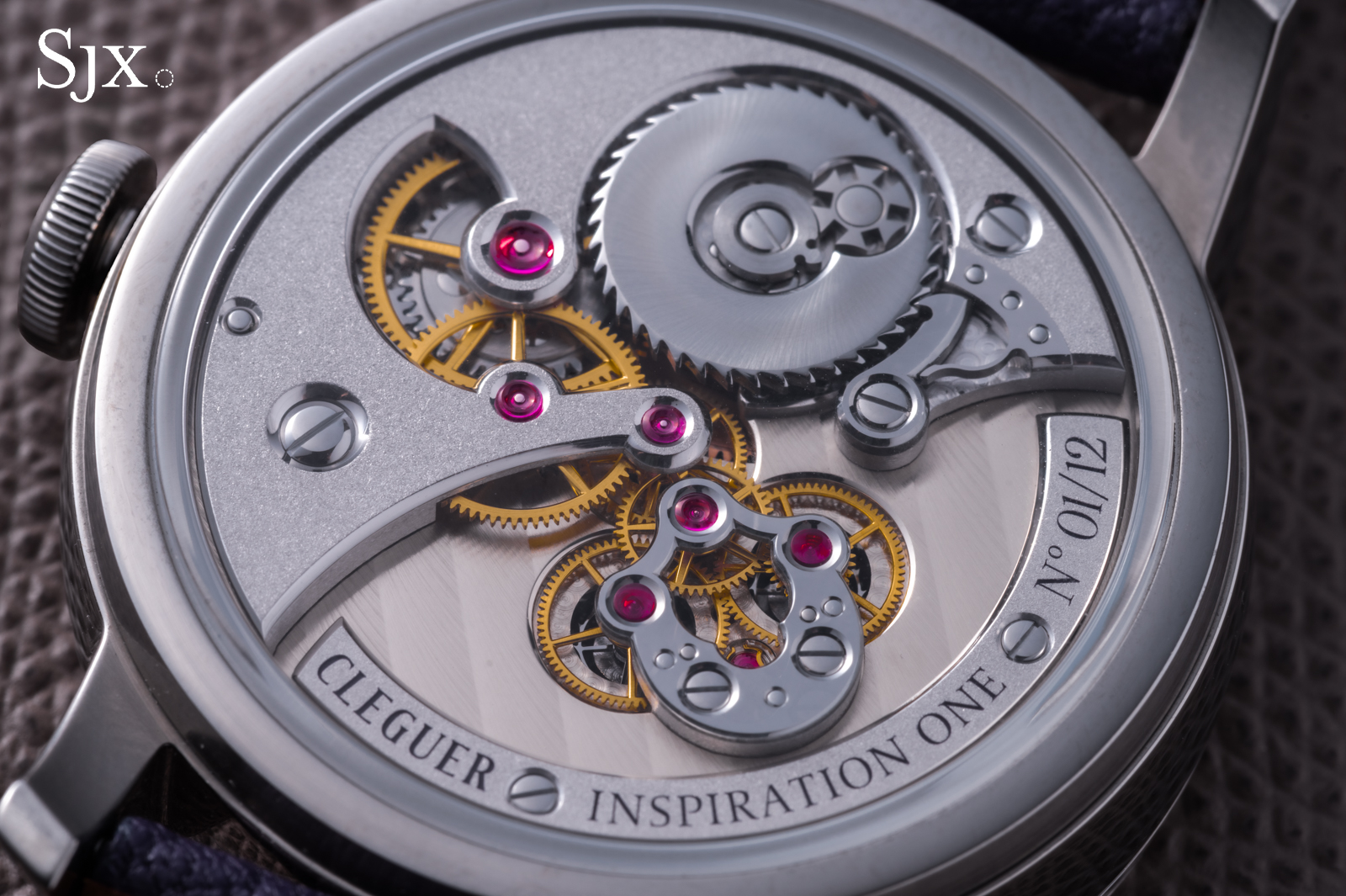
The more streamlined Maltese cross shape prevents this from happening because the wheel’s concave arms lock securely on the driver finger’s circular face. It remains unclear precisely when the Maltese cross stop-work was first implemented, but its superior reliability ensured its use spread rapidly across the watchmaking world.
Although the Geneva stop-work and the Maltese cross mechanism are historically different, mechanical engineers now broadly call this kind of kinematic linkage a Geneva drive. The intermittent transmission system found enduring utility not only in horology but also in old film cameras, mechanical projectors, and technical plotters.
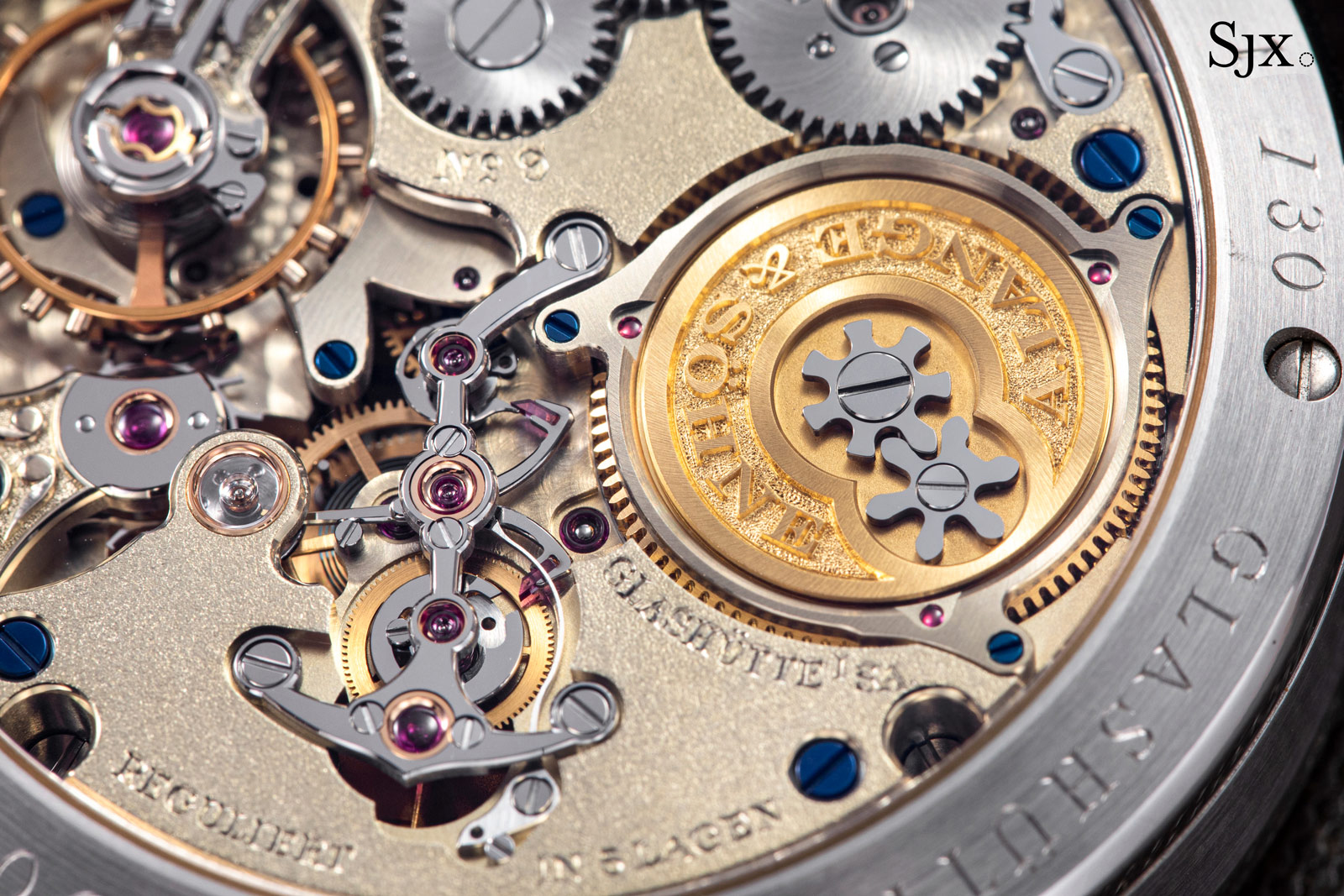
Other barrel stop-work mechanisms were also explored throughout history, some entirely original and others serving as clever variations of the Geneva stop-work. Master watchmaker Abraham-Louis Breguet opted for his own complicated design, while modern independent and high-horology makers such as A. Lange & Söhne and Ferdinand Berthoud have continued to develop proprietary barrel stop-works, sometimes pairing them directly with traditional fusee and chain systems to achieve ultimate chronometric stability.
Stepping Beyond the Barrel
The same foundational ability to hold its position rigidly and advance in precise steps gave the Maltese cross many clever applications far beyond barrel stop-work, finding a natural home in jumping complications and complex perpetual calendars.
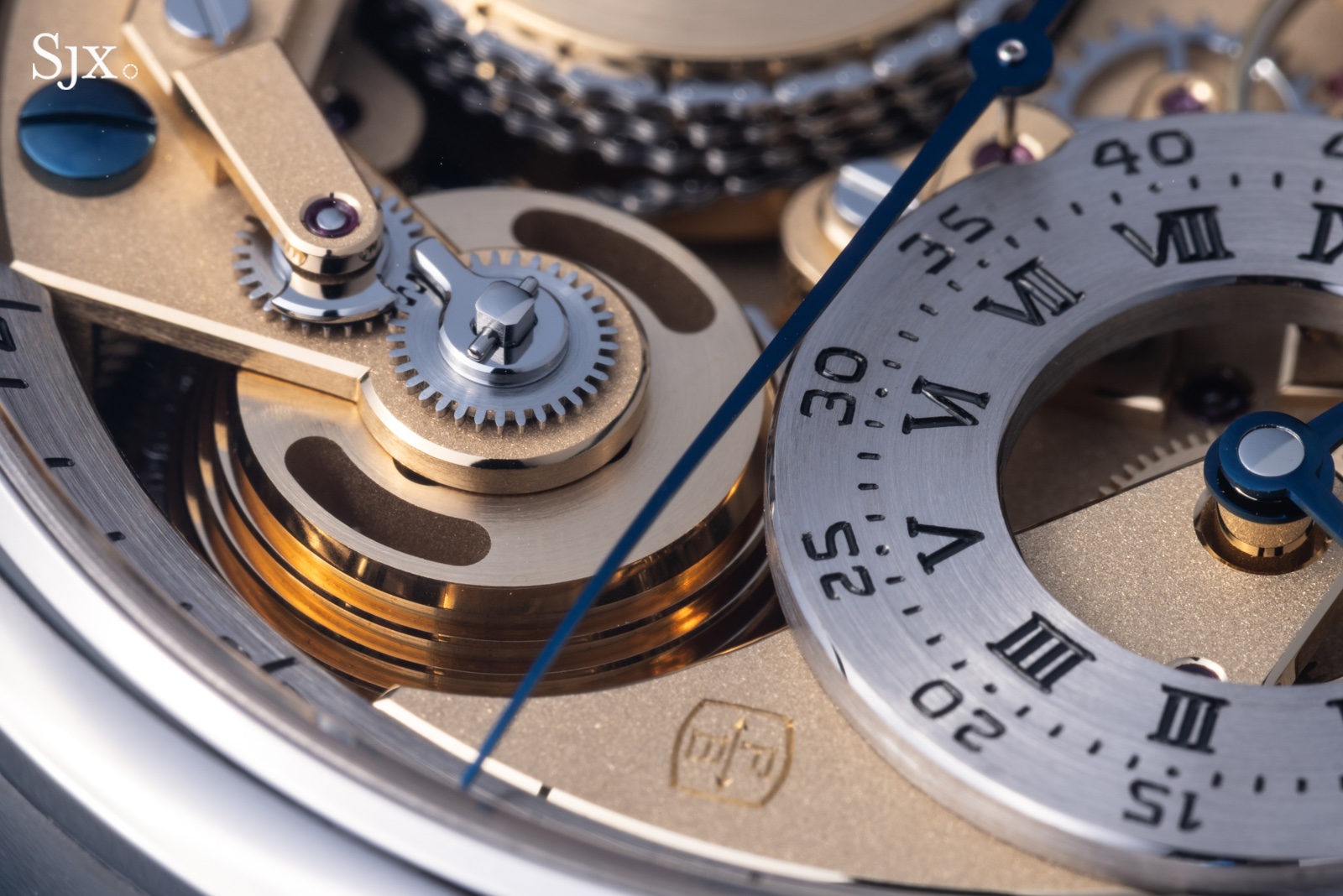
The Maltese cross is utilized in most classic perpetual calendars inside the months cam, where it advances one step every twelve months, carrying a leap year cam along with it. Every four years, the cam’s extended lobe interacts with a feeler to indicate that a particular February features 29 days instead of the standard 28.
The system is so fundamentally simple and reliable that it can be found in perpetual calendars spanning from 19th-century pocket watches to modern mechanical marvels such as H. Moser & Cie’s perpetual calendar models.
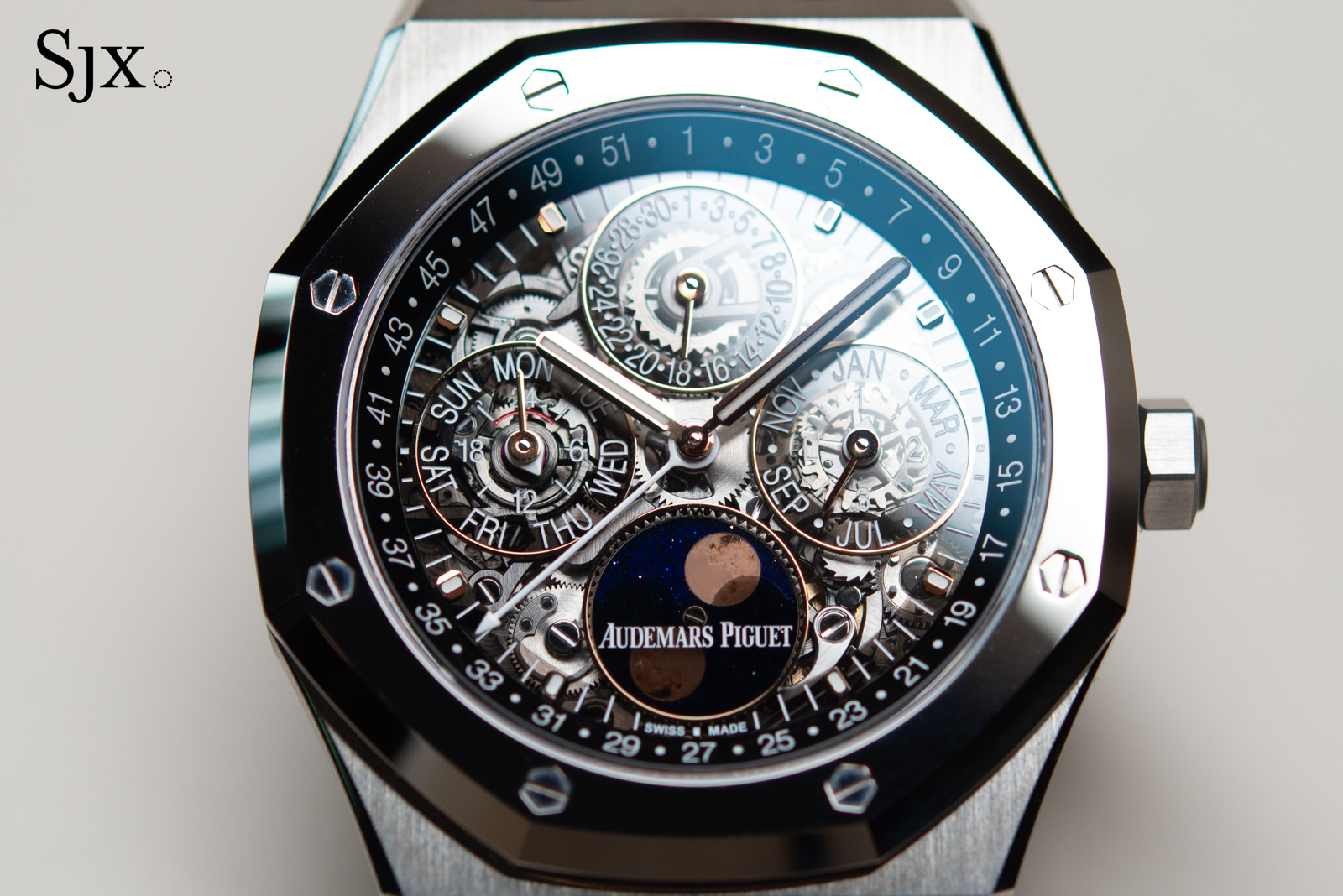
The basic kinematic principle of the Maltese cross mechanism was eventually extended to standard gears as well, creating a generalized Maltese cross drive. Outstanding examples of this engineering approach can be seen in the work of Dr. Ludwig Oechslin at Ulysse Nardin and later at Ochs und Junior.
Instead of employing a traditional Maltese cross, Dr. Oechslin adapted regular pinions or gear wheels to work seamlessly with a driving finger. The addendums of the wheel’s teeth lock over the driving member’s peripheral surface and only unlock and advance when the finger comes directly into engagement.

This setup allows additional gear trains to be driven directly from the adapted cross wheel, an arrangement Dr. Oechslin put to excellent use in his rotary perpetual and annual calendars. A wheel with $n$ teeth advances by a fraction of a tooth spacing with each step when used in this fashion.
By enlarging the diameter of the driving member and adding teeth at carefully calculated irregular intervals, Dr. Oechslin also managed to construct an innovative double-digit date mechanism using only the generalized Maltese cross layout.

Variations of the generalized Maltese cross drive appear frequently in modern double-digit date mechanisms because they are straightforward to configure and physically cannot become unsynchronized once assembled. Although by design the system is self-indexing, watchmakers frequently incorporate auxiliary springs to ensure a crisp, instantaneous jump and proper visual alignment of the date numerals.
Jumping Complications
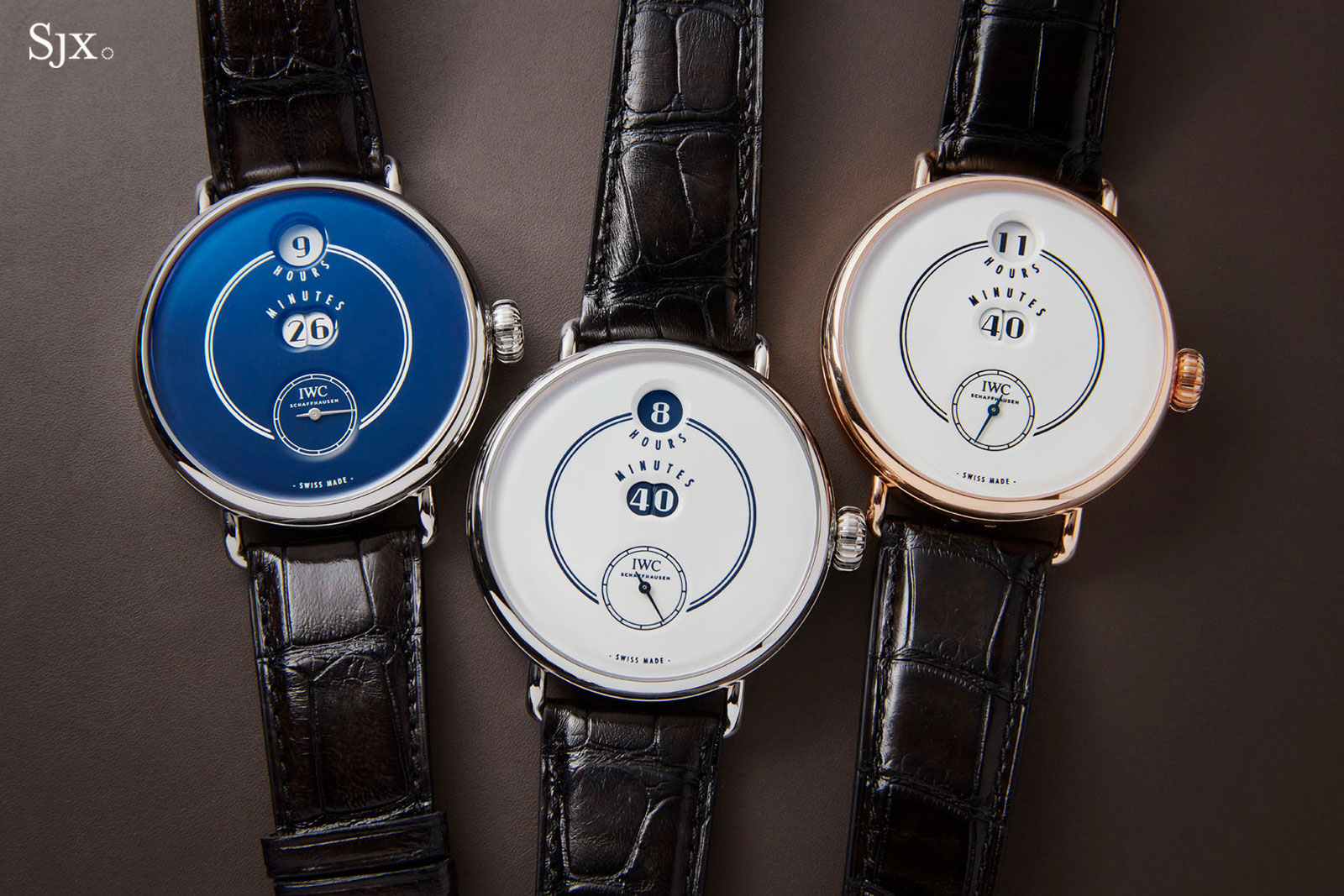
The Maltese cross can also be encountered, in one form or another, inside contemporary and historical jumping hour complications featuring digital indications. Joseph Pallweber’s original 19th-century pocket watch design, recently revived and made famous by brands like IWC, relied on a Maltese cross-like drive linking the tens and units discs of the minute display.

The units disc jumped one step every 60 seconds driven by the underlying gear train, and a dedicated finger then switched over the tens disc by one step every ten minutes. While the broader minute jumping system was heavily reworked for contemporary standards, a direct descendant of the Maltese cross drive remains active in the modern IWC Tribute to Pallweber “150 Years” edition.
Independent watchmaker Urwerk also makes extensive use of the Maltese cross mechanism in its trademark satellite wandering hours displays. The system is inherently suitable for wandering hour complications because it allows an hour carrier to be driven around the dial while keeping the hour satellite stationary, only forcing it to rotate and advance one step at the precise completion of its orbital revolution.
Perhaps the most dramatic and abundant use of a Maltese cross drive is found in Ludovic Ballouard’s Upside Down timepiece, which displays all the hour numerals except the current one upside down on the dial. As the hour passes, the active numeral is inverted and rotated into place while the next hour indicator turns upright.
Each individual flip takes exactly 180 degrees of rotation and is accomplished by pairing a four-pointed Maltese cross with a wide driving ring featuring two fingers. At 60-minute intervals, a snail cam mechanism causes the broad ring to jump swiftly, switching over two Maltese crosses simultaneously. All in all, the Upside Down movement relies on no fewer than twelve distinct Maltese crosses—one dedicated to every hour on the dial.

The Louis Vuitton Tambour Taiko Spin Time takes this kinetic concept to an even higher dimension with a three-dimensional cube-based interpretation, utilizing out-of-plane Maltese cross drives expertly concealed within the architecture of the movement.
Genuine mechanical innovation is often instantly recognisable by its sheer elegance and simplicity. The Maltese cross mechanism remains one of those foundational systems that has become so deeply embedded in collective watchmaking practice that it stands alongside the mainspring and balance wheel as a pillar of traditional engineering. The same simple geometry that once served solely to limit a mainspring’s working range continues to lend itself brilliantly to calendar indications, jumping hour displays, and unconventional complications alike. Its applications are endlessly varied, but its core appeal remains unchanging: an elegant mechanism that is at once beautifully simple and brilliantly clever.