





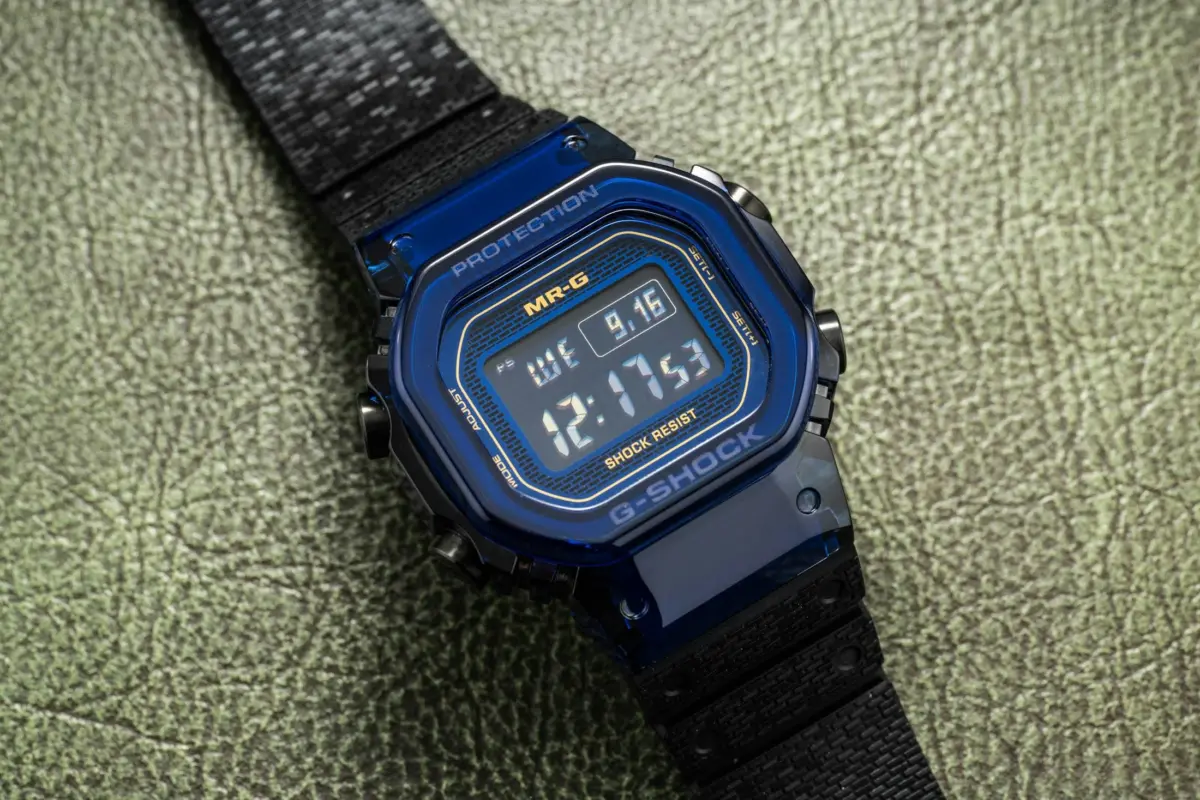
Earlier this summer, inside a brightly lit meeting room at Casio’s renowned production facility in Yamagata, Japan, a heavy box was placed on the table by a group of company associates. The visit was initially framed as a routine factory tour of the production lines, but what followed was an unexpected unveiling of an extraordinary horological milestone. Casio was preparing to reveal the G-SHOCK MRG-D5000 "Blue Rose Project," the brand’s first-ever production watch constructed entirely out of sapphire crystal. Limited to just 20 pieces worldwide and priced at $80,000 (approximately 1.1 million JPY), this release represents the most expensive G-SHOCK to ever hit the commercial market.

While the staggering price tag and radical material choice might catch casual observers off guard, the timepiece is not entirely out of the blue. The foundational clues and ambitions for such a watch have been quietly building within Casio’s research and development divisions for years.
Within the high-end MR-G series—which already sits at the absolute summit of the G-SHOCK hierarchy—the new Blue Rose Project stands apart. The MR-G lineup is designed to take the familiar digital modules and legendary durability specs demanded of a G-SHOCK and combine them with elevated materials, complex multi-component constructions, and meticulous hand-finishing. These timepieces are proudly assembled at the Yamagata factory, where specialized artisans ensure a level of fit and finish that separates them from standard production models.
For collectors who have experienced the MR-G series firsthand, the physical presence and craftsmanship of these watches often defy initial skepticism. Over the years, the MR-G umbrella has frequently served as a showcase for traditional Japanese artistry. Notable models like the MRGB5000 "Tsuiki" and the MRGB2000JS "Jyuroku-Maru: San" featured hand-hammered and hand-engraved bezels and bracelets crafted by some of Japan’s finest traditional metalworkers. Despite retail prices stretching well past the ten-thousand-dollar mark, these artisanal releases have historically enjoyed fierce demand and rapid sell-outs among dedicated high-end G-SHOCK collectors.

This relentless pursuit of extreme design and engineering naturally set the stage for Casio’s "Dream Project," an initiative led by Kikuo Ibe, the legendary inventor of the original G-SHOCK. The Dream Project was conceived to bring the wildest conceptual ideas from R&D sketches into reality. The journey began at Baselworld in 2015 with a solid-gold 5000-series concept, which eventually materialized in 2018 as the G-SHOCK Dream Project ‘Pure Gold’ G-D5000-9JR—a Japan-only run of 35 pieces crafted from 18-karat yellow gold and priced at roughly $70,000 at the time of its release.
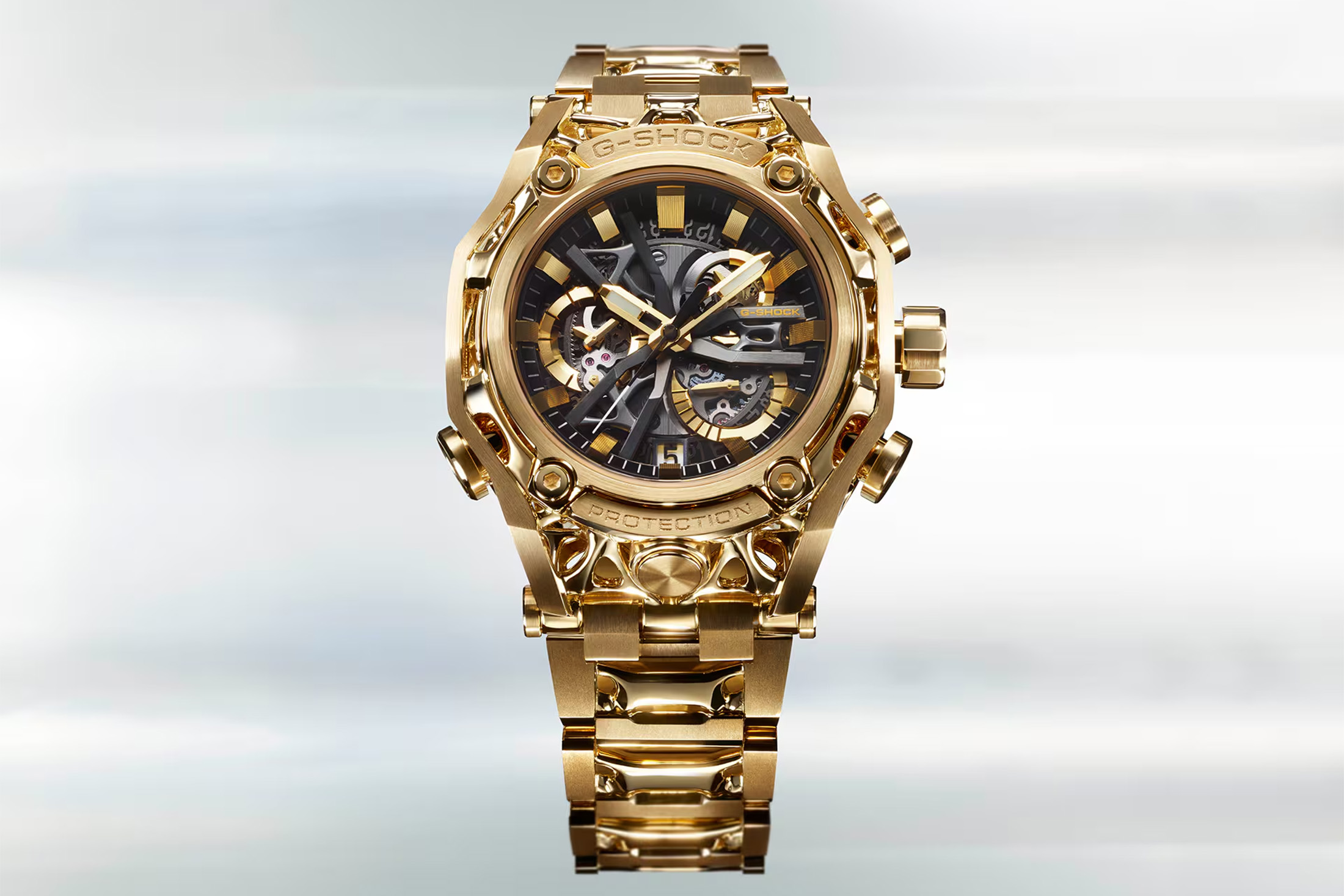
For G-SHOCK’s 40th anniversary in 2023, the brand introduced Dream Project #2: the G-D001, a unique piece created with the assistance of generative AI models. Auctioned off at Phillips for charity, the fever-dream timepiece hammered at an astounding $400,050. During this era of ambitious concepts, Ibe-san also revealed a pair of experimental prototypes featuring cases, bezels, and bracelets made entirely of sapphire crystal. At the time, bringing a sapphire case to production seemed virtually impossible given the core identity of the brand. The G-SHOCK name is synonymous with shock resistance, and while sapphire crystal is exceptionally hard and scratch-resistant, it is also notoriously brittle.
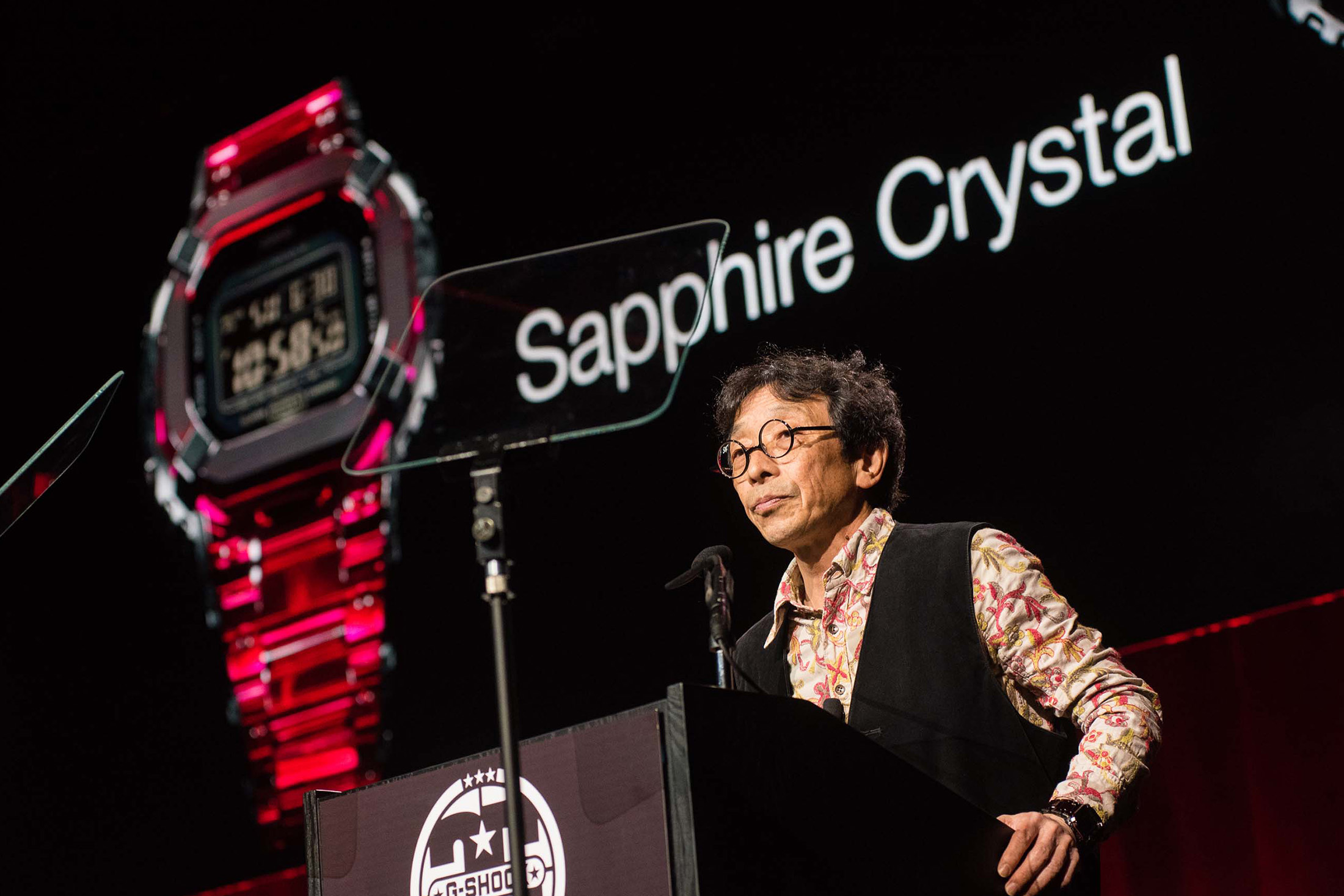
Although Ibe-san has since retired from his day-to-day corporate role, he remains an active and beloved global ambassador for the brand. His retirement effectively marked the close of the formal Dream Project series, but the new Blue Rose Project serves as a direct homage to his final, unrealized vision. While it is not formally designated as Dream Project #3, the words "Dream Project" are proudly engraved on the caseback as a permanent tribute to Ibe-san’s pioneering spirit.
Finally, A Sapphire G-SHOCK
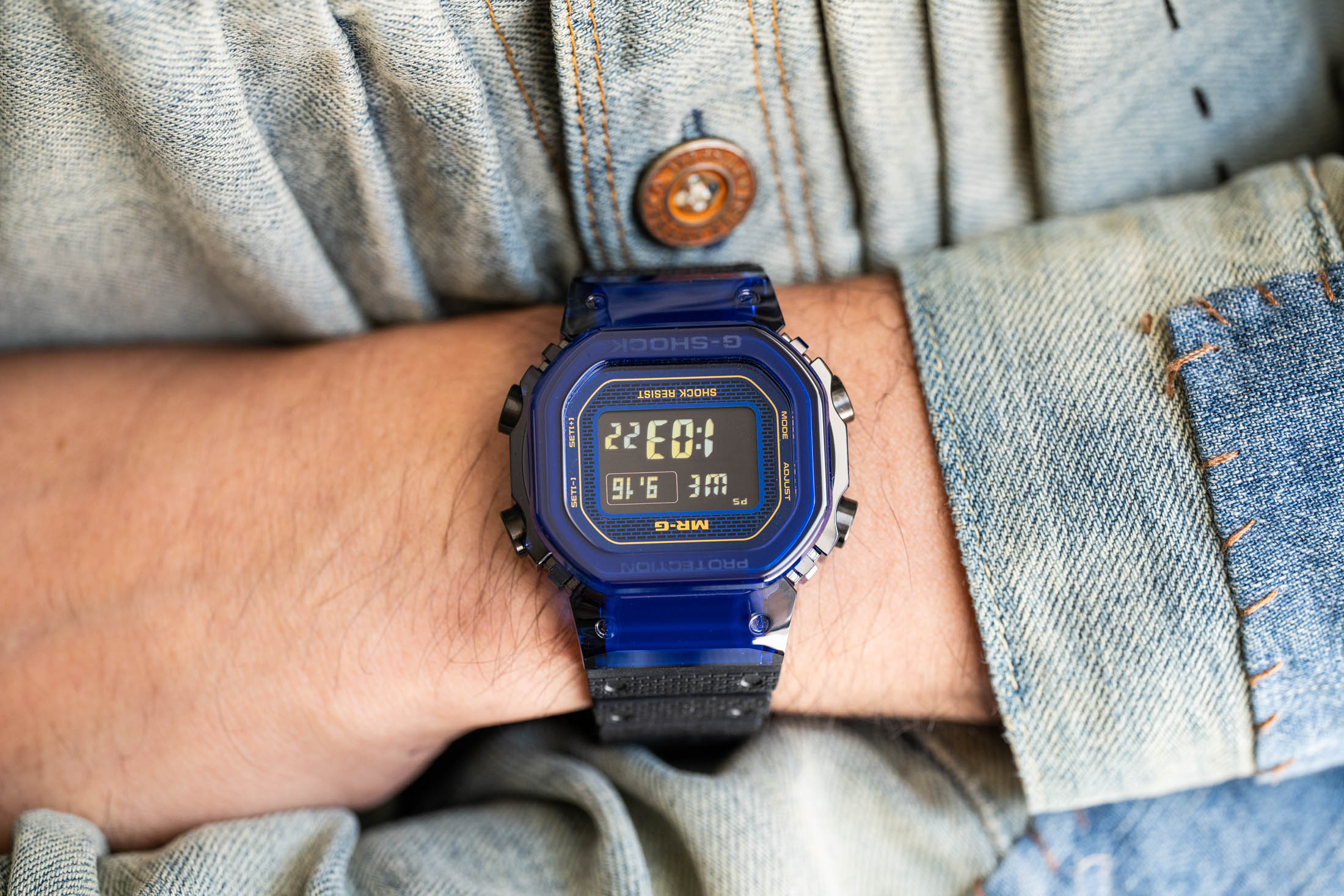
The newly unveiled MRG-D5000 Blue Sapphire is an unabashedly extravagant interpretation of G-SHOCK’s iconic square silhouette. Despite its ultra-luxurious material composition, it retains the core utility expected of a G-SHOCK. The watch features tough solar charging, Multi Band 6 radio control for precise time synchronization, and standard digital features including a stopwatch, countdown timer, multiple alarms, and world time capabilities. True to the brand’s foundational engineering ethos, the sapphire-cased production model maintains the requisite 20-bar water resistance and verified drop resistance.
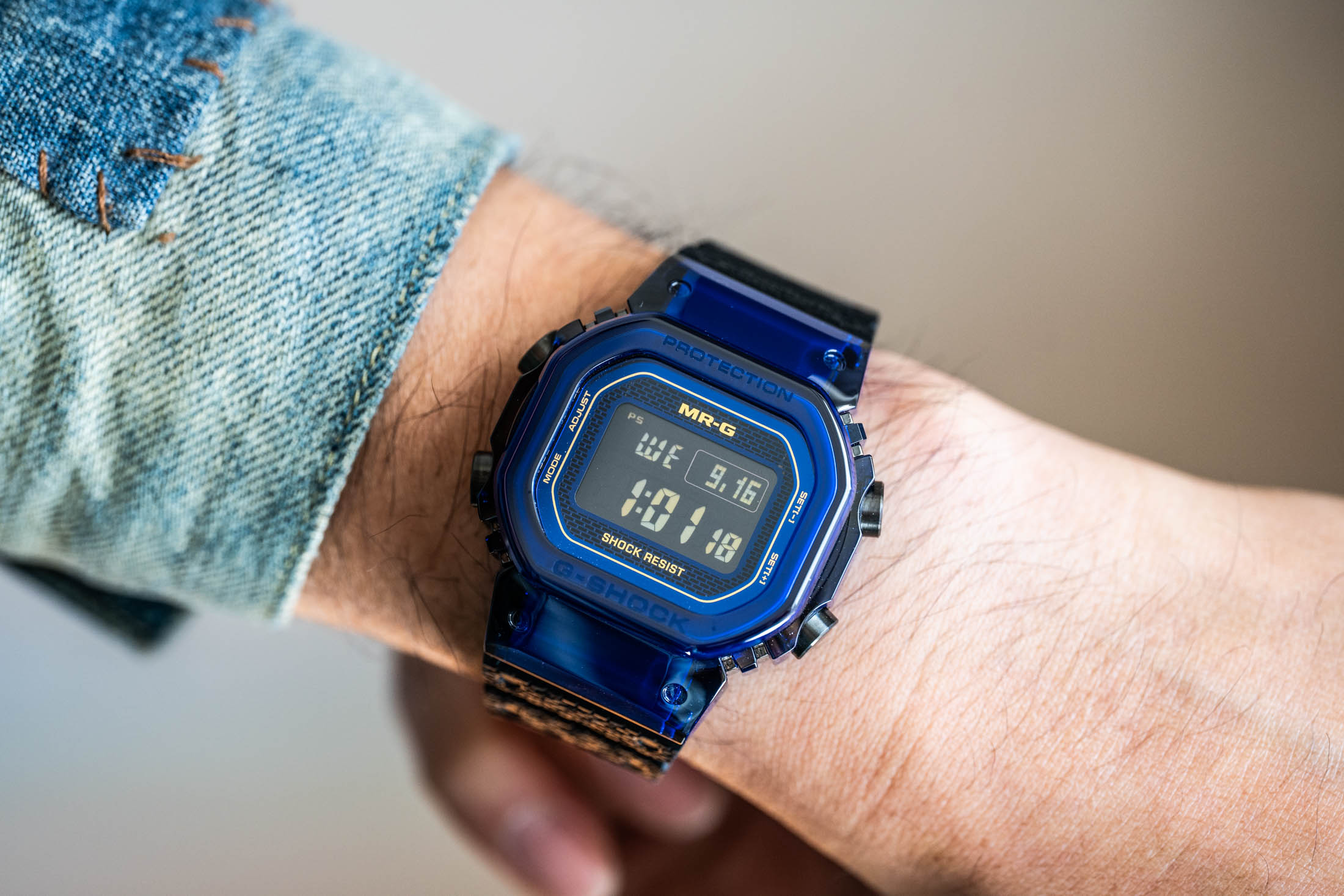
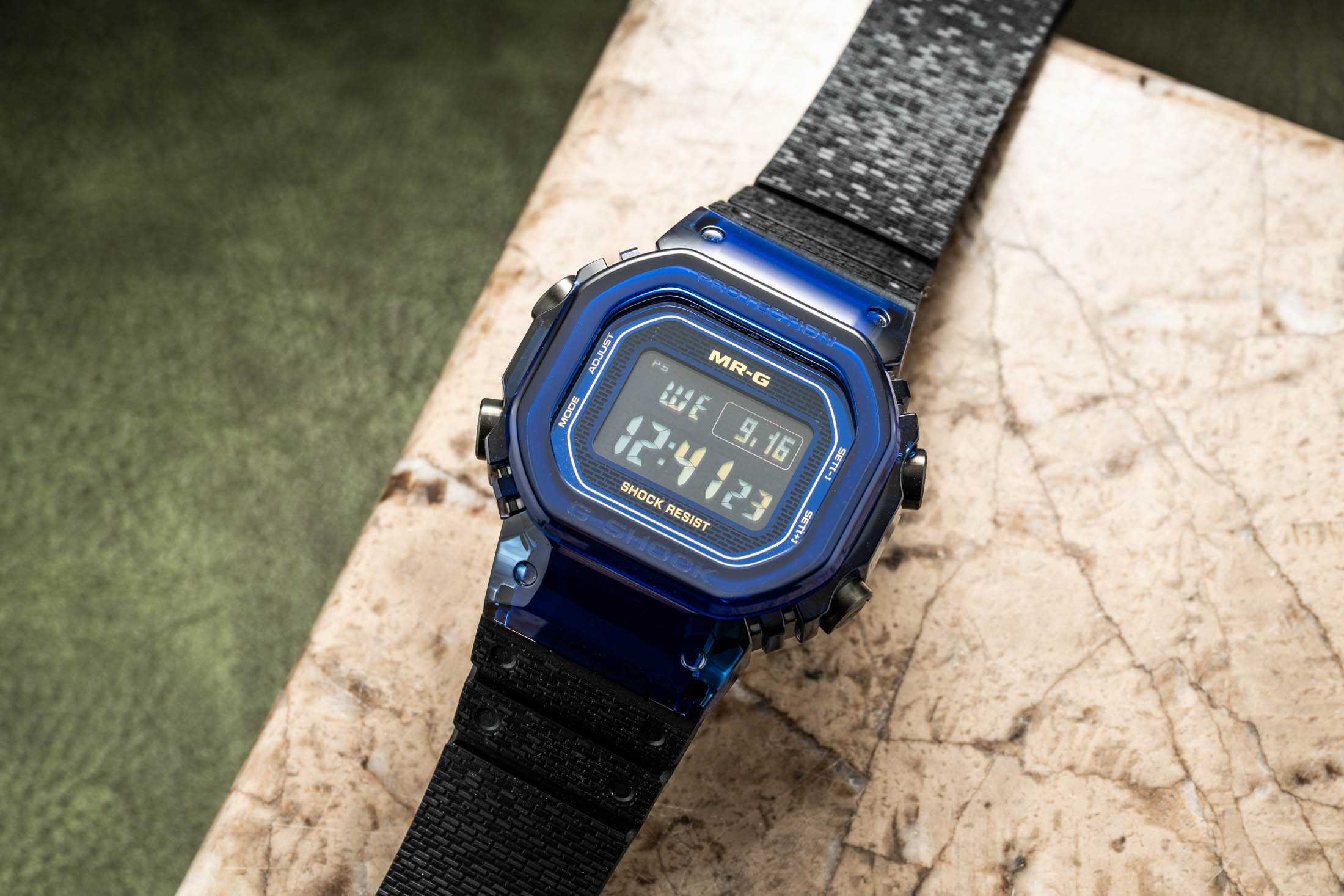
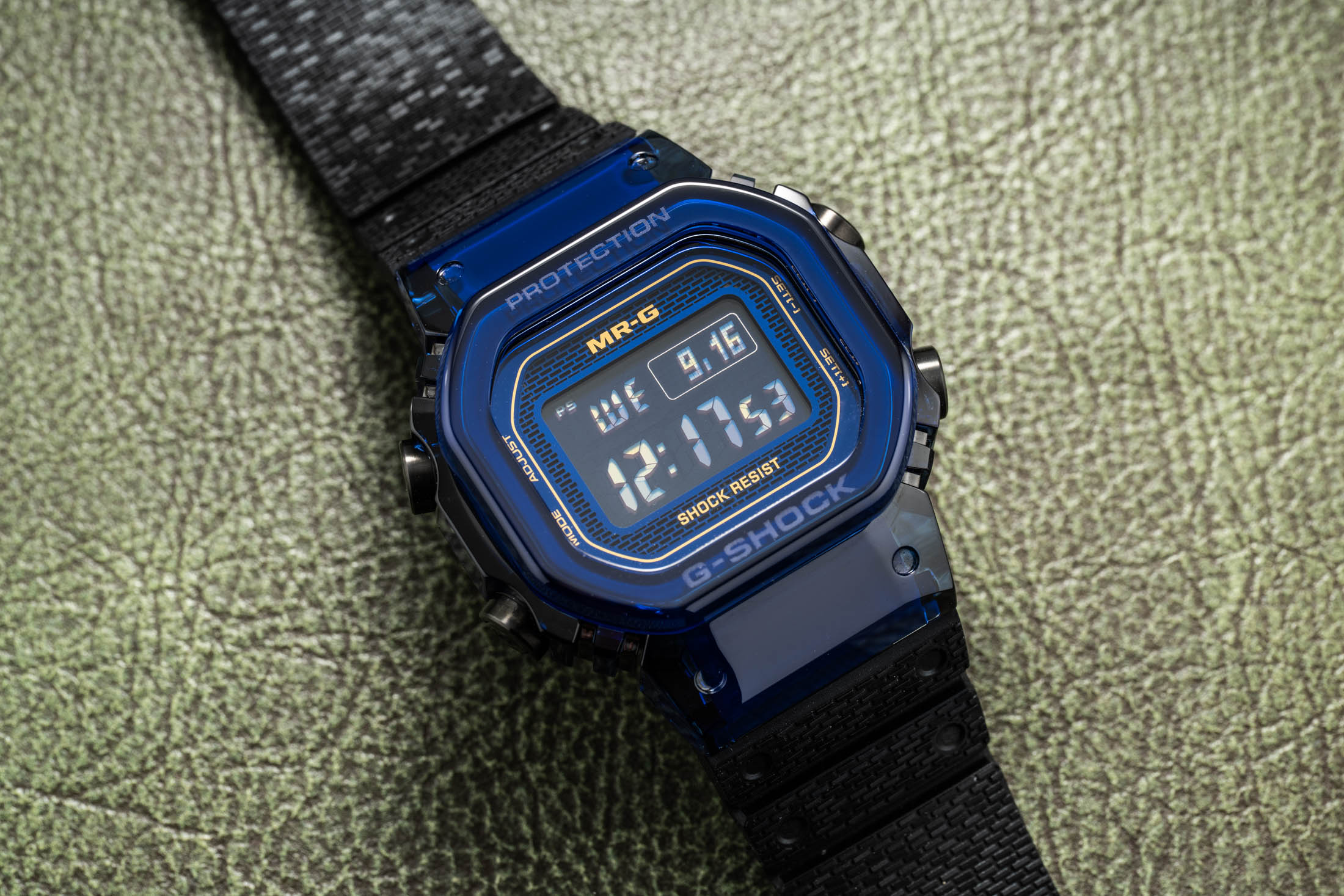
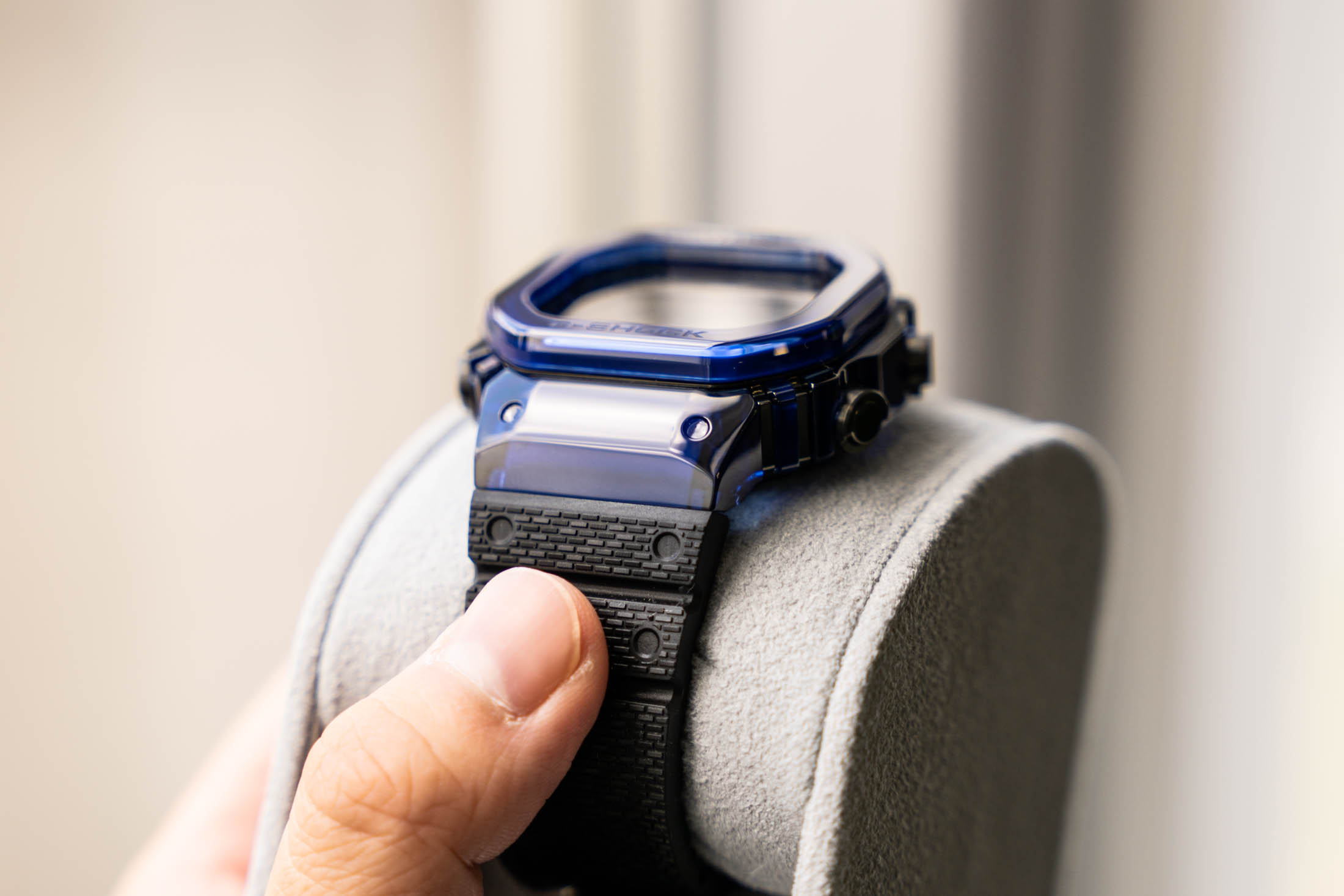
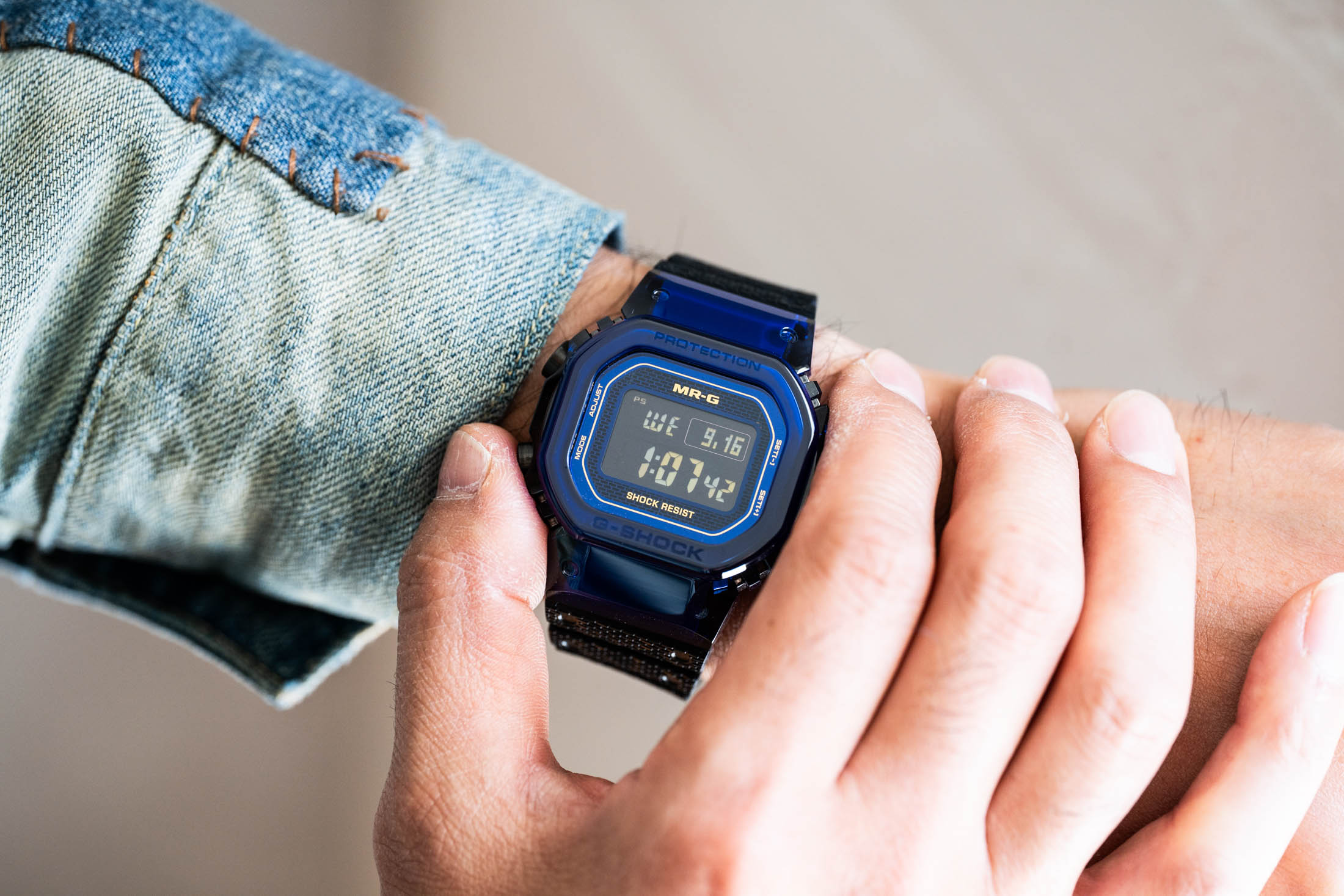
The defining characteristic of the watch, however, is its transparent blue sapphire case. The material exhibits a deep, dark hue that shifts into a vibrant ultramarine when caught in direct light, accentuating the complex geometry of the outer case architecture. While transparent G-SHOCK models have existed in resin for decades, utilizing sapphire crystal reframes the MR-G construction in an entirely unique aesthetic language. Regrettably, the MRG-D5000 does not include the full sapphire crystal bracelet seen on the early conceptual prototypes, opting instead for a comfortable high-end rubber strap.
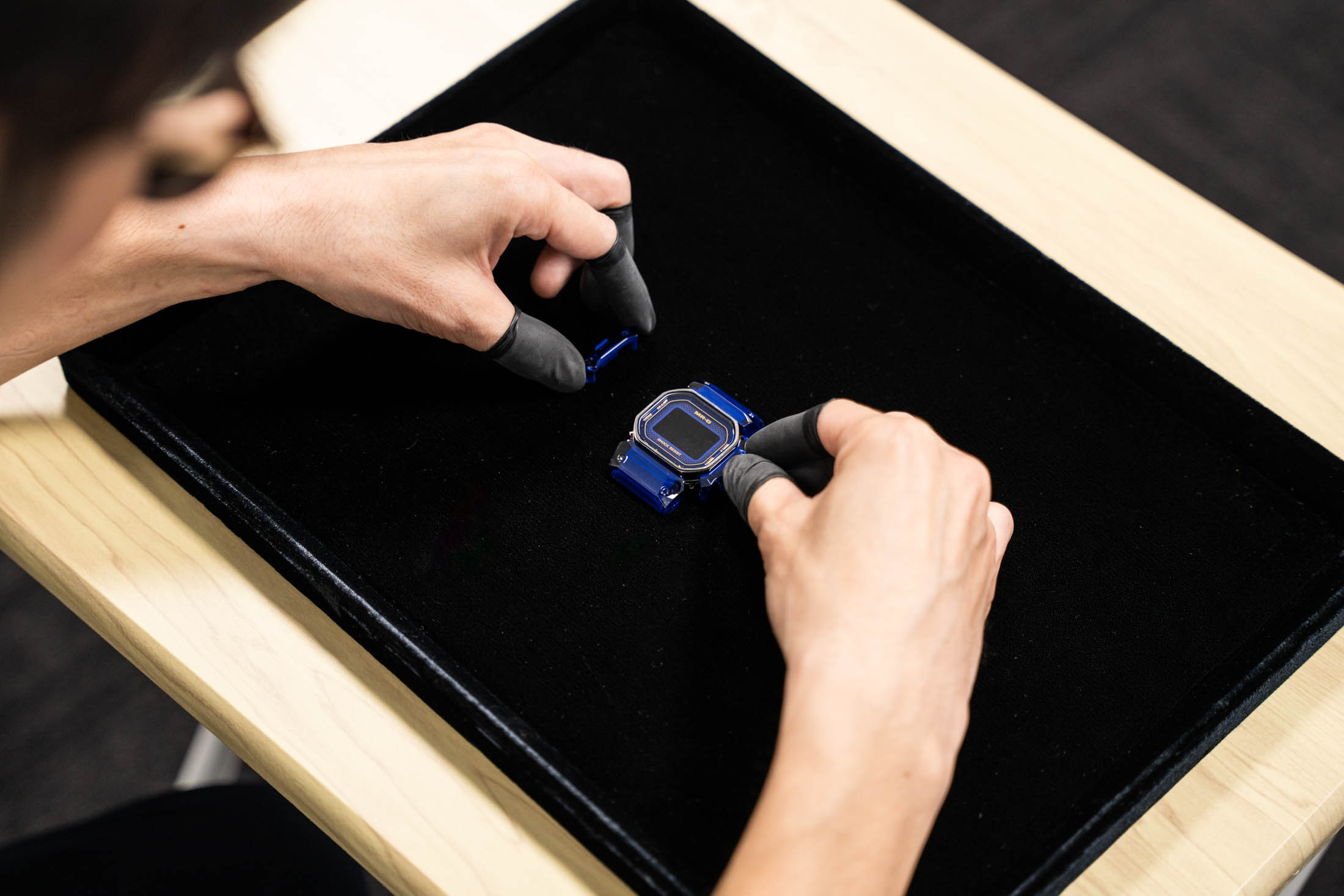
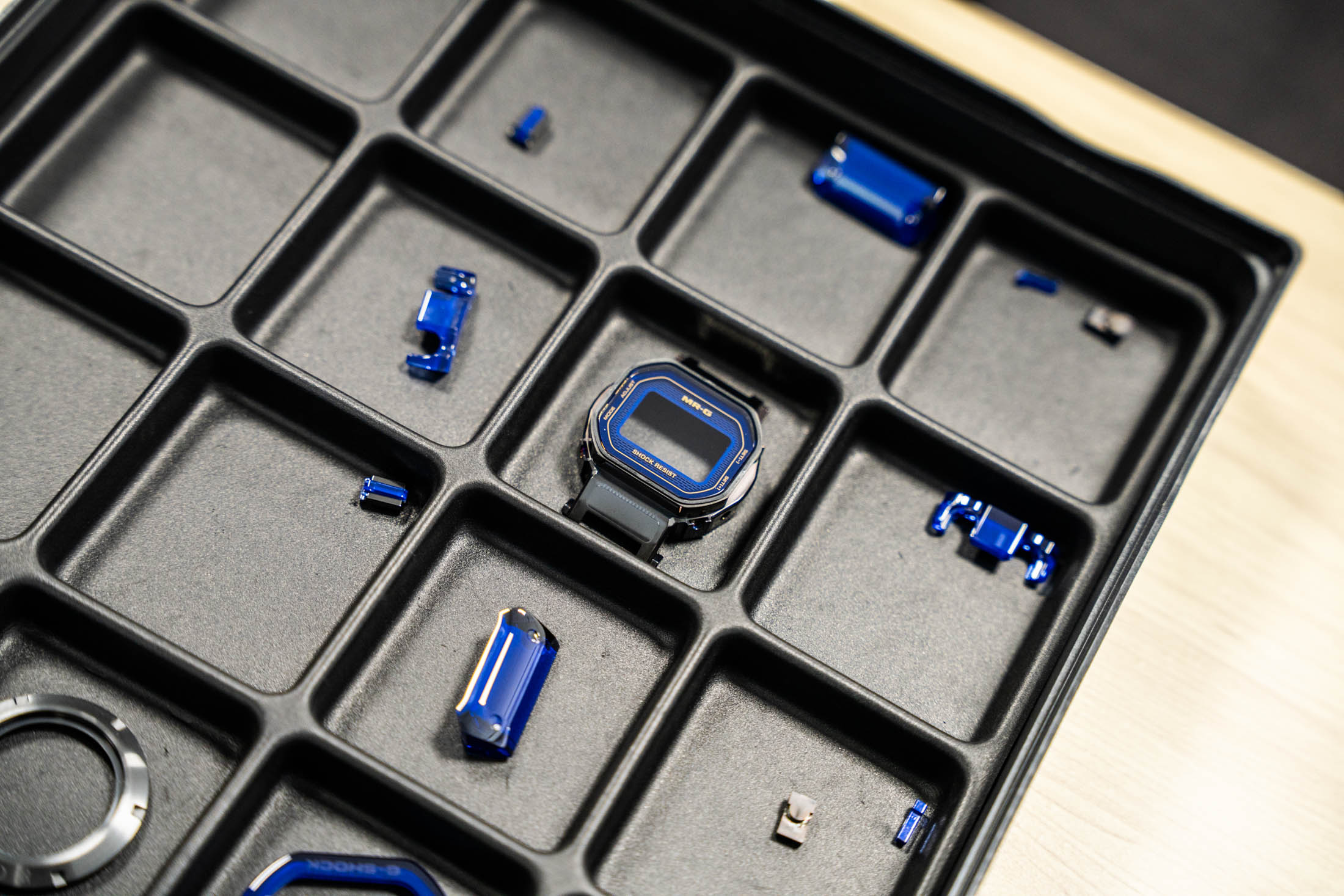
One of the most remarkable technical achievements of the MR-G square series is its intricate outer case architecture. Rather than relying on a single solid block of material, MR-G square models utilize a "Multi-Guard Structure" comprising numerous smaller, individually finished components. This modular approach allows artisans in Yamagata to apply contrasting hand-finishing techniques across various minuscule surfaces while simultaneously improving shock dispersion upon impact.

For the sapphire edition, this multi-component concept was re-engineered to eliminate the need for screws entirely, treating the outer case components like an interlocking puzzle. During the visit to Yamagata, the senior technician responsible for overseeing the production and assembly of all 20 pieces demonstrated how the larger sapphire elements fit seamlessly together. The development team drew inspiration from traditional Japanese wood joinery, a historical building technique where wooden beams interlock securely without the aid of nails, screws, or adhesives.
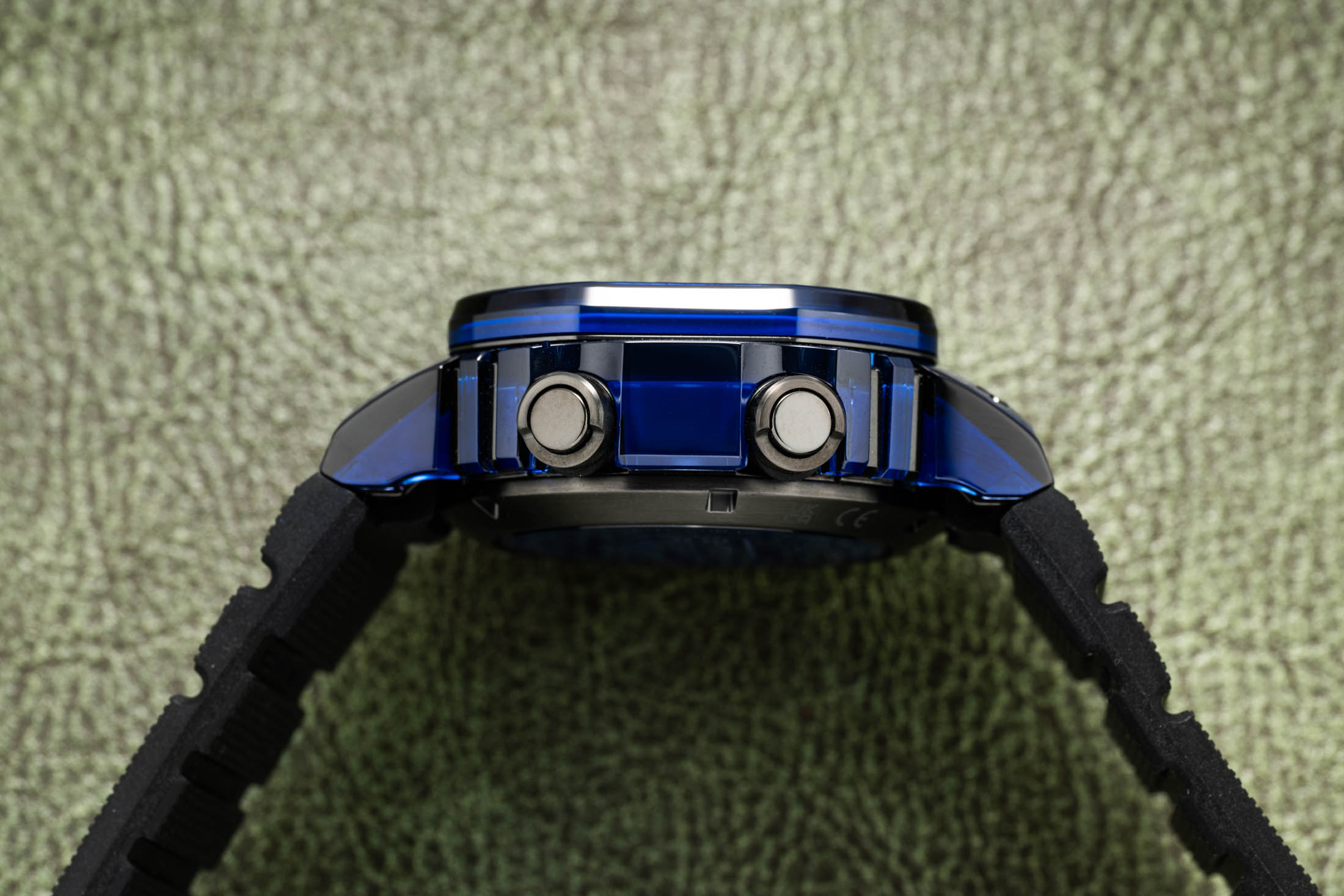
This complex construction does, however, introduce a compromise regarding physical dimensions. The sapphire MRG-D5000 feels substantially heftier than its metal counterparts due to increased case thickness. While the titanium MRGB5000R-1 measures a modest 12.9mm in thickness, the new sapphire edition stands at a robust 16.45mm. The overall width remains consistent, but the lug-to-lug measurement increases slightly from 49.4mm to 51mm. A redesigned pusher tube structure also contributes to a larger visual footprint. While the pushers function smoothly, they lack the flush integration of classic MR-G designs—a reasonable trade-off for engineering the world’s only drop-resistant sapphire-cased watch.
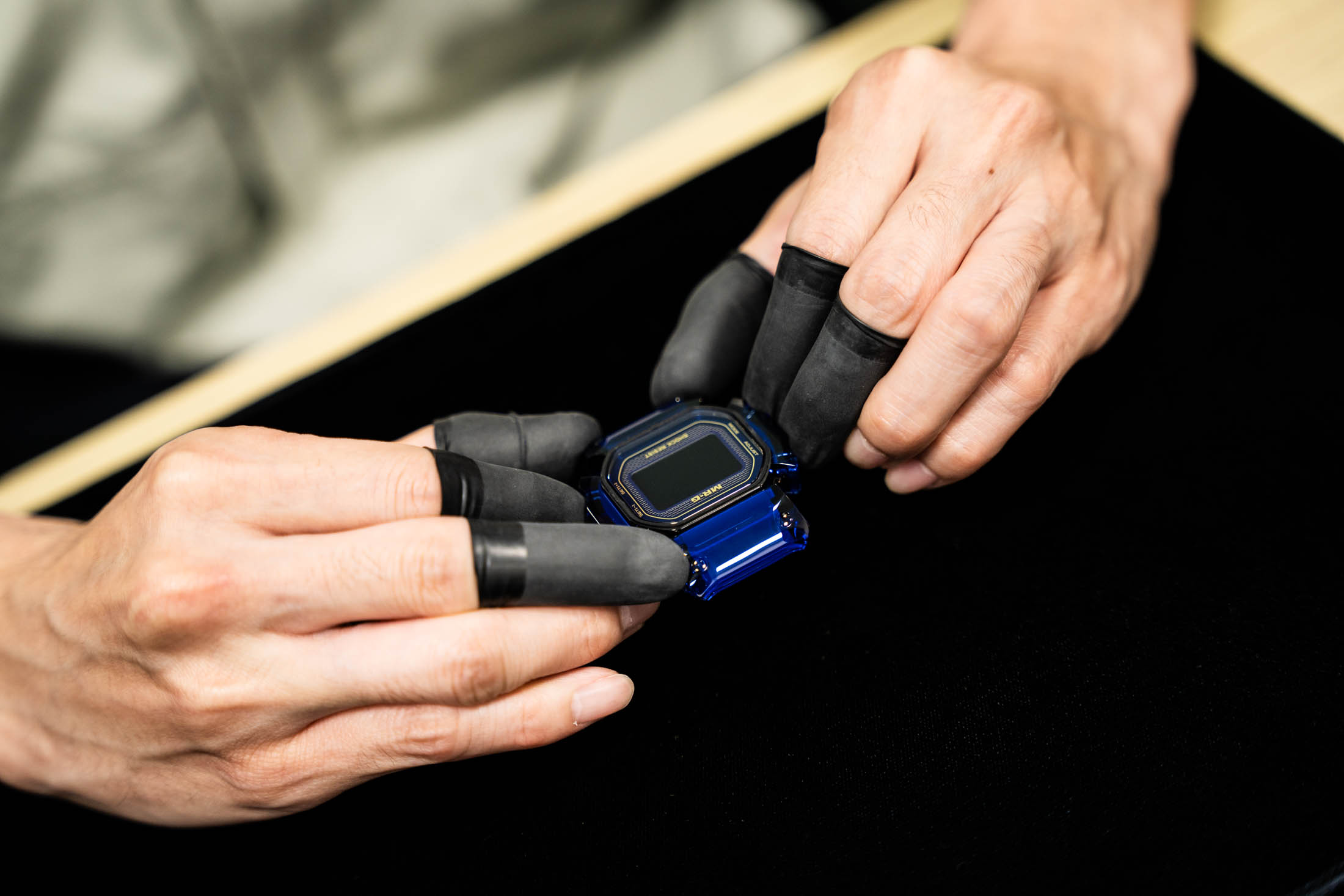
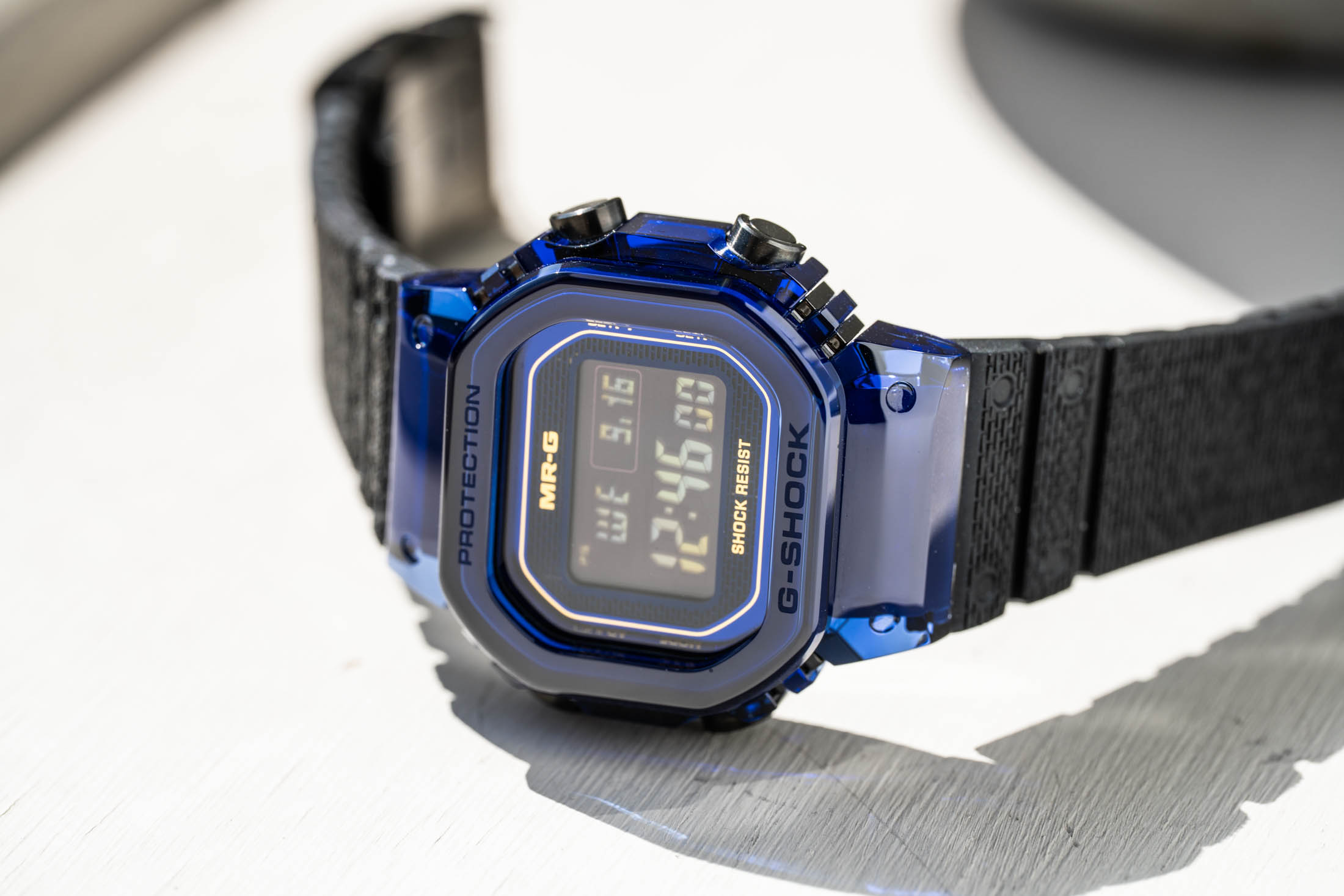
On the dial side, the classic brick pattern from the original 1983 G-SHOCK appears in a matching blue tone, achieved through a specialized PVD coating applied beneath the sapphire crystal. Elevating the luxury quotient further, the surrounding lettering and dial details are executed in 24K gold.
The watch utilizes a negative digital display. While negative displays offer a stealthy, cohesive aesthetic that complements dark case designs, they frequently invite debate among watch enthusiasts regarding optimal legibility. Nevertheless, for a novelty exercise built purely on technical bravado and artistic expression, such design choices underline the watch’s unique character.
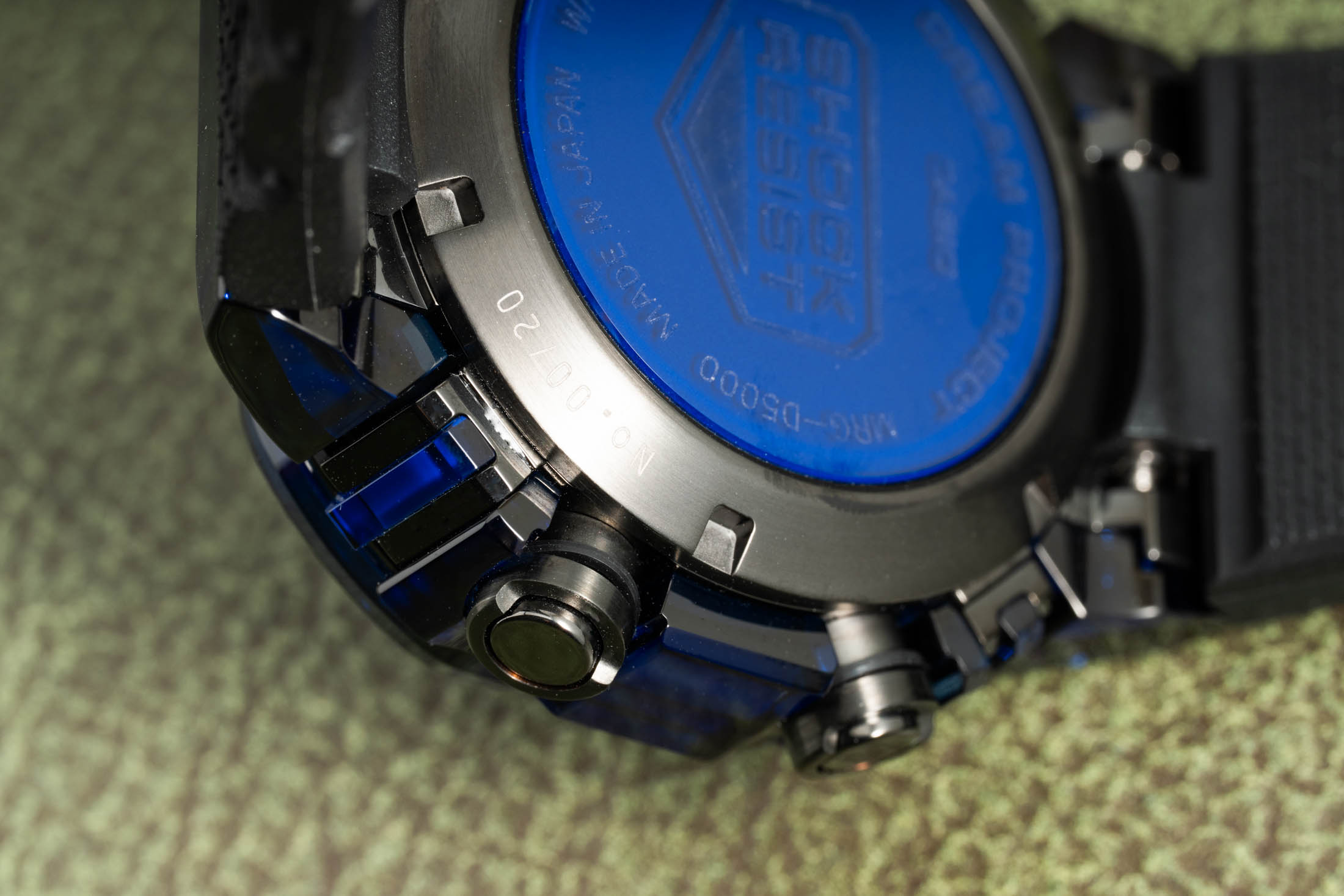
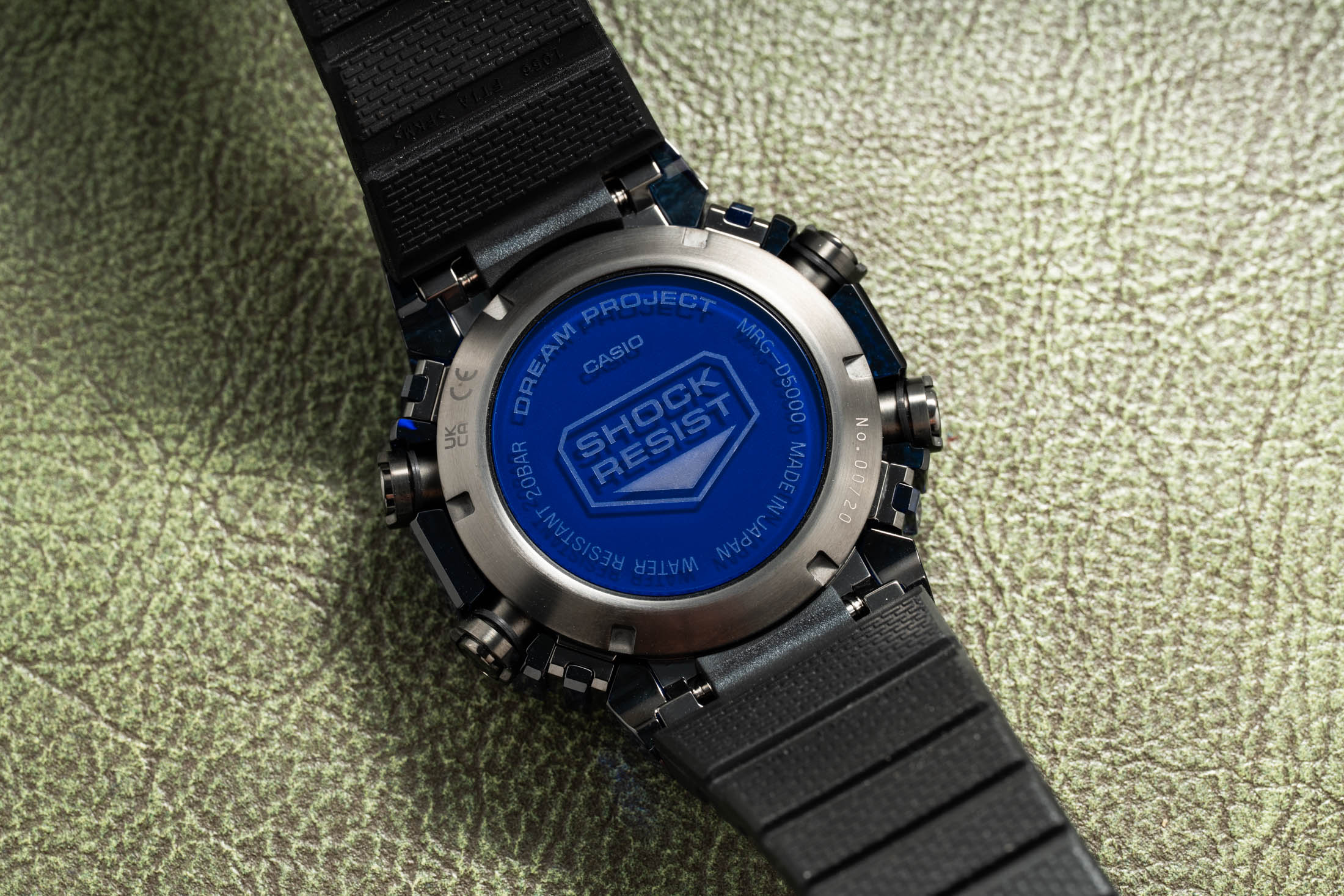
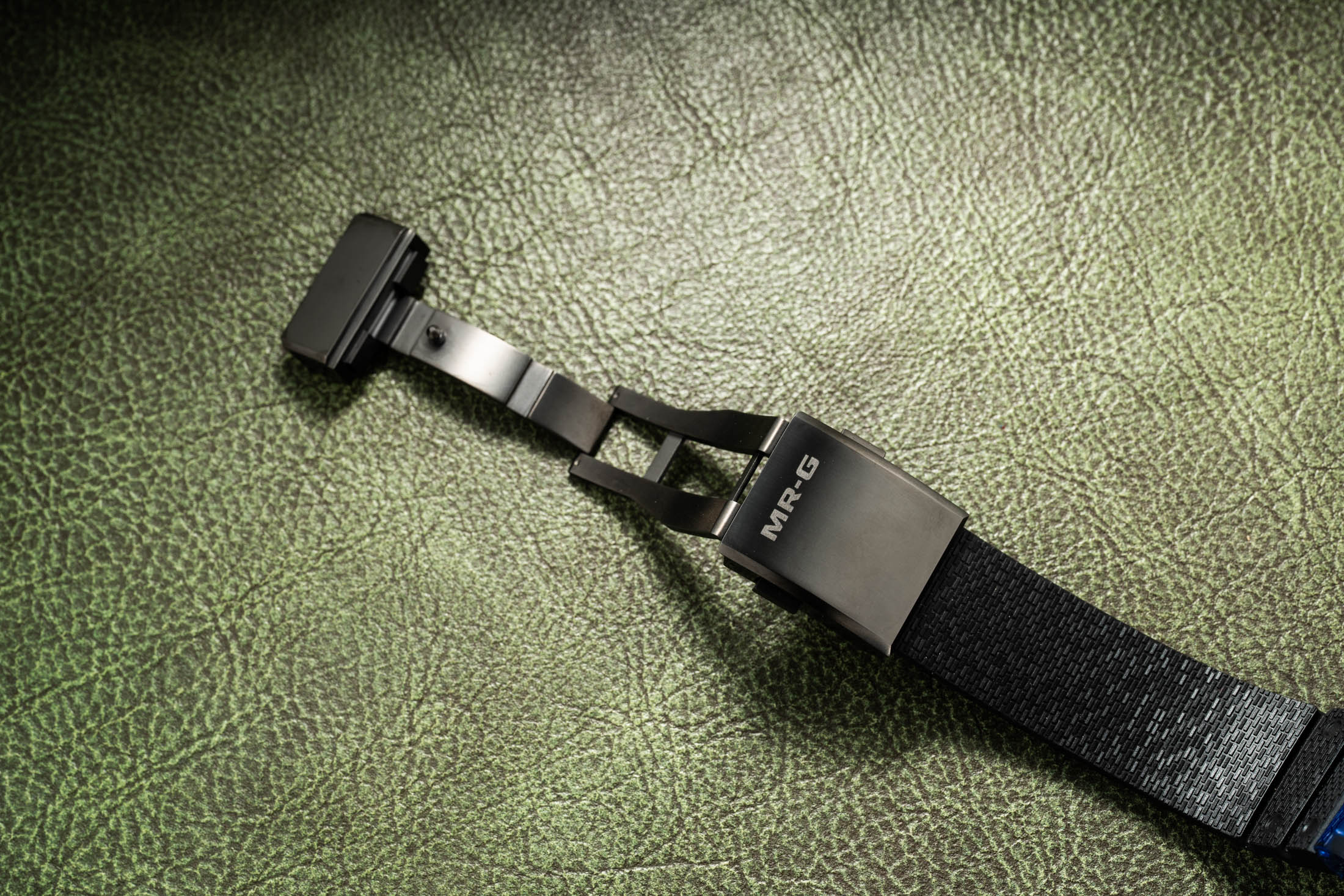
Turning the watch over reveals a DLC-coated Grade 5 titanium caseback featuring a centered blue sapphire insert. The sapphire insert bears standard caseback engravings alongside the "Dream Project" tribute, while the outer titanium rim displays the individual production number out of 20. The watch is secured by a newly designed rubber strap featuring a modern iteration of the classic brick pattern. Following the style of other rubber-strap MR-G models, it utilizes a cut-to-size design reminiscent of high-end Swiss sports watches, eliminating strap overhang while requiring precise sizing upon purchase.
The accompanying deployant clasp offers multiple micro-adjustment positions via a spring bar tool, allowing for a finely tuned wrist fit. While some collectors might hope for a toolless micro-adjustment mechanism in future iterations, the existing setup delivers a luxurious, highly integrated wearing experience that significantly enhances wrist comfort.
Expanding the Blue Rose Project
Beyond the headline-grabbing $80,000 sapphire flagship, Casio is celebrating the Blue Rose Project by introducing two accompanying models at more accessible price points. The first is the MRG-B5000SA-2, a 500-piece limited edition that adapts the standard Grade 5 titanium MR-G platform by embedding two large two-carat blue sapphires directly into the lug shrouds, complemented by subtle blue dial accents. Priced at $6,600, it caters to collectors seeking precious gemstone integration within a titanium architecture.
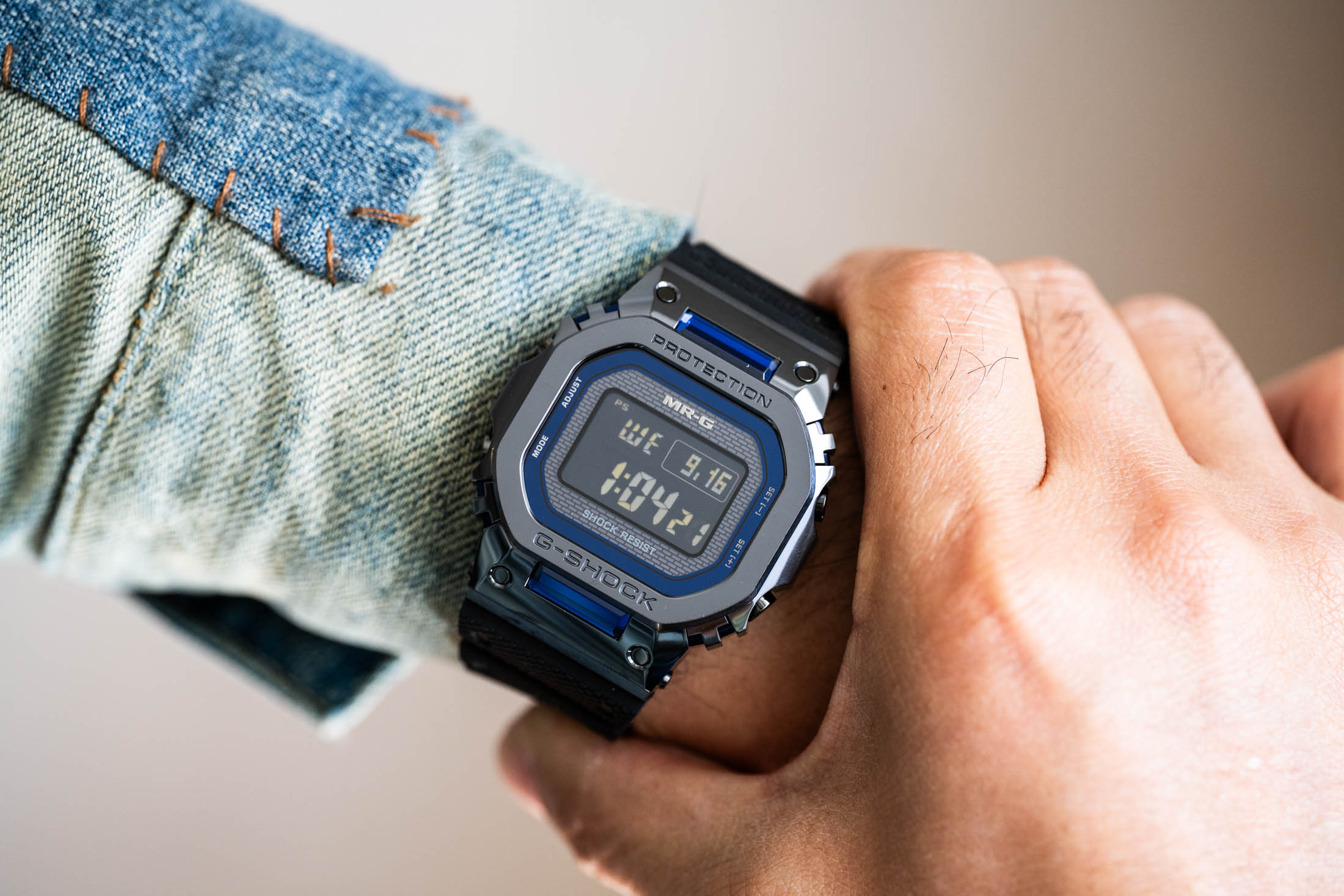
For a broader audience, Casio has introduced the GMW-B5000SB-1A2 at $770. This steel-cased model incorporates blue sapphire stones into the four bezel corner dimples of the lug shrouds. While not strictly limited in production numbers, releases of this nature are typically manufactured in limited-time production runs.
As Casio continues to push the boundaries of materials science and micro-engineering, the ultimate question remains whether the brand’s engineers will eventually succeed in producing a complete sapphire-cased watch paired with an integrated sapphire bracelet. Such a feat would present monumental challenges in both shock resistance manufacturing and retail pricing. Yet, seeing Casio embrace such ambitious, unconventional ideas ensures that the innovative spirit instilled by Kikuo Ibe more than forty years ago remains vibrantly alive.