






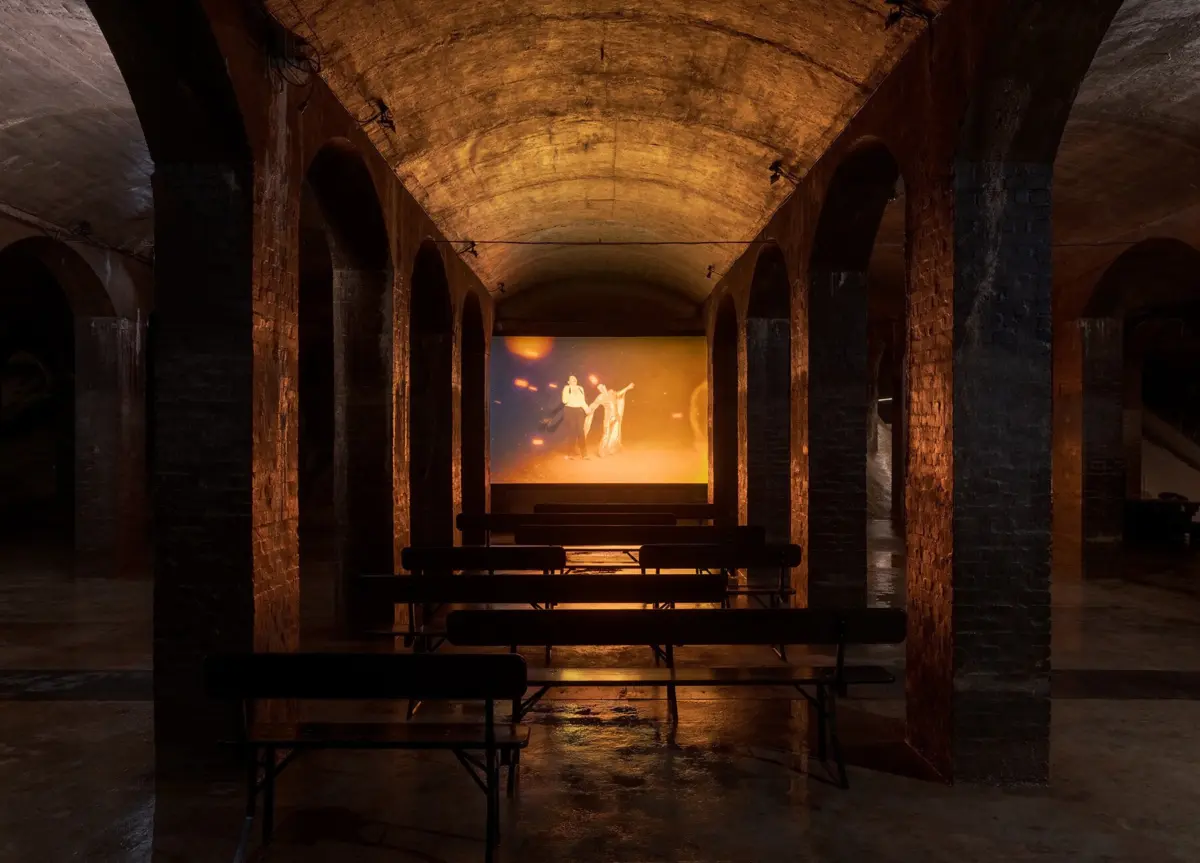
COPENHAGEN — Beneath the manicured green lawns of Copenhagen’s Søndermarken park, opera travels through the dark before the audience can ever locate its source. Water drips continuously from overhead concrete vaults, and stagnant puddles catch what little sliver of daylight manages to reach the floor. A low, resonant rumble of music moves steadily through the former underground reservoir at Cisternerne, spreading far beyond the individual screens where each visual sequence begins.
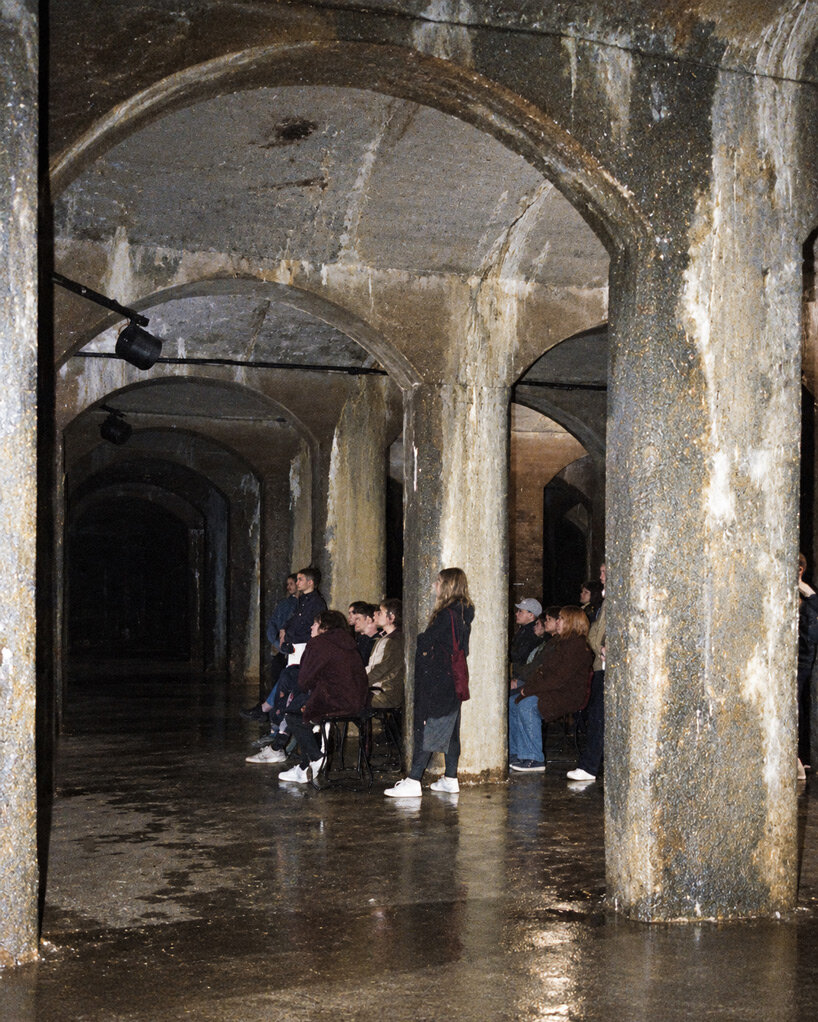
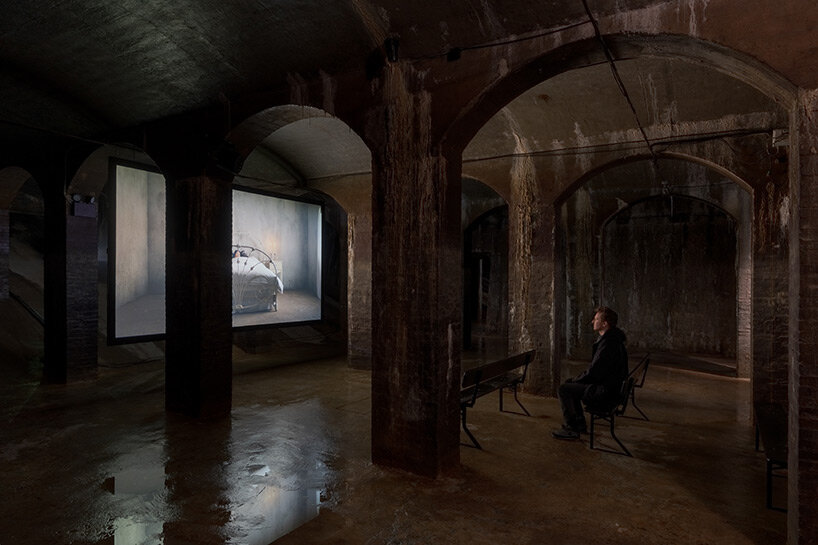
Visitors navigating the damp, cavernous space this spring are immediately swallowed by an environment where the atmosphere is as much a part of the exhibition as the art itself. Only portions of the dim, sprawling subterranean space can be made out, fading away into absolute darkness. Small, theater-like setups emerge gradually from the shadows as visitors move further inside, each configured with a modest row of seats facing a glowing screen.
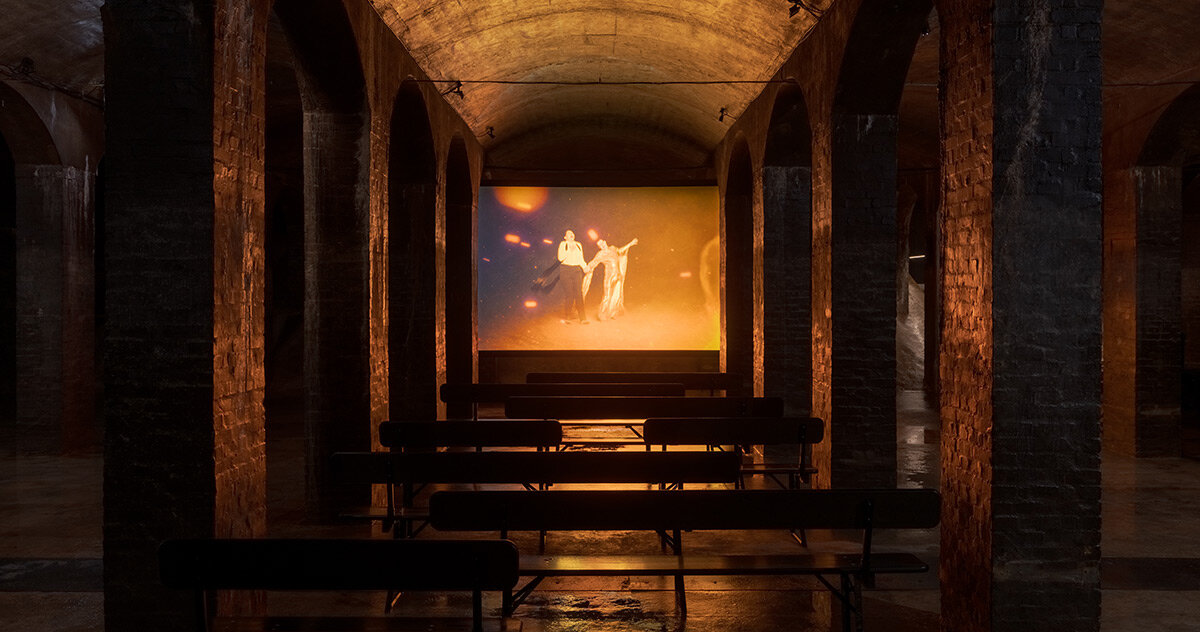
Here, legendary performance artist Marina Abramović presents Seven Deaths, placing her own body inside seven doomed female roles immortalized by operatic icon Maria Callas. The performance artist appears opposite acclaimed actor Willem Dafoe in a series of short, cinematic films, all underscored by haunting historical recordings of the soprano’s voice. The immersive installation takes roughly an hour to experience in its entirety, touching on a theme universally familiar to anyone who has ever sat through a traditional opera: a female character dies, and the audience stays behind to watch. At Cisternerne, however, that audience is compelled to keep moving, confronting and re-experiencing those fatal moments over and over again.
Seven Endings, One Body
Within the subterranean chambers of Copenhagen, Marina Abramović draws directly from operas whose heroines meet profoundly different ends. Violetta succumbs to tuberculosis in Verdi’s La traviata, while Tosca hurls herself to her death from the parapet. Desdemona is strangled by Otello, and Carmen is struck down by Don José. Each character possesses a distinct narrative, history, and musical legacy, yet Seven Deaths collapses all of these disparate fates into a single, recurring physical vessel. Abramović dies onscreen, only to return in the subsequent film to die yet again.
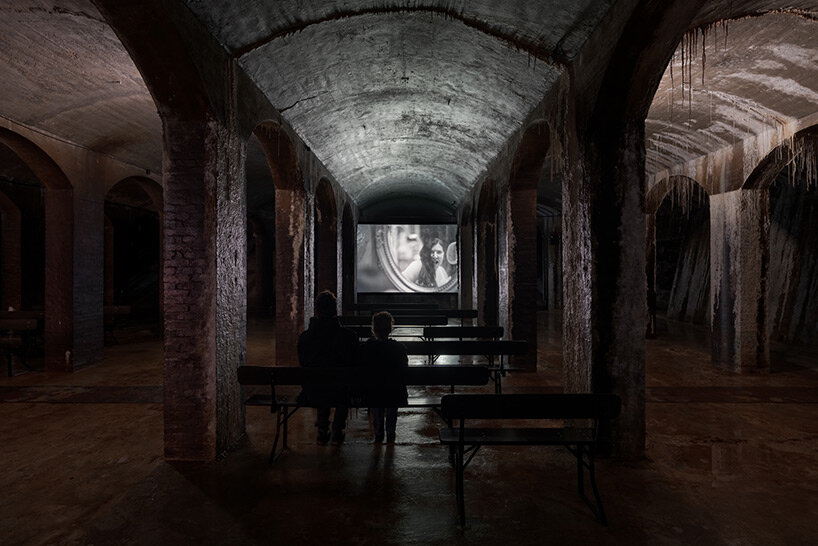
The films draw heavily upon these canonical stories without ever attempting to reproduce their original theatrical staging. Instead, they elevate the deaths to a cinematic scale, with the artist’s body serving as the focal point around which each meticulously constructed scene revolves. The title of the work already reveals the destination of every narrative arc; the intrigue lies entirely in the how and the for how long. The deliberate, unhurried pace of each vignette affords viewers the rare time to look closely, even when the visceral nature of the action makes steady observation deeply uncomfortable.
The Audience Moves Together
Unlike a traditional theater where multiple acts unfold before a stationary audience, Seven Deaths operates on a singular rhythm. Only one film plays at a time across the scattered viewing areas inside the subterranean facility, giving the entire installation a shared pulse. Visitors naturally drift toward a small group already gathered before a screen, taking whatever seats remain. When the short film concludes, the room falls quiet, and the assembly rises in unison.
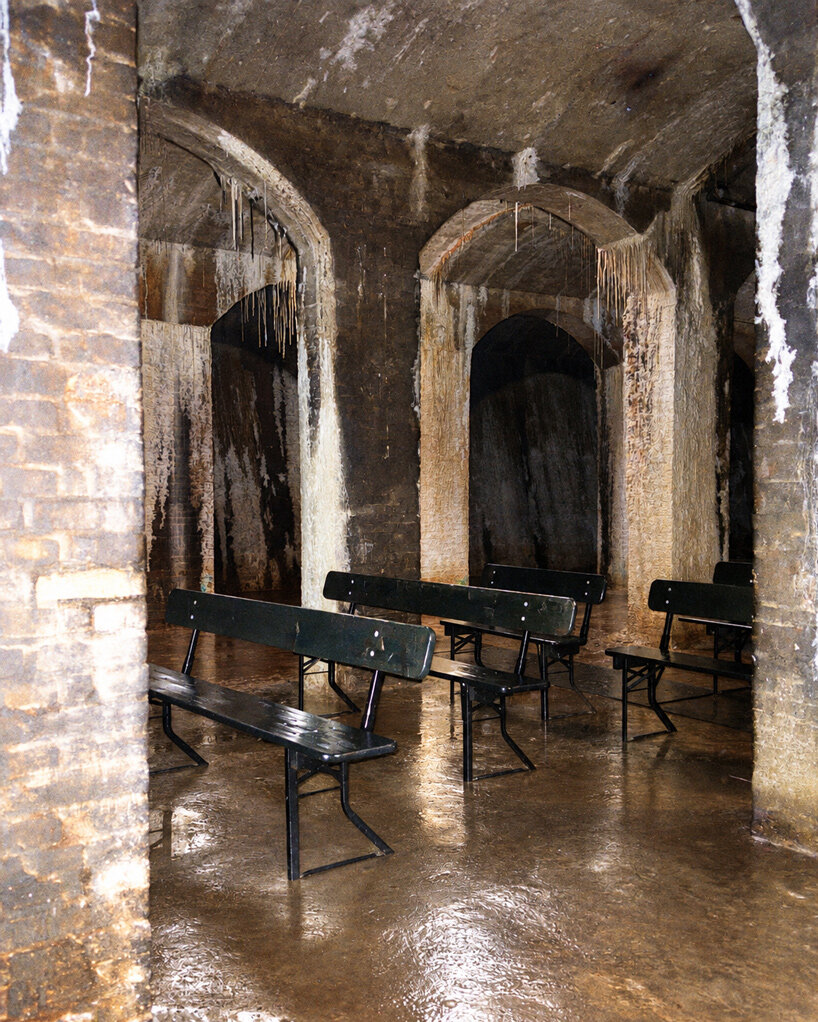
Low, echoing murmurs and the steady shuffle of feet replace the operatic singing as the group moves quietly through the pitch-black corridors toward the next illuminated screen. For a few fleeting moments, the act of viewing transforms into a practical exercise in navigation.
This repeated migration forms a substantial portion of the artistic experience at Cisternerne. In a conventional opera house, patrons occupy the same seat for hours while the physical scenery shifts around stationary performers. Here, the audience changes its physical position between each successive death. The oppressive darkness prevents visitors from grasping an overall view of the installation layout, meaning each makeshift theater must be discovered organically along the way. Meanwhile, sound bleeds beyond the boundaries of individual viewing areas, while the damp air, the chill of the concrete, and the sound of dripping water remain stubbornly present through every scene, ensuring the harsh reality of the room constantly intrudes upon the cinematic illusion.
A Dying Heroine Still Has a Voice
Opera has long devoted some of its most breathtaking and memorable music to women on the precipice of death. While the plot inexorably drives a character toward her demise, the soaring architecture of the singing grants that woman an extraordinary, commanding presence in the theater. Tosca’s famous aria, “Vissi d’arte,” sung just moments before her final tragic act, looks backward over a life wholly devoted to art and love. Listening to it demands that the audience remain present with her, lingering in the emotion even though her ultimate fate is already sealed. The prolonged duration of the aria allows spectators to fully inhabit that emotional space.
Seven Deaths radically separates the singing voice from the physical body visible on screen. Abramović performs the physical acts of dying, while Callas supplies the vocal architecture through archival recordings made during the height of her career. That profound separation becomes especially palpable deep underground, where the recorded sound seems to occupy vastly more physical volume than the screens themselves. Maria Callas passed away in 1977, yet her voice continues to reach across decades to new generations of listeners. As Abramović repeatedly returns for another filmed death, the soprano’s singing provides a continuous, unbroken thread that the stark cinematic images repeatedly interrupt.
‘You Give Me Your Time’
Reflecting on the nature of her work, Marina Abramović has frequently described a direct, unmediated exchange between herself and her audience, noting, “You give me your time, and I die for you seven times.” At Cisternerne, that investment of time explicitly encompasses the solemn, silent gaps between the films. Visitors wait for a scene to conclude, stand alongside strangers in the dark, and follow them collectively toward another set of benches. Through this repetitive movement, the group gradually establishes a quiet familiarity, bound together by the shared sequence of the journey.
“You die many times in life,” Abramović has observed, “and yet you continue living.” This philosophical perspective expands the scope of the artwork far beyond the literal, dramatic deaths of its fictional characters. An ending can feel absolute, heavy, and final, yet life insists on continuing beyond it. The installation gives that abstract thought a tangible, physical rhythm: after each depicted death, there remains another dark stretch of the former reservoir to cross. Visitors must stand up once more, listen to the water dripping overhead, and walk forward to find the next screen.
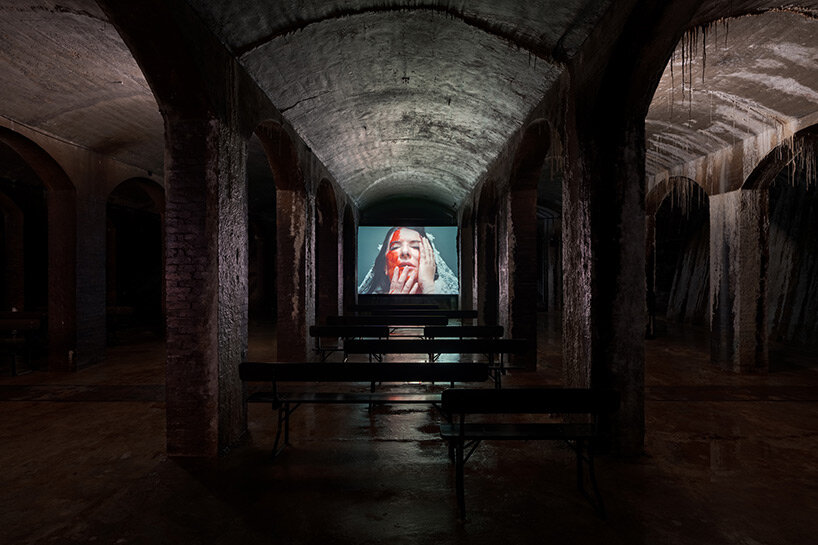
Seven Deaths runs at Cisternerne in Frederiksberg, Copenhagen, Denmark, from March 14th through November 30th, 2026. The project brings together Marina Abramović, actor Willem Dafoe, and the historic recorded vocals of Maria Callas in a unique exploration of performance art, mortality, and architectural space.