





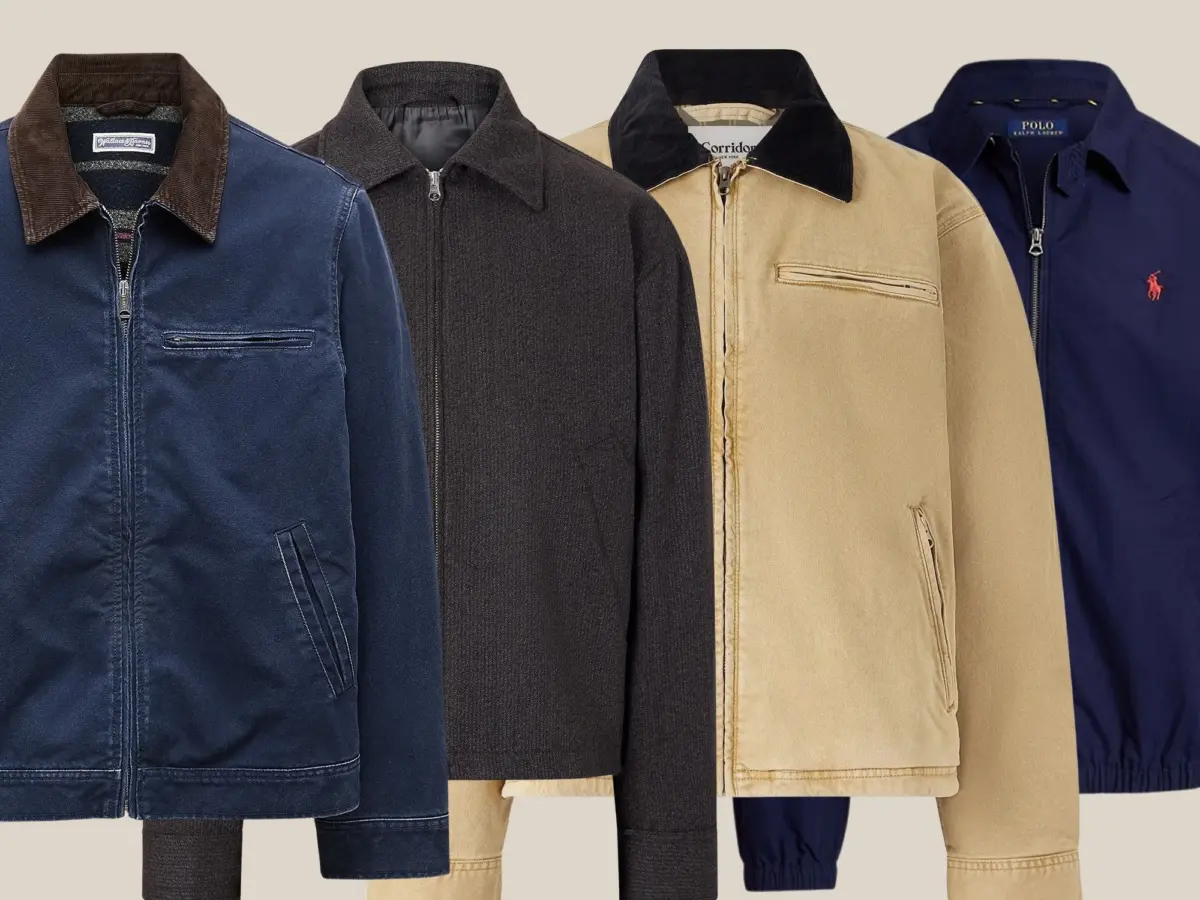
For generations, the work jacket belonged strictly to functional environments: auto garages, factory assembly lines, timber yards, and loading docks. Today, that narrative has shifted completely. Heritage workwear has migrated from job sites to city streets, establishing itself as the most reliable shortcut to rugged, effortless style.
This transformation has been accelerated by high-profile style figures like Paul Mescal and Austin Butler—the latter of whom revealed he wore his trusty Carhartt jacket daily for a full year. The modern work jacket offers an ideal combination of practical utility and aesthetic appeal. Structurally, the cut inherently flatters the male frame: its structured shoulders, boxy drape, and waist-length hem neaten the torso whether paired with slim denim or modern wide-leg trousers.
Beyond its visual appeal, utility outerwear remains surprisingly accessible. While luxury houses routinely offer pre-distressed canvas outerwear at steep markups, foundational brands like Dickies and Carhartt continue to supply robust cotton-canvas originals at modest price points. Meanwhile, independent designers and specialized heritage labels provide upgraded interpretations featuring refined wools, premium linings, and tailored fits.
The Core Recommendations
Best Work Jacket Overall: Carhartt Blanket-Lined Detroit Jacket
- Retail Price: $120 – $130
- Pros: Iconic design heritage, insulating blanket lining, heavy-duty 12-ounce cotton canvas, warm corduroy collar
- Cons: Prominent brand logo patch may not suit minimalists
The Carhartt Detroit Jacket stands as an undeniable benchmark in American casual wear. Produced for over seven decades, its historical staying power places it alongside blue jeans and leather boots among the nation’s definitive garment designs. High-end luxury labels frequently draw inspiration from its exact specifications, offering washed and aged variants at high prices, yet the original design remains unchanged.
Constructed from stiff, heavy-duty 12-ounce cotton canvas, the Detroit features a waist-length cut and three strategically positioned exterior pockets. Its silhouette traces back to WWII military dress, when General Dwight D. Eisenhower popularized shorter, boxy outerwear for armed forces—a pattern that permanently altered mid-century civilian design. Outfitted with a warm corduroy collar and an insulating blanket lining, the Detroit functions as a true multi-season piece. For buyers seeking a sleeker, unlined silhouette tailored specifically for contemporary streetwear, Carhartt also offers an unlined WIP variant.
Best Budget Work Jacket: Dickies Insulated Eisenhower Jacket
- Retail Price: $70
- Pros: Water-repellent finish, subtle branding at hem, wide point collar
- Cons: Fabric constructed from a cotton-polyester blend
Sharing structural lineage with the cropped military silhouettes of the 1940s, the Dickies Insulated Eisenhower Jacket provides exceptional utility at an entry-level price. Positioned as a direct counterpart to the brand’s widely worn 874 work trousers, the jacket delivers reliable warmth, rugged construction, and a clean fit without demanding a large investment.
Unlike options featuring centered chest branding, Dickies places its classic woven patch near the bottom hem, giving the Eisenhower a cleaner, more subtle appearance. The durable poly-cotton shell is treated with a water-repellent finish, offering defense against light precipitation while preserving light mobility. Decades after its introduction, it remains a pillar of functional apparel.
Best Upgrade Work Jacket: Wallace & Barnes Lined Canvas Work Jacket
- Retail Price: $268
- Pros: Heavyweight cotton canvas shell, rich wool-blend blanket lining, tailored proportions, classic corduroy collar
- Cons: Premium price point relative to standard workwear
Wallace & Barnes, the heritage-focused sub-label from J.Crew, has established a reputation for rebuilding mid-century utility apparel using elevated materials. This canvas work jacket distills vintage workwear details into a refined modern garment, balancing rugged character with thoughtful tailoring.
The design incorporates key archival features: a contrasting corduroy collar, a zippered chest pocket, and a subtly cropped hemline. Underneath the durable cotton canvas shell lies a thick wool-blend blanket lining, providing substantial insulation against winter cold. Given its premium construction and timeless visual appeal, the jacket delivers lasting value across years of regular wear.
Best Work Jacket for Cold Weather: Filson Mackinaw Wool Cruiser Jacket
- Retail Price: $599
- Pros: Dense 24-ounce Mackinaw wool blocks wind, naturally water-resistant, exceptional long-term durability
- Cons: Higher initial financial investment
Designed for extreme conditions, the Filson Mackinaw Wool Cruiser represents an industrial-grade approach to cold-weather insulation. Filson has developed outdoor apparel since the late 19th century, and this jacket relies directly on the architectural specs of its original 1914 Cruiser model.
The garment is crafted from heavy 24-ounce Mackinaw wool, a densely woven twill engineered to resist wind, repel moisture, and maintain thermal insulation even when damp. Equipped with spacious, hand-warmer pockets designed to accommodate gloved hands, the Mackinaw Cruiser is built for long-term wear, aging gracefully over decades of active use.
Best Fancy Work Jacket: Buck Mason Italian Doeskin Station Jacket
- Retail Price: $298
- Pros: Soft Italian doeskin cotton construction, versatile colorways, horn button hardware
- Cons: Requires higher care than heavy canvas
Drawing inspiration from mid-century station jackets, Buck Mason reimagines classic utilitarian shapes through premium material choices. This variation swaps rigid industrial duck canvas for a plush Italian doeskin cotton fabric that offers immediate comfort without requiring a long break-in period.
The garment incorporates shoulder pleats to enhance mobility across the back, genuine horn buttons on the chest flap pockets, and a clean point collar. The result is a versatile outerwear piece that bridges the gap between rugged workwear and refined casual tailoring.
Best Lightweight Work Jacket: Polo Ralph Lauren The Bayport Poplin Jacket
- Retail Price: $185
- Pros: Breathable 100% cotton construction, timeless heritage appeal, ideal mid-weight layering
- Cons: Minimal cold-weather insulation
Polo Ralph Lauren’s zip-front cotton jackets have long held legendary status among heritage menswear enthusiasts. While modern iterations often shift toward synthetic poly-nylon fabrics, the Bayport Poplin Jacket returns to a classic 100% cotton construction.
Unassuming and functional, the Bayport makes no pretense of job-site heavy duty; instead, it offers a well-tailored light layer suited for everyday transition weather. The soft poplin weave provides wind resistance while remaining lightweight, serving as an adaptable outer layer for casual wear.
Specialty Styles and Alternative Takes
Beyond the core classics, several independent labels and heritage brands offer unique variations on traditional utility outerwear:
- Mfpen Wool Blend Mail Jacket ($690): Hailing from Copenhagen, Mfpen utilizes a dense wool-blend yarn featuring a multi-tonal weave. The heavy texturing and boxy silhouette offer a modern Scandinavian perspective on service apparel.
- Tom Beckbe Stanley Jacket ($495): Designed for wet weather, this waterproof waxed-cotton jacket provides a streamlined profile, bridging rustic fieldwear with contemporary urban outerwear.
- FrizmWORKS Leather-Trimmed Canvas Jacket ($385): Produced by South Korean label FrizmWORKS, this canvas jacket features a soft, leather-trimmed collar that delivers a subtle luxury contrast against rugged cotton duck cloth.
- Stan Ray Roughneck Collared Bomber ($221): Originating from Texas, Stan Ray stands alongside Carhartt and Dickies as a cornerstone of traditional American workwear. The Roughneck Jacket features ribbed cuffs, a collared neck, and a washed finish for an authentic, broken-in aesthetic.
- Corridor Utility Twill Jacket ($365): Designed in New York, Corridor offers a vibrant take on utility outerwear, executing a heavyweight cotton-blend twill jacket in bold seasonal hues.
- RRL Corduroy-Collar Cotton Deck Jacket ($690): Drawn from Ralph Lauren’s specialized vintage-inspired division, this heavy nautical deck jacket features period-correct hardware and a plush corduroy collar.
- Abercrombie & Fitch Canvas Fireman Clasp Jacket ($160): Offering a precise cropped cut, this option features distinctive metal fireman clasp closures and a hemline tailored to rest exactly at the beltline.
- BRUT The Cropped Work Jacket ($290): Produced by Paris-based vintage purveyors BRUT, this garment recreates archival French workwear proportions using custom-developed indigo-dyed fabrics.
Key Characteristics of Exceptional Work Outerwear
The enduring popularity of work jackets among modern buyers stems largely from their functional design heritage. Originally engineered for unrestricted physical labor, standard work jackets feature broad shoulders, generous chest proportions, and durable fabrications built to withstand everyday wear and tear.
When evaluating a work jacket, consider three key structural factors:
- Fabric Weight and Composition: Traditional 100% cotton duck canvas offers long-term durability and develops character through wear. Wool twills provide natural weather protection, while blended cotton fabrics offer improved flexibility and lighter weight.
- Lining Material: Unlined jackets serve as versatile three-season layering pieces, whereas wool-blend or quilted blanket linings transform waist-length outerwear into capable cold-weather gear.
- Hardware and Detailing: High-wear stress points benefit from reinforced triple-needle stitching, heavy-gauge metal zippers, and secure pocket closures.
Evaluation and Selection Standards
Assessing quality within heritage menswear requires balancing historical authenticity, structural durability, and value across varied price points. Product evaluations lean on extensive hands-on experience, material sourcing analysis, and long-term wear observations.
Key criteria include evaluating fabric density, the durability of hardware, seam integrity, and how closely a brand adheres to sustainable manufacturing practices rather than superficial marketing. By balancing time-tested classics with innovative modern takes, this selection highlights outerwear capable of pulling double duty in any contemporary wardrobe.