






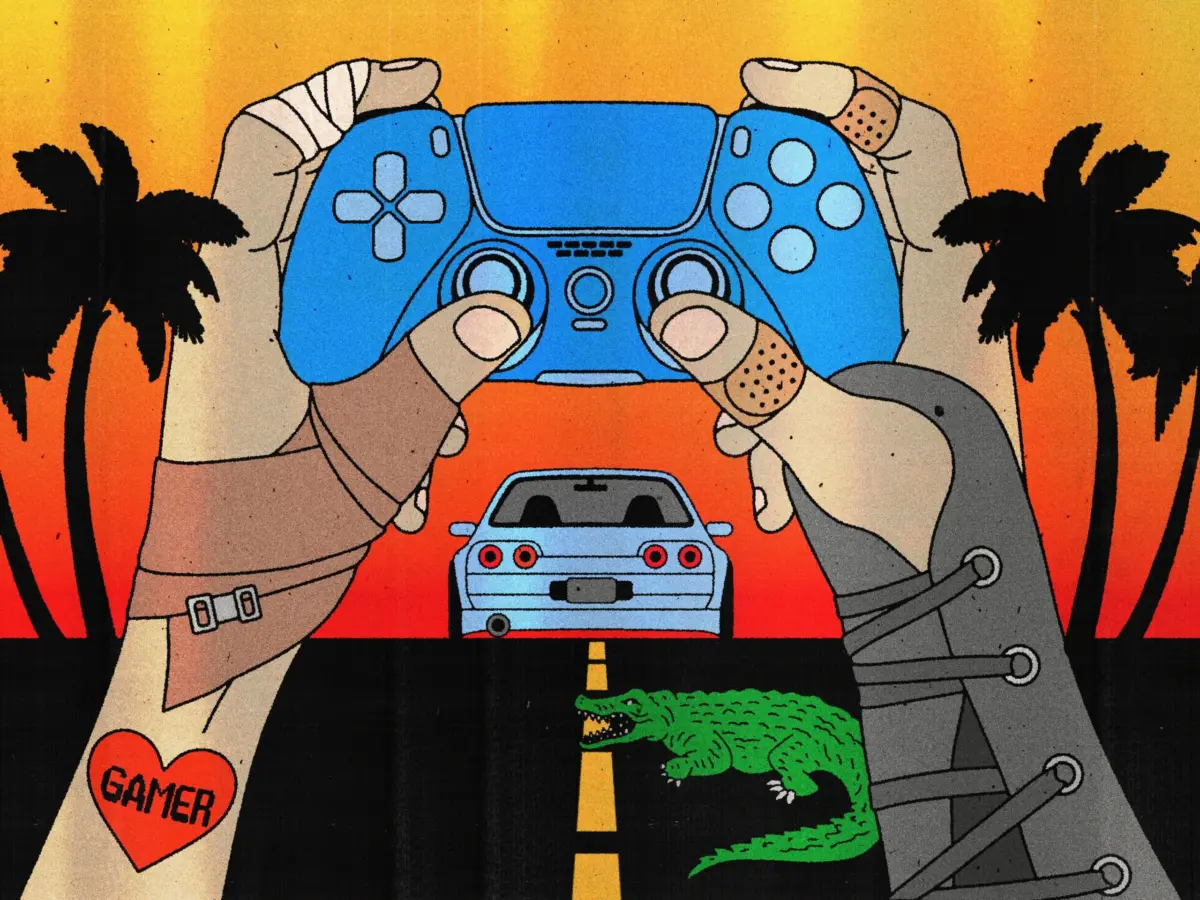
The decade-long wait is finally over. Grand Theft Auto VI has officially arrived, bringing millions of players back to the neon-soaked streets of Vice City and the broader state of Leonida. Across the globe, fans are clearing their schedules, taking time off work, and preparing for weekend-long gameplay marathons. As the most anticipated release in interactive entertainment history, the game boasts more than 17 million preorders, meaning a massive audience will be spending dozens of hours attempting to outrun law enforcement, pulling off high-stakes heists, and navigating the vast open world while managing their in-game wanted levels.
However, locking in for an extended gaming session carries physical costs that can extend well beyond the screen. Hours spent gripping controllers, hunching over screens, and executing high-volume button presses can quickly lead to fatigue, joint stiffness, and repetitive strain injuries. To help players survive their journey through Vice City without damaging their bodies, physical therapy experts and veteran gaming professionals have shared key strategies for maintaining physical well-being during extended play sessions.
1. Schedule Strategic Breaks to Preserve Your Physical Capacity
Prolonged gaming sessions place the soft tissues of the hands, wrists, and arms under continuous stress. As intensity ramps up during complex gameplay sequences, players frequently experience muscle soreness, physical fatigue, and localized inflammation.
Dr. Matthew Hwu, a physical therapist and owner of 1 Health Point in Monrovia, California, has spent over 11 years treating esports athletes and casual gamers for competitive injuries. He conceptualizes hand and arm endurance through a framework familiar to any gamer: the health bar.
"The metaphor we like to share with pro players or casual gamers is the concept of the health bar," Dr. Hwu explained. "The muscles and tendons of your wrist, hand, thumb, as you move the analog stick, only have so much capacity or ‘max HP’ that they can handle throughout the day."
Because Grand Theft Auto VI is played primarily on console hardware like the PlayStation 5 and Xbox Series X/S, controller design plays a significant role in physical strain. Players constantly use their thumbs to manipulate analog sticks for movement and camera control while rapidly toggling action buttons. According to findings from the Cleveland Clinic, the most frequent physical issues arising from this style of play are "gamer’s thumb" (tendonitis in the thumb) and tennis elbow (lateral epicondylitis).
To mitigate these risks, scheduling structured breaks is essential. Dr. Hwu recommends taking at least a five-minute break for every 90 minutes of continuous play. Younger players may possess greater physiological resilience, but pushing through longer sessions requires larger windows for recovery.
"Two hours, 10-minute break; three hours, 15-minute break," Dr. Hwu advised. "If you want to be degenerate, you can be a smart degen."
Players can also schedule downtime strategically after sequences that demand high actions per minute (APM), such as intensive gunfights or high-speed vehicle pursuits. Resting immediately after high-intensity moments allows tissues to begin recovering before stiffness sets in. Setting timer alerts on a phone or smartwatch ensures breaks actually happen rather than being forgotten during immersive gameplay.
During these intermissions, stepping away from the screen to hydrate, eat, and move around is vital. Taking a brief walk outdoors or walking around an apartment helps improve circulation and resets the nervous system, preventing the drained, ghost-like feeling that often accompanies marathon sessions locked in a dark room.
2. Stretch Before Play and During In-Game Pauses
Just as traditional athletes warm up before competition, gamers benefit significantly from preparing their muscles and tendons prior to a long session. Incorporating simple mobility stretches before turning on the console—and utilizing cutscenes for quick adjustments—can reduce tightness across key muscle groups.
Specific attention should be focused on the thumbs and forearms, which perform the majority of fine motor tasks during gameplay. Dr. Hwu suggests gently pulling the thumb away from the index finger and stretching it downward to loosen the underlying musculature.
Additionally, index fingers require targeted attention due to constant trigger pulls required for acceleration, braking, and combat. "Every time you press your trigger," Dr. Hwu noted, "you’re using the extensors, the top side of your fingers, but also the flexors to push down." Forearm tension can be relieved by extending the arm forward with the elbow straight and gently pressing the palm downward with the opposite hand.
Upper body posture is another critical area of concern. High-stress gameplay moments often cause players to unconsciously elevate their shoulders and lean forward, placing severe strain on the upper trapezius and neck muscles.
Calliope Ryder, platform director at GYLD and former producer on Tales of the Shire, incorporates active movement breaks into her gaming routine to combat upper body stiffness.
"I will do small things: roll my neck from side to side, stretch my traps by sitting on one hand and pulling my head [in the] opposite direction," Ryder explained. "Tense my calves in spurts to help with blood flow, or stand up and let my body fold at the hips while swaying side to side with my arms crossed. Again, alerts to remind me to do it are necessary or I’ll go hours without noticing."
For acute dull pain or lingering soreness in the lower back, temperature-based therapy can offer temporary relief. Applying a heating pad helps relax tight, constricted muscles by encouraging blood flow, while an ice pack can dull sharp pain sensations. While these passive interventions do not build physical strength, they serve as effective tools to manage discomfort during play.
3. Set Up Your Gaming Station for Proper Ergonomics
Maintaining good physical alignment while seated prevents long-term postural distress. Dr. Hwu recommends establishing an ergonomic baseline regardless of whether play takes place at a desk or in a living room setup.
The ideal seated position positions the legs at a 90-degree angle with feet resting flat on the floor and the back fully supported by the chair’s backrest. Placing a pillow across the lap provides an elevated resting surface for the arms and controller, which reduces tension in the forearms and prevents forward slumping. For living room play, transferring an ergonomic office chair, such as a Herman Miller Aeron, into the viewing space can offer vastly superior support compared to a soft, unsupported couch.
Specialized physical support accessories can also reduce fatigue during extended sessions. Maddy Myers, editor-in-chief and co-founder of Mothership, relies on a dedicated gaming pillow from Mechanism to support her hands and equipment during intensive gameplay.
"The pillow allows you to have the handheld device suspended in the air in a comfortable, adjustable spot so that you don’t tire out your arms from holding it up," Myers said. "You can also put a controller on there."
Myers notes that using ergonomic supports enables her to manage play stretches of up to eight hours a day during major release windows while incorporating proper breaks for meals and stretching. For games journalism professionals reviewing massive titles under tight deadlines, such equipment is essential for maintaining physical function.
4. Select Controllers and Peripherals Tailored to Personal Needs
The shape, weight, and grip style of a input device play a direct role in hand health. Using ill-fitting hardware can accelerate wrist fatigue and increase the risk of carpal tunnel syndrome.
Julia Lee, section lead for video game guides at Polygon, regularly plays two to ten hours a day. She experienced severe wrist pain linked directly to controller design before making adjustments to her setup.
"Those flat Joy-Cons were directly to blame," Lee recalled regarding her experience playing on the Nintendo Switch. "I ended up getting a Nintendo Switch Pro Controller (which has a much more ergonomic shape and grip), and that helped alleviate pain a lot." Lee also noted the importance of consciously relaxing her hand muscles to avoid "death-gripping" the controller during tense moments.
Dr. Hwu notes that controller choice often comes down to individual hand anatomy and muscular endurance. Factors such as whether a controller features staggered or inline analog thumbsticks affect hand strain differently depending on the user.
"If you use a claw grip position, an awkward grip, or a modded controller, that might lead to more stress for certain muscles in your wrist and hand," Dr. Hwu cautioned.
For players managing existing physical limitations or chronic hand pain, alternative input devices offer a way to distribute mechanical strain across other parts of the body. John Warren, chief marketing officer and co-founder of Glydr, a company that produces foot-operated video game controllers, uses alternative peripherals to manage minicore disease—a neuromuscular disorder causing muscle weakness.
"Moving two to four of my most awkward hand-based actions from my hands to my feet allows me to play longer," Warren explained. "Anytime you have an opportunity to stop overloading your hands while you play, you give your hands a little reprieve. It makes your high-precision hand actions more accurate."
In addition to alternative inputs, medically prescribed supportive gear can protect vulnerable joints. Custom thumb splints, such as Push Metagrips, stabilize floppy or hypermobile joints, offering external structure during extended controller use.
5. Train the Body to Expand Long-Term Gaming Endurance
While resting, ice, heating pads, and supportive bracing help restore lost energy and relieve symptoms, passive treatments do not increase physical tolerance over time. Building long-term endurance requires active physical conditioning to expand tissue capacity.
"When you rest, ice, massage, kinesio tape… all of these things can restore your HP," Dr. Hwu explained. "It does nothing to change the size of your health bar, which represents the tissue’s capacity or your endurance. The way we do that is you can do specific exercises to build up or create a buffer for how much you’re going to handle."
For players recovering from repetitive stress injuries, physical therapy regimens often target the small muscles of the hands, forearms, shoulders, and core. Dedicated conditioning routines may include slow wrist curls using light weights (such as two-pound dumbbells), rotator cuff exercises utilizing resistance bands, and squeezing egg-shaped stress balls to improve grip endurance.
For individuals without pre-existing injuries, incorporating targeted strength training three to four days a week builds muscle resilience. According to Dr. Hwu, tissue adaptation requires consistent effort over time: muscle adaptations typically take four to six weeks to manifest, while tendon strengthening requires roughly eight weeks.
Strengthening upper body stabilizer muscles is equally critical for preventing posture-related back and neck pain.
"I focus on ‘chest opening’ exercises that strengthen your back," said Ryder. "I tend towards curving forward so I consciously strengthen the ‘opposite’ muscles so they pull my shoulders back a bit." She also incorporates chin tucks to strengthen the deep neck flexors that support head alignment.
Strength training and core conditioning have also proved vital for games journalists managing marathon coverage sessions. Gita Jackson, co-founder of Aftermath, transitioned to structured fitness routines after experiencing severe physical complications from prolonged sitting.
"A few years ago I started having extreme back pain when I sat in my office chair," Jackson shared. "The pain was excruciating, and sometimes my legs would get so stiff I couldn’t walk. Recovery started with physical therapy, and then a new ergonomic chair." Today, Jackson regularly attends Pilates classes to maintain physical health. "I really had no idea that if I wanted to continue playing noodley strategy games without pain that I would have to be a person who works out multiple times a week."
6. Monitor Physical Signals and Adjust Play Habits
Even with preventative measures in place, heavy play sessions can lead to physical overexertion. Recognizing the difference between minor fatigue and potential injury allows players to adjust their habits before lasting damage occurs.
"If it gets to a point where cumulatively, over days, symptoms are getting worse, maybe reflect and identify what you could change," Dr. Hwu advised. "If things are consistently sharp, or you start to feel some weakness, where when you go and try to pick up something, you’ll want to drop it… that’s a sign that it may be time to make a change in some of the variables that you can control."
Instead of stopping entirely at the first sign of discomfort, players should evaluate their overall daily habits, assessing total play volume, session intensity, break frequency, and physical exercise routines. Adjusting these factors usually restores balance without forcing an extended break from playing.
However, certain severe symptoms require immediate evaluation by a healthcare provider. Clinical guidance from 1 Health Point highlights several red flags that warrant medical attention:
- Visible swelling or bruising around the wrist or hand joints.
- Inability to move a joint or bear weight through the hand or wrist.
- Symptoms that worsen or spread despite resting.
- Persistent numbness or tingling in the hands, particularly when accompanied by muscle weakness.
Ultimately, navigating extended gaming marathons successfully comes down to balancing enthusiasm with practical self-care. By taking regular breaks, stretching, optimizing ergonomics, and building physical strength, players can fully immerse themselves in the world of Vice City while keeping their physical health intact.