





The Great American State Fair, conceived as the crowning centerpiece of the United States’ 250th birthday celebrations, was envisioned and executed entirely in the image of the president who called it into being. Slated to run from June 25 to July 10, the grand spectacle was heralded by President Donald Trump as nothing short of “the most unforgettable birthday party any country has ever seen.” In that regard, if for few of the reasons the White House intended, the fair proved true to his billing. From its opening hours, the national festival unfolded as an exhibition of logistical disarray, technical breakdown, and political paradox, capturing in miniature the chaotic theater that has come to define Trump’s second tenure in the Oval Office.
Behind the bombastic rhetoric of patriotic celebration, the practical execution of the fair steadily disintegrated. Half of the officially announced musical lineup canceled appearances or quietly withdrew before stepping foot on stage, leaving organizers scrambling to fill vacant slots across multiple pavilions. On the fairgrounds, infrastructure failures compounded the mounting embarrassment. Widespread power outages repeatedly stalled the fair’s towering Ferris wheel, trapping riders in the midsummer heat, while refrigeration failures left concessions melting across the National Mall.
The elements offered no respite. On the Fourth of July, an aggressive summer tempest tore across Washington, sending crowds of drenched attendees fleeing for shelter into nearby Smithsonian institutions. In an irony of historic proportions, hundreds sought refuge inside the National Museum of African American History and Culture—an institution that the Trump administration had repeatedly targeted for ideological review and structural dismantling. The museum rapidly reached its maximum indoor capacity, protecting citizens from the storm beneath rooflines its most vociferous political critics had sought to curtail. Later that evening, after the rains finally abated, organizers moved forward with an audacious bid to stage what had been promoted as the largest fireworks display in recorded history. The resulting pyrotechnics shrouded the capital in an acrid haze, driving local air pollution metrics to more than six times their normal levels and smothering the celebratory skyline in dense smoke.
Yet if the public commemoration appeared to outside observers as an exercise in disorder, the president possessed personal, private reasons to count the anniversary as an unqualified triumph. Just days before the nation celebrated its quarter millennial milestone, financial disclosures revealed that Trump had generated approximately $1.4 billion in personal income during 2025 alone, driven almost entirely by an expansive network of cryptocurrency ventures. Central to this windfall was the $TRUMP meme coin, a speculative digital token that investigative reporting from The New York Times described as possessing no intrinsic economic value, functioning instead as an unvarnished wager on the political and cultural aura surrounding the president himself.
The mechanics of the venture played out in familiar fashion: the house prospered while retail backers absorbed catastrophic losses. By Independence Day, the trading value of the $TRUMP coin had plummeted by 97 percent from its initial zenith, wiping out the holdings of enthusiastic individual buyers who had wagered their savings on the president’s brand. Trump himself, however, had already converted the venture into unprecedented liquid wealth, securing the most profitable single financial windfall in his decades-long career as a real estate developer and media figure, all during the opening year of his return to the presidency.
The scale of the enterprise stunned constitutional scholars and ethics experts. As New York Times investigative reporter Eric Lipton noted, presidential historians were unable to identify any prior commander in chief who had launched novel, highly lucrative commercial ventures immediately prior to entering the White House and then actively exploited the office to extract personal profits while serving as head of state. Where previous administrations observed strict conflict-of-interest firewalls and established blind trusts, the second Trump administration treated the office as a direct vehicle for monetization.
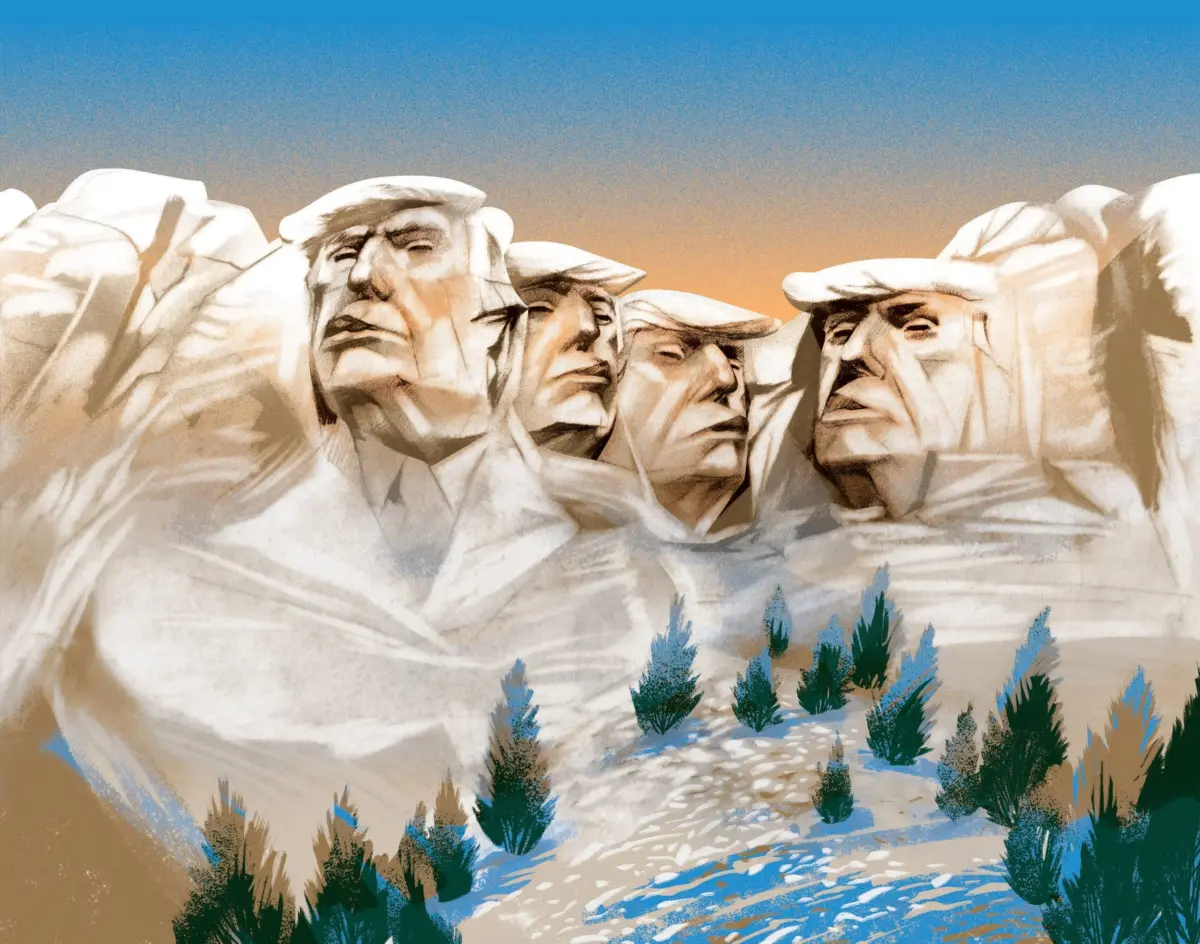
The juxtaposition of visible organizational mismanagement and historic private wealth extraction at the nation’s 250th anniversary was emblematic of Trump’s broader political career. Yet both aspects of his governance stem from an underlying reality that his political rivals and institutional detractors have consistently failed to grasp. Trump has proven to be more than merely the most financially acquisitive politician of his generation. In a distinct and ruthless sense, he has emerged as a visionary figure endowed with an acute awareness of the country’s vulnerabilities, latent resentments, and structural fractures—and a singular willingness to turn those fractures into personal and political capital.
Crucially, Trump recognized early on that the institutional guardians of American liberal democracy—its United States senators, elite legal practitioners, prestigious universities, and corporate press—were bound largely by unwritten customs, rhetorical shibboleths, and procedural norms rather than unyielding defenses. The vaunted guardrails of the constitutional republic, he observed, were fragile constructs that dissolved the moment someone in high office dared to ignore them entirely.
Through an uncompromising mixture of audacity, institutional cynicism, and deep skepticism toward democratic conventions, Trump established himself as the central and defining American political figure of the twenty-first century. His political ascendancy took shape at a precise historical juncture, riding a potent wave of backlash following the nation’s first Black presidency and aligning seamlessly with an entrenched conservative legal and political apparatus that had pursued a generational counterrevolution for decades.
The transactional partnership between Trump’s populist platform and movement conservatism yielded sweeping, transformative results across the federal landscape. Within a single four-year term, Trump appointed three conservative jurists to the United States Supreme Court, tipping its balance decisively and inaugurating a profound rewriting of American jurisprudence. In rapid succession, the transformed high court eradicated the constitutional right to abortion, struck down decades of race-conscious affirmative action policies in university admissions, and further diminished the structural enforceability of the Voting Rights Act of 1965.
This institutional reordering was matched by an aggressive campaign to hollow out the federal bureaucracy itself. For decades, anti-tax advocate Grover Norquist famously articulated a vision of shrinking the federal government down to a size where it could be dragged into the bathroom and drowned in a bathtub. In practice, no modern administration pursued that objective with greater zeal than Trump’s second-term White House. Under the auspices of the newly established Department of Government Efficiency, sweeping personnel mandates decimated civil service payrolls, gutted foreign assistance through the virtual dismantling of the United States Agency for International Development, and severely eroded administrative oversight within regulatory agencies.
The consequences of this administrative rollback manifested swiftly at home and abroad. Public health agencies saw their authority and staffing systematically undermined, contributing to the most widespread domestic measles outbreak in several decades and leaving domestic agricultural inspection networks strained to the point that ordinary consumers began avoiding raw produce amid fears of contaminated food supplies. Abroad, the abrupt shuttering of humanitarian and medical assistance programs left global health monitors warning that hundreds of thousands of vulnerable individuals faced premature death due to the sudden withdrawal of American-backed aid. Yet within the ideological framework that equates minimal governance with ultimate virtue, these structural disruptions were regarded not as administrative failures, but as necessary milestones in the elimination of the regulatory state.
Despite this hostility toward administrative regulation, the administration showed no hesitation in aggressively wielding raw state authority against domestic entities viewed as ideological adversaries. Across the country, educational institutions faced direct political intervention. In Texas, state-level authorities moved to seize and purge academic syllabi, while several of the nation’s most storied private universities acquiesced to federal demands, capitulating through financial agreements and preemptive policy changes to avoid administrative retaliation.
The Fourth Estate found itself under similar structural pressure. Major corporate news organizations repeatedly retreated under direct pressure from the executive branch. Corporate owners and media executives intervened to suppress critical editorials, publicly distanced themselves from their own investigative journalists, and agreed to costly legal settlements in defamation disputes that legal scholars widely viewed as lacking merit.
In one notable episode, Trump leveraged a high-profile defamation lawsuit to force ABC News into an extraordinary and humbling multi-million-dollar settlement. Emboldened by the victory, the president publicly leveraged the outcome to issue direct warnings to the network’s chief Washington correspondent, Jonathan Karl. Trump explicitly reminded the reporter that his employer had paid out $16 million, suggesting that the Department of Justice might soon be directed to turn its investigative power toward Karl himself. The threat carried tangible weight because the administration had successfully recruited some of the country’s largest and most prestigious corporate law firms—enterprises that had once positioned themselves as defenders of liberal norms and civil rights—extracting nearly a billion dollars in pro bono legal services and effectively repurposing elite legal talent in service of executive priorities.
Having encountered minimal domestic friction, the administration extended its unconstrained doctrine to the international arena. While prior administrations had stretched the boundaries of international legal frameworks, Trump abandoned those boundaries altogether. In rapid succession, executive directives authorized the summary lethal targeting of alleged drug traffickers in international waters, the abduction of a foreign head of state in Venezuela to face contested American criminal charges, and the targeted assassination of foreign leaders.
When the White House initiated operations aimed at toppling the governing apparatus in Iran, Trump’s secretary of defense, Pete Hegseth, articulated the operational philosophy in stark terms, proclaiming that American forces would no longer be restrained by conventional rules of engagement or what he characterized as politically correct constraints on military violence. Yet it was precisely on this international terrain, confronting ideological adversaries and entrenched theocratic regimes, that the administration’s transactional leverage encountered stubborn limits, entangling American forces in strategic friction abroad that could not be resolved through domestic intimidation tactics.
Domestically, however, Trump’s consolidation of power encountered few meaningful obstacles, benefiting from an elite establishment that routinely chose capitulation over confrontation. His political dominance was not the byproduct of intricate strategic maneuvering, but of an unyielding willingness to exercise blunt political leverage against institutions that consistently declined to push back. While opposition figures occasionally signaled that a future legislative majority might compel a strategic reckoning, the prevailing response from traditional political leaders often resembled tactical retreats, characterized by passive compliance or rhetorical appeals to democratic norms that had long ceased to constrain the White House.
The systemic precedents established during this era remain profoundly entrenched. The boundaries of executive authority have been fundamentally redrawn: federal law enforcement personnel deployed onto metropolitan streets against domestic protests, deportations executed in defiance of judicial rulings, the apparatus of the Department of Justice directed against perceived personal rivals, and unprecedented private profits accumulated from the seat of power. Throughout this transformation, the established guardians of American democracy—from corporate suites and academic boardrooms to traditional political institutions—largely accommodated the new reality.
When later asked to explain why he felt empowered to execute massive personal business transactions while sitting in the Oval Office, Trump offered an explanation of devastating simplicity: he had simply realized that nobody in a position of authority truly cared to stop him. In the end, the defining reality of the era was not merely the president’s willingness to breach institutional limits, but his discovery that the nation’s most powerful gatekeepers would ultimately permit it.