





What if a retail store invited visitors to consider not just what they are buying, but how it is made? At Desa Potato Head in Bali, the newly opened Good Times General Store explores that fundamental question through architecture, traditional craftsmanship, and circular design principles. Created in collaboration with the renowned architecture firm OMA, Potato Head’s very first permanent retail space shifts the traditional focus of shopping away from passive consumption and toward active discovery. By doing so, the venue invites visitors to directly engage with the materials, stories, and complex processes behind the products on display.
Building on a collaborative partnership that now spans more than a decade, OMA and Potato Head envisioned the store as a physical extension of the hospitality brand’s guiding philosophy: "Good Times, Do Good." Rather than prioritizing the mere display and sale of commercial goods, the architectural and spatial design centers heavily on experience, active participation, and meaningful human interaction.

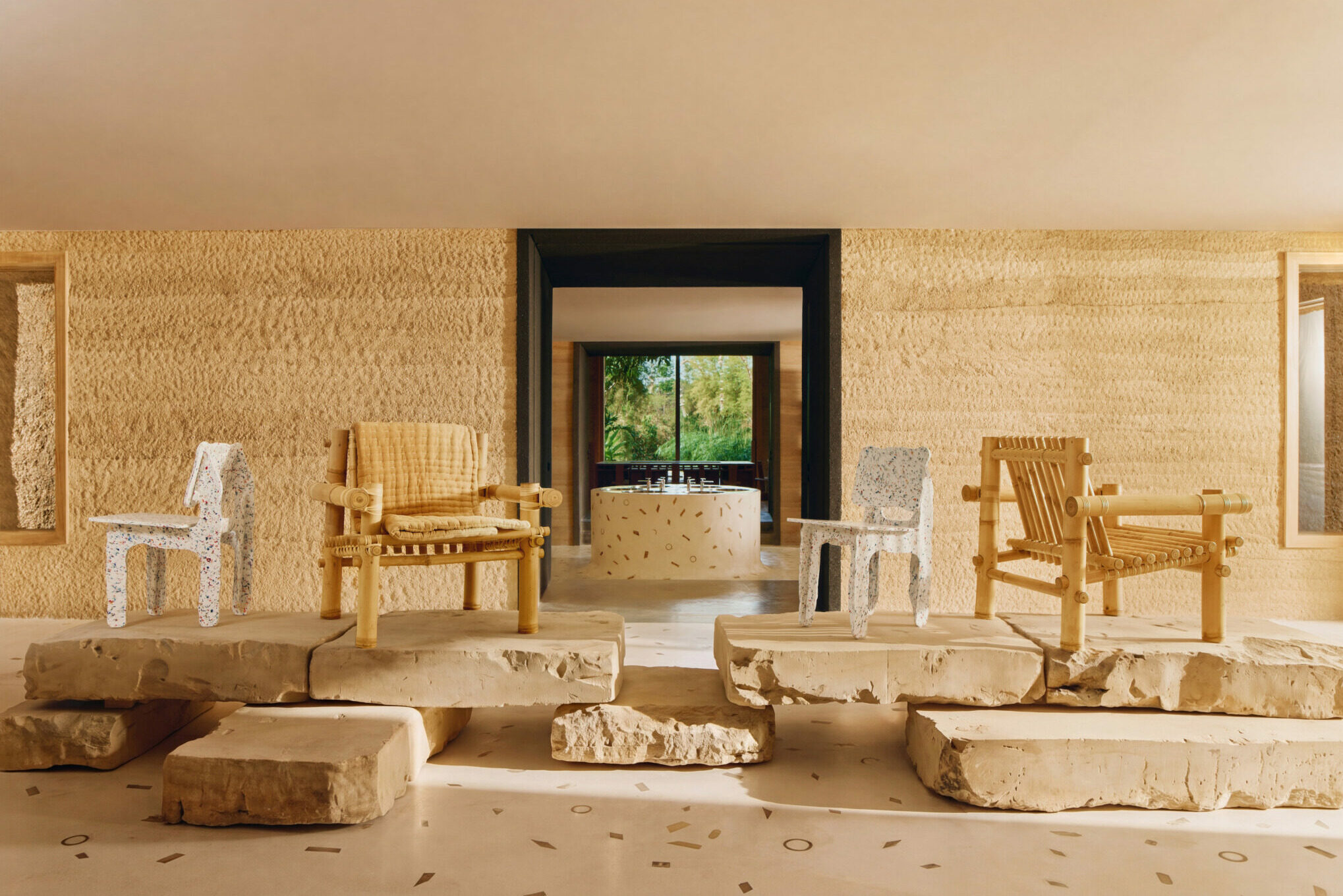
The architecture itself embraces a contemporary-traditional approach, successfully translating Balinese vernacular building techniques into a modern setting. The exterior features an alang-alang thatch facade crafted from locally sourced tropical grass, creating a deeply textured and organic outer layer. Inside, rammed-earth walls constructed from local clay lend the interior spaces a grounded, highly tactile quality. Furthermore, bamboo is integrated throughout the environment in unexpected ways, appearing as an aggregate in the custom terrazzo flooring and serving as a primary structural and aesthetic element in various display units across the store.

This design methodology rejects the simple reproduction of traditional decorative forms in favor of a deeper reinterpretation. The collaborative team sought to honor local heritage while serving the functional demands of a modern, forward-thinking retail space. Reclaimed and locally sourced materials inherently bring natural variations in color, texture, and form to the project. Instead of attempting to conceal these organic irregularities or force materials into rigid, predetermined industrial specifications, the designers embraced them, allowing the natural characteristics of the materials to guide the overall assembly and fine detailing.

The interior layout unfolds across five interconnected bays, guiding visitors on a purposeful journey from finished consumer goods toward the foundational processes behind their creation. The first bay welcomes visitors by showcasing curated souvenirs and lifestyle objects crafted by talented Indonesian artisans. Moving into the second bay, shoppers encounter the Potato Head Collection, an apparel line heavily inspired by the culture and environment of Bali. The third bay introduces "Wasted by Potato Head," a high-profile collaboration with British designer Max Lamb that brilliantly transforms discarded materials and industrial waste into functional furniture and contemporary homewares.

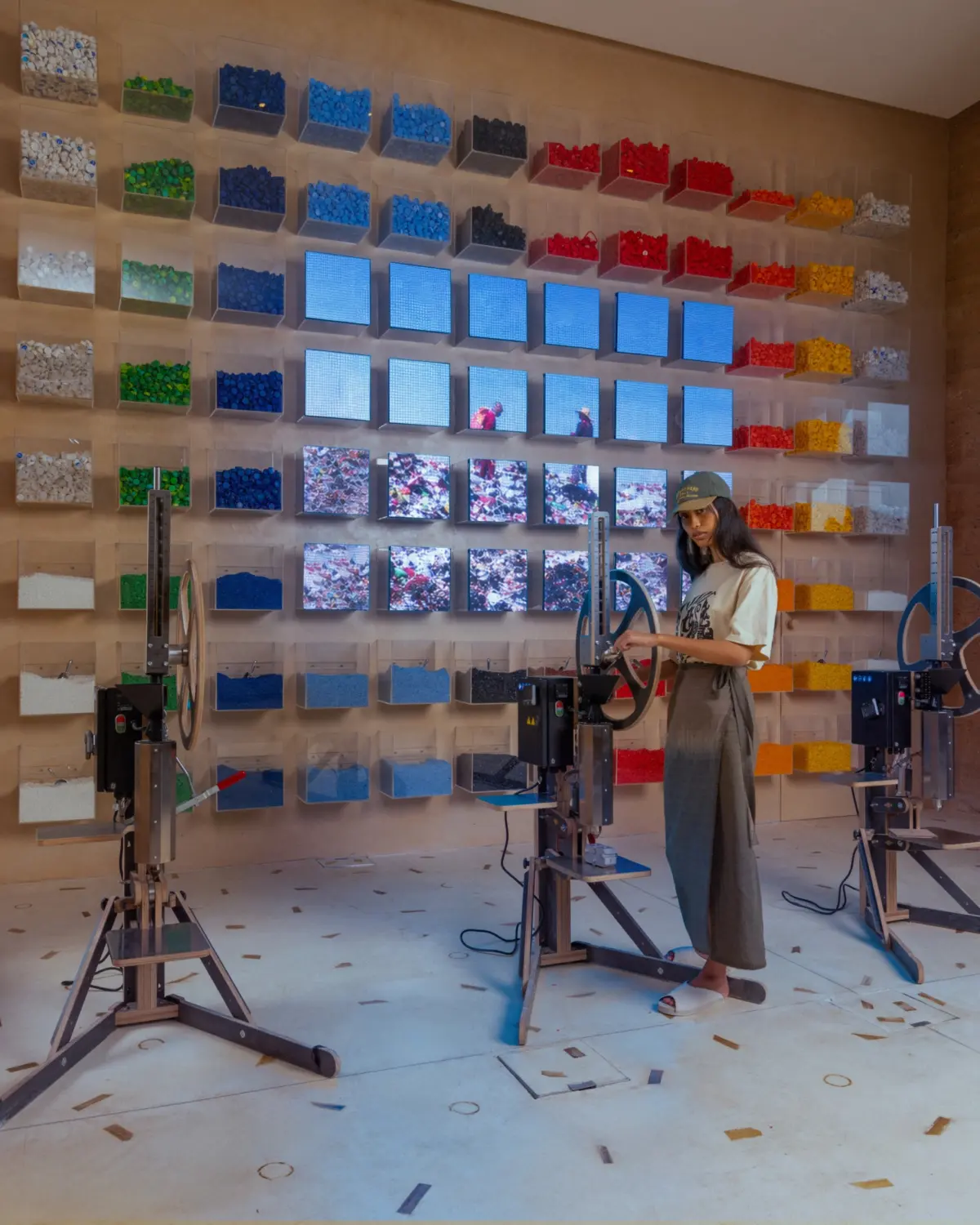
In the final two bays, the visitor experience shifts definitively from browsing to active making. A fully functioning natural dye studio transforms everyday food and plant waste into rich pigments, which are subsequently utilized in hands-on workshops exploring traditional dyeing, painting, and pattern-making techniques. Beyond the dye studio, a space known simply as "The Workshop" features a striking architectural wall constructed from shredded high-density polyethylene (HDPE) plastic. This plastic was painstakingly recovered from waste collectors operating across Bali and Java. These colorful fragments are permanently embedded into the architecture, making the material’s previous life unmistakably visible, while the surrounding space remains fully dedicated to ongoing creative experimentation and public workshops.

This physical setup ensures that the transition from product to process is seamless. While the initial bays focus heavily on finished goods and the narratives of their makers, the concluding zones prioritize participation, encouraging visitors to get their hands dirty and engage directly with raw materials and circular production methods.

This innovative retail space connects directly to Desa Potato Head’s broader, long-standing sustainability initiatives, including its pioneering Waste Lab and the educational Follow the Waste Tour. These initiatives collectively demonstrate how discarded materials can be systematically recovered, processed, and upcycled into valuable new objects. For OMA, this retail project serves as a natural evolution of ideas previously explored in Nthing is Possible*, a 2022 exhibition held in Singapore that examined the vast potential and viability of zero-waste hospitality and design. Through this layered approach, circularity ceases to be an abstract corporate talking point and instead becomes a visceral, experiential reality for everyone who walks through the door.

Working with reclaimed resources inherently required a high degree of flexibility, particularly when dealing with the unpredictable nature of material consistency and availability. By adapting the architectural design to the natural limitations and quirks of recovered elements, the team expanded their understanding of sustainable building practices.

Ultimately, the Good Times General Store demonstrates that the act of making can be just as visible and celebrated as the final product on the shelf. By placing active workshops side-by-side with retail displays and allowing reclaimed materials to literally shape the architecture, OMA and Potato Head have established a compelling new model of conscious shopping—one that gently encourages visitors to look much more closely at what they consume, and what might otherwise be left behind.