





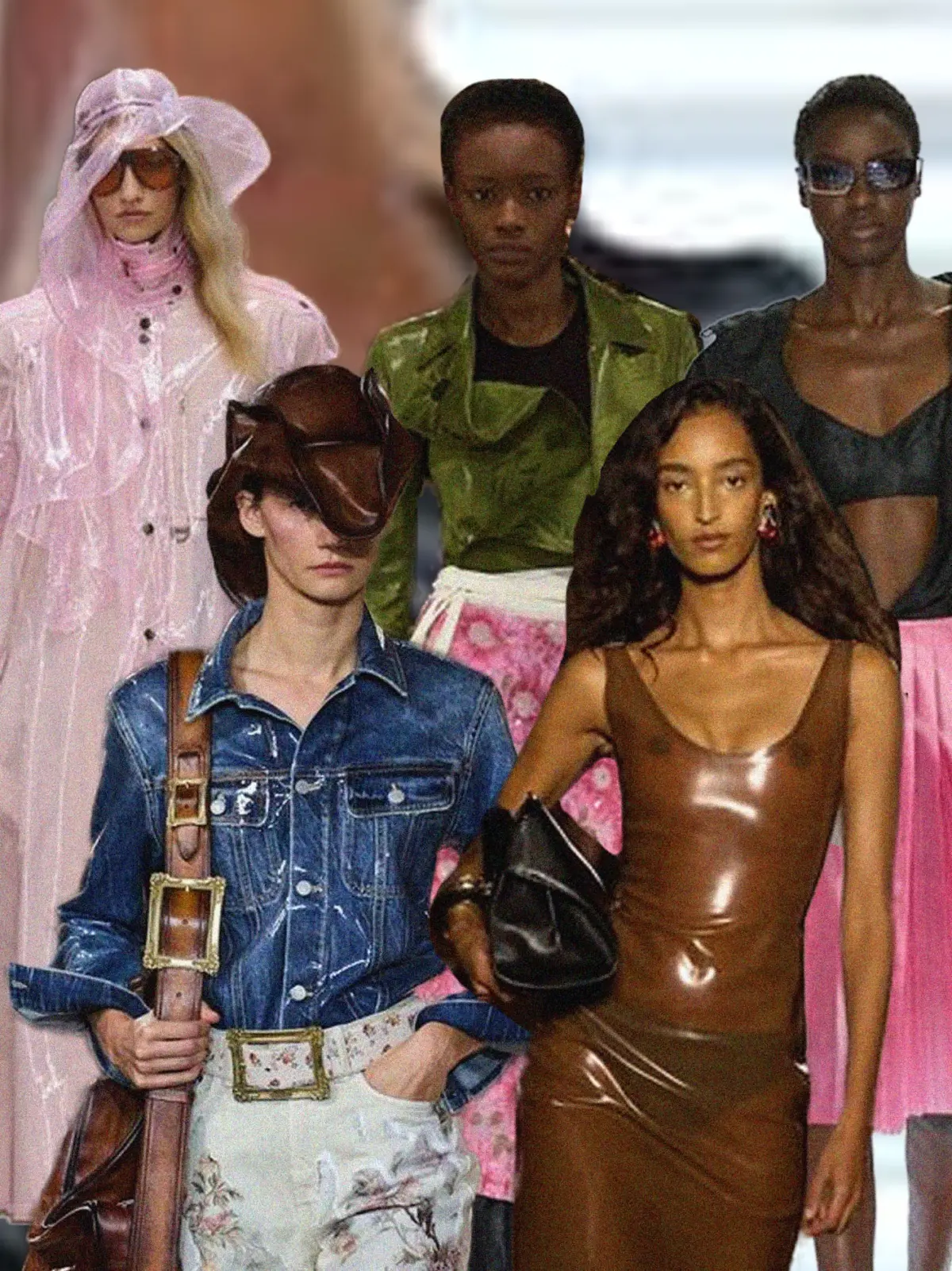
It is an undeniably plastic time in fashion. From nylon trench coats and vinyl gowns to PVC bralettes and rubberized jeans, everyday silhouettes across recent global collections have been thoroughly plastic-ified. As these high-shine, synthetic materials dominate the runway, this sweeping shift raises a pressing question about the current direction of the fashion landscape: Does this material obsession signal a broader regression in the industry’s hard-fought sustainability efforts?
Human-made fibers have a long and complex history in modern dress. In 1938, synthetic alternatives like nylon emerged as a post-World War II solution to silk shortages, quickly capturing the public imagination. Only a few years later, additional human-made fibers—including polyester and acrylic—exploded into mainstream wardrobes. All of these textiles fall squarely under the umbrella of plastic and have served as foundational building blocks for countless historical collections.
Iconic moments in fashion history are defined by these exact materials. Alexander McQueen’s Spring/Summer 1995 collection featured a striking series of plastic-wrapped shift dresses, while Craig Green’s Fall 2019 menswear collection presented models clad in colored sheets of plastic that were bubbled and smocked to create the convincing illusion of blown glass. Plastic, plastic-like substances, and man-made fibers engineered into woven forms have maintained a steady presence in design for decades. However, the sheer frequency with which these materials appeared during the recent Spring/Summer 2027 shows marks a distinct escalation.
This resurgence is particularly visible at the highest levels of luxury design. For Glenn Martens’ debut Artisanal collection for Maison Margiela, the opening four looks set a dramatic tone with a procession of plastic-wrapped masks, gowns, and menswear. Crafted to represent delicate, transparent, and crackly blown glass, these pieces echoed the spirit of Craig Green’s 2019 glass illusion. Shortly before, Saint Laurent’s Spring/Summer 2026 show saw Anthony Vaccarello send an ultra-light nylon collection down the runway. These garments floated through the show space with a distinct, plastic-bag-like quality, paving the way for his subsequent Fall/Winter 2026 presentation featuring latex-coated lace and heavy rubber raincoats.
As rubber, vinyl, PVC, and traditional plastics reclaim prominent spots on international runways, the environmental implications have come under intense scrutiny. Non-natural materials are rarely controversial strictly on creative grounds, but textiles like polyester, acrylic, nylon, and elastane are fundamentally produced by burning fossil fuels to synthesize polyethylene terephthalate (PET). The prominent return of explicit representations of plastic—ranging from clear PVC to heavy vinyl—begs a critical industry-wide question: Are fashion houses backtracking on their environmental commitments?
Industry reports suggest that the momentum toward corporate sustainability has indeed slowed significantly. A late 2024 Business of Fashion (BoF) article revealed that 63 percent of fashion companies were falling behind on their publicly stated sustainability commitments, with brands and suppliers struggling to deliver on their grand ambitions. Furthermore, the Apparel Impact Institute’s 2026 Roadmap To Net Zero report highlighted that fashion industry emissions increased by 6.3 percent between 2023 and 2024, marking the second consecutive year of rising greenhouse gas emissions. A combination of persistent economic pressures, the unrelenting acceleration of the fast fashion economy, and the immense financial cost of systemic transformation have hindered the sector’s environmental progress—hesitations that appear to be bleeding directly into high-fashion design collections.
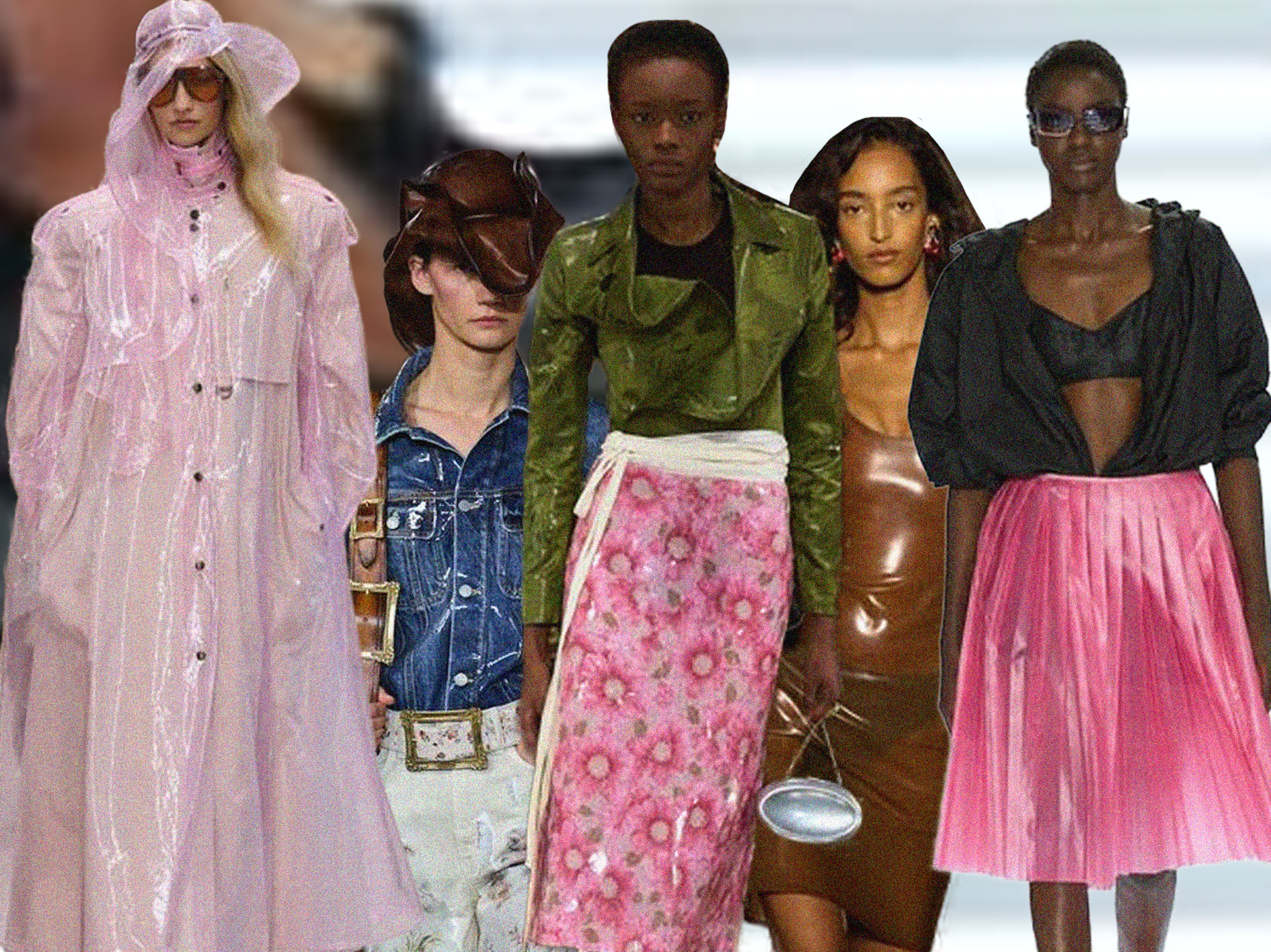
Yet, interpreting this plastic revival strictly as environmental apathy may overlook deeper creative commentary. What appears on the surface as an embrace of synthetic materials can also be read as a biting critique of modern society’s unwavering reliance on single-use products and the broader fast fashion crisis currently gripping the globe.
For many designers, however, the choice remains purely aesthetic. Possessing a shiny, water-like, and intentionally artificial appearance, the unique visual qualities of plastic and plastic-based materials cannot be genuinely replicated through traditional natural mediums like waxed cotton or fine leather. Nylon, vinyl, and plastic are regularly integrated into design codes specifically to challenge natural textures, functioning either as cultural commentary or uncompromising visual statements.
This design philosophy was on full display during the Spring/Summer 2027 collections. At Chloé, designer Chemena Kamali presented a series of clear and smoked vinyl raincoats that created the illusion of literal plastic garment bags when layered over traditional cotton trench coats. Over at Ferragamo, Maximilian Davis offered rubber latex mini dresses and skirt suits rendered in milky, semi-transparent materials, styled simply with basic black underwear to deliver a deliberately provocative approach.
The artificial themes continued elsewhere. Maison Margiela and Prada introduced striking pink plastic skirts, while Acne Studios showcased latex-coated cotton and denim separates that evoked the nostalgic styling of doll clothes. In Australia, Christopher Esber presented rigid, glossy plastic bralettes, wrap skirts, and mini dresses featuring prints by artist Anna Studeli, meticulously translated onto satin-backed pieces of PVC.
While contemporary designers continue to embrace these challenging materials as a vibrant visual language, the overarching conversation surrounding environmental responsibility has grown noticeably quieter over the past five years. Although these specific luxury silhouettes cannot be viewed as a direct, physical consequence of fashion’s retreat from sustainability, the renewed appetite for artificiality, novelty, and synthetic styling is undeniably influenced by the current cultural climate. When luxury houses present the visual depiction of plastic through an elevated, covetable framework, public perception naturally shifts toward a more accepting view of these divisive materials.
Historically, in the broader court of public opinion, man-made fibers and PET-derived materials have often been dismissed as cheap and of inferior quality. Against this backdrop, the deliberate positioning of plastic as an avant-garde aesthetic proposition by major luxury houses signals that the fashion industry is becoming increasingly comfortable with contradiction. As the runways continue to champion these high-shine synthetics, the fundamental question remains: Is this truly plastic fantastic, or a symptom of an industry looking away from its ecological future?