



Right now, art enthusiasts and collectors alike could use a thoughtful treat, and there are few better ways to indulge than by acquiring a terrific piece of contemporary art jewelry while simultaneously celebrating and supporting the visionary artists and dedicated galleries that bring their work to the public eye.
The Art Jewelry Forum’s international network of gallery supporters consistently curates exceptional exhibitions that champion the breadth and depth of art jewelry as a serious medium. To connect global audiences with these wearable masterpieces, the organization’s bi-monthly On Offer series allows an extensive network of international galleries to showcase extraordinary pieces personally selected to tempt and inspire collectors. A glance through the latest selection reveals a diverse array of conceptual designs, sustainable practices, and deeply personal narratives that prove why this medium continues to captivate the contemporary art world. Interested buyers can contact the exhibiting galleries directly for inquiries and acquisitions.
Mélanie Denis at Pistachios Contemporary Art Jewelry
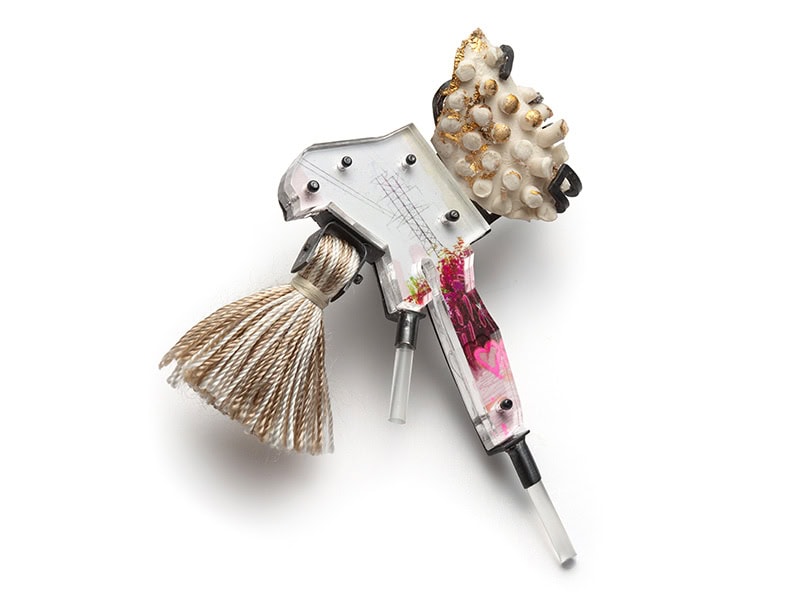
Among the standout pieces in the September 2026 showcase is a unique brooch by artist Mélanie Denis, presented by Pistachios Contemporary Art Jewelry in Chicago, Illinois. Titled J’Aime Hydro, the brooch is crafted from an elaborate combination of sterling silver, Plexiglas, photographic paper, ink, gold leaf, acetate, cotton, acrylic, and steel, measuring approximately 3 x 3 inches. The piece is available through gallery contact Meg Nash for a retail price of US$1,595.
Denis’s work addresses profound themes of memory, loss, and grief. The brooch is part of her solo exhibition at Pistachios titled Transition, which presents a comprehensive body of work created over three years. The collection spans three territories, three inner states, and three defining moments of the artist’s life. Explaining the origins of the series, Denis notes that the works were largely created in Mont Bélair, a vast forested territory on the outskirts of Quebec City, Canada. The initial pieces bear witness to a deep attachment to a place of refuge that eventually became the setting of a painful rupture and a necessary departure.
As the collection progresses, the dark and silent winter landscapes gradually give way to a vibrant palette where signs of a transition toward a new territory begin to emerge. The final phase, entitled Renaissance, marks the artist’s arrival in an urban environment chosen in accordance with her personal values and reclaimed freedom. In these concluding works, the colors soften, the landscapes become more human, and the creative process rediscovers a space of trust, gentleness, and free expression.
John Ecuyer at Fingers Gallery
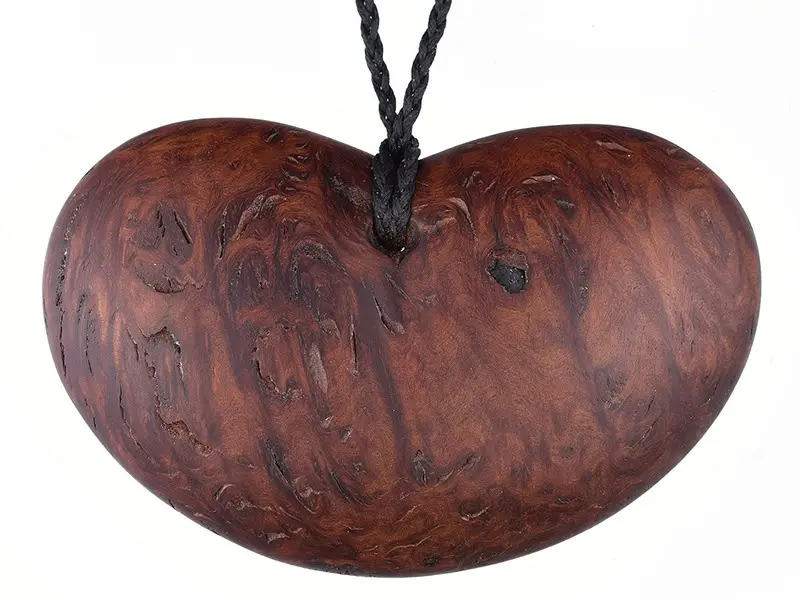
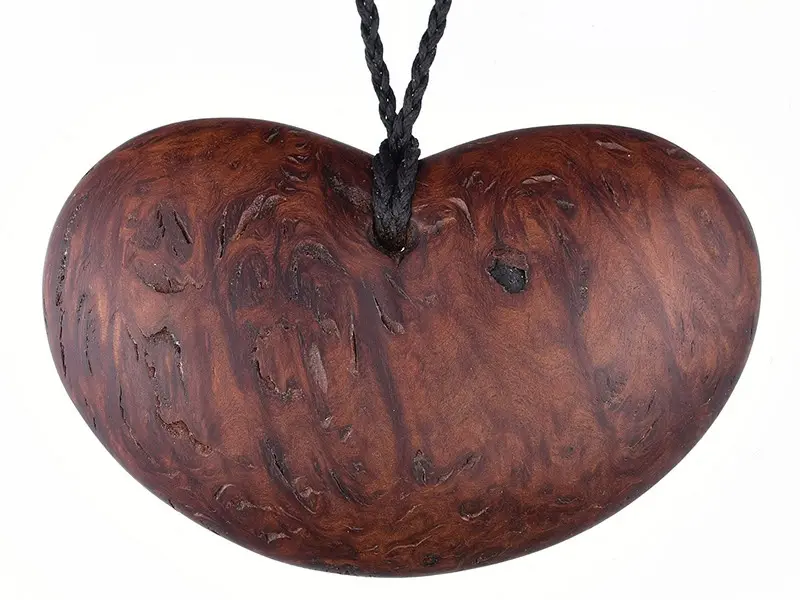
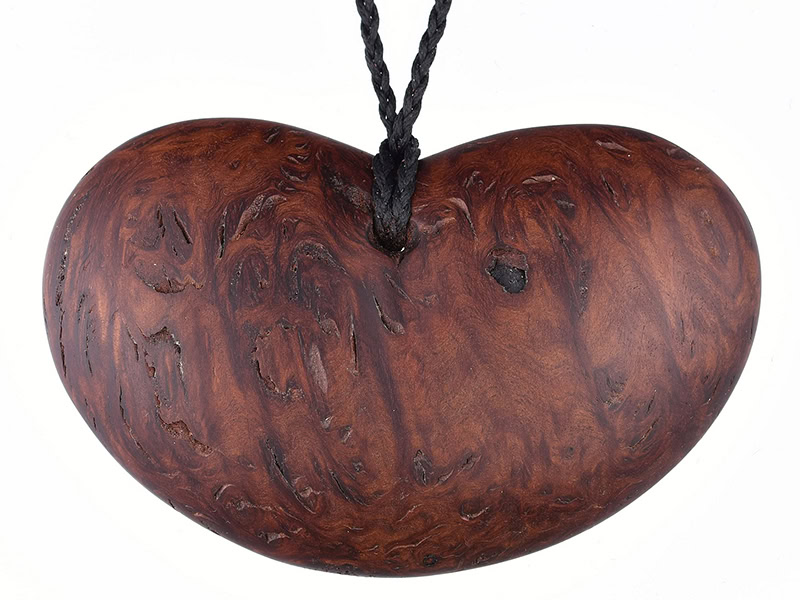
Traveling to the Southern Hemisphere, Auckland, New Zealand’s Fingers Gallery presents a striking pendant by artist John Ecuyer from his 2026 Kina/Abundant series. Fabricated from jarrah burl wood sourced from Western Australia, the pendant measures 4 1/8 x 2 1/2 inches and is available through gallery contact Lisa Higgins for NZ$320.
Born and currently living in Whangarei, New Zealand, Ecuyer began his creative journey crafting turned wooden objects in 1988. This foundation naturally led to an exploration of alternative techniques and materials, including stone, bone, and cast glass. Throughout his career, Ecuyer has maintained a special interest in the complex relationship between his sculptural work and the art of healing, drawing inspiration from both historical and contemporary traditions. Recognized internationally, Ecuyer’s collections are held in prominent institutions such as New Zealand’s Auckland War Memorial Museum, the Dowse Art Museum, and the Whangarei Art Museum. Furthermore, his work can be found in the permanent collections of the Detroit Institute of Art and the Maoli Wood Art Museum in Taiwan, building on a robust exhibition history spanning Los Angeles, Detroit, Korea, and Australia.
Marty Ornish at the Wearable Art Museum
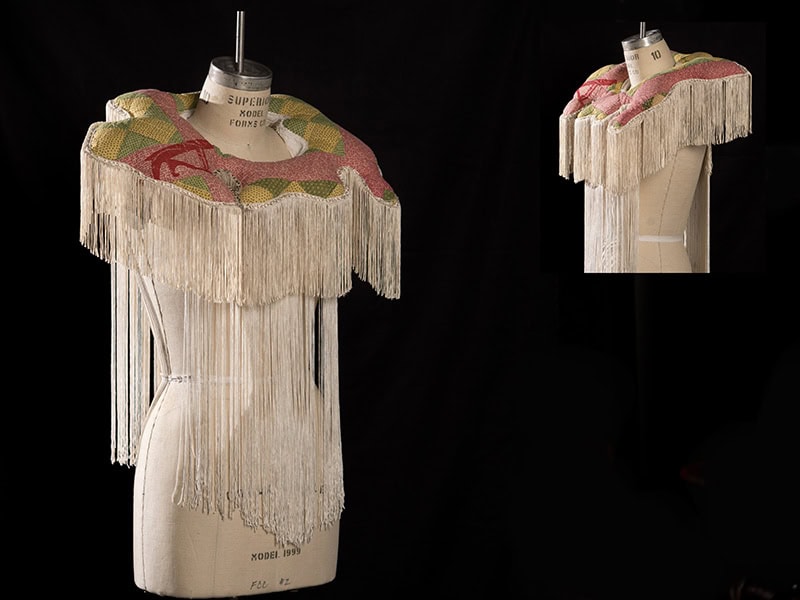
Focusing on sustainability and political commentary, the Wearable Art Museum highlights the work of American artist Marty Ornish. Her piece, Fringe Benefits, is a collar drawn from the On the Fringe collection and is constructed from a historical 100-year-old cotton quilt, batting, letterpress ink, and fringe, measuring 24 x 20 x 22 inches. The wearable sculpture is available through museum director Lisa M. Berman for a retail price of $1,200.
Operating under daily studio mantras such as "Zero waste," "Loved to death," and "Nothing is new," Ornish—often known as MartyO—is an established creator recognized for politically charged, thought-provoking museum exhibitions that utilize fabric as raw material and complex meaning as substance. A prime example of her socially engaged practice was her 2021 Social Security exhibition at the Oceanside Museum of Art in California. Known for her signature lavender hair and distinctive spectacles, Ornish wields her artistic intention to transform societal waste into new wearable sculpture. Fringe Benefits is currently featured as part of the California Fibers The Languages of Fiber exhibition at the Huntington Beach Art Center in California through October 24, 2026.
Gésine Hackenberg at Galeria Reverso
In Lisbon, Portugal, Galeria Reverso offers a window into contemporary Dutch and European domestic histories through the work of artist Gésine Hackenberg. The featured piece, Precious Fluids #1, created in 2012, is a brooch fashioned from silver-plated glass and red brass. Available through gallerist Paula Crespo, the piece is priced at €940.
The brooch forms part of Hackenberg’s broader Kitchen Glass Brooches series, which belongs to her larger Still-lives Collection. Describing the conceptual underpinning of the work, Hackenberg explains that the collection functions as a contemporary interpretation of 17th- and 18th-century Dutch still-life paintings. Those historical canvases typically depicted everyday items that held significant economic and emotional value for people of the era. By cutting vintage glassware and rearranging the fragments into new compositions and modern still-lifes, Hackenberg achieves a direct translation from three-dimensional domestic objects to two-dimensional shapes and precious jewelry. In this framework, the wearer’s body assumes the role of a canvas. Additionally, the collection serves as a deliberate homage to the rich history of European glass manufacture and its historic designers, particularly those working in the Netherlands, Germany, and Scandinavia.
Linda van Niekerk at Zu design
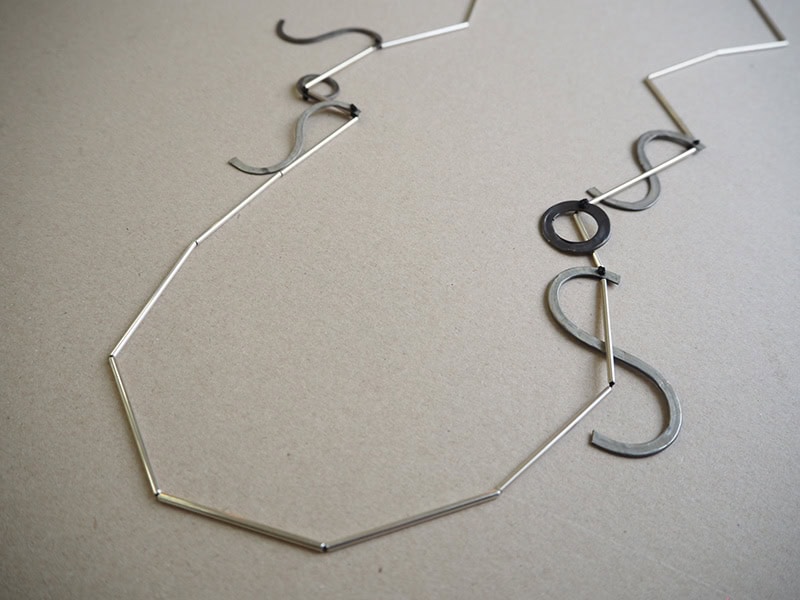
Adelaide, Australia-based gallery Zu design presents the SOS Graffiti neckpiece by artist Linda van Niekerk, created in 2026 as part of her Just Saying series. Crafted from sterling silver, oxidized sterling silver, and silk, the neckpiece measures 47 1/4 inches long with a chenier diameter of approximately 2.2 mm. Handled by gallerist Jane, the piece is offered at an Australian retail price of AU$1,360.
Reflecting on the turbulent sociopolitical climate that inspired the series, Van Niekerk writes that in a world where everyday life—spanning political, social, financial, and environmental spheres—frequently defies logic, she began making works to vent, rage, and poke fun at the prevailing insanity. The resulting jewelry serves as an exercise in protest accompanied by a smile.
Märta Mattsson at Galerie Noel Guyomarc’h
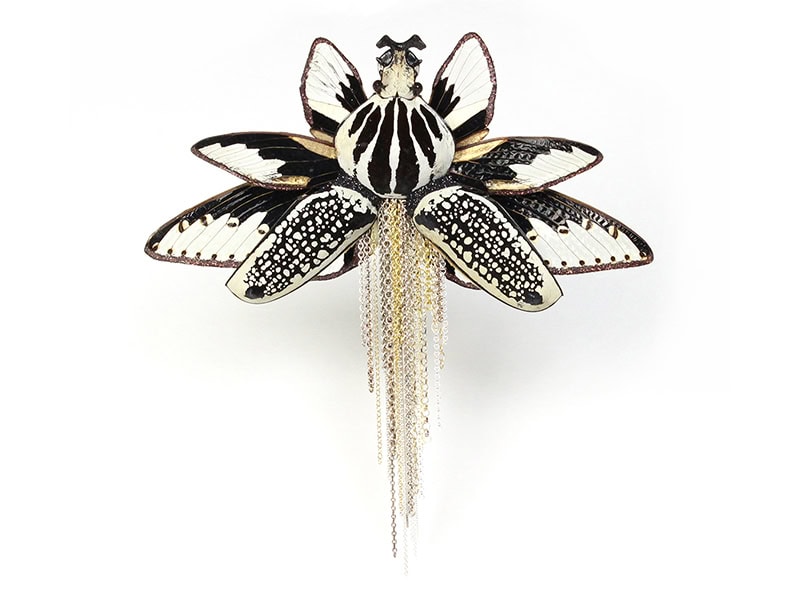
In Montreal, Canada, Galerie Noel Guyomarc’h showcases the latest creations of Swedish artist Märta Mattsson. Her prominent brooch, titled Goliath (2026), is constructed from a real Goliath beetle, cicada wings, lacquer, resin, pigments, silver, gold-plated silver, and stainless steel, measuring 6 1/4 x 6 1/2 x 1 5/8 inches. Available through gallerist Noel Guyomarc’h, the piece is priced at €3,200.

With her broader collection titled Glow against the Dark, Mattsson continues a long-standing artistic exploration of insects and the complex cultural ideas they can convey. Vibrant, intricate, and deeply colorful, these new works assert their unmistakable distinctiveness with quiet confidence.
Ameli Dévé at Platina
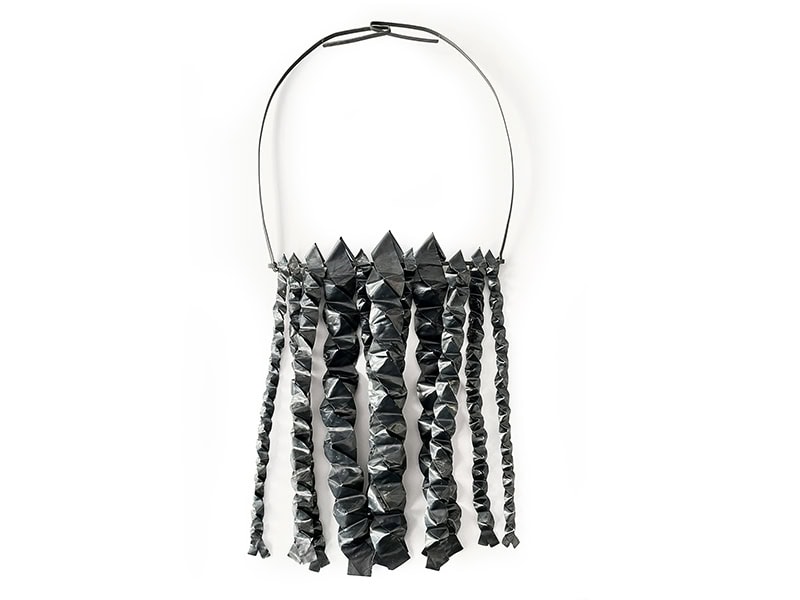
Stockholm, Sweden-based gallery Platina highlights an untitled 2024 necklace by artist Ameli Dévé, crafted entirely from oxidized silver and measuring 14 x 6 1/4 x 3/4 inches. The piece is available through gallerist Sofia Björkman for US$3,600.
Dévé frequently draws upon universal symbolism and familiar, repetitive forms, such as the traditional braid. In this specific work, she employs pure fine silver, taking advantage of the metal’s inherent softness to manipulate it into shapes that would otherwise remain exceedingly difficult to achieve. By stretching and pushing the material to its absolute structural limits, the artist produces results that simultaneously allude to historical craftsmanship while aggressively pushing its boundaries and re-examining classic structural archetypes. Born in northern Sweden and currently based in Gothenburg, Dévé completed a rigorous three-year apprenticeship in Tibet making traditional Tibetan jewelry before pursuing further studies in Sweden, New Zealand, and France, ultimately earning an MFA in jewelry art from the Academy of Design and Crafts in Sweden.
Gitte Nygaard at Objects Beautiful
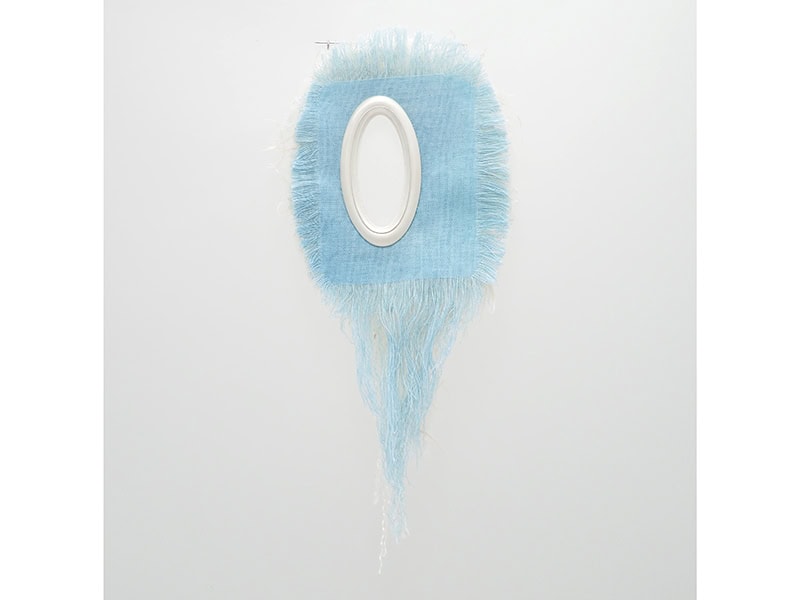
In London, United Kingdom, Objects Beautiful presents the brooch Dogger Bank II by Danish/Dutch artist Gitte Nygaard. The intricate piece is constructed from organic wool, plant-dyed silk with weld, cotton, Japanese washi and gampi paper, indigo-dyed denim and hemp denim, Nakachu silk thread, silver, and a stainless steel pin, measuring 7 x 3 1/8 x 1/2 inches. Available through gallerist Yael Reisner, the brooch is priced at £1,930 GBP excluding tax.
Designed to be worn showing either side, Dogger Bank II features textiles elegantly clasped together by a simple silver oval ring. The work is named after the large, shallow sandbank located in the North Sea. Much like the sea itself, the brooch remains porous, carrying memory not merely as a fixed visual image, but as a tangible material presence. Gallerist Yael Reisner notes that Nygaard stands out as one of the most important European art jewelers working today, maintaining a remarkably serene and modest profile despite her profound talent, largely by deliberately choosing to forgo a public Instagram presence.
Kerianne Quick at In the Gallery at Brooklyn Metal Works
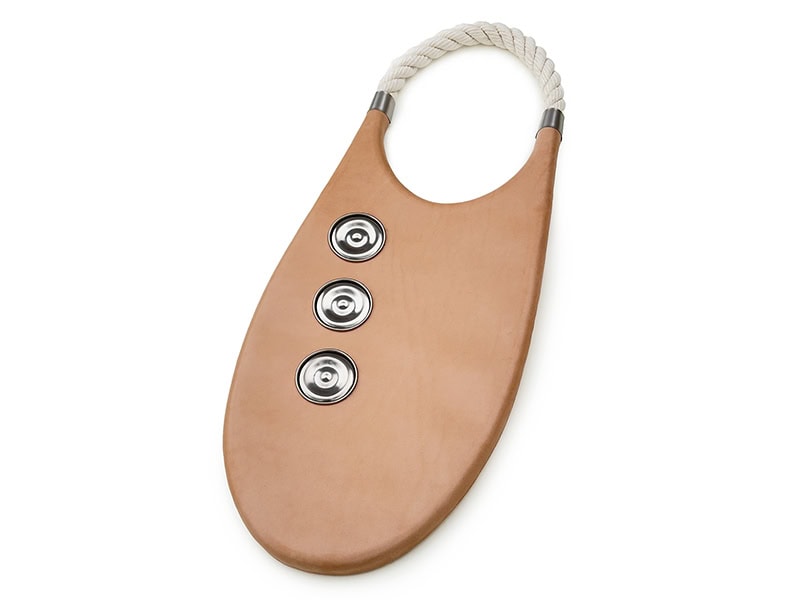
In Brooklyn, New York, In the Gallery at Brooklyn Metal Works exhibits the necklace 7.62 x 39 (Oh Well) by artist Kerianne Quick. Crafted from titanium, vegetable-tanned leather, and cotton, the piece measures 26 x 11 x 1 inches and is managed by gallery director Brian Weissman for a retail price of US$1,500.
The necklace is part of Quick’s Oh Well collection, which comprises leather and titanium necklaces and brooches drawing inspiration from historical and contemporary forms of body armor. These include bibs, utility wear, aprons, and tactical vests. The central titanium elements feature "wound" inserts informed by slow-motion projectile testing and forensic images of high-caliber bullet wounds, effectively transforming concrete evidence of bodily trauma into striking objects of adornment while critically examining modern notions of manufactured protection and false security.
Alexander Blank at Four Gallery
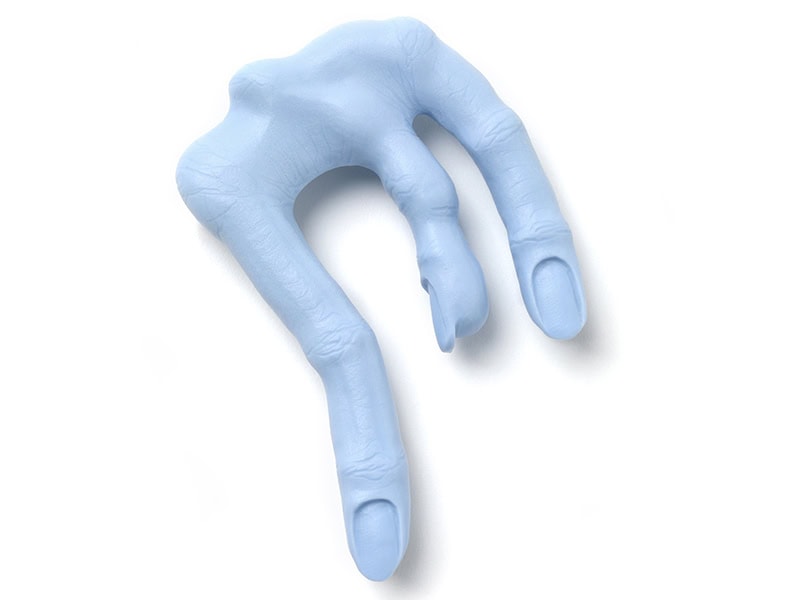
Umeå, Sweden’s Four Gallery features a 2025 brooch titled Bones & All by artist Alexander Blank, crafted from Corian and silver with dimensions of 3 1/2 x 2 3/4 x 1/2 inches. Handled by gallerist Karin Roy Andersson, the piece is available for 680€ excluding VAT.
The work explores the duality of the human hand as a primary tool that makes things happen—cooking, building, clapping rhythms, igniting fires, healing, and increasingly interacting with digital touchscreens. Reflecting on this relationship, Blank asks what might happen if hands chose to break free from the brain’s commands to create an entirely new reality. The resulting work offers a glimpse into a speculative evolutionary path where hands and fingers achieve independence.
Teresa Shields at Gravers Lane Gallery
Philadelphia, Pennsylvania’s Gravers Lane Gallery showcases the large-scale necklace Pomponner (2022) by artist Teresa Shields. Constructed from felted wool, hidden magnetic clasps, and wood mounts, the piece measures 40 x 48 x 6 inches and is available through gallery contact Mia Chen for US$6,700.
The title Pomponner—a French term referring to the act of dolling oneself up or preparing oneself to be looked at—forms part of Shields’s broader I Feel Seen collection. Working primarily in felted wool, a handcraft historically relegated to domestic women’s work, Shields focuses her conceptual lens on the female gaze and the lifelong experience of being watched and judged without truly being seen. The necklace is structured enough to maintain its own architectural form. Throughout the collection, the artist utilizes the color logic of artist Hilma af Klint as a central touchstone, where blue represents the feminine, yellow signifies the masculine, and pink denotes love. The piece is equipped with hidden magnetic clasps for easy wearing, alongside magnetic wall-mounts that allow it to double as a wall sculpture when not worn on the body.
Carin Jones at Heidi Lowe Gallery
In Lewes, Delaware, the Heidi Lowe Gallery presents On a Whim Tattoo (2026), a brooch by artist Carin Jones made from vintage tin, sterling silver, acrylic, brass signature bolts, and stainless steel, measuring 2 1/2 x 2 1/4 inches. The piece is handled by gallery contact Kassadi Williams and is available for a retail price of US$350.
Jones’s practice centers on the repurposing of historical specimens, such as vintage tins, substituting traditional precious gemstones with everyday found objects set in meticulously crafted precious metals. This deliberate juxtaposition challenges conventional societal notions of material worth and grandeur, prompting viewers to reconsider the fundamental relationship between intrinsic material value and artistic merit.
Evelyn Kline at Baltimore Jewelry Center
In Baltimore, Maryland, the Baltimore Jewelry Center highlights the brooch Time Machine (2024) by metalsmith and enamelist Evelyn Kline. Fabricated from enamel, copper, sterling silver, and fine silver, the brooch measures 3 1/2 x 4 1/2 x 1/2 inches and is available through J Diamond for US$1,450.
A native of the mountains of North Carolina with a BFA from Appalachian State University and residency experience at the Arrowmont School of Arts and Crafts and the Baltimore Jewelry Center, Kline draws inspiration from personal nostalgia. Explaining the conceptual roots of the piece, Kline writes that during her final year of college, she discovered a local grocery store that had remained unrenovated since the early 2000s, serving as an accidental portal to memories of her childhood hometown. Amidst a period of significant personal change, visiting the unchanging store provided a comforting portal to another time.
Catarina Silva at Galeria Tereza Seabra
Concluding the September 2026 showcase, Lisbon, Portugal’s Galeria Tereza Seabra presents Alfinete Original (Original Brooch) by Catarina Silva, created in 2026 from leather, glass seed beads, silk thread, zinc, silver, and stainless steel, measuring 5 3/8 x 4 x 3/8 inches. Managed by gallerist Tereza Seabra, the piece is available for 750€ plus shipping.
The brooch forms part of Silva’s solo exhibition Jardin d’agrément, presented as part of the third Lisbon Jewellery Biennial program. The exhibition imagines a lush, utopian garden inspired by traditional paradisiacal and divine gardens found across various cultures, where humans, animals, and plants coexist in a shared ecology free from traditional hierarchies. Through symbols such as apples, unicorns, flowers, birds, and Marian iconography, the jewelry evokes concepts of knowledge, fertility, and transformation. At the center of the exhibition, the snake is reimagined not as a tempter, but as a guardian of wisdom, regeneration, and the continuous cycle of life. Rather than mourning a lost Eden, the collection offers a poetic fiction that invites viewers to imagine new ways of inhabiting the world together.
The opinions stated here do not necessarily express those of Art Jewelry Forum. AJF welcomes comments and thoughtful, polite letters to the editor submitted electronically through its official website.