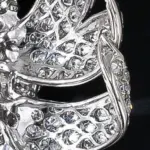






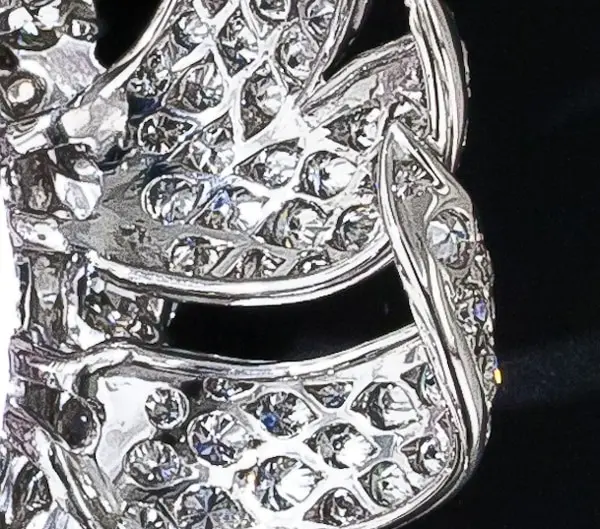
À jour—derived from the French word jour, meaning day—is a specialized term used in gemstone setting to describe open-worked backgrounds created through meticulous sawing or piercing, designed to keep the back of a stone open "to the day." This deliberate architectural choice allows maximum light to enter the gem from behind, significantly enhancing its scintillation and color depth while making the overall piece appear considerably more lively and dynamic.
The history of à jour settings in fine jewelry represents a major shift in how master artisans approached the interaction between precious metals and gemstones. These open-worked settings began gaining widespread popularity around 1800. Prior to this period, the prevailing convention in jewelry manufacturing was to mount most gems in closed-back settings, often with reflective foils placed behind the stones to artificially enhance their brilliance or alter their perceived color. The emergence of à jour craftsmanship reflected a broader evolution toward celebrating the natural optical properties of gemstones by allowing unobstructed natural light to pass directly through them.
Achieving a high standard of fine à jour work requires exceptional technical skill and precision from the jeweler. Artisans accomplish this intricate process by utilizing a specialized tool known as a graver to meticulously refine, carve, and shape well-formed openings on the reverse side of a jewelry item. Because the back of the piece is fully exposed, every millimeter of the metalwork must be executed with the same level of immaculate detail and polish as the front. This dedication to craftsmanship reached notable heights during the Art Deco era, a period renowned for its geometric precision, architectural inspiration, and uncompromising attention to detail. Art Deco jewelry customarily features refined à jour work that renders the reverse side of a piece nearly as visually stunning and intricate as the front, showcasing a holistic approach to design where no element is left neglected.
Beyond traditional gemstone setting, the concept of open-worked design extends into the realm of enameling, where it is known by a related yet distinct French term. In the decorative art of enameling, the term plique à jour is used to describe an item characterized by an open metal background that is filled with transparent or translucent enamel rather than a gemstone. When light passes through a plique à jour piece, it creates a breathtaking myriad of shifting colors and luminous effects, closely resembling miniature stained-glass windows. This technique, much like its gemstone-setting counterpart, relies entirely on the absence of a solid backing to achieve its signature visual impact, demonstrating how the fundamental principle of opening jewelry to the light has continually inspired master craftspeople across centuries of design evolution.