




Shortly before the start of the 2026 baseball season, Howie Rose announced his impending retirement, bringing an era to a close for generations of baseball fans across New York. After 22 years serving as the definitive radio voice of the New York Mets, the relentless grind of the job had finally become too taxing. Rose was ready to step aside, pass the broadcast torch, relocate to South Florida, and dedicate his time to working on his golf game. Above all, he looked forward to spending more quality time with his wife, Barbara, noting with his characteristic wit that they would share those years together "whether she likes it or not!"
Coming on the heels of a humiliating conclusion to the previous season and the winter departure of much of the franchise’s beloved core, the announcement had all the ingredients of a devastating blow to a fanbase for whom Rose’s unmistakable Queens-accented play-by-play has long served as an indispensable comfort. For decades, listening to Rose’s cadence was the primary antidote to the peculiar emotional burden of rooting for the Mets.
Yet, to look back on that retirement announcement now—especially after witnessing the team’s painful elimination from playoff contention at the hands of former Mets icon Pete Alonso and his Baltimore Orioles during one of the most brutal weeks of baseball in recent memory—is to feel an unexpected sense that the story is not quite finished. Rose delivered his announcement with his signature genial gravitas, striking a delicate balance between authentic optimism and sharp New York sarcasm. He reflected on his role with the team, noting how honored he always felt to open each season by emceeing events at Citi Field, but added that his ultimate dream remained unfulfilled: he wanted nothing more than to bookend his career by acting as master of ceremonies on the steps of City Hall following a championship ticker-tape parade down the Canyon of Heroes. Achieving that, he explained, would make the dream he had lived complete.
During this past grueling season, supporters could at least find solace in having Rose at the microphone as a steady guide while watching the highest-paid roster in baseball history unravel, sinking toward the bottom of the standings faster than the Titanic. Even amidst the disappointment, listeners wondered about Rose’s own frustration and questioned how the fanbase would manage to navigate the sport without his familiar presence setting the tone day after day.

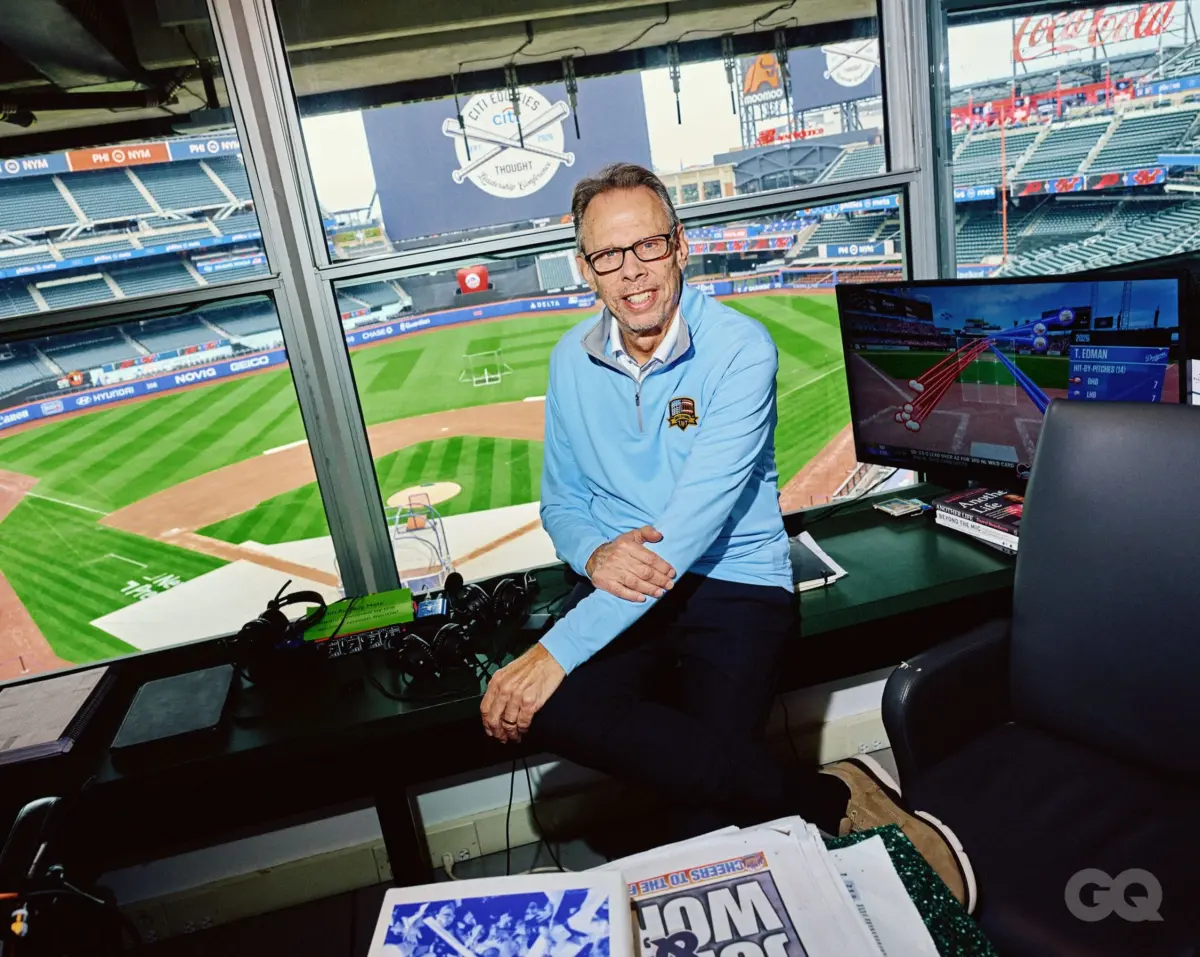
Inside the Bob Murphy Broadcast Booth at Citi Field, Rose sat down to reflect on his journey as he prepared to call the opening game of the final series of his 40th season with the franchise. When first approached for an interview by GQ, the veteran broadcaster admitted to initial confusion, jokingly questioning why a fashion magazine would want to speak with him, though he was quickly reassured that the conversation was not about style advice. Instead, the focus was on understanding his core philosophy of Mets fandom and discovering how supporters can endure—and perhaps even take pride in—the turbulent experience of following the team.
Rose articulated the fundamental choice inherent to being a sports fan in New York City. In a market shared by two major baseball teams, residents must decide whether to align themselves with the Mets or the cross-town Yankees. Because that choice exists, Rose observed, choosing to remain loyal to the Mets through difficult, non-contending years while the Yankees regularly play postseason baseball in October becomes a true test of dedication. That loyalty, he emphasized, is proven by an unwavering refusal to abandon ship, adding dryly that any idiot could root for a team that plays for championships almost every single year.
Rose made that fateful choice himself at seven years old in 1961, a full year before the Mets played their inaugural game. His father, Robert, had attempted to guide him toward Yankees fandom, but the effort failed to stick. When the young Rose learned that a brand-new franchise was arriving in Flushing, Queens—located just moments away from the Bayside neighborhood where his family was planning to relocate—he felt as though the team had been created specifically for him.
In many respects, his childhood instinct was spot on. Recognizing that its initial expansion roster, cobbled together from the expansion draft, was destined to suffer heavy losses, the franchise deliberately marketed itself to young baby boomers as a lively, colorful alternative to the somber, corporate severity of the Yankees. Everything about the new club captivated young Rose, right down to the vibrant blue and orange team colors, which immediately drew him in.
The broader question remains: what kept Rose and the initial generation of "New Breed" fans steadfastly loyal once it became clear that they had tied their hearts to one of the losingest teams in modern sports history? The answer can be found in the very name adorned on the broadcast booth where Rose spent his career.

It was original Mets broadcaster Bob Murphy who first demonstrated to young Howie Rose—first through the radio during the 1960s and later as a mentor and colleague in the 1990s—how a skilled play-by-play announcer could elevate a struggling, trophy-less team into a beloved institution. Murphy possessed a rare gift for making listeners feel genuinely positive about the team regardless of the final score or their position in the standings. Even if things went poorly on a given night, Murphy’s commentary instilled a belief that greatness might be waiting just around the corner tomorrow.
Rose pinpoints the exact moment he decided to follow in Murphy’s path back to a forgotten mid-summer game on August 4, 1966. On that afternoon, the surging San Francisco Giants held a commanding 5-0 lead over the second-to-last-place Mets heading into the bottom of the seventh inning. Against the odds, the Mets fought their way back to equalize, eventually securing a dramatic victory on a walk-off home run by Ron Swoboda.
Riding the Q27 bus home that day, the young Rose was consumed by the experience. He realized that beyond the excitement of the game itself, he was fascinated by how legendary announcers Lindsay Nelson and Bob Murphy had called the comeback over the airwaves. He recognized that while hitting a game-winning home run must be an incredible feeling, having the privilege to broadcast that moment to thousands of listeners was nearly as extraordinary.
That afternoon illuminated a profound truth about modern sports broadcasting: without the framing of familiar commentary, attending a game in person can sometimes feel incomplete, as if the full story hasn’t been entirely captured. By setting the narrative tone, a broadcaster’s voice becomes the shared emotional pulse of the fanbase, giving structure, meaning, and historical weight to the action on the field.
Rose preserved the date of that August 1966 game in his memory like a cornerstone. From that point forward, during his own Little League games, he no longer imagined himself as superstar pitcher Tom Seaver on the mound or Swoboda at the plate. Instead, he pictured himself elevated in the broadcast booth, adoption the persona of Bob Murphy, hovering above the diamond and guiding his team toward glory.

By the following summer, at age 14, Rose organized a dedicated fan club for Marv Albert, who was then the radio voice of the rising New York Rangers. Rose typed up mimeographed newsletters and mailed them directly to Albert at the WHN studio. Rather than ignoring the young fan, Albert responded with constructive critiques, initiating a friendship and professional mentorship that would last a lifetime.
A decade later, WHN hired Rose as a sports reporter. Ten years after that break, he stepped into the spotlight as the host of the flagship pre- and postgame program, "Mets Extra." Rose’s style, influenced by Albert’s blend of passionate fandom and unvarnished objectivity, occasionally ruffled feathers in the front office, but it earned him deep trust among both players and listeners.
His breakthrough moment behind the microphone arrived in 1994 while filling in for Albert during the National Hockey League playoffs. Rose’s legendary, echoing call of "MATTEAU! MATTEAU! MATTEAU!" as Stephane Matteau scored the double-overtime goal to propel the New York Rangers into the Stanley Cup Finals made him an overnight broadcasting star. Shortly thereafter, the New York Islanders hired Rose as their lead play-by-play announcer, and the Mets brought him onto their television broadcast team. Finally, in 2004, Rose achieved his ultimate career goal when he was named the lead radio voice of the Mets, taking over the microphone previously held by his hero, Bob Murphy.
Yet, despite fulfilling his childhood ambition, one key difference remained between his tenure and Murphy’s legacy. Rose openly admits that his single greatest professional regret is never having the opportunity to call a World Series championship for the Mets.
In the booth behind him, a small piece of personal memorabilia sits on display: the words "HE DID IT!" pinned to the wall with thumbtacks. The display honors his dramatic call of Pete Alonso’s late-inning, three-run home run that clinched the 2024 Wild Card series—a call that stands as one of Rose’s most iconic moments behind the microphone. When he placed those tacks on the wall, he had harbored hope that he might eventually add a few more letters, transforming the phrase into "THEY DID IT!" following a World Series victory.

Even when the team’s magical 2024 postseason run eventually came to an end at Dodger Stadium, Rose urged the fanbase to keep perspective rather than give way to despair. On the air, he expressed gratitude to the team for making a 70-year-old broadcaster feel 15 again, drawing a direct parallel to the legendary 1969 "Miracle Mets," when a young, underdog squad captivated the city and defied all expectations to capture a world title.
For younger generations of fans whose connection to the team was forged long after the 1986 championship, the emotional high of 2024 felt like their own version of 1969. In his memoir, Put It In the Book!: A Half-Century of Mets Mania, Rose recounted storming the field at Shea Stadium alongside 20,000 ecstatic fans when the 1969 team clinched its postseason berth. Reflecting on that history, Rose once noted that the 1969 Mets effectively embodied the era’s countercultural spirit, recalling Bob Dylan’s iconic anthem The Times They Are A-Changin’ as a fitting soundtrack for a team that turned the traditional baseball hierarchy upside down.
While Rose frequently invokes historical parallels—such as comparing a spectacular diving catch by rookie outfielder Carson Benge to Ron Swoboda’s famous diving grab in Game 4 of the 1969 World Series—he remains a realist about the passage of time. He acknowledges that modern baseball can never truly replicate the 1960s, noting that the original Mets were a unique phenomenon: a brand-new franchise that managed to capture the public’s heart despite losing over a hundred games a year.
Rose also recognizes the natural generational shift within the fanbase. The dominant era of the mid-1980s reshaped expectations, and many younger supporters today have little direct connection to the 1969 team. When surviving members of that championship squad appear at Citi Field for ceremonial occasions, the applause from younger crowds is sometimes muted compared to decades past—a reality Rose accepts as the natural circle of life in sports.
As the date of his final official broadcast on September 20th draws near, the iconic voice that connects modern Mets fans to the team’s origins will quiet down. While Rose has promised to return periodically to emcee major ceremonies at Citi Field and has indicated a willingness to fill in on occasion for his designated successor, Keith Raad, he remains careful not to overshadow those taking over the booth.

He maintains that while he would be deeply honored to return to the microphone for a special moment, he has no intention of pushing anyone aside or forcing his way back into the spotlight. Yet, even in his humble attempt to manage expectations, long-time listeners hear the familiar resilience of a broadcaster who spent a lifetime chronicling baseball in Queens—leaving the door open for one last miraculous chapter before the final curtain falls.