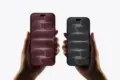







With the official announcement and upcoming release of the iPhone 18 Pro and Pro Max, Apple has fundamentally rethought both how a smartphone photograph looks and how it proves itself to be real. For the first time in the history of the device, Apple has fitted one of its primary mobile cameras with a mechanical variable aperture, marking a major turning point in how pocket-sized technology handles light. Alongside this physical optical breakthrough, the Cupertino company is introducing "Reference Image," an opt-in security mode designed to combat the rising tide of digital manipulation by preserving a cryptographically signed, unalterable record of what the camera sensor actually saw.
Priced starting at $1,199 for the iPhone 18 Pro and $1,299 for the Pro Max, with a release date set for September 18, 2026, the new flagship devices introduce a sweeping array of hardware updates. These include the blazing-fast 2-nanometer A20 Pro chip, a subtly downsized Dynamic Island enabled by repositioning Face ID components beneath the display, and significantly improved battery longevity. Early hands-on testing with the new Pro cameras reveals an impressive evolution in mobile imaging, bringing smartphone photography one decisive step closer to the optical capabilities and creative flexibility traditionally reserved for dedicated, standalone cameras.
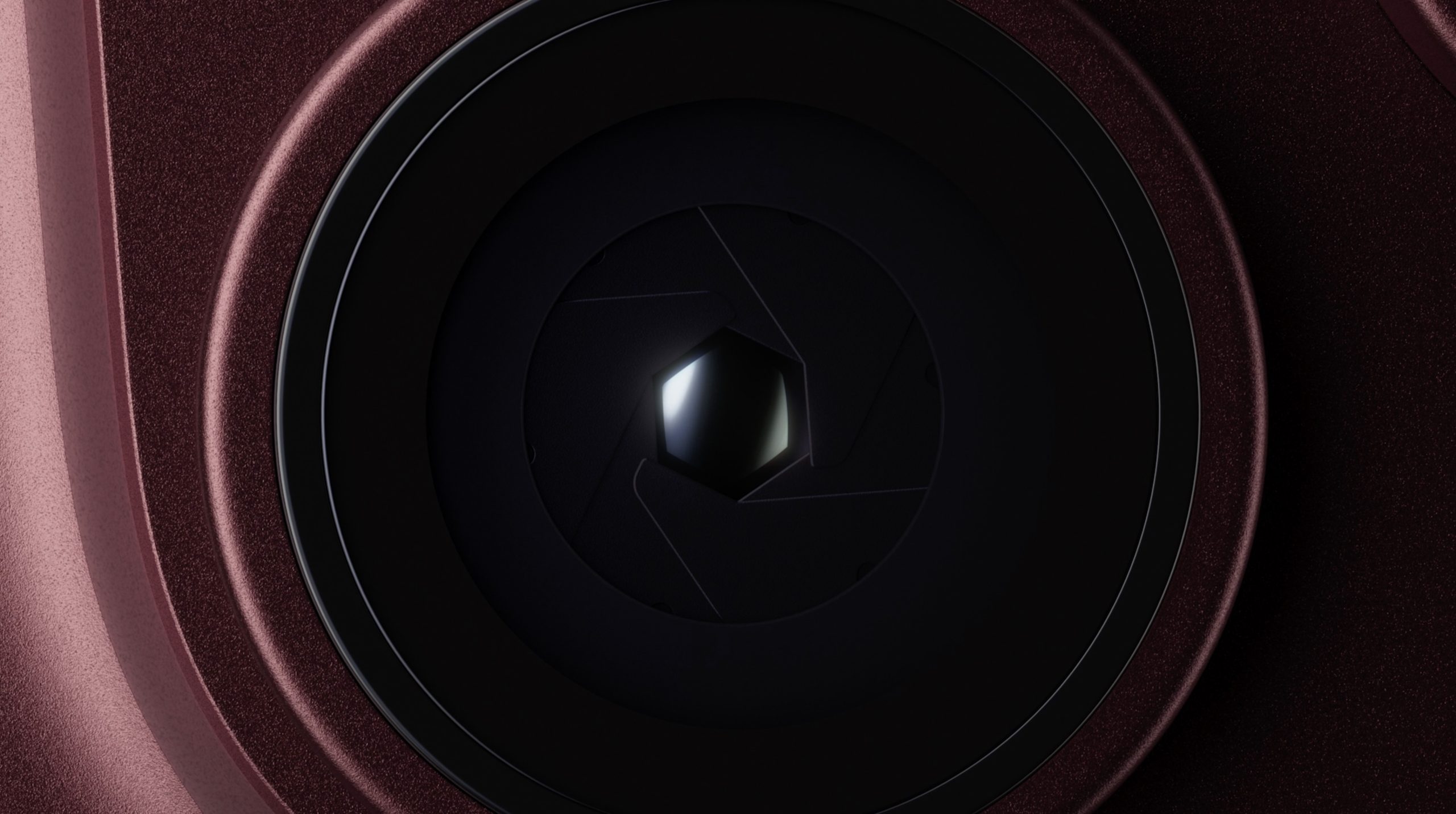
At the heart of the new photographic system is the 48MP Fusion Main camera, which features a true mechanical variable aperture driven by six laser-cut blades. According to Apple, each of these microscopic blades is engineered to be thinner than a human hair, smoothly shifting between physical f-stops of f/1.48, f/1.8, f/2.8, and f/4.0. While everyday users can leave the aperture selection entirely automated by iOS, photography enthusiasts can take direct manual control through a completely redesigned Pro interface. This dedicated interface also houses granular controls for shutter speed, white balance, and a live histogram, giving mobile shooters unprecedented creative latitude directly within the native camera application.
Most casual users, however, will never need to manually adjust the aperture setting, as the software is designed to adapt intelligently to changing environments. In dimly lit rooms, the physical lens mechanism opens wide to an impressive f/1.48, outperforming the fixed f/1.78 aperture found on the previous generation iPhone 17 Pro. When tracking a moving subject in moderate ambient light, the aperture similarly widens to allow faster shutter speeds that freeze motion effectively. Conversely, when capturing a group portrait where individuals are staggered at various distances from the lens, the aperture automatically closes down toward f/4.0 to increase the depth of field and keep every subject sharply in focus. An inspection of image metadata from early test frames confirms the aperture dynamically shifting from shot to shot as the camera continuously reads the optical requirements of each unique scene.
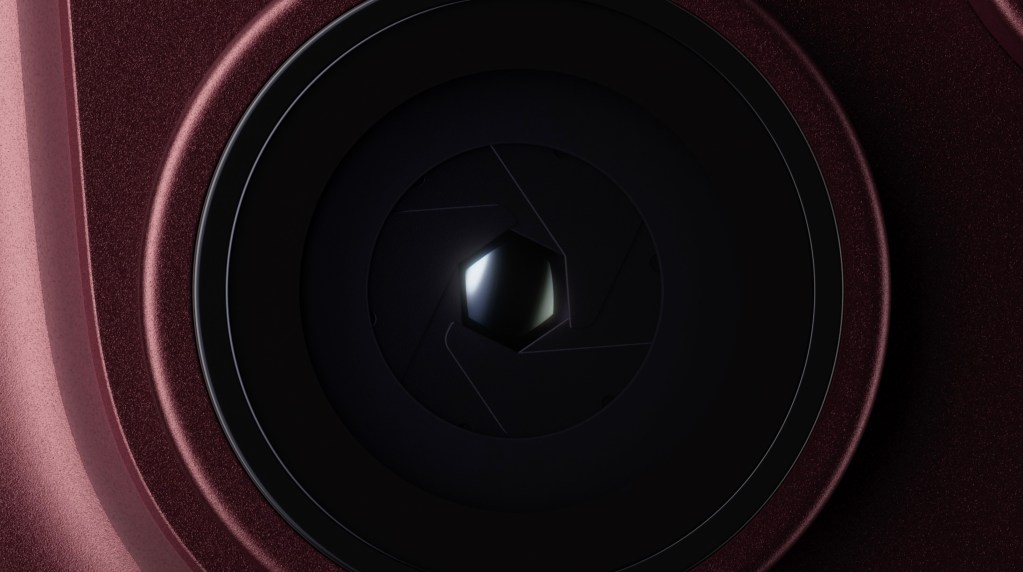
For those who prefer a hands-on approach, the new Pro controls place exposure decisions squarely back into the hands of the photographer. A configurable row of toggles situated above the viewfinder—previously reserved for options like the flash or Live Photos—now accommodates live icons displaying the active f-stop and shutter speed. Tapping either icon reveals a streamlined controller along the bottom edge of the frame. For the first time, shutter speed is fully adjustable within the native Camera app, permitting long exposures of up to a full second. Because ISO remains automatically managed, fixing either the aperture or the shutter speed prompts the remaining variables to compensate accordingly, while manual adjustment of both settings unlocks advanced creative control. Importantly, these extensive manual adjustments apply seamlessly to video recording as well.
Third-party app developers also stand to benefit significantly from these hardware changes. Apple’s expanded APIs grant external applications manual control over all three pillars of the traditional exposure triangle—aperture, shutter speed, and ISO—alongside automated aperture behavior and intermediate stops located anywhere between f/1.48 and f/4.0. Early access partners like Blackmagic Camera have already embraced the new architecture, utilizing these robust tools to elevate professional mobile videography.

Beyond simply regulating the volume of light hitting the sensor and altering the range of sharp focus, stopping down the physical aperture fundamentally changes how points of light are rendered in an image. As light diffracts around the edges of the six-blade iris, bright points of light such as distant streetlamps or glinting jewelry are transformed into distinct six-pointed stars when shooting at f/4.0. This authentic optical phenomenon is entirely distinct from software-generated filters and was simply unattainable with the fixed, rounded openings characteristic of earlier iPhone generations.
Further expanding creative options, the updated Photographic Styles system introduces dedicated texture controls designed to fine-tune the rendering of skin, glowing highlights, and authentic film grain. The system applies these enhancements semantically, distinguishing human skin from clothing, foliage, or background elements, and all adjustments remain completely non-destructive so they can be modified or reversed at any point. The newly formulated film grain pattern is an in-house creation by Apple’s engineering team, who closely studied how dye clouds clump together in developed color film. True to traditional chemistry, this digital grain naturally gathers densely in the midtones while thinning out perceptibly in the deepest shadows and brightest highlights. These sophisticated texture controls remain exclusive to the iPhone 18 Pro lineup.

Videographers will find that every main-camera video clip now automatically records depth data, enabling cinematic focus effects to be applied in post-production at frame rates up to 60 fps. Additionally, the enhanced Audio Mix feature now possesses the capability to isolate background music alongside spoken voices, while Time-lapse recording is elevated to 4K Dolby Vision HDR, supported by an adaptive mode that intelligently lingers on dynamic action while speeding swiftly through lulls.
While the variable aperture alters the visual aesthetics of mobile photography, the newly introduced Reference Image feature addresses an entirely different and increasingly urgent modern challenge: digital verification. In an era dominated by synthetic media and sophisticated AI manipulation, Reference Mode allows the camera sensor to digitally sign its pixel output at the hardware level before the data ever leaves the chip. Apple’s Private Cloud Compute servers then process this raw data into an unalterable reference image that resides alongside the working photo in the Photos app, functioning much like an analog film negative stored next to its final print.

While conventional authenticity initiatives typically focus on labeling images that have been altered, Apple’s approach tackles the inverse problem by proactively proving an image’s authentic origins. The system integrates cleanly with the established C2PA standard—the same protocol powering Adobe’s Content Credentials—which logs subsequent edits and tracks who touched a file over its lifecycle. Together, these technologies establish an unbroken, verifiable chain of custody. At launch, this opt-in feature will be limited by regional rollouts, remaining unavailable in China and initially restricted to viewing modes within the European Union.
Beneath the exterior glass, Apple has completely redesigned the internal thermal architecture of the device outward from the central processor. Powered by the new 2-nanometer A20 Pro chip—which delivers graphics rendering speeds up to 40 percent faster than its predecessor alongside a dual 16-core Neural Engine dedicated to on-device artificial intelligence—the phone generates substantial processing power. To manage heat dissipation, Apple has abandoned the traditional stacked memory layout, which previously trapped thermal energy directly over the processor. Borrowing an architectural design from its custom Mac silicon, the memory now sits alongside the chip, allowing the main processor to press directly against a significantly expanded vapor chamber. This sealed thermal sheet, where liquid water continuously evaporates off hot spots and condenses in cooler zones, covers triple the surface area of last year’s model. Combined with a nanoscale copper layer embedded within the display to diffuse heat away from the user’s fingertips, the iPhone 18 Pro can sustain up to 40 percent more performance under prolonged heavy workloads without thermal throttling.

Externally, the physical design remains largely unchanged aside from the introduction of a striking new burgundy finish. The signature Dynamic Island has been reduced in physical footprint because the infrared camera components for Face ID have been successfully relocated beneath the display. This is achieved by removing half of the display pixels in that specific area to let infrared light pass freely, while driving the remaining pixels at double the brightness to seamlessly mask the transition. The newly recovered screen real estate now comfortably accommodates up to three simultaneous Live Activities, an increase from the previous limit of two. According to Apple’s updated metrics for median user habits, the iPhone 18 Pro delivers up to 24 hours of typical daily battery life, while the larger Pro Max extends that figure to 30 hours. Furthermore, using a compatible 60W adapter, the Pro can rapidly replenish its battery to 50 percent capacity in approximately 15 minutes.
Among the software developments arriving alongside iOS 27, the introduction of iPhone Handoff is particularly notable for users juggling multiple devices, such as the newly announced iPhone Air or the forthcoming iPhone Duo foldable. iPhone Handoff allows a single phone number and cellular profile to seamlessly follow its owner across multiple iPhones; unlocking one device instantly transfers the active number to it. Supported across any hardware capable of running iOS 27, initial carrier support launches with T-Mobile in the United States and Telekom in Germany. Early testing demonstrates that for users utilizing both the high-performance camera of the 18 Pro and a secondary folding device for reading, editing, and media consumption, the ecosystem transitions operate without friction.

Ultimately, the inclusion of a mechanical variable aperture gives the iPhone 18 Pro unprecedented depth of field, while the implementation of Reference Image establishes vital depth of proof. One fundamentally reshapes how a mobile photograph looks, while the other guarantees what that photograph can be trusted to represent.