




The contemporary art jewelry community is mourning the loss of a foundational figure, Jürgen Eickhoff, whose recent exhibition Netzwerke/Networks at Galerie V&V has barely faded from memory. The exhibition’s poignant subtitle, Boundaries: top and bottom, inside and outside, now resonates deeply as an exploration of the possible, as Eickhoff has since crossed an irreversible boundary. Though only his enduring works and the collective recollections of his peers remain, his influence on the international art jewelry landscape is permanent.
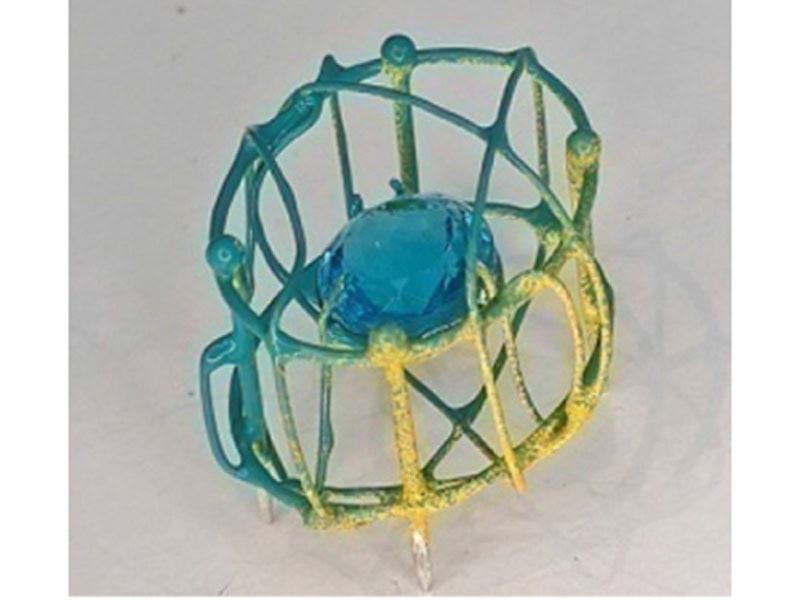
Throughout a career spanning decades, Eickhoff defined his practice through a dynamic interplay of structure, material, and space. Describing his own work, he frequently noted that his jewelry was characterized by a system of apparent chaos and fragile order. Free forms with a defined exterior evolved from concrete, architecture-inspired shapes. Inside these boundaries, silver wires intertwined, connecting and crossing one another like synapses. Various found objects—such as wire fragments, nails, and reflector parts—were systematically integrated to find a new home within the pieces.
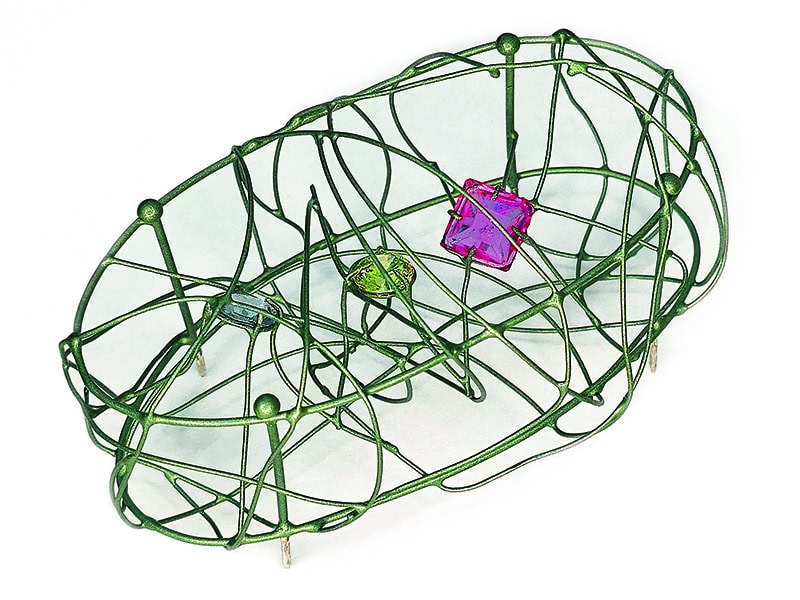
As his artistic language evolved, Eickhoff later supplemented or replaced these industrial found objects with synthetic stones. These materials possessed defined colors, which opened up a remarkably wide spectrum of creative possibilities for his studio practice. At times, he would lacquer the silver wires, creating a striking visual contrast and a subtle dialogue between the stone and the metal body. This deliberate choice stripped the precious metal of its traditional mystical significance, focusing the viewer’s attention more strongly toward the work’s actual message.
Eickhoff’s collegiality knew no bounds, and his energy always seemed inexhaustible. For the 44 years that he was known to his peers as an artist, a fellow gallerist, and a loyal friend, the concept of restrictive boundaries never truly played a role in his personal or professional interactions. He was a man who consistently championed the best interests of his friends and colleagues. A memorable example of this boundless generosity occurred at the 2012 Eunique International Fair for Applied Arts & Design in Karlsruhe, Germany. Operating adjacent booths, Eickhoff offered not only exceptional professional support and warm hospitality but also a large jar of the most delicious honey, which had been produced by his late father, a hobbyist beekeeper.
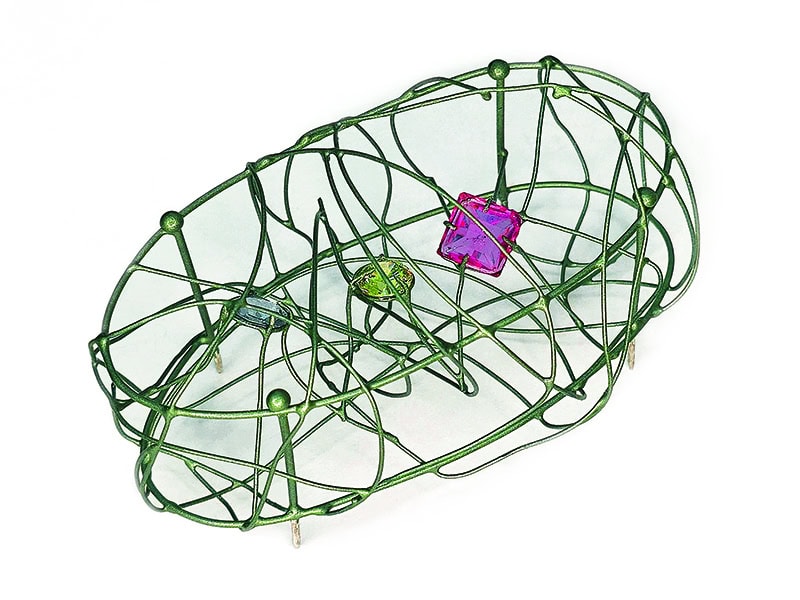
Eickhoff’s entry into the world of art jewelry began in 1981. Having previously studied geology, his path shifted when his wife, Marianne Schliwinski, awakened in him not just love, but a profound and lasting passion for the field. He pursued formal studies in jewelry at the prestigious Gerrit Rietveld Academie in Amsterdam, while simultaneously launching his career as a gallerist alongside Marianne.
Studying in Amsterdam forged a deep bond between Eickhoff and fellow artists and gallerists regarding a shared, holistic perspective on art jewelry. In the Netherlands, practitioners quickly learn that creating the work is only one side of the coin; the art must also be actively shown and contextualized for the world. Consequently, Eickhoff and his contemporaries dedicated a significant portion of their professional lives to running and sustaining independent galleries.
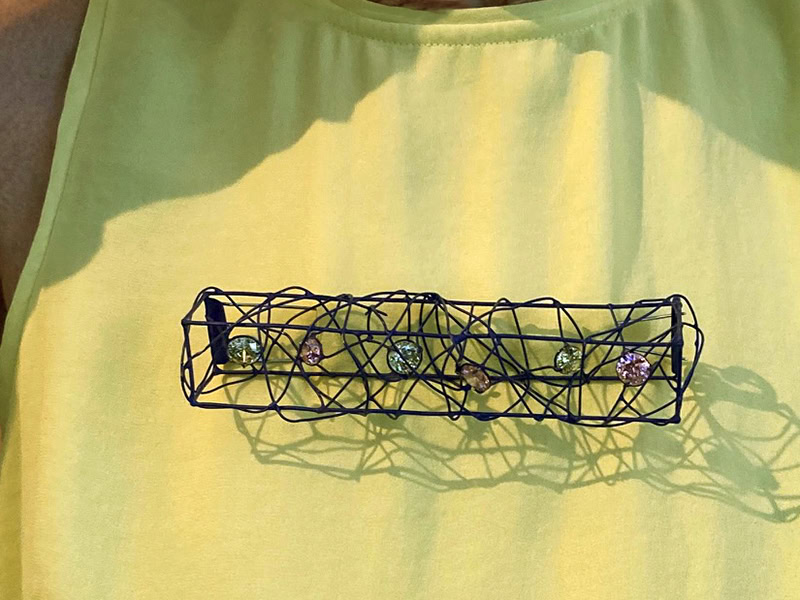
Within Galerie Spektrum, Eickhoff served as the creative, technical, and administrative heart of the institution. Together with Marianne, he managed artist representation, exhibition curation, and daily operations. The gallery occupied five different locations across Munich and Karlsruhe over the years, and Eickhoff was perpetually responsible for the interior design—handling not just the conceptual layouts, but the rigorous physical craftsmanship required to bring them to life. He tirelessly produced small, beautifully crafted catalogs for almost every exhibition while simultaneously fabricating new jewelry pieces. Those who worked alongside him often marveled at his speed. While others were still deliberating or contemplating a design choice, Eickhoff had already finished the work.
A deep love for Italy characterized much of Eickhoff’s personal life alongside Marianne. Their affinity for the country began in an Italian café on Munich’s Türkenstraße, where—over good coffee and gelato—they dreamed of Italy and meticulously planned their travels, particularly to Venice. Later, they were able to establish a home and studio overlooking Lake Garda in northern Italy, allowing them to live and create amidst inspiring landscapes. It was during this fruitful period that Eickhoff produced a celebrated series of works that were subsequently exhibited at Galerie V&V in 2010.
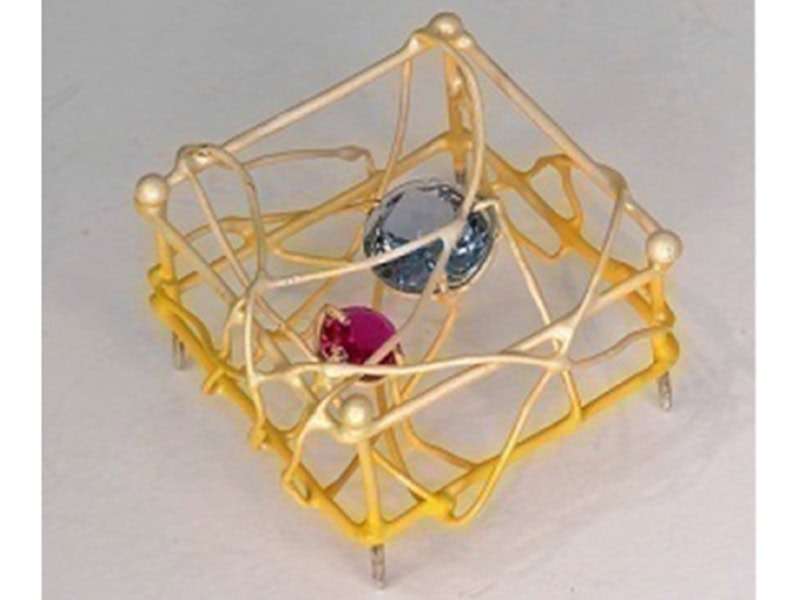
These distinctive pieces comprised brooches fashioned from thin silver wire, whose intricate arrangements evoked the forms of traditional fish traps and the structural systems used to anchor them in tidal waters. Some of these intricate objects resisted easy wearability, hovering delicately on the boundary of free-standing sculpture. The precise, rhythmic manipulation of the wire gave the works the appearance of sketched, hatched drawings, highly reminiscent of travel sketches captured along the Venetian Lagoon.
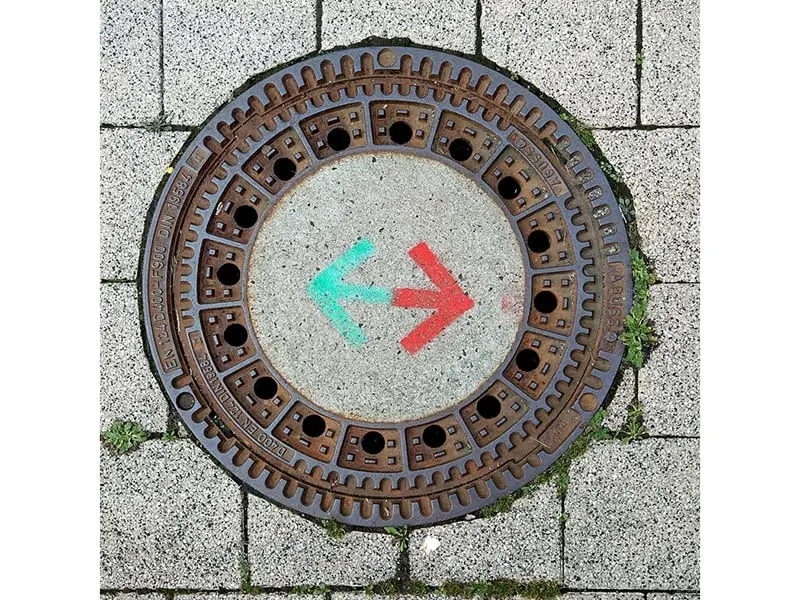
This sensitivity to the overlooked textures of the built environment also informed Eickhoff’s extensive photographic series. Describing this ongoing project, he explained that for years he had been photographing the mundane objects that people simply walk past every single day. Beneath lids, covers, and manhole covers lies the hidden nervous system of modern civilization. Gathering nearly 900 images over time, Eickhoff had about 44 of them printed on square canvases. Amidst the apparent monotony of the pavement, viewers discovered a surprising variety, geometric complexity, and richness of color. Furthermore, many of these utilitarian covers served as functional elements of the corporate identity of cities and municipalities, rendering them impressively and thoughtfully designed.
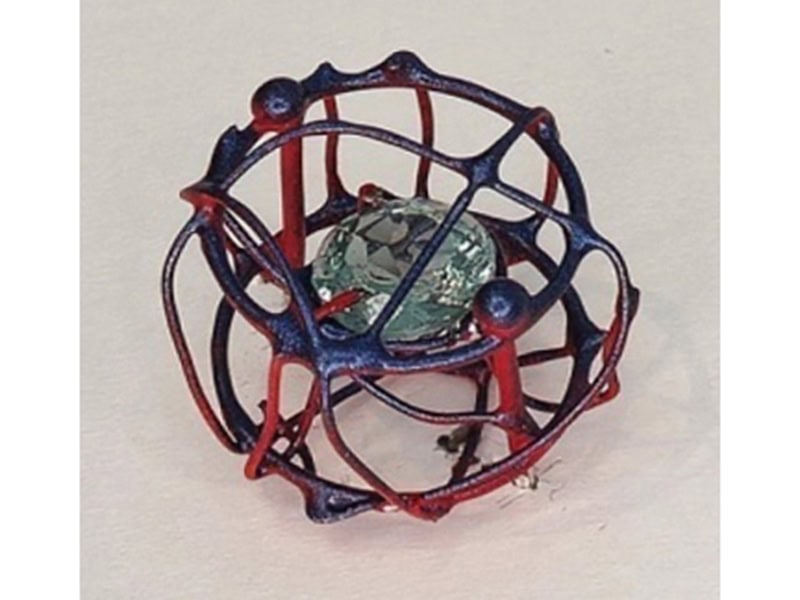
This body of work underscored Eickhoff’s extensive international presence. His photographs of manhole covers were captured around the globe during travels prompted by lectures, guest professorships, and exhibitions. Throughout his distinguished academic and lecturing career, Eickhoff shared his expertise at institutions such as HAWK in Hildesheim, Germany; the Rhode Island School of Design (RISD) in Providence, Rhode Island; Pforzheim University in Germany; the Academy of Fine Arts Munich; Grey Area in Mexico City, Mexico; the Bezalel Academy of Arts and Design in Jerusalem, Israel; and Shenkar College in Tel Aviv, Israel.
Eickhoff’s curatorial and artistic footprint remained active up until his final months. As the curator and organizer of the Chronos exhibition, he traveled to Padua, Italy. His exhibition schedule also took him to Sweden, Vienna, and to Espace Solidor in Cagnes-sur-Mer, France, where his work remains part of an exhibition running through September 2026.
The profound impact of his artistic output is reflected in his inclusion in numerous esteemed public and private collections worldwide. Eickhoff’s works are proudly preserved in the holdings of the Stadtmuseum in Munich, Germany; the Kunstgewerbemuseum in Berlin, Germany; the Dallas Museum of Art in Dallas, Texas; the Badisches Landesmuseum in Karlsruhe, Germany; the Württembergisches Landesmuseum in Stuttgart, Germany; the Pinakothek der Moderne / Die Neue Sammlung in Munich; the Schmuckmuseum in Pforzheim, Germany; CODA in Apeldoorn, Netherlands; the Bröhan Design Collection in Berlin; the Bollmann Collection in Vienna, Austria; and the V&V Collection in Vienna.
As the international art jewelry community continues to process the loss of Jürgen Eickhoff, his legacy survives not only through the monumental public collections that house his creations and the memories of his boundless generosity, but through the rigorous, thoughtful standard he set for craftsmanship, collaboration, and spatial exploration.